Tag: Organic

  • Honey To Avoid: Nature Nate’s

    Honey To Avoid: Nature Nate’s

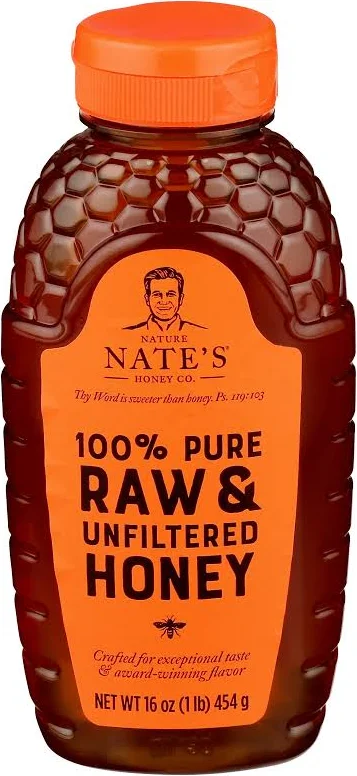
    The Truth About Nature Nate’s Honey: Heated, Not Raw, and High in HMF

    Honey has been cherished for thousands of years, not just for its sweet taste but also for its numerous health benefits. However, not all honey is created equal. The quality and purity of honey can vary significantly depending on how it is processed. One brand that has come under scrutiny is Nature Nate’s Honey. Despite being marketed as “100% pure, raw, and unfiltered,” there are concerns about its production practices and the presence of potentially harmful compounds.

    In this article, we will delve into the details of these concerns and explore why they matter, and why this a Honey to avoid.

    What do these terms mean?

    Hydroxymethylfurfural (HMF): This compound forms when honey is heated. High levels of HMF can be toxic and potentially carcinogenic.

    Health Benefits of Raw Honey: Raw honey is packed with nutrients, including all B-complex vitamins, vitamins A, C, D, E, and K, and minerals like magnesium, sulfur, phosphorus, iron, calcium, and potassium.

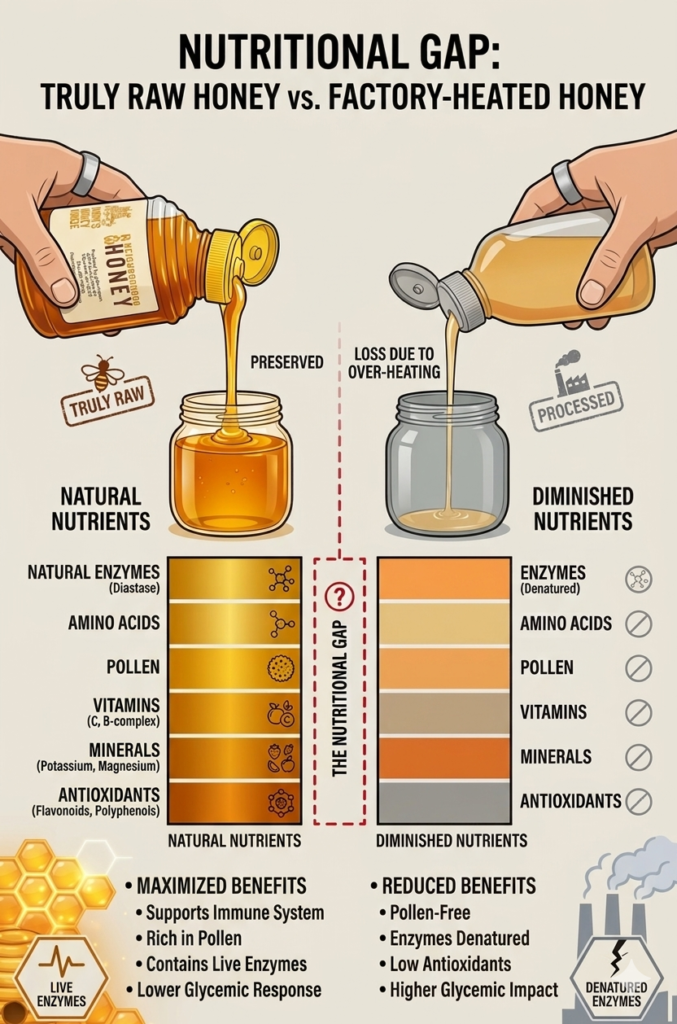
    Heating Honey: Heating honey above 105 degrees Fahrenheit destroys most of its beneficial enzymes, amino acids, and phytonutrients. This is why beekeepers will often advise against pouring boiling water into Tea and Honey.

    You can relate this process to how they’re treating modern Milk.
    However, honey pasteurization shouldn’t be relative to Milk.
    Which sounds like massive factory honey, not backyard bee honey.

    Class Action Lawsuit: In March 2020, a class action lawsuit was filed against Nature Nate’s Honey for allegedly heating their honey and having high levels of HMF.

    Adulteration Concerns: There were concerns about possible adulteration of Nature Nate’s Honey with added syrups, which is not expected in “100% pure and raw honey”.

    The Misleading Branding of Nature Nate’s Honey

    Nature Nate’s Honey is marketed as “100% pure, raw, and unfiltered.” This branding suggests that the honey is collected directly from the honeycombs of free-buzzing bees, strained to remove unwanted particles, and then bottled without any further processing.

    However, testing of Nature Nate’s honey samples has shown that this is not the case. The honey has been heated to make it easier to process and flow, which contradicts the “raw” label.

    Always check where it’s from. Product of BRAZIL and URUGUAY!

    The Importance of Raw Honey

    Raw honey is prized for its incredible health benefits. It contains all of the B-complex vitamins, vitamins A, C, D, E, and K, as well as minerals like magnesium, sulfur, phosphorus, iron, calcium, and potassium. Raw honey is also rich in live enzymes, amino acids, phytonutrients, and cancer-fighting antioxidants. These beneficial compounds are what make raw honey a superfood.

    However, heating honey destroys most of these beneficial enzymes, amino acids, and phytonutrients. When honey is heated above 105 degrees Fahrenheit, it loses its raw status and many of its health benefits. This is why it is crucial to ensure that honey labeled as “raw” has not been subjected to high temperatures.

    The Toxic Compound HMF

    One of the most concerning findings in the testing of Nature Nate’s honey is the presence of high levels of hydroxymethylfurfural (HMF). I know, its a mouthful to try and pronounce.

    HMF is a compound that forms when honey is heated. While small amounts of HMF are naturally present in honey, high levels can be toxic and potentially carcinogenic.

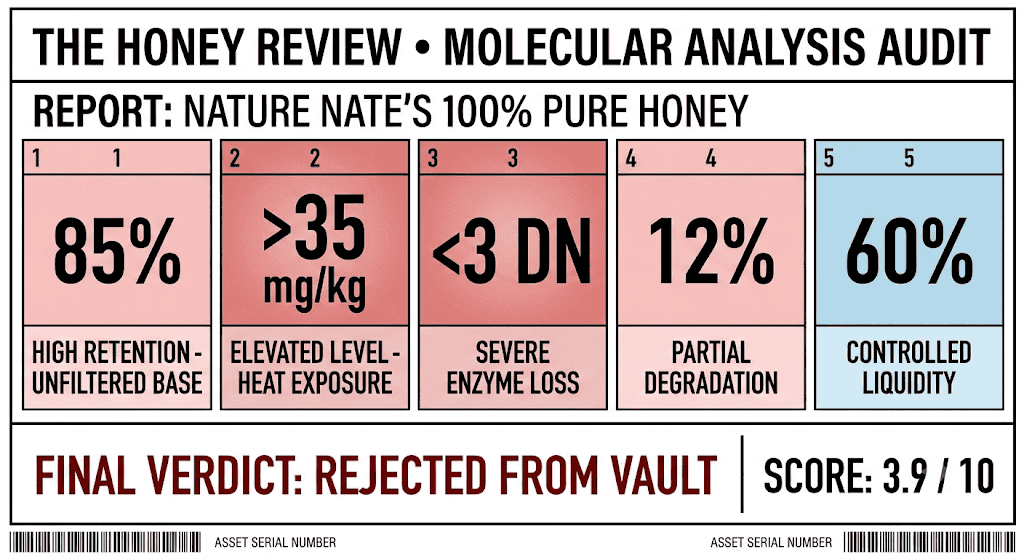
    The Codex Alimentarius, a global reference standard for consumer protection, has determined that the maximum safe limit for HMF in raw honey is 40 mg/kg. However, samples of Nature Nate’s honey tested HMF values as high as 232 mg/kg.

    These levels are not only far above the safe limit, but they also indicate that the honey has been heated up to 120 degrees.

    Why is HMF toxic and potentially cancer causing?

    Hydroxymethylfurfural (HMF) is a compound that forms when honey is heated. While small amounts of HMF are naturally present in honey, high levels can be toxic and potentially carcinogenic. Here are some reasons why HMF is considered harmful:

    1. Genotoxicity: HMF has been shown to induce genotoxic effects, which means it can damage genetic information within a cell, causing mutations that may lead to cancer. Studies have revealed that HMF may induce genotoxic and mutagenic effects in bacterial and human cells.
    2. Carcinogenicity: HMF can be converted in the body to 5-sulfoxymethylfurfural (SMF), a compound that has been shown to be genotoxic. Animal experiments have demonstrated that HMF can promote colon and liver cancer in rats and mice.
    3. Toxicity to Bees: High levels of HMF have been shown to be toxic to bees. Studies from the 1970s and 1980s found that feeding bees sugar syrup with HMF values of 150 mg/kg caused a mortality rate of 50% within 16 days. This suggests that high levels of HMF can be harmful to other living beings as well.
    4. Potential Health Risks: The presence of high levels of HMF in honey raises concerns about its safety for human consumption. While the exact impact on human health is still being studied, the potential for genotoxic and carcinogenic effects makes it a compound to be cautious about.

    These factors highlight the importance of ensuring that honey is not heated to high temperatures, as this can lead to the formation of harmful levels of HMF. Choosing raw, unfiltered honey from reputable sources can help minimize the risk of exposure to this toxic compound.

    The Class Action Lawsuit

    In March 2020, a class action lawsuit was filed against Nature Nate’s Honey. The lawsuit alleged that the honey was heated and contained high levels of HMF, not “100% pure and raw.”

    The lawsuit also raised concerns about possible adulteration of the honey with added syrups.

    The court dismissed the case with prejudice, meaning it cannot be refiled. However, the dismissal was based on procedural grounds rather than the merits of the case. The concerns about the heating and adulteration of Nature Nate’s honey remain unresolved.

    The Health Risks of High HMF Levels

    High levels of HMF in honey are not just a concern for bees. Studies have shown that HMF can be toxic to humans as well.

    Animal experiments have revealed that HMF may induce genotoxic and mutagenic effects in bacterial and human cells. HMF also promotes colon and liver cancer in rats and mice.

    These findings suggest that consuming honey with high levels of HMF could pose serious health risks.

    Adulteration Concerns

    Another concern raised in the lawsuit was the possible adulteration of Nature Nate’s honey with added syrups. Adulteration can occur either by adding syrups directly to the honey or by feeding the bees heated sugar syrups. Both practices are harmful and compromise the quality and purity of the honey.

    Consumers expect “100% pure and raw honey” to be free from any added syrups. The presence of syrups in Nature Nate’s honey raises questions about the company’s quality control and the integrity of its suppliers.

    The Need for Transparency and Quality Control

    To truly be called “100% pure, raw, and unfiltered,” Nature Nate’s Honey needs to eliminate the heating process and tighten its vetting standards for suppliers.

    Transparency in production practices and rigorous quality control are essential to ensure that consumers are getting the high-quality honey they expect.

    Finding Authentic Raw Honey

    For those seeking the health benefits of raw honey, it is important to choose honey from reputable sources. Small beekeepers who produce honey from bees buzzing around healthy, biodiverse ecosystems are often the best choice.

    These beekeepers prioritize the health of their bees and the purity of their honey, ensuring that it retains all its beneficial properties.

    I recently wanted to bring attention back to this company once I saw they are now contributing to the Manuka Honey space. I mean, C’MON!

    Conclusion

    Nature Nate's Raw and Unfiltered Honey

    Nature Nate’s Honey has come under scrutiny for its misleading branding and questionable production practices. The presence of high levels of HMF and concerns about adulteration raise serious questions about the quality and purity of the honey.

    Consumers deserve transparency and honesty from honey producers, and it is crucial to choose honey from reputable sources to ensure its health benefits.

    If you are looking for truly raw honey, be sure to do your research and choose honey from small, reputable beekeepers who prioritize the health of their bees and the purity of their honey.

    By doing so, you can enjoy the incredible health benefits of raw honey without the risks associated with heated and adulterated honey and better know which Honey to avoid.

    • The 2026 Supermarket Showdown: Testing Walmart’s Top 5 Honey Brands

      The 2026 Supermarket Showdown: Testing Walmart’s Top 5 Honey Brands

      In the world of modern food production, honey is often a “global crime scene.” Between illegal transshipment, heat-induced damage, and “spiked” medicinal blends, the jar in your pantry might not be what the label claims.

      Read More


    • Supermarket Honey Fraud: The 2011 “Honey Heist” & How to Spot Fakes

      Supermarket Honey Fraud: The 2011 “Honey Heist” & How to Spot Fakes

      Have you ever looked at that golden bear in your pantry and wondered if it’s actually honey? For many Americans, the answer might be “not exactly.” Supermarket honey fraud is a deep problem in the Industry.

      Read More


    • Manuka Honey

      Manuka Honey

      “Not all Manuka is created equal. We taste-test and lab-check the world’s leading Manuka honey brands to help you navigate potency, purity, and price. Whether you’re looking for UMF 20+ healing power or a daily MGO-boost, start your journey here.”

      Read More


  • A Skeptical Audit: Torie & Howard “Tupelo Honey” Hard Candy

    A Skeptical Audit: Torie & Howard “Tupelo Honey” Hard Candy


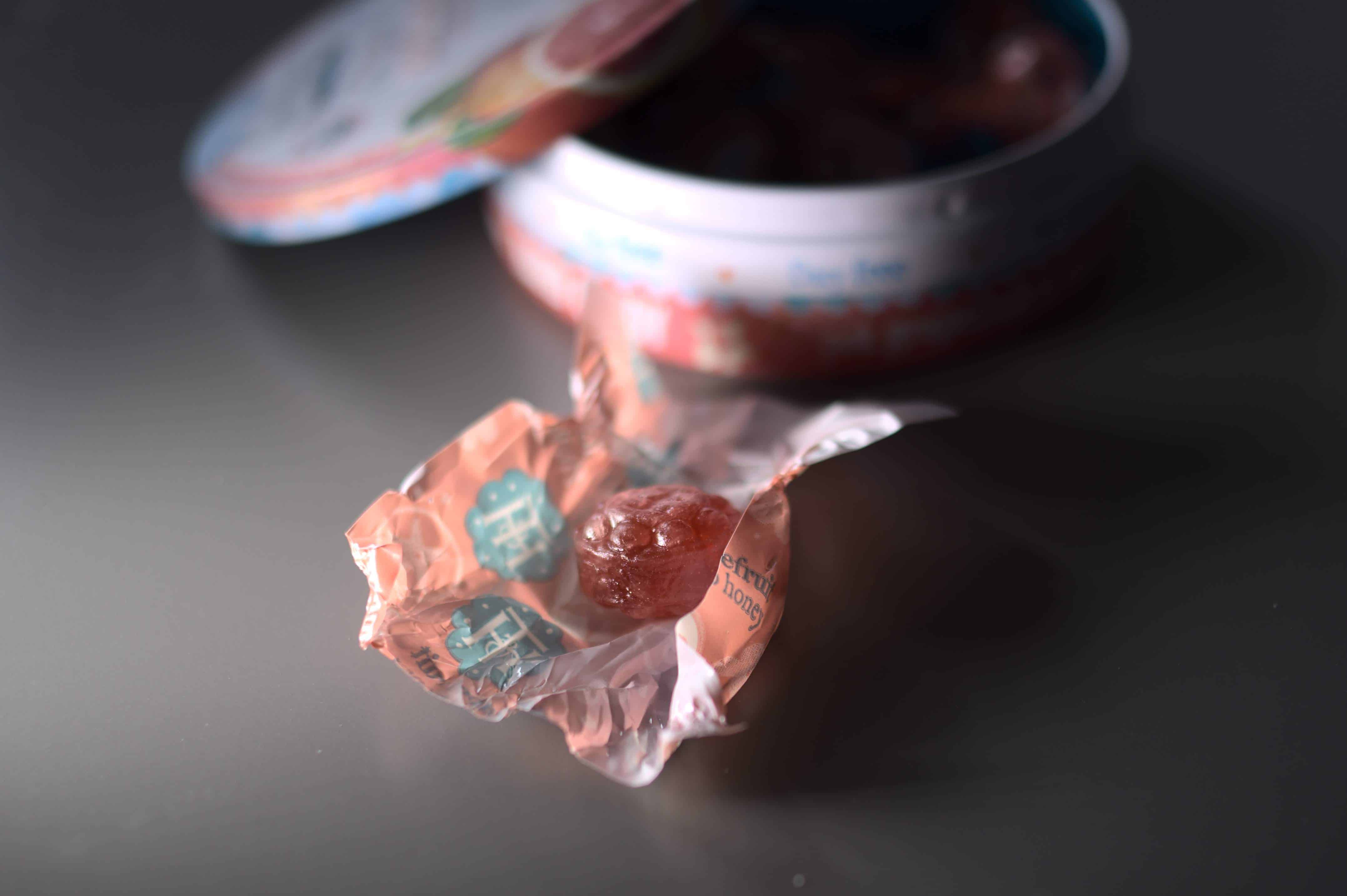
    When I first branched out from raw honey into honey-based candies, Torie & Howard Pink Grapefruit and Tupelo Honey immediately caught my eye. As someone who loves grapefruit (and recently reviewed the VonBee Honey Tea), the promise of “Tupelo Honey” in a convenient tin sounded like a match made in heaven.

    However, as The Honey Review has evolved into a forensic operation, I’ve had to take a closer look at the labeling. Is this a premium alternative to a Jolly Rancher, or a case of “Marketing Adulteration”? Let’s apply the Vault Protocol to find out.

    The Investigation: Where is the Bee?

    Tupelo honey is the “Champagne of Honey,” rare and prized for its floral elegance. At $5.87 for a 2oz tin on Amazon, my detective instincts were tingling. I reached out to the brand directly on Twitter to ask: “Is there any source of honey in your products, or are you just using the name as a flavor reference?”

    The Forensic Verdict: The brand confirmed that because they are a fully vegan company, they use a proprietary mixture of oils, fruit juices, and veggie extracts to simulate honey.

    There is 0% honey in this product. While I appreciate the transparency of their social media rep, as a honey auditor, I find the specific use of “Tupelo” on the label to be highly misleading.

    The Tasting Report: Premium Experience vs. Synthetic Reality

    Despite the lack of actual nectar, these candies hold their own as a sophisticated snack.

    • Flavor & Aroma: The aroma is slightly sweet with subtle floral notes. On the palate, you get a punch of citrus that moves from subtle to sour as it hits the sides of your tongue. It finishes with a cool, refreshing balance that eerily resembles the “tingle” real honey leaves in the throat.
    • Texture & Design: The tin is reminiscent of Altoids—classy and durable. The candies themselves have fun ridges and bumps with the Torie & Howard emblem etched in. It’s a true hard candy; you can’t just bite it immediately. One piece can last up to 10 minutes.
    • Ingredients: They earn points in The Lab for using Organic Sugar and Rice Syrup, with dyes derived from Red Cabbage and Purple Carrots rather than artificial chemicals.

    Forensic Comparison: Marketing vs. The Hive

    MetricTorie & Howard “Tupelo”Real Tupelo Honey
    Honey Content0% (Synthetic Match)100% Raw Nectar
    Dietary ProfileVegan / OrganicRaw / Animal-Produced
    Enzyme ActivityNoneHigh (Diastase/Invertase)
    Vault StatusFlavor OnlyVerified Functional

    The Final Verdict: A Sophisticated Deception

    Score: 3/5

    Aside from the confusing labeling, this is a decent, premium hard candy. It beats a Lifesaver any day of the week in terms of ingredient quality. However, if you are looking for the medicinal or enzymatic benefits of honey found in our Manuka Vault, you will be disappointed.

    The Honey Reviews Recommendation: If you want a citrus-forward, vegan-friendly candy, this is a great buy. But don’t let the “Tupelo” branding fool you into thinking a bee was involved. If you want to taste the difference between a “plant oil simulation” and the real deal, I recommend pairing these with a spoonful of actual Raw Honey—the flavor combination is actually delicious!


    Forensic Tools for the Curious Eater

    To understand why we’re so picky about “Tupelo” labeling, you have to taste the complex profile of real raw nectar.

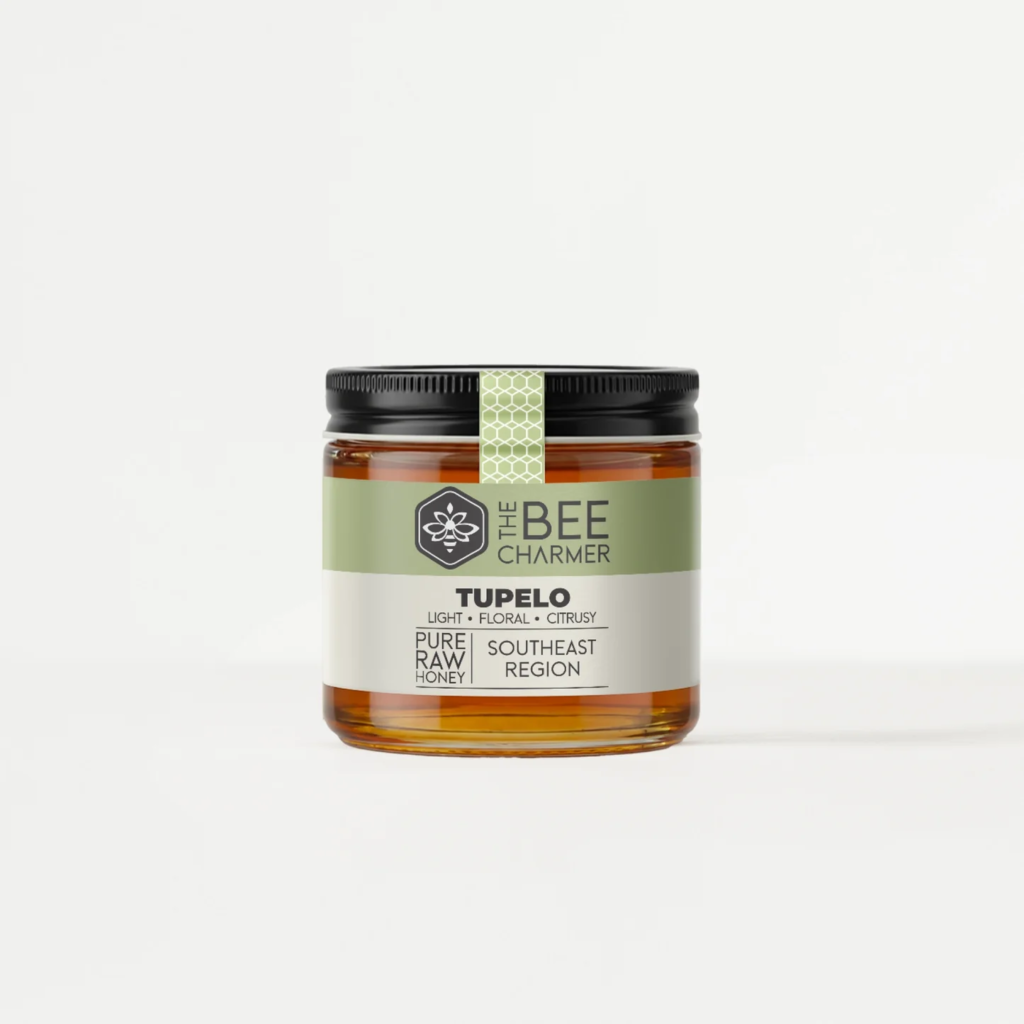
    For a real Tupelo Honey out of Asheville, NC:

    The Bee Charmer: Tupelo Honey – Starts at $8.00 /3oz

    the bee charmer - tupelo honey www.shopbeecharmer.com
    Does Torie & Howard candy contain real honey?

    No. After a forensic investigation and direct confirmation from the brand, we verified that these candies are 100% Vegan. They use a proprietary blend of organic plant oils and fruit extracts to simulate the flavor and mouthfeel of honey without using bee-produced nectar.

    Why does the label say “Tupelo Honey” if it is vegan?

    The term “Tupelo Honey” is used here as a flavor descriptor rather than an ingredient listing. While it mimics the floral profile of the rare Tupelo nectar, it does not contain the actual enzymatic properties found in our Manuka Vault.

    Are these candies healthier than standard hard candies?

    Yes, from a clean-label perspective. They use organic rice syrup and sugar, and the vibrant colors come from natural sources like Red Cabbage and Purple Carrots rather than artificial dyes like Red 40.

    Is Torie & Howard candy allergy-friendly?

    They are marketed as Organic, Vegan, and Non-GMO. However, always check the “Forensic Label” on your specific tin if you have sensitivities to specific natural flavorings or citrus oils.