Tag: Health

  • 5 Everyday Uses for Honey | Go Beyond the Breakfast Table

    5 Everyday Uses for Honey | Go Beyond the Breakfast Table

    Raw honey isn’t just a sweet treat—it’s a natural powerhouse with benefits that stretch far beyond your morning toast. Whether you’re a wellness enthusiast or just honey-curious, here are five timeless ways to make the most of every golden drop.

    1. Natural Skin Soother

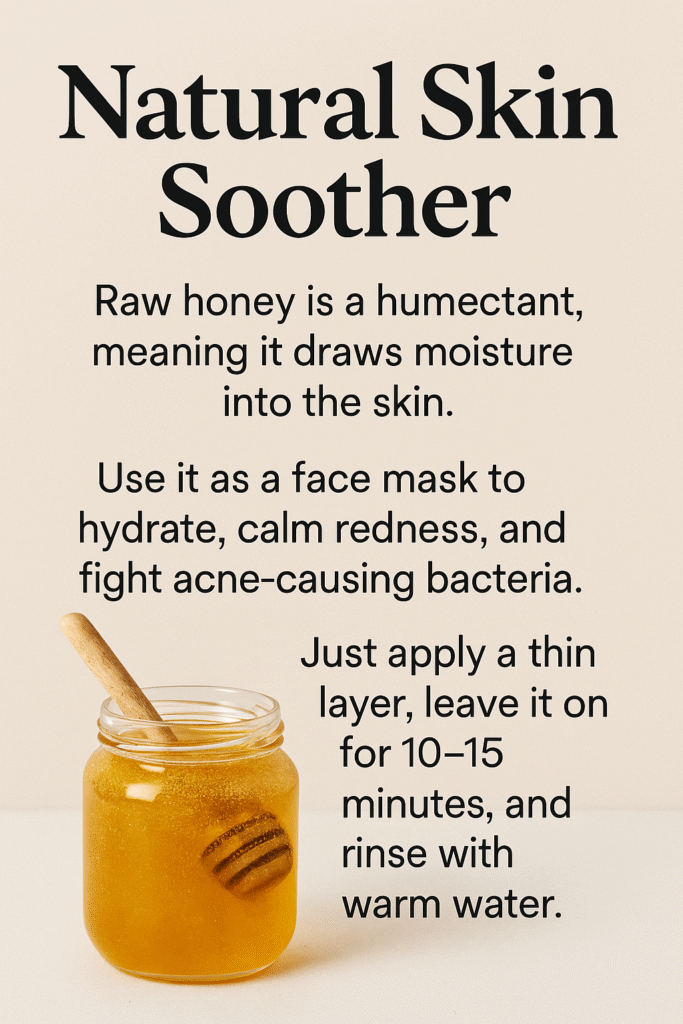
    When it comes to natural skincare, raw honey is basically the Beyoncé of the pantry—always glowing, endlessly reliable, and naturally gifted. Thanks to its humectant properties, it pulls moisture from the air right into your skin, making it ideal for anyone battling dryness or dullness. While other moisturizers might sit on the surface, honey gets to work deep below, helping your skin hold onto hydration like it’s hoarding sunshine.
    Natural Skincare Honey - TheHoneyReviewer

    But honey’s benefits go beyond hydration. It’s naturally antibacterial and antimicrobial—meaning it doesn’t just sit there looking pretty. It actively works to cleanse pores and prevent the buildup of acne-causing bacteria. Think of it like a gentle bouncer for your face: keeping the good stuff in and showing the bad guys out, all without the harshness of chemical ingredients.

    Got sensitive skin or redness that flares up faster than gossip in a group chat? Honey’s anti-inflammatory compounds are here to hush it. Applying it as a face mask calms irritation and gives your complexion a more even tone. And because it’s so gentle, it’s a great option even for those with rosacea or eczema—just do a patch test first to be safe.
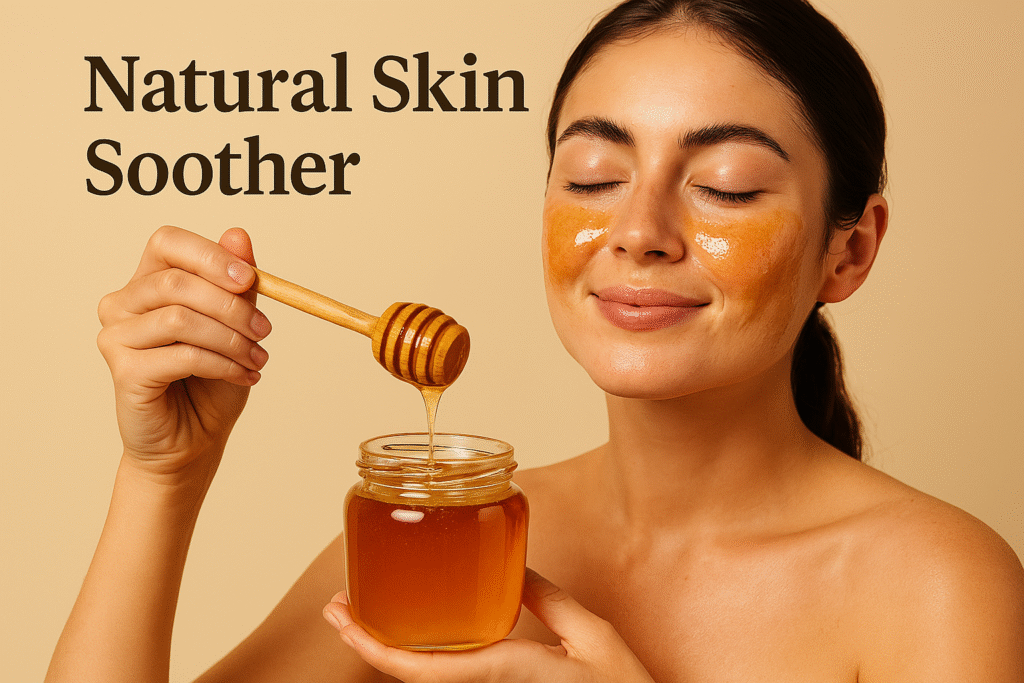
    natural skincare honey - thehoneyreview

    The best part? There’s no need to overcomplicate it. Simply smooth a thin layer of raw honey over clean, dry skin and let it work its magic for 10 to 15 minutes. Rinse with warm water and pat dry for that post-facial glow—no spa appointment needed. For an extra boost, try mixing in a teaspoon of yogurt (for exfoliation) or a dash of turmeric (for brightening). Boom: DIY glow-up.

    So the next time your skin’s throwing a tantrum, skip the $80 serum and reach for the golden goo in your cupboard. Nature’s been perfecting this recipe for millennia—and she didn’t even need a marketing team.

    2. Cough & Cold Relief

    When your throat starts feeling like you swallowed sandpaper, raw honey comes through like your herbalist best friend with a velvet voice. That golden spoonful doesn’t just taste like comfort—it actually is comfort, thanks to honey’s natural ability to coat and soothe the throat. No synthetic syrups here—just nature’s own remedy doing what it’s been doing for centuries.
    raw honey as a could and cough relief thehoneyreview.com

    Raw honey is antimicrobial, which means it doesn’t just sit there looking pretty—it’s actually fighting the good fight against whatever’s making your throat scratchy. Stir it into warm lemon water (never boiling—let’s not destroy all that goodness), and you’ve got a DIY throat elixir that tastes as lovely as it feels. Bonus points if you add ginger, chamomile, or a sprig of thyme for that apothecary flair.

    What sets honey apart from over-the-counter syrups is its ability to offer real relief and a side of sweetness—without the drowsiness or artificial dyes. Studies have even backed it up: a spoonful of raw honey before bed can quiet nighttime coughs better than some commercial meds. Your body rests easier, and your sinuses stop throwing a tantrum.

    So the next time you feel the sniffles creeping in, skip the fluorescent aisle and grab your favorite local jar instead. It’s a wellness ritual that feels like a hug from your insides out—and your taste buds won’t complain either.
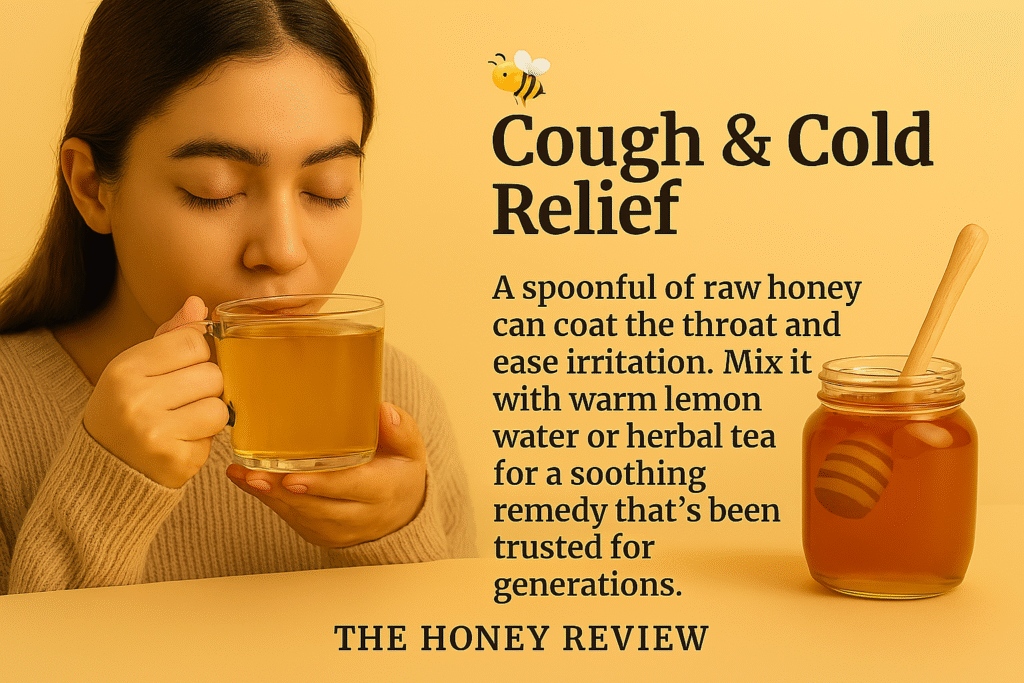
    honey cold and cough relief thehoneyreview.com

    3. DIY Energy Boost

    When your energy’s dragging like a Monday morning mood, skip the fluorescent gels with ingredients you can’t pronounce and turn to nature’s OG pick-me-up: raw honey. This golden goodness isn’t just for your tea and toast—it’s a fast-acting, naturally sweet source of quick-release carbohydrates that your body knows exactly how to use. One spoonful, and you’re fueling up with something bees made—not a lab.

    honey diy energy boost thehoneyreview.com

    Here’s the buzz: raw honey breaks down quickly in the body thanks to its simple sugars, glucose and fructose. That makes it an ideal pre-ride or pre-workout snack. You get the benefit of a quick energy spike without the crash-and-burn that comes with overly processed alternatives. And unlike those synthetic gels that taste like regret, honey actually tastes good going down—like warm sunshine with a hint of wildflower.

    Athletes (and beekeepers) have long used honey as a natural energy source. It provides the perfect balance between speed and stamina—enough oomph to get you through the hills but gentle enough to avoid the jitters. Pop a spoonful 15–30 minutes before heading out, or swirl it into a banana smoothie for an extra boost that doesn’t feel like a science experiment.

    Honey Citrus Electrolyte Drink

    Serving Size:
    Single
    Time:
    Few Minutes
    Difficulty:
    Easy

    Ingredients

    • 1 Tablespoon of Raw Honey
    • 1 1/2 cups of cold water
    • 1/2 cup fresh orange juice
    • 2 Tablespoons of lemon juice
    • Pinch of sea salt
    • Optional: A few mint leaves or a dash of grated ginger

    Directions

    1. Whisk together the honey and citrus juices until fully dissolved
    2. Add cold water and stir in the pinch of sea salt.
    3. Toss in fresh mint or ginger if using, then chill or serve over ice

    And let’s not forget the portability factor. Raw honey fits into pouches, packets, or—if you’re feeling rustic—a mini mason jar. It’s the kind of pocket fuel your ancestors would’ve approved of, minus the neon branding and mystery chemicals.

    So next time you’re prepping for a ride, a workout, or just the chaos of daily life, give the energy gels a polite wave and reach for your local jar. Your body (and your taste buds) will thank you. Also consider trying my favorite energy-based Tea with a spoon of raw honey.

    4. Food Preserver

    Long before refrigeration was a sparkle in modernity’s eye, honey was already doing the most in ancient pantries. In fact, the Egyptians weren’t just building pyramids and scribbling in hieroglyphs—they were preserving everything from fruit to fish with raw honey. Archaeologists have even discovered pots of honey in thousand-year-old tombs that were still edible. Let that sink in. Your jam has an expiration date, but honey? Honey is basically immortal.

    So what makes it such a stellar preserver? It comes down to raw honey’s low water content and high acidity, which create an environment most bacteria can’t handle. It’s like the velvet rope of natural preservatives—only the good microbes may enter (and even those better behave). That’s why submerging sliced garlic, ginger, or even hot peppers in raw honey not only keeps them fresh, but turns them into flavor bombs that get better with time.
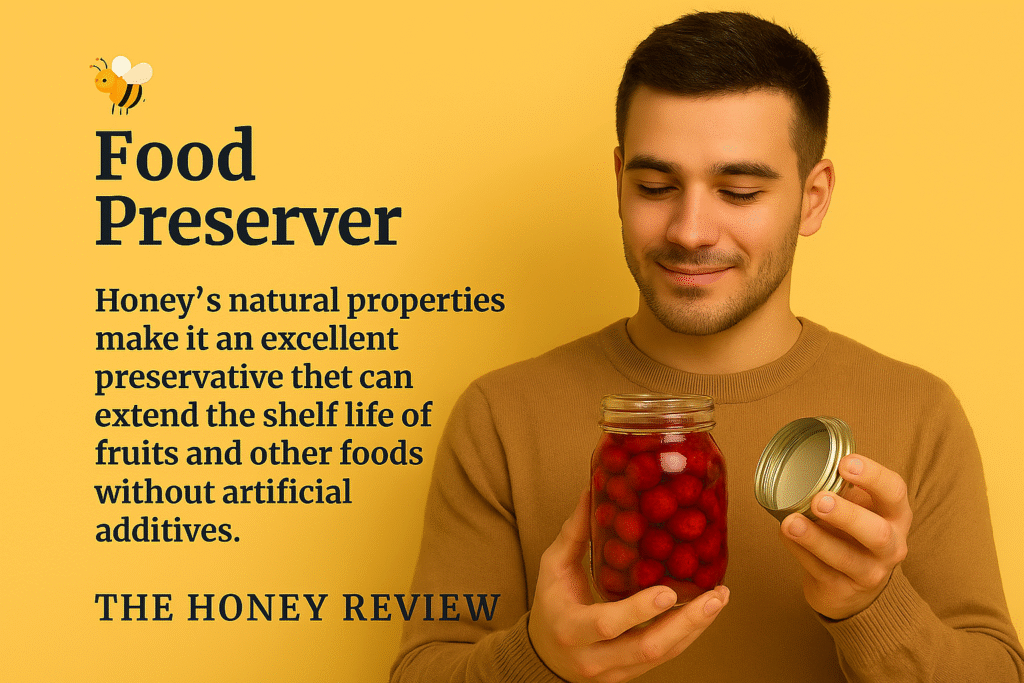
    honey food preserver thehoneyreview.com

    The best part? It’s ridiculously easy. Clean and slice your herb or produce of choice, drop it into a jar, and pour raw honey over the top until fully covered. Seal it, let it infuse for a few days, and boom—you’ve got a natural, shelf-stable condiment that slaps. Ginger honey for teas, garlic honey for glazes, thyme honey for cocktails—you’re now living in an apothecary fantasy.

    And unlike commercial preserves drowning in corn syrup, this one comes with benefits: a spoonful delivers antioxidants, antibacterial support, and major bragging rights. Plus, it feels kind of magical to know you’re using the same preservative your ancient ancestors did—minus the pyramid construction.

    5. Eco-Friendly Sweetener

    When it comes to sweetening your life without wrecking the planet, raw honey deserves its own sparkly gold star. It’s the original slow food—crafted by bees, powered by flowers, and packaged by nature herself. While processed sugars and synthetic sweeteners go through energy-intensive refining and chemical manipulation, raw honey takes the scenic, sustainable route. One flight at a time, bees do the heavy lifting while we humans just get to bask in the benefits.

    And let’s talk packaging. Raw honey often comes in glass jars, reusable tins, or even straight from your local beekeeper in a squeeze bottle with hand-scrawled labels. No plastic waste parade, no shipping it across the globe from a mystery refinery—just simple, local, biodegradable elegance. Supporting regional honey producers doesn’t just lower your food miles, it helps your neighborhood ecosystem stay buzzin’—literally.
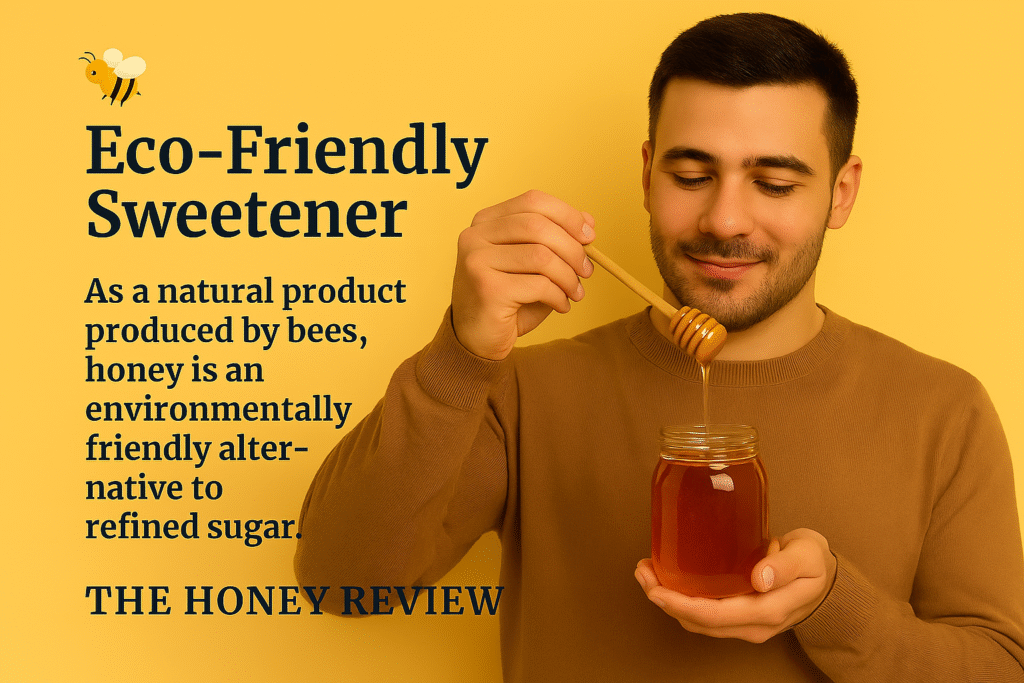
    honey as eco-friendly sweetener  thehoneyreview.com

    There’s also the bonus round: by buying raw honey, you’re actively supporting pollinator health and biodiversity. Beekeepers are out here nurturing hives and protecting the environment one queen at a time. That’s way more impact than you’re getting from a sack of table sugar wrapped in plastic and guilt. Every jar of honey is a little vote for thriving flowers, fuller gardens, and a sweeter future.

    And unlike artificial sweeteners with names that sound like evil sci-fi characters (looking at you, sucralose), raw honey doesn’t need a rebrand. It’s been eco-chic since Ancient Egypt and it keeps showing up—gloriously golden, naturally powerful, and endlessly useful.

    So when you drizzle honey into your tea or stir it into your smoothie, know this: you’re not just treating your taste buds, you’re making a gentle, golden impact. And honestly, isn’t that the kind of sweet we all need more of?

    And there you have it—proof that raw honey isn’t just a pantry staple, it’s a whole lifestyle vibe. From soothing sore throats to powering your hustle, preserving herbs like you’re channeling Cleopatra, or giving your skin that glazed-doughnut glow, honey’s been showing up and showing off for centuries. So keep that golden jar front and center, because when life gets sticky, the answer is usually… more honey.

  • Designer Honey Risks Health and Beekeepers’ Incomes

    Designer Honey Risks Health and Beekeepers’ Incomes


    Designer Honey in Supermarkets Risks Health and Beekeepers’ Incomes

    Howdy y’all! Today, we’re diving into a sticky situation that’s been buzzing around the honey world. We’re talking about designer honey in supermarkets and how it’s putting our health and hardworking beekeepers’ incomes at risk. So grab a cup of sweet tea, sit back, and let’s get into it.

    Honey Fraud: A Growing Concern

    First things first, let’s talk about honey fraud. It’s a real problem, folks. A significant portion of honey entering the EU is flagged as potentially fraudulent. These sneaky folks are using advanced syrups as diluting agents, making it hard to tell the real deal from the fake stuff. And let me tell ya, this ain’t just a European problem – it’s happening right here in the good ol’ USA too.

    Health Risks of Adulterated Honey

    Now, you might be wondering, “What’s the big deal if my honey’s a little watered down?” Well, let me tell ya, it’s a big deal. Adulterated honey can cause all sorts of health issues like diabetes, obesity, and liver damage. It’s not just about the taste – it’s about your health.

    Economic Impact on Beekeepers

    But it ain’t just our health that’s at risk. Genuine beekeepers are facing unfair competition from these fraudulent honey peddlers. It’s hard enough keeping bees happy and healthy without having to compete with folks who are cutting corners. This unfair competition is putting honest beekeepers at risk of losing their businesses and the vital crop pollination services they provide.

    Technological Solutions to the Rescue

    Thankfully, researchers are stepping up to the plate with some fancy new technology. They’re using advanced techniques like Fluorescence Excitation-Emission Spectroscopy (FLE) to detect honey fraud. It’s a mouthful, I know, but it’s making a big difference in identifying the real deal from the imposters.

    Regulatory Challenges

    The EU is having a tough time regulating and enforcing honey standards due to the complexity of international trade and the sophistication of adulteration methods. It’s a big ol’ mess, and it’s gonna take some serious effort to clean it up.

    Consumer Awareness

    One of the best ways to fight honey fraud is through consumer awareness. We need to educate folks on how to identify genuine honey and understand the implications of honey fraud. Knowledge is power, y’all. How does it benefit the Industry?

    1. Empowering Consumers: When consumers are well-informed, they can make better purchasing decisions. By knowing how to identify genuine honey, they can avoid buying adulterated products that may pose health risks.
    2. Supporting Genuine Beekeepers: Educated consumers are more likely to support local and ethical beekeepers. This helps sustain the livelihoods of those who are committed to producing high-quality, authentic honey.
    3. Driving Market Demand: As more consumers demand genuine honey, it puts pressure on retailers and producers to ensure their products are authentic. This can lead to better industry practices and reduced instances of honey fraud.
    4. Health Benefits: Genuine honey offers numerous health benefits, from its natural antibacterial properties to its role in boosting the immune system. By choosing real honey, consumers can enjoy these benefits without the risks associated with adulterated products.


    This blog was started with the mission to educate and inform consumers about the importance of genuine honey. By sharing knowledge and insights, I aim to empower readers to make informed choices and support ethical beekeeping practices. Together, we can combat honey fraud and ensure that the honey we enjoy is pure, authentic, and beneficial for our health and the environment.

    If you support this mission, consider supporting the cause and subscribe.

    Environmental Impact

    Honey fraud doesn’t just affect us humans – it has environmental consequences too. Genuine beekeepers play a crucial role in pollination and biodiversity. When they suffer, so does our environment.

    Collaborative Efforts

    Tackling honey fraud ain’t a one-person job. It’s gonna take collaboration between governments, industry stakeholders, and researchers to develop and implement effective detection methods and policies. We’re all in this together.

    Market Trends

    On a brighter note, the demand for organic and locally-sourced honey is on the rise. As consumers become more conscious of the quality and origin of their food products, they’re seeking out the real deal. And that’s good news for our hardworking beekeepers.

    But let me explain Organic Honey in the US.

    Organic Honey in the US: A Myth!

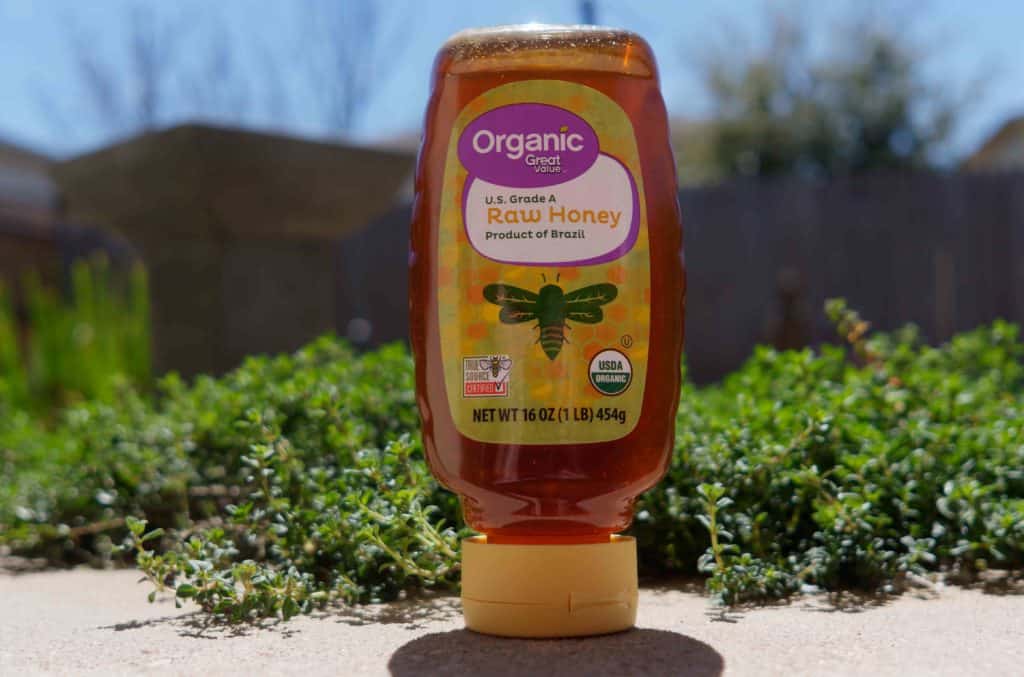
    great value organic raw honey

    Organic Honey in the US: A Myth!

    Many consumers are drawn to the idea of “organic” honey, believing it to be healthier and more environmentally friendly. However, the concept of organic honey in the United States is more myth than reality.

    The Challenge of Certifying Organic Honey

    In the US, honey cannot be certified as organic by the USDA because bees have a foraging range of several miles. This makes it nearly impossible to control where they collect nectar and pollen. For honey to be truly organic, bees would need to forage exclusively on organically managed flowers, which is not feasible.

    Imported Organic Honey

    Any honey labeled as “Certified Organic” in the US is typically imported from other countries with different standards. This can lead to confusion and mistrust among consumers.

    Environmental and Ethical Considerations

    Producing organic honey would require keeping bees in a controlled environment, such as a greenhouse, to ensure they only visit organic plants. This approach is impractical, inhumane, and detrimental to the environment. Bees play a crucial role in pollination and biodiversity, and restricting their natural behavior would have negative ecological impacts.

    The Reality of Local Honey

    While the organic label may be elusive, locally sourced honey offers a more transparent and beneficial alternative. Local beekeepers often use sustainable and ethical practices, and consumers can directly verify the authenticity and quality of the honey. Supporting local honey also helps sustain small-scale beekeepers and reduces the carbon footprint associated with transporting honey over long distances.

    While the idea of organic honey is appealing, it remains a myth in the US due to the challenges of certifying and controlling bee foraging. Instead, consumers can turn to locally sourced honey for a more transparent, ethical, and environmentally friendly option. Beware of designer honey that may not be as genuine as it seems.


    Local Honey vs Organic

    Transparency and Traceability

    • Direct Connection: Buying locally sourced honey allows consumers to visit apiaries and meet beekeepers.
    • Verification: Consumers can verify the authenticity and quality of the honey.

    Supporting Local Economy

    • Sustaining Beekeepers: Purchasing local honey supports small-scale beekeepers.
    • Ethical Practices: Local beekeepers are more likely to use sustainable and ethical practices.

    Environmental Benefits

    • Reduced Carbon Footprint: Locally sourced honey has a smaller carbon footprint.
    • Promotes Biodiversity: Supporting local beekeepers contributes to environmental sustainability.

    Health Benefits

    • Nutritional Value: Locally sourced honey is often raw and unprocessed, retaining more natural enzymes and nutrients.
    • Healthier Choice: Raw honey provides greater health benefits compared to processed honey.

    Challenges with Organic Certification & Designer Honey

    • Foraging Range: Bees can travel several miles, making it difficult to ensure they only visit organically managed flowers.
    • Meaningless Label: The organic label is less meaningful for honey due to the challenges in controlling bee foraging.

    Consumer Trust

    • Direct Interaction: Consumers can interact with local producers and learn about their practices.
    • Building Trust: Trust is easier to establish with local honey compared to distant sources.

    What Can You Do to Help?

    Now that you’re informed, here is what you can do to help:

    1. Educate Yourself: Learn how to identify real raw honey. The Honey Review offers tips and tricks to help you distinguish genuine honey from adulterated products.
    2. Buy Local: Support local beekeepers by purchasing honey directly from them. This not only ensures you’re getting authentic honey but also helps sustain local beekeeping businesses.
    3. Check Labels: Look for certifications like “True Source Certified” or “USDA Organic” on honey labels. These certifications indicate that the honey has been sourced and processed according to specific standards.
    4. Avoid Cheap Honey: Be wary of honey that is significantly cheaper than other brands. Low prices can be an indicator of adulteration.
    5. Spread Awareness: Share information about honey fraud with friends and family. The more people know about the issue, the better equipped they will be to make informed purchasing decisions.
    6. Support Ethical Brands: Choose brands that are transparent about their sourcing and production methods. The Honey Review provides reviews of various honey products, highlighting those that are genuine and high-quality.

    By taking these steps, consumers can help protect their health, support honest beekeepers, and contribute to the fight against designer honey and honey fraud.

    There you have it, folks. Honey fraud is a serious issue that’s affecting our health, our beekeepers, and our environment. But with a little knowledge and a lot of collaboration, we can make a difference. So next time you’re at the store, take a moment to think about where your honey comes from. Support your local beekeepers and enjoy the sweet taste of genuine honey.

    Y’all take care now, and happy honey hunting!

    • Kirkland Signature Local Honey Pulled From Shelves

      Kirkland Signature Local Honey Pulled From Shelves

      If you’re a Costco member, you may have noticed that the Kirkland Signature honey has been pulled temporarily. The honey is being re labeled to ensure that it isn’t misleading to it’s members. I reviewed Kirkland Signature twice, the Texas “Local” blend and the Southeast ” Local” blend. And what I found mirror’s Costco’s statement…


    • Supermarket Honey Fraud: The 2011 “Honey Heist” & How to Spot Fakes

      Supermarket Honey Fraud: The 2011 “Honey Heist” & How to Spot Fakes

      Is Your Supermarket Honey Real? The Truth Behind the 2011 “Honey Laundering” Scandal Have you ever looked at that golden bear in your pantry and wondered if it’s actually honey? For many Americans, the answer might be “not exactly.” Supermarket honey fraud is a deep problem in the Industry. Honey fraud, or “economically motivated adulteration,”…


    • Manuka Honey

      Manuka Honey


    • Texas Honey