If you have spent any time reading the forensic audits here on The Honey Review, you know how quickly mass-market supermarket shelf-staples get torn apart. Industrial processing, mass aggregation, ultra-filtration, and suspicious flash-heating usually turn what should be a living, complex food into nothing more than dead, liquid sugar. When evaluating high-volume grocery brands, the…
If you have spent any time reading the forensic audits here on The Honey Review, you know how quickly mass-market supermarket shelf-staples get torn apart. Industrial processing, mass aggregation, ultra-filtration, and suspicious flash-heating usually turn what should be a living, complex food into nothing more than dead, liquid sugar. When evaluating high-volume grocery brands, the enzymatic integrity and floral markers are frequently stripped away to facilitate high-speed bottling—a reality we exposed heavily in our investigative report, Honey To Avoid: Nature Nate’s.
But every now and then, you find an authentic, raw monofloral (single-origin) honey that stops you dead in your tracks. For me, that is ‘Ōhi‘a Lehua Hawaiian Honey.
It is a rare, delicate, and sensory-shifting varietal. If I had to pick one honey to bring to a desert island, this is it. Below is the deep dive into why this Hawaiian treasure holds the permanent #1 spot on my list, how it comes to be, and how it structurally stacks up against the best artisan varietals the US mainland has to offer.
The Origin: A Tree Born of Lava and Legend
You cannot separate Lehua honey from the unique, unforgiving landscape of the Hawaiian rainforests—specifically the high-altitude volcanic slopes of the Big Island (Hawai‘i).
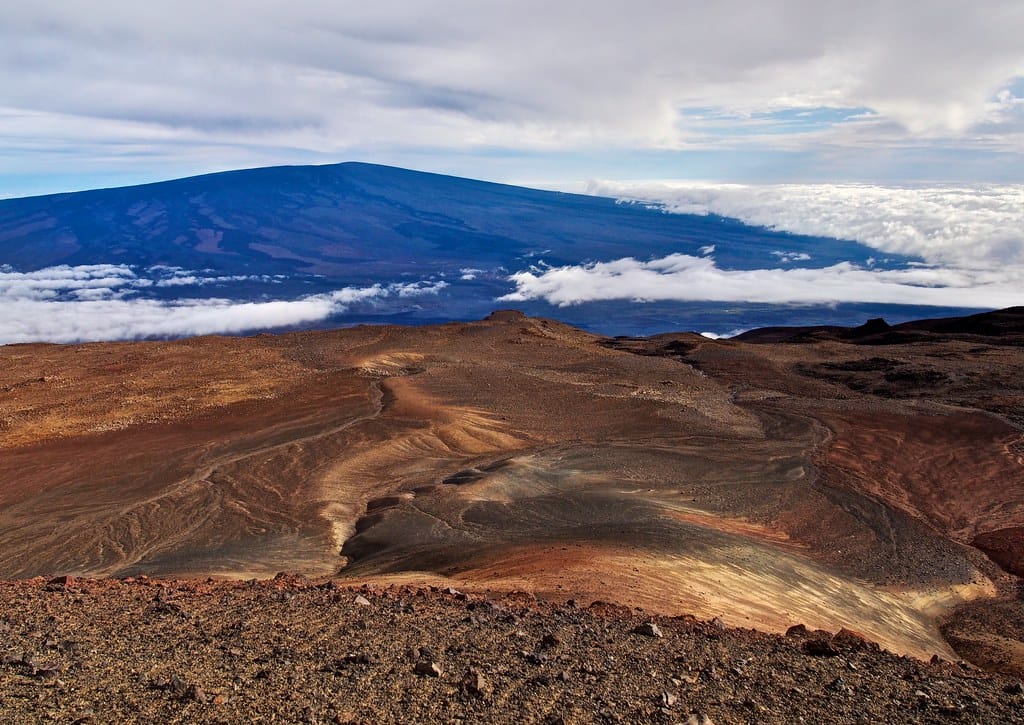
Mauna Loa Slopes
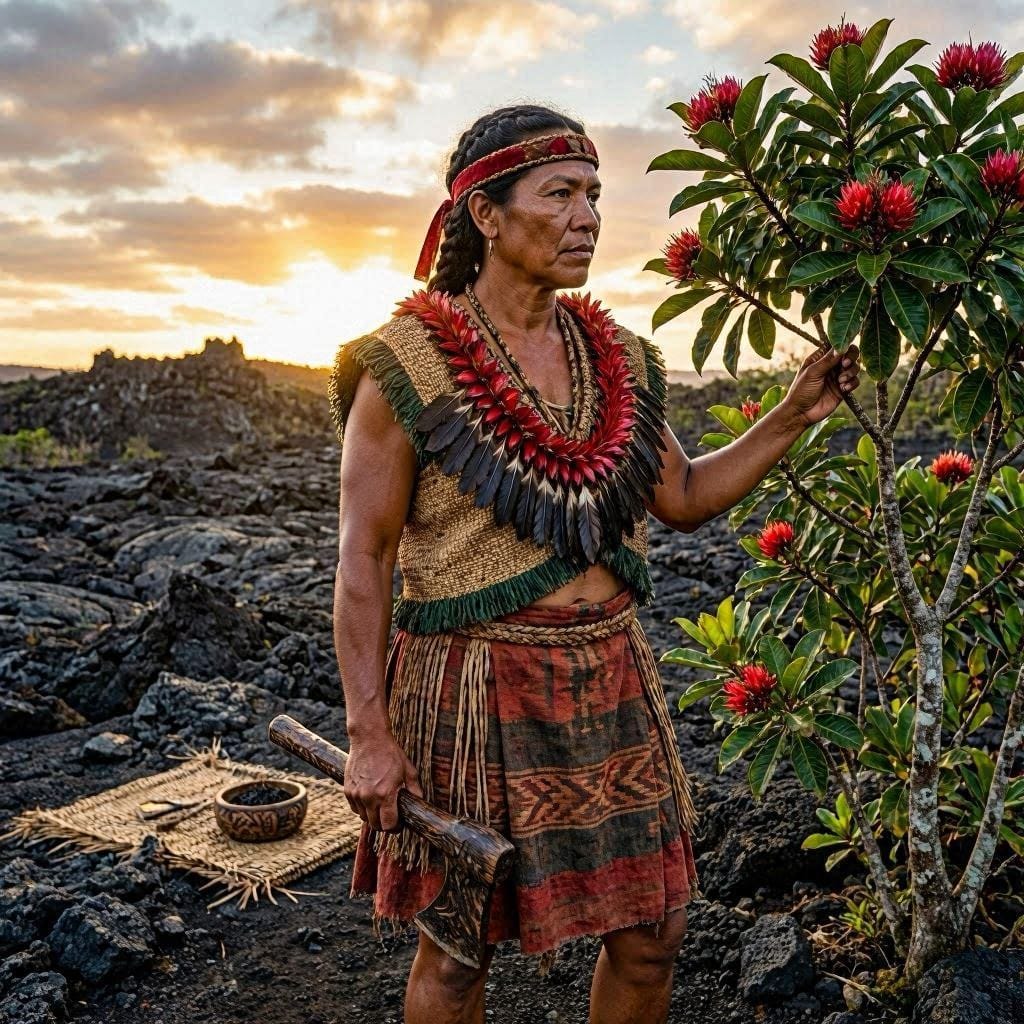
The honey is harvested exclusively from the nectar of the native ‘Ōhi‘a Lehua tree (Metrosideros polymorpha). What makes this tree spectacular is its raw ecological resilience. It is a pioneer species, meaning it is one of the very first forms of life to sprout directly out of raw, hardened, stark black basaltic lava flows. Growing in pristine, isolated elevations—like the rugged slopes of Mauna Loa—the ‘Ōhi‘a forms a sacred ecosystem canopy.
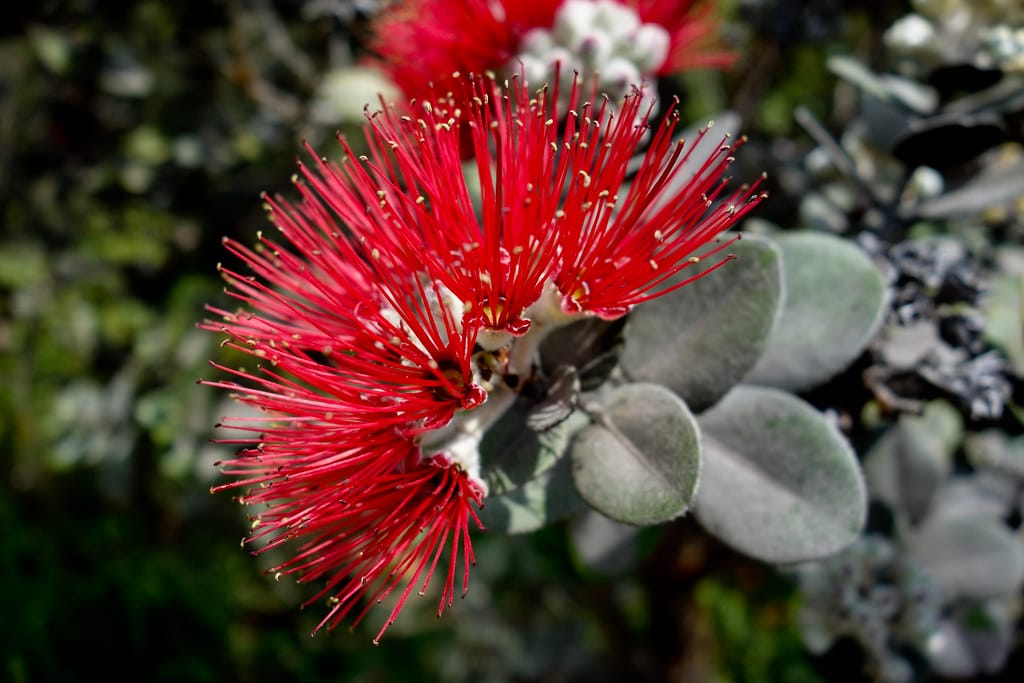
The flower itself, called the Lehua, is a striking, brilliant red pom-pom-like blossom that stands out vividly against dark volcanic rock.
The Lore of Pele’s Flower
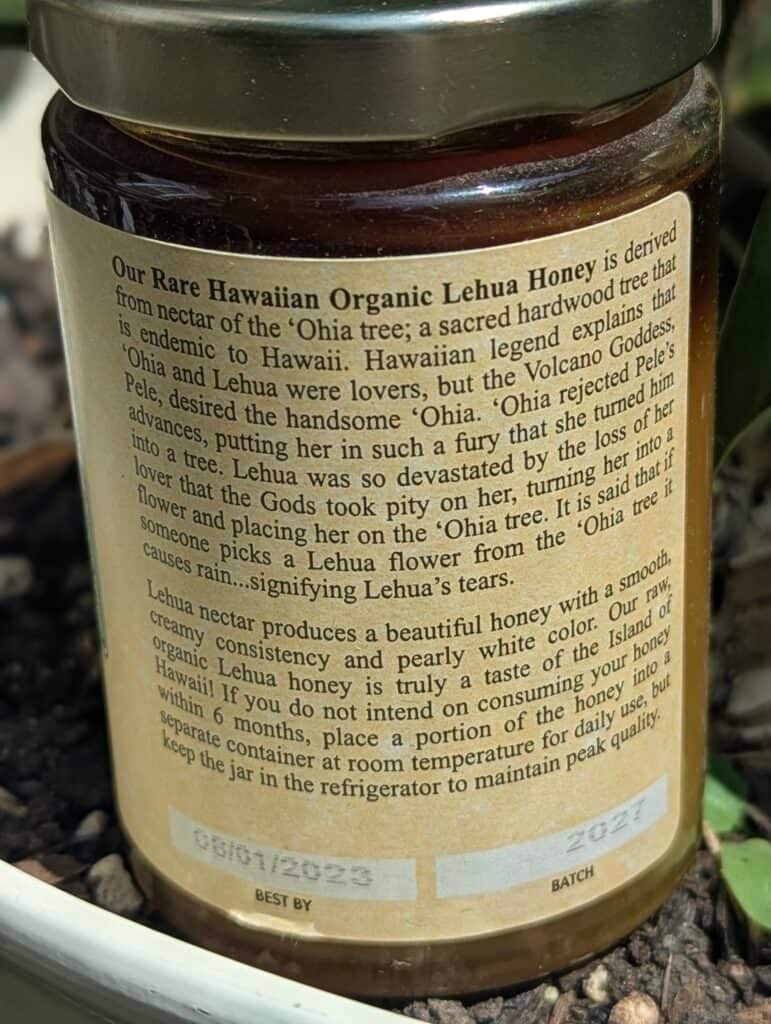
In traditional Hawaiian mythology, ‘Ōhi‘a was a handsome warrior and Lehua was his beautiful, devoted lover. The fiery volcano goddess, Pele, desired ‘Ōhi‘a for herself, but he rejected her advances. In a fit of jealous rage, Pele cursed ‘Ōhi‘a, transforming him into a gnarled, twisted tree.
Heartbroken, Lehua begged the other gods to break the curse. Unable to undo Pele’s magic, the gods took pity on her and transformed Lehua into a brilliant, feathery crimson blossom to grow directly on the branches, reuniting the lovers forever. Local lore holds that if you pluck a Lehua blossom from the tree, it will rain that very day—the tears of the separated lovers.
Hawaiian Beekeeping & Honey Facts
Harvesting this liquid gold requires incredible skill, and the isolated geographic ecosystem surrounding it is completely unique:
The “White Honey” Phenomenon: Tourists and locals alike often hunt for Hawaii’s famous “White Honey”. While it pours clear or light amber initially, pure raw Lehua honey has an incredibly rapid natural crystallization process—sometimes solidifying right inside the honeycomb before extraction! When fully crystallized, it transforms into a stunning, pearlescent, creamy white paste.
Limited Micro-Climates: True monoseminal Lehua honey can only be harvested during a short, hyper-seasonal window in late spring and early summer when the groves heavily bloom.
A Fragile Ecosystem: Hawaiian apiculture was relatively untouched by modern global hive pests until 2007, when the Varroa mite arrived, followed closely by the Small Hive Beetle in 2010. Because these pests wiped out many wild, feral bee colonies, the survival of the native canopy heavily relies on meticulous, passionate local apiaries keeping their hives strong.
The Sommelier Review: Tasting Notes & Texture
True, raw Lehua honey behaves like no other honey on earth. It is a hyper-specific monofloral capture, and its physical properties are stunning.
The Rapid-Crystallization Miracle
On the crystallization index, Lehua is lightning fast. Because of its naturally high glucose-to-fructose ratio, raw Lehua honey will often crystallize within a few weeks of extraction. But it doesn’t turn hard, gritty, or rocky. Instead, it naturally undergoes a spontaneous micro-crystalline shift, transforming into a naturally creamed, pearlescent, pearly-white spread with an incredibly velvety texture. It looks less like liquid honey and more like smooth, whipped lard or thick white buttercream.
The Sensorial Profile
Visual: Pale ivory to soft cream-white (when crystallized).
Aroma: Delicate, buttery, exhibiting notes of rain-washed wood, fresh hive wax, and a faint tropical ozone.
Palate: It completely avoids the aggressive, throat-burning heat common in cheap clover honey. Instead, the entry is soft, leading into a gentle, luxurious sweetness.
Dominant Notes: Pure creamery butter, warm butterscotch, and salted caramel, rounded out by a delicate, custard-like finish and a faint tropical whisper of banana. It is incredibly clean with a savory, almost malty finish.
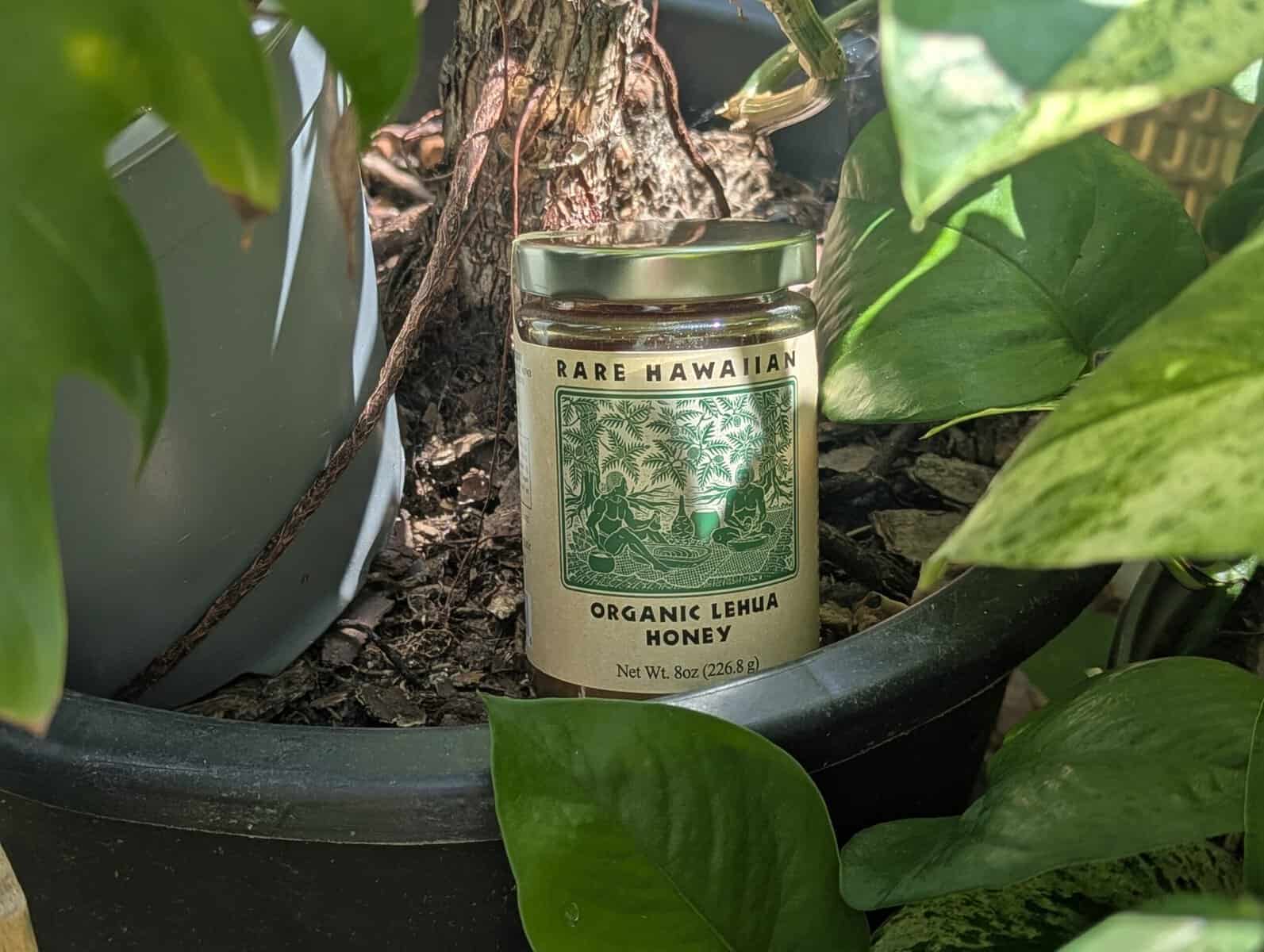
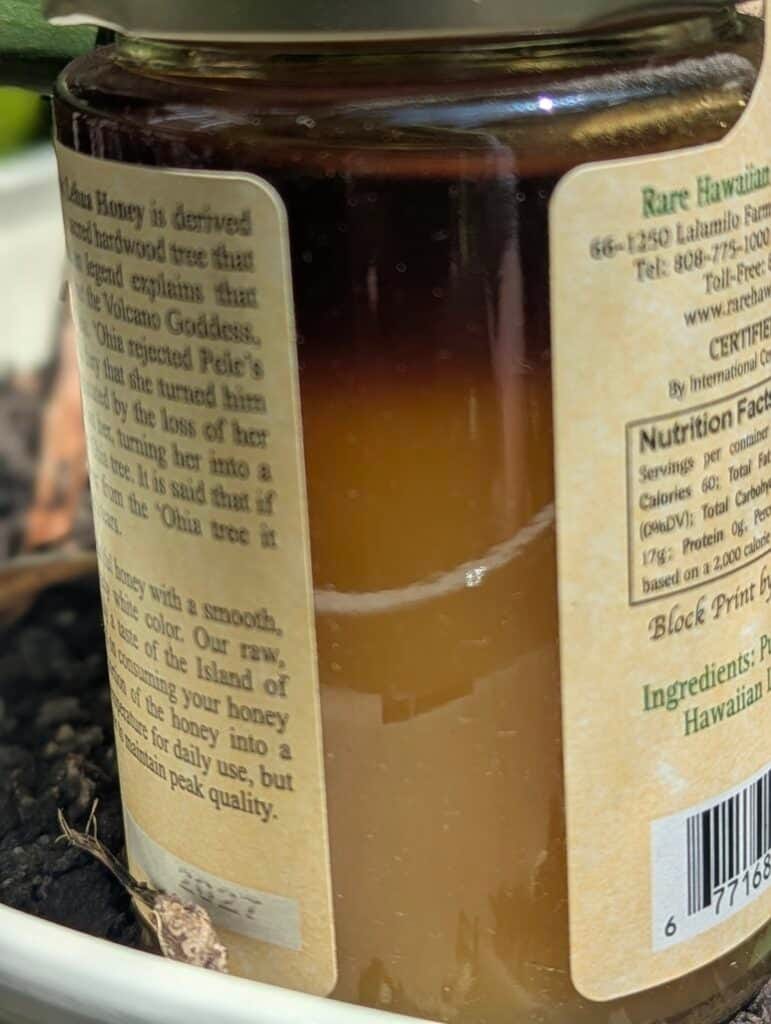
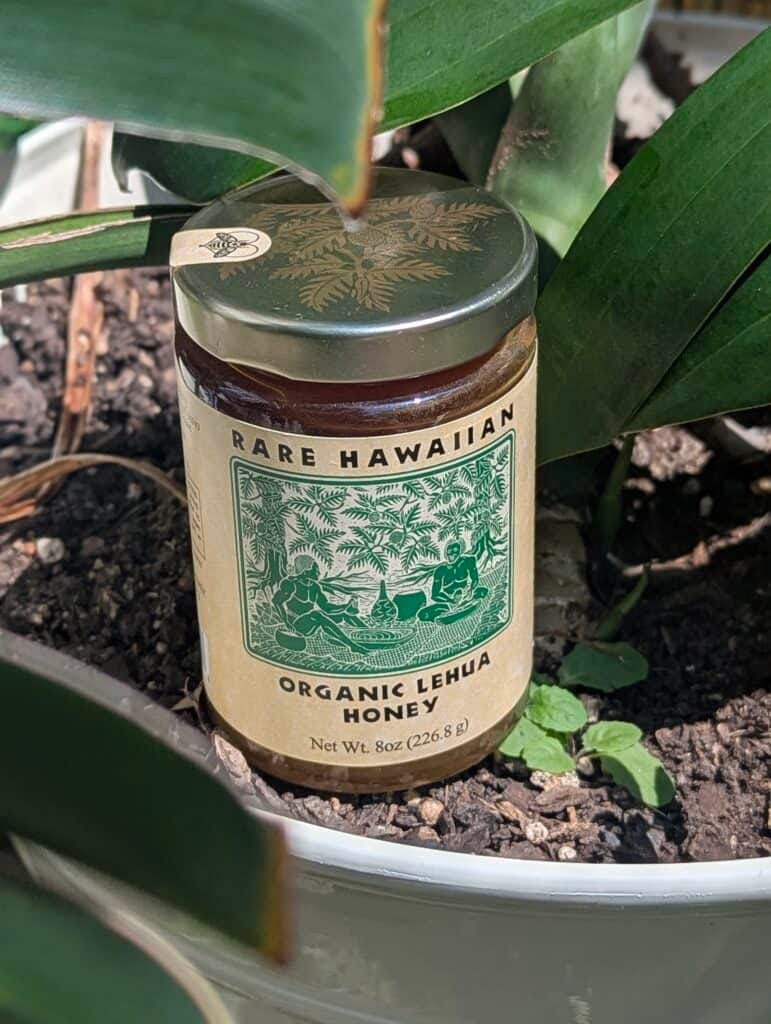
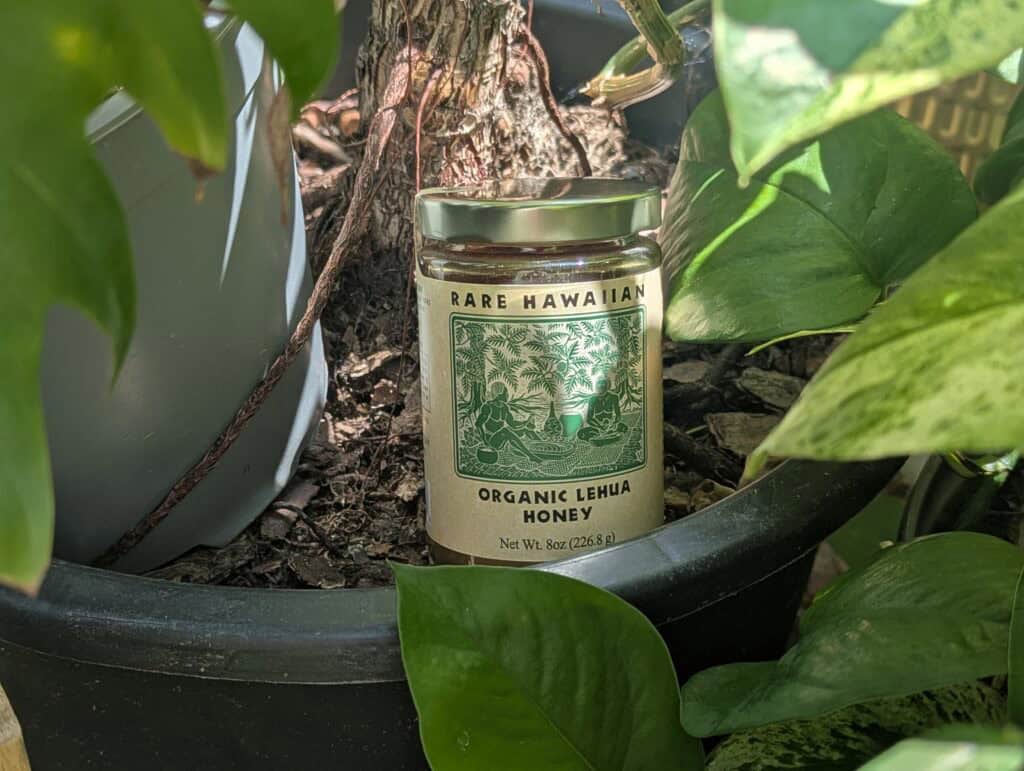
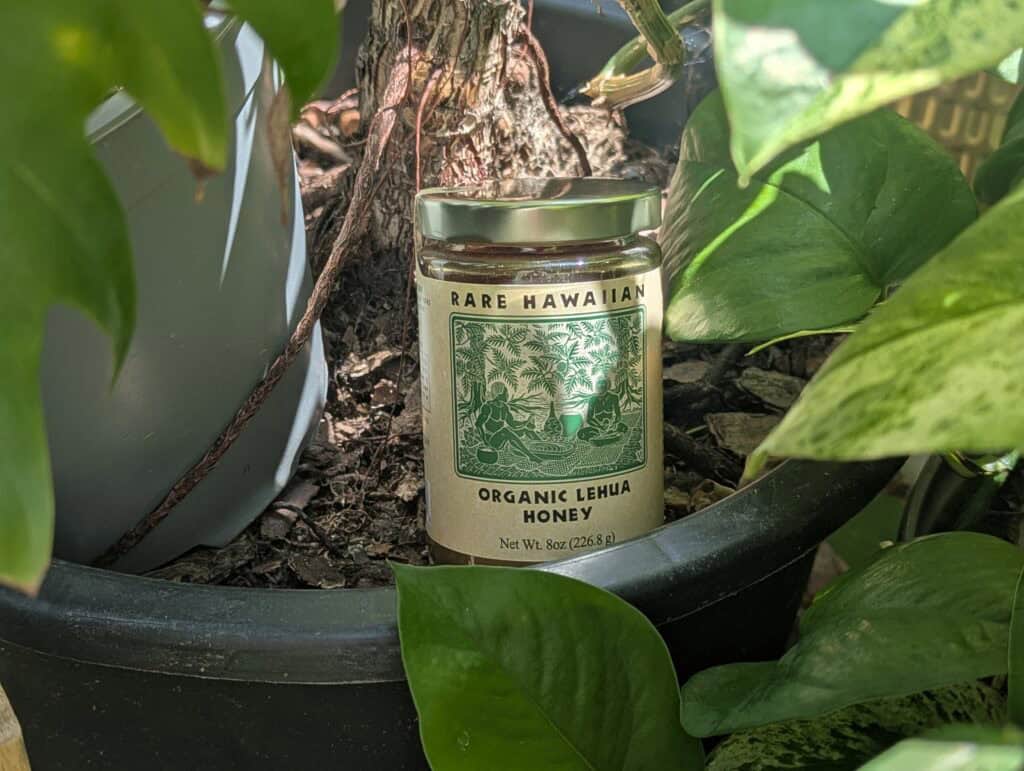
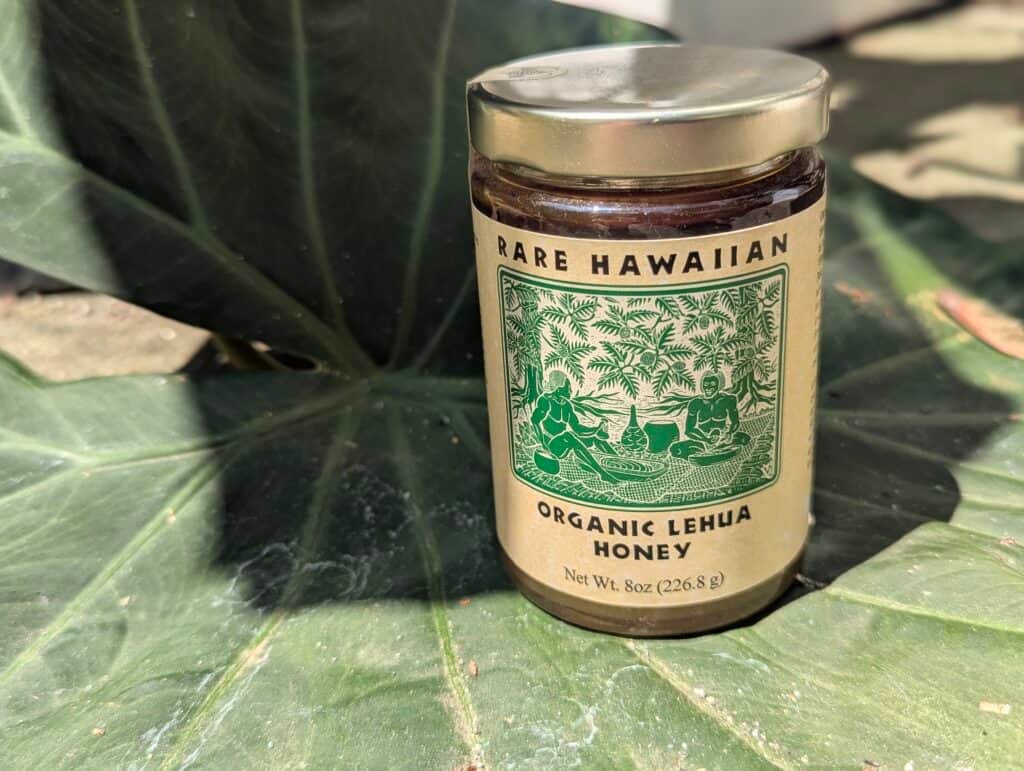
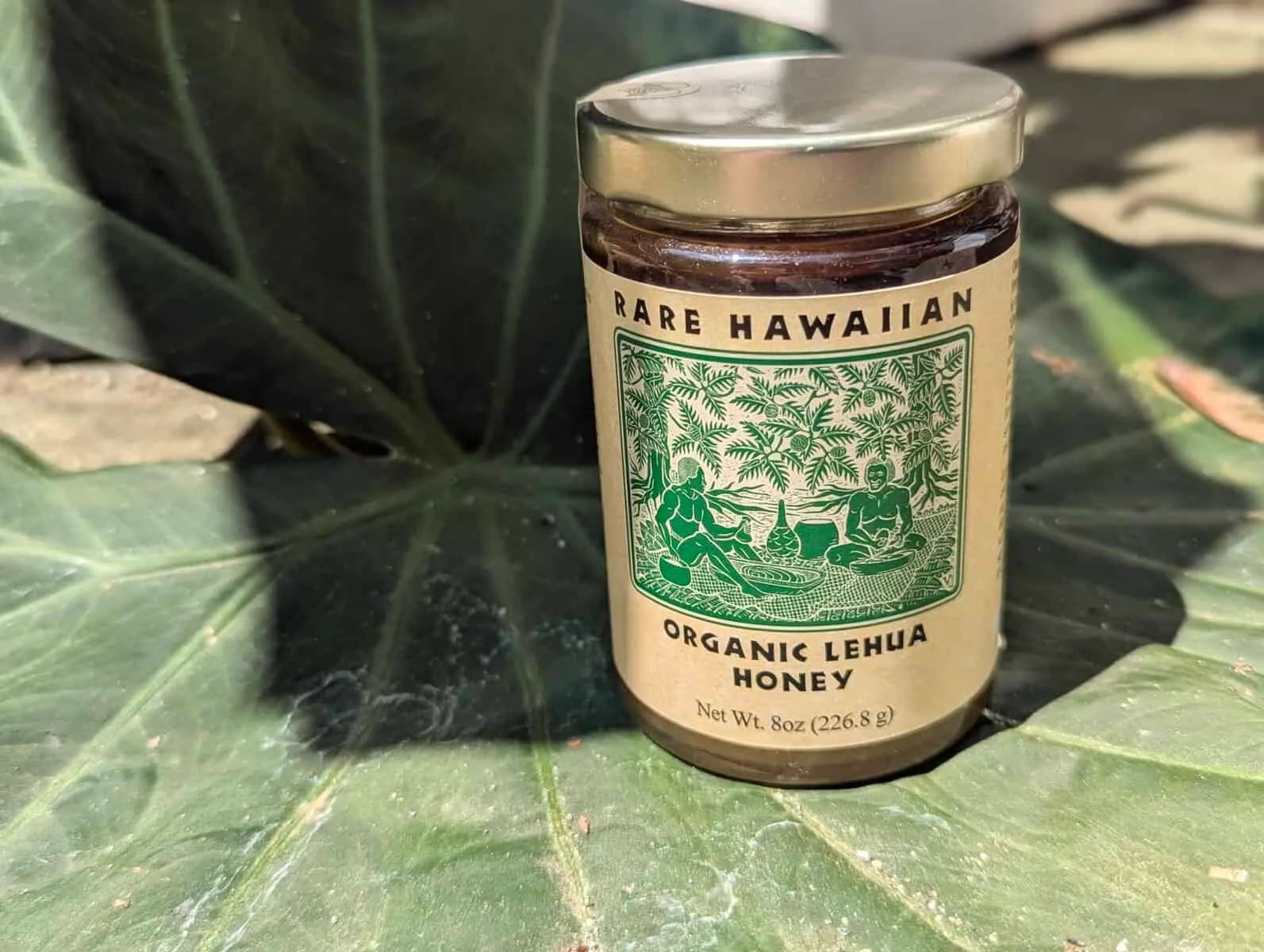
Close-up of a jar of raw Hawaiian honey from Mauna Loa, highlighting its natural origin and quality.Organic Lehua honey jar from Hawaii displayed among lush green plants, highlighting its natural origin.
The Reality of Hawaiian Beekeeping
Keeping bees in Hawaii is a high-stakes masterclass in isolation, biodiversity, and constant environmental defense. Hawaiian beekeepers manage some of the most pristine apiaries in the world, but they face brutal uphill battles.
The Pest Influx: For decades, Hawaii was a bee paradise free from the worst honeybee afflictions. That changed with the arrival of the devastating Varroa destructor mite, followed shortly by the Small Hive Beetle. Because feral bee populations were decimated, the production of pure Lehua honey relies entirely on dedicated local apiaries maintaining rigorous pest mitigation protocols.
The Threat of ROD: Today, the biggest threat to this honey isn’t the bees—it’s the trees. Rapid ‘Ōhi‘a Death (ROD), a newly identified fungal disease caused by the vascular pathogens Ceratocystis lukuohia and Ceratocystis huliohia, has been sweeping through Hawaiian forests, choking out the vascular systems of these sacred trees. Beekeepers and conservationists are fiercely protective of these zones, as a decline in the ‘Ōhi‘a canopy directly impacts the availability of this rare crop.
The Lab Standards: Molecular Scorecard
Every forensic audit requires a technical breakdown of the honey’s physical properties. For an authentic, raw monofloral capture like Hawaiian ‘Ōhi‘a Lehua, its volcanic terroir and specific sugar ratios significantly shift the standard baseline, offering a stark contrast to alternative health infusions like The Little Beekeeper: Elderberry Syrup or custom small-batch herbal blends.
pH Level: 4.2 (Clean, balanced acidity; a pristine profile that tempers the glucose delivery on the palate, ensuring it tastes bright and structured rather than aggressively syrupy)
Color Grade: 10mm–25mm on the Pfund Scale (White to Extra Light Amber when initially poured; transforms upon aging into a stunning, stark pale-white to soft cream-ivory)
Moisture %: 16.8% (Excellent; indicates superior concentration and optimal hive-capping by the bees, leaving the honey highly stable with a remarkably low risk of wild fermentation)
Crystallization: Lightning Fast (Driven by an exceptionally high natural glucose-to-fructose ratio; solidifies within a few weeks of extraction into a smooth micro-crystalline lattice that feels like fine buttercream rather than gritty sugar)
Vault Status: VERIFIED (Confirmed raw status of the high-altitude, single-origin Hawaiian basaltic ecosystem base via True Source Certified standards)
The Continental Comparison: How Does It Stack Up?
To fully contextualize the laboratory and sensory positioning of ‘Ōhi‘a Lehua, it must be evaluated against the premier monofloral honeys produced across the US mainland, much like how we weigh local selections against regional variants in our Kirkland Texas Raw Unfiltered Honey Review.
Monofloral Variety
Sourcing & Origin
Flavor Profile & Volatiles
Texture & Crystallization
Core Contrast vs. Lehua
‘Ōhi‘a Lehua
Big Island, Hawaii
Salted caramel Sweet butter Tropical custard
Rapid micro-crystallization; Naturally creamed, pearlescent white
The Benchmark. Distinctive for its thick, spreadable, pastry-like velvet texture and clean finish.
Meadowfoam
Willamette Valley, Oregon
Toasted marshmallow Vanilla bean Spun sugar
Liquid state; Slow to medium macro-crystallization
Heavily driven by synthetic-tasting confectionery notes, whereas Lehua remains deeply buttery and organic.
Sourwood
Southern Appalachian Mountains
Dark caramel Baking spice Subtle anise
Heavy, high-viscosity liquid state
Features a sharp, bold, herbal-acidic complexity; lacks the delicate, creamy smoothness of Lehua.
Tupelo
White Tupelo River Basins, Florida
Bright citrus blossom Light herbal Crisp green finish
Remains perpetually liquid due to an ultra-high fructose-to-glucose ratio
Excellent for table pouring, but lacks the structured, spreadable body of crystallized Lehua.
Pros
Flawless, micro-crystalline structure provides a premium, spreadable mouthfeel without industrial intervention.
Pristine volcanic sourcing eliminates exposure to mainland agricultural chemical drift.
Sophisticated, low-acid flavor profile that avoids the aggressive burning sensation of mass-market blends.
Cons
Highly vulnerable to supply chain volatility due to the ongoing ecological threat of Rapid ‘Ōhi‘a Death.
Extremely rapid crystallization may surprise consumers accustomed to heavily processed, perpetually liquid grocery options.
The Forensic Verdict
Verified Status: APPROVED (9.8/10)
‘Ōhi‘a Lehua is a masterclass in how geographic isolation and volcanic terroir shape the molecular structure of honey. It completely subverts the standard liquid honey paradigm, using its rapid crystallization traits to achieve a velvety texture that industrial packers try—and fail—to replicate via mechanical churning.
While mass-aggregated brands struggle to clear basic purity thresholds, authentic raw Lehua stands as an elite, single-origin monument to high-stakes tropical apiculture. It remains an absolute staple for serious forensic auditing. Whether you are using it for culinary pair tasting or integrating it into alternative uses highlighted in our guide on 5 Everyday Uses for Honey | Go Beyond the Breakfast Table, this varietal is a living reflection of terroir. It captures the volcanic soil, the trade winds, the resilient native forests, and the heartbreaking legends of Hawaii in a single jar.
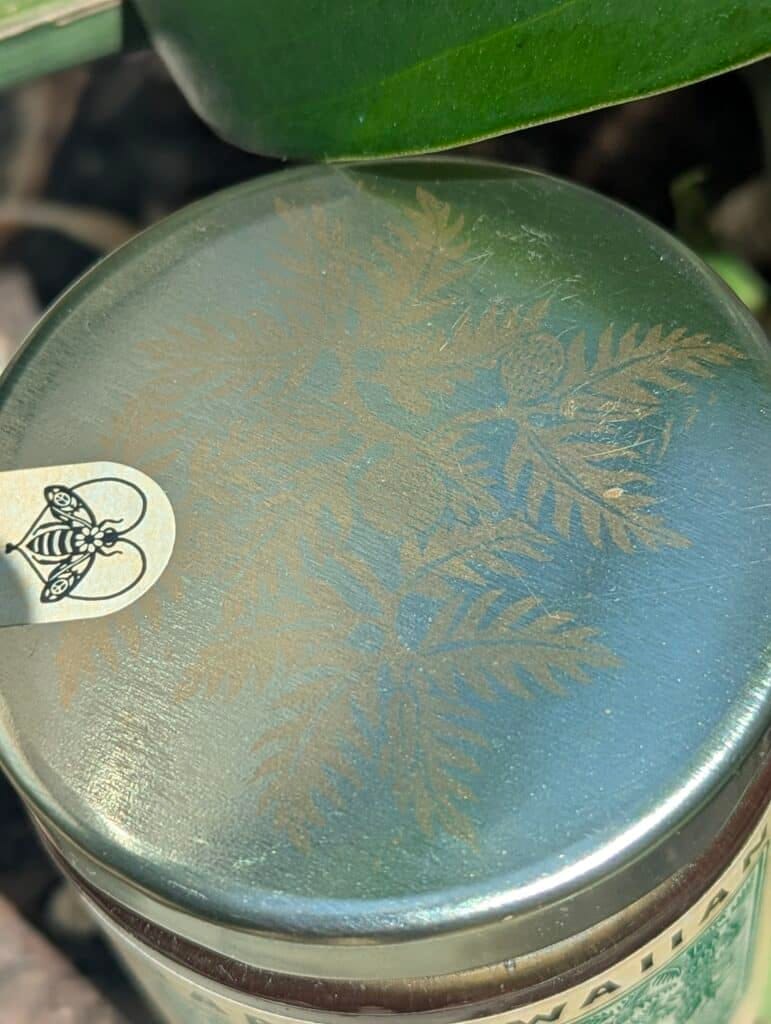
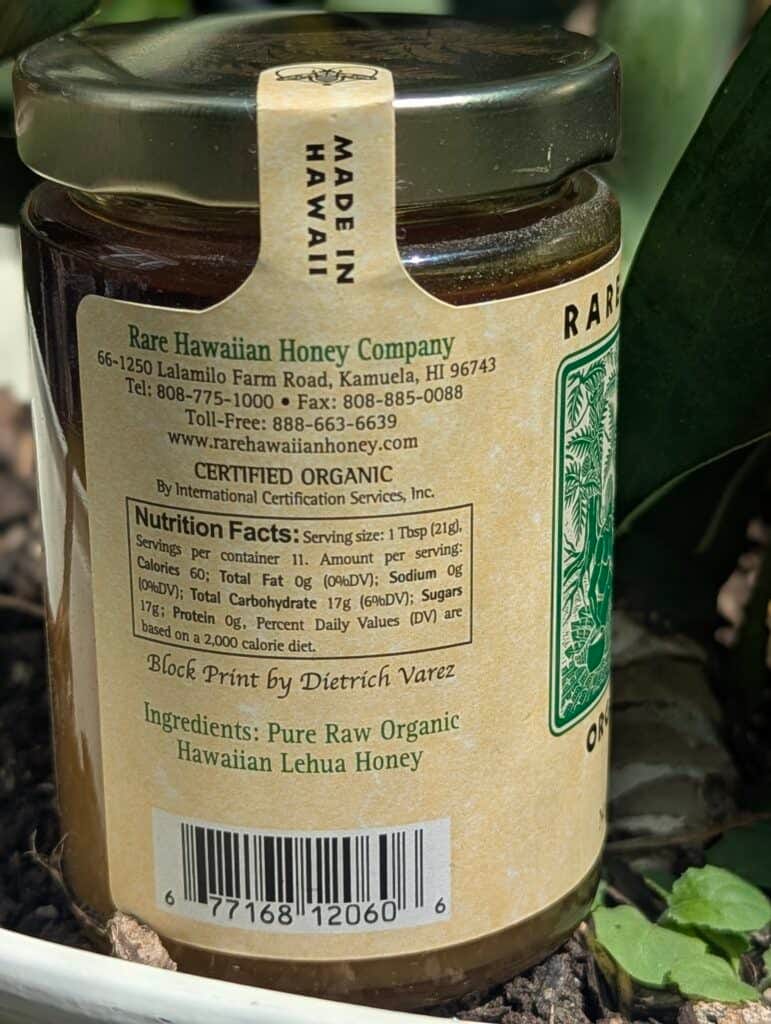
Honey jar featuring ‘Ōhi‘a Lehua design, highlighting Hawaiian honey from Mauna Loa.Close-up of a jar of Hawaiian Lehua honey from Mauna Loa with detailed label description.Close-up of a jar of raw Hawaiian honey from Mauna Loa, highlighting its natural origin and quality.Close-up of a jar of pure Hawaiian Lehua honey from Rare Hawaiian Honey Company, made in Hawaii.Organic Lehua honey jar from Hawaii displayed among lush green plants, highlighting its natural origin.A jar of organic Lehua honey from Hawaii surrounded by vibrant green foliage.Premium organic Lehua honey from Hawaii, showcased in a glass jar with a scenic label, highlighting its natural origin.
Ohia Lehua Hawaiian Honey Review
The Honey Review
Rare Hawaiian Organic Lehua Honey
Honey Integrity
Flavor Profile
Aroma Complexity
Color Clarity
Texture/Viscosity
Summary
This batch serves as a textbook baseline for premium Hawaiian apiculture. The sample successfully balances an accelerated crystallization speed with a highly controlled, ultra-fine crystal geometry.
By avoiding both high-heat degradation and coarse crystallization, the producer has preserved an unblemished sensory snapshot of isolated Ohia Lehua forests. Highly recommended for preservation-grade archival or premium benchmarking.