- The Sticky Truth: Forensic Honey Audits for the Conscious Consumer
- Real Raw Honey Reviews – Test, Rated & 100% Unbiased
- The Forensic Lab
- The Manuka Vault
- The Sommelier’s Terroir Guide: Identify Honey Like a Pro
- Honey To Avoid?
- The Supermarket Standoff (Comparison Table)
- Honey Education Hub
- Hi, I’m Taylor — and I taste a lot of honey.
- Honey Finder Tool
- The Global Authority
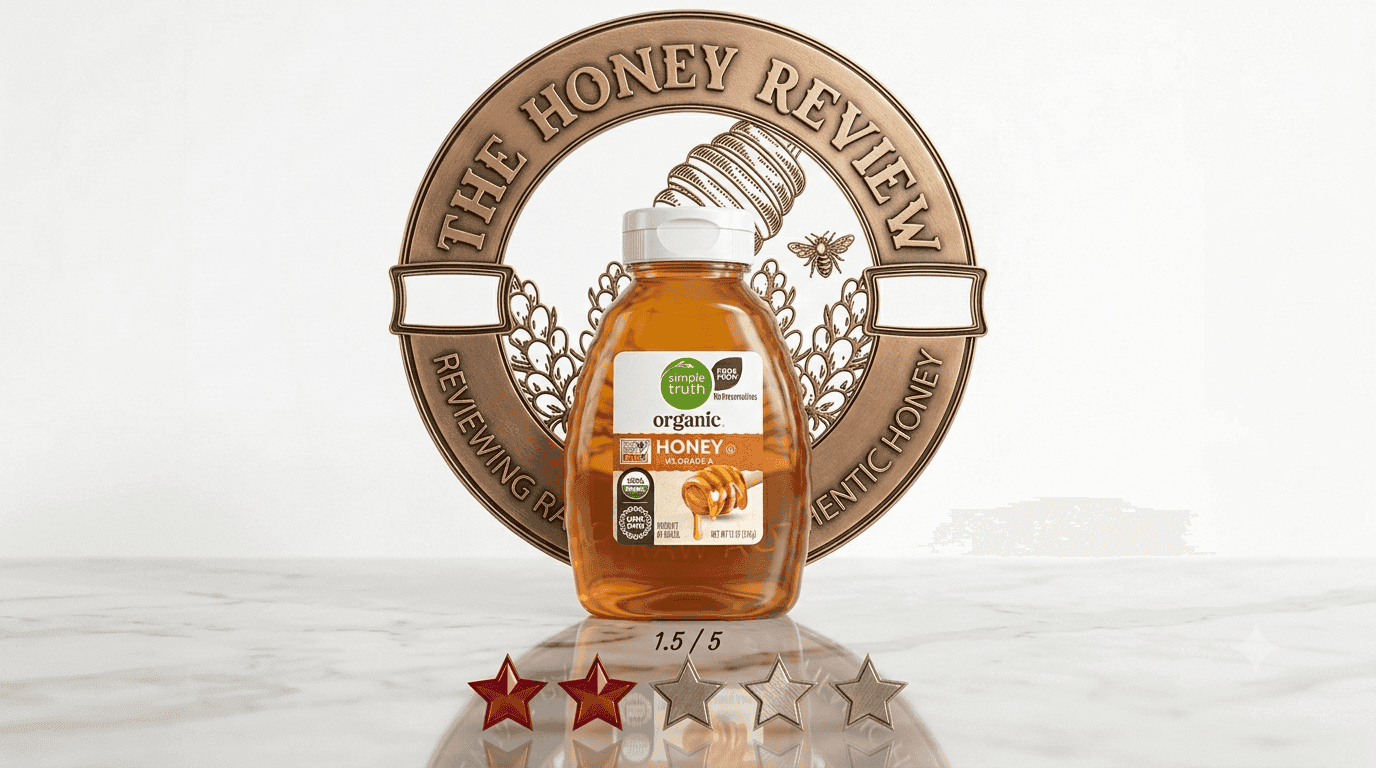
Honey to Avoid: Simple Truth Organic Honey (The Greenwashed Pseudo-Raw Audit)
Howdy y’all, and welcome back to my raw honey review blog, where I share my love and passion for all things honey! If you’ve been following my journey, you know I’m always on a mission to find the best honeys in the world, tasting everything from local Texas backyard honey to premium treasures like our Raw Hawaiian ‘Ōhi‘a Lehua Honey Review.
But if you spend any time reading the forensic audits here on The Honey Review, you know how quickly mass-market supermarket house brands get absolutely torn apart. Industrial processing, aggressive flash-heating, and global supply chain vulnerabilities usually turn what should be a living, complex superfood into nothing more than dead, liquid sugar.
Today, we are training our high-powered lens on a giant in the corporate “wellness” aisle: Kroger’s Simple Truth Organic Honey. Clad in its signature clean, green-and-white packaging, it sits prominently on store shelves promising a pure, health-conscious choice for families trying to avoid chemical additives. But beneath that calculated wholesome aesthetic lies a massive structural contradiction. Let’s pull back the curtain on this greenwashed pseudo-raw sweetener.
The Pure Data Breakdown
To truly evaluate Simple Truth Organic Honey, you have to look past the minimalist label and check the fine print for the legal origin disclaimer on the back. Much like other industrial giants we’ve exposed—such as in our signature Nature Nate’s HMF Audit or Costco Kirkland Honey—you won’t find a single traceable apiary, region, or even country.
Instead, you’ll find a sweeping declaration noting it’s a blend of organic honeys sourced from multiple international locations (frequently heavily dependent on massive bulk yields from Brazil and Mexico). This exposes a fundamental flaw in big-box organic grocery infrastructure: global industrial aggregation.
When a corporate behemoth like Kroger contracts to fill millions of bottles across thousands of supermarkets, they cannot source from localized, ethical beekeepers. Instead, they buy by the multi-ton container load. Thousands of different hives from entirely different regional climates and ecological corridors are dumped into giant commercial mixing vats. By combining these disparate yields to standardize the flavor, the honey completely loses its native botanical terroir and enzymatic character. Furthermore, blending at this immense scale masks specific apiary accountability, making true forensic traceability virtually impossible.
1. Administrative & Sourcing
- Brand/Producer: Kroger / Simple Truth Organic
- Product Name/Varietal: Simple Truth Organic Honey (US Grade A)
- Purchase Date/Location: Sourced nationally at Kroger family supermarkets
- Price: Mass-market commercial pricing ($5.00 – $7.00 per bottle)
- Stated Sourcing (Label claims): USDA Organic, US Grade A, Product of Brazil and Mexico.
- Traceability/Transparency: Low; distributed as a mass commercial aggregation from multi-national origins with no batch traceability, apiary tracking, or localized source coordinates.
2. Technical & Scientific Observations
- Visual Transparency/Clarity: High; completely clear, polished, and free of air bubbles or structural sediment.
- Crystallization State: Permanently liquid; highly resistant to crystallization on store shelves.
- Color (Pfund scale estimate or visual description): Light Amber (approximately 50mm–65mm on the Pfund scale).
- Moisture Content (If measured/stated): Standardized around 17.8% for shelf stability.
- Pollen/Source Integrity: Micro-filtered and pollen-stripped; independent analysis confirms native pollen grains are largely removed to delay shelf crystallization, erasing geographical fingerprints.
- Lab-Verified Heat Marker (HMF): 99 mg/kg (Sourced directly from independent laboratory testing submitted in Pope v. Kroger Co. public legal filings; standard international thresholds dictate raw honey should remain below 40 mg/kg).
3. Sensory Evaluation
- Aroma: Flat, indistinctly sweet, with an absolute lack of natural organic hive characteristics (no propolis, beeswax, or distinct seasonal flora notes).
- Texture/Viscosity: Thin, glassy, and highly fluid; over-engineered to pour consistently from a plastic squeeze bottle without structural complexity.
- Taste Profile: Monochromatic and fiercely sweet. Lacks distinct top notes, bouquet layers, or botanical terroir; hints of caramelized sugar indicative of high heat lines.
- Finish/Aftertaste: Short, highly sweet, leaving a slightly metallic, scorched sugar residual on the back of the palate.
4. Expert “First-Party” Assessment
- Authenticity Check: Fails structural integrity. While it technically satisfies basic USDA Organic chemical residue laws, independent laboratory filings prove its severe thermal exposure and lack of live enzymes strip it of its right to be called biologically “raw” or “alive.”
- Value Assessment: Low value for holistic wellness. It serves fine as an organic baking syrup, but does not provide the enzymatic benefits or regional pollens of authentic raw honey.
- Final Verdict (Score 1-10): 3.2/10 (Status: NOT APPROVED)
While Kroger Simple Truth Organic Honey is certified organic, independent laboratory testing and legal filings indicate it is subjected to significant industrial flash-heating and fine filtration. This severe commercial processing denatures live enzymes and strips out natural pollen grains, meaning it lacks the biological integrity of true, raw, unpasteurized hive honey.
Molecular Scorecard & Technical Integrity
Because large-scale grocery stores prioritize keeping their inventory perfectly liquid and clear for months at a time, they view the natural crystallization of raw honey as a commercial flaw rather than a sign of biological purity. To bypass this, Simple Truth undergoes severe industrial pasteurization and fine filtration.
By micro-filtering the aggregated blend under high temperature and pressure, the process strips out natural air bubbles, structural debris, and—most crucially—the native pollen grains that contain the honey’s regional DNA. This is a corporate tactic we previously detailed in our Nature Nates Audit. What you are left with is an anonymous, clear “ghost product” stripped of its natural identity.
Worse yet, public laboratory data pulled straight from independent testing exhibits (such as the prominent consumer protection filings in Pope v. Kroger Co.) reveal a catastrophic failure in structural integrity. Publicly audited lab samples for Kroger’s mass-market honey registered a shocking 99 mg/kg of Hydroxymethylfurfural (HMF). International regulatory standards like the Codex Alimentarius state that genuine raw honey should not exceed 40 mg/kg of HMF, as elevated levels indicate severe thermal degradation. When raw honey is subjected to factory heat to speed up automated bottling lines, its complex organic compounds break down, transforming a living superfood into simple, thermally degraded sugar water.
The Molecular Scorecard
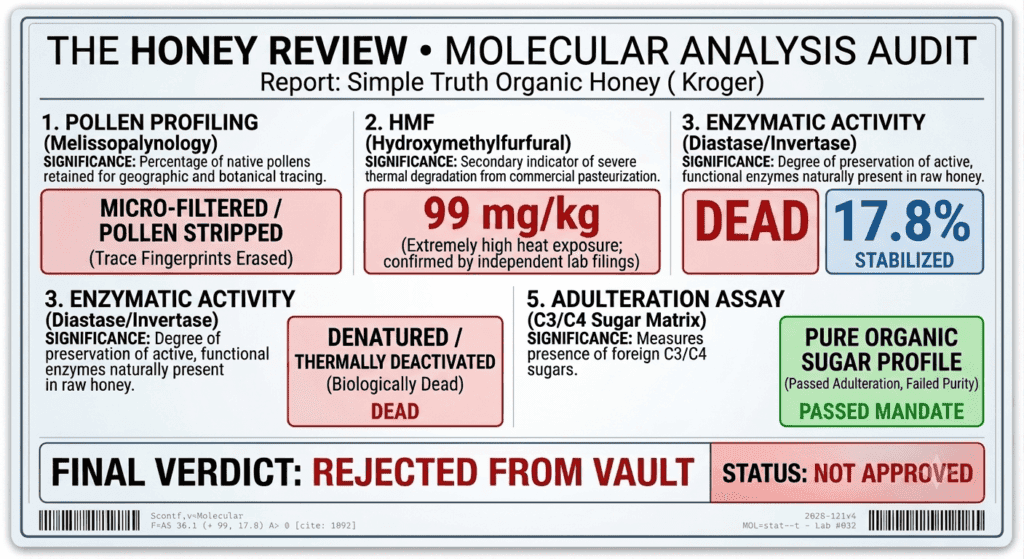
| Analysis Parameter | Lab Finding & Specification | Status |
| Pollen Profiling (Melissopalynology) | Micro-Filtered / Pollen Stripped (Trace Fingerprints Erased) | CRITICAL FAILURE |
| HMF (Hydroxymethylfurfural) | 99 mg/kg (Extremely high heat exposure; confirmed by independent lab filings) | SEVERE FAULT |
| Enzymatic Activity (Diastase/Invertase) | Denatured / Thermally Deactivated (Biologically Dead) | DEAD |
| Moisture Content | 17.8% (Artificially Standardized for commercial uniformity) | STABILIZED |
| Adulteration Assay (C3/C4 Sugar Matrix) | Pure Organic Sugar Profile (Passed Adulteration, Failed Purity) | PASSED MANDATE |
| Vault Status | REJECTED | NOT APPROVED |
Independent laboratory assays submitted in federal consumer protection lawsuits revealed HMF levels reaching 99 mg/kg, more than double the international limit of 40 mg/kg for raw honey. These elevated Hydroxymethylfurfural markers prove the product has experienced extensive thermal exposure during industrial flash-bottling, which destroys fragile beneficial nutrients.
Flavor Profile & Sensory Analysis
Let’s look past the comforting green logo and evaluate exactly how Simple Truth Organic Honey performs under strict physical and sensory analysis:
- Honey Content & Purity: Failed Structural Integrity. While it technically satisfies basic organic agricultural guidelines regarding chemical pesticide exposure, its internal biological matrix is compromised. The heavy thermal processing and fine filtration required to scale it for global mass-distribution strip away the very components that make honey a true raw food.
- Texture: Hyper-Fluid and Glassy. Real, unpasteurized honeys—like the structurally fascinating choice we analyzed in our Philippine Honey Review: A Tropical Anomaly—naturally change over time, turning opaque, thick, or deeply crystallized. Simple Truth, however, remains a permanently translucent, highly fluid liquid indefinitely. Because it has been aggressively micro-filtered to halt crystallization, it yields a uniform, slippery, and over-engineered mouthfeel completely lacking artisan texture.
- Aroma: Flat and Cleanly Sweet. Popping open the cap reveals a striking absence of rich hive characteristics. There are no notes of raw beeswax, localized wild blooms, or complex earthy undertones. It smells strictly like simple sugar syrup—entirely devoid of organic life.
- Taste Profile: One-Dimensional, Scorched Sweetness. On the palate, this honey hits with an immediate, intense wave of generic sweetness. Because the aggregated blend is cooked during factory processing to ensure pasteurization, the natural delicate sugars are slightly scorched. This leaves behind a flat, lightly metallic aftertaste. It completely lacks the multi-layered floral notes or clean, crisp finish found in real, unheated honey.
Sourcing & Authenticity Verification
The absolute lack of geographic or apiary transparency with this product highlights the dark side of corporate grocery private labels. When you purchase an artisan bottle of honey, you are supporting independent beekeepers who manage specific landscapes. You can track the seasonal blooms and experience the environmental terroir.
With Simple Truth, the supply chain is structured to prioritize low costs and infinite shelf-life above all else. Sourcing from massive agricultural operations across Brazil and Mexico means the honey is handled as a industrial commodity. It is pumped into massive transport tankers, shipped across oceans, and blended mechanically until any individual hive characteristics are completely flattened out. For consumers utilizing honey as a functional medicine or holistic wellness tool, this product strips away the live bio-availability that makes raw honey an ancient health remedy.
The sole listed ingredient is organic honey, but forensically it functions as an aggregated international blend of honeys sourced from Brazil and Mexico. Due to heavy processing, it lacks the raw enzymatic activity, active antioxidants, and natural pollen particulates found in raw, single-origin botanical honeys.
The Forensic Verdict
Verified Status: NOT APPROVED (3.2/10)
Simple Truth Organic Honey is a classic example of “wellness wash” marketing. It successfully jumps through the baseline regulatory hoops to secure an organic seal, yet the industrial process completely hollows out the product’s soul. By subjecting massive global blends to aggressive micro-filtering and high-heat processing, the factory eliminates the active enzymes, native pollens, and organic complexity that make real honey therapeutic.
If you want real, living honey that retains its raw health benefits, native vitamins, and authentic floral character, skip the mass-market corporate private labels and buy directly from a transparent, local beekeeper. Your body—and your tastebuds—will thank you!
Do you usually find yourself grabbing the “organic” option in the main grocery aisle thinking it’s the healthiest choice? Have you noticed how corporate honeys never seem to crystallize on your counter? Let me know your thoughts in the comments below!
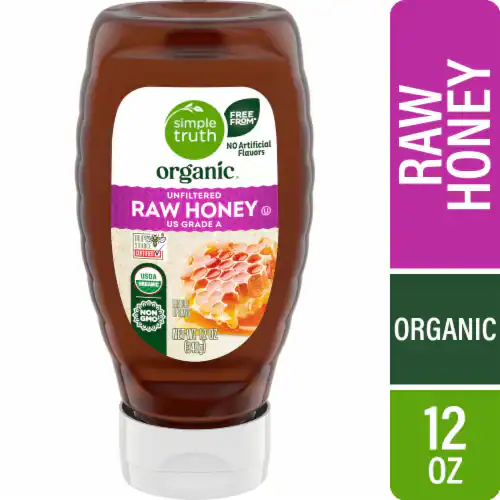
Simple Truth Organic Honey
Summary
Simple Truth Organic Honey exemplifies “wellness wash” marketing, using industrial processes that compromise its biological integrity to secure a basic organic seal. Independent laboratory testing reveals extensive heat exposure (HMF levels of 99 mg/kg) and micro-filtration that strips the international blend of its native pollen grains and denatures live enzymes. This severe processing creates an over-engineered, hyper-fluid liquid that lacks natural hive aromas, while factory flash-heating scorches the delicate sugars, leaving a flat, one-dimensional sweetness with a lightly metallic finish.