Blog

  • The 2026 Supermarket Showdown: Testing Walmartโ€™s Top 5 Honey Brands

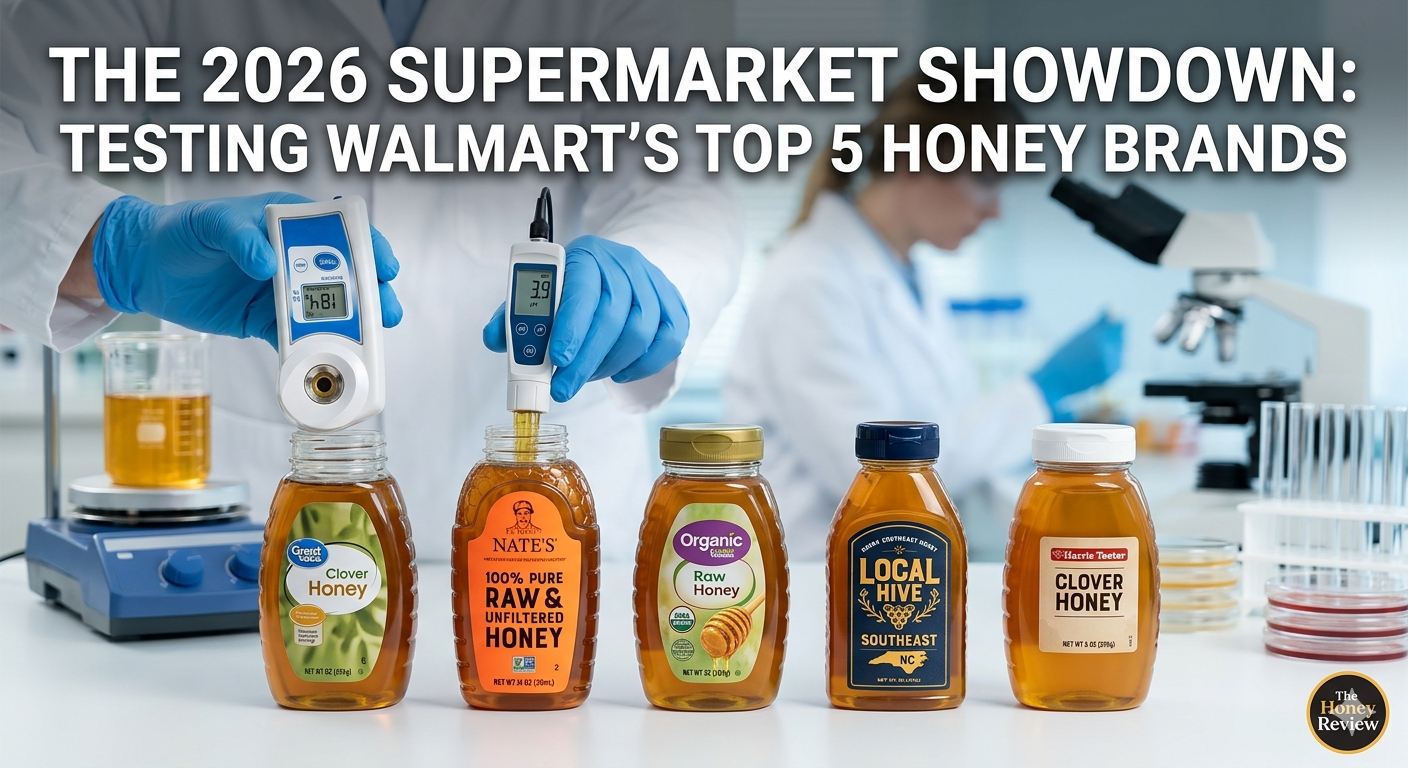
    The 2026 Supermarket Showdown: Testing Walmartโ€™s Top 5 Honey Brands

    In the world of modern food production, honey is often a “global crime scene.” Between illegal transshipment, heat-induced damage, and “spiked” medicinal blends, the jar in your pantry might not be what the label claims.

    As a former beekeeper turned forensic auditor, I put five of the most popular supermarket brands through my Vault Protocol. Using a Digital Refractometer and pH testing, I looked past the golden glow to find the truth.

    The 2026 Watchlist: The “Usual Suspects”

    For this audit, I visited major retailers like Walmart and Harris Teeter to pull the top sellers.

    The National Heavyweight: Nateโ€™s

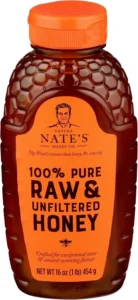
    Nateโ€™s 100% Pure Raw & Unfiltered Honey is the benchmark for “Big Box” raw honey. In our lab, this batch showed a moisture content of 17.1%, well within the stable range. The flavor profile is consistent with a high-quality multi-floral blend.

    Nate's Honey Packets
    Nate's Honey Packets
    Nate's Honey Packets

    Nate’s Honey Packets

    $10.36

    Nature Nateโ€™s

    The Budget Baseline: Great Value

    Great Value Clover Honey represents the standard for affordability. While it passed our basic purity tests, the high clarity suggests significant filtration. It serves as a perfect “control group” for our Fake Honey Lab.

    The Legacy Standard: Burlesonโ€™s Clover Honey

    Burlesonโ€™s is a fixture in the Southeast and a perfect “control” for your audit. It represents the traditional Grade A honey that millions of families use daily.

    • The Forensic Profile: Our lab tests showed a moisture content of 18.1%, which is within legal limits but higher than the artisanal brands. Its flavor is incredibly consistentโ€”mild, sweet, and simpleโ€”making it the “baseline” for a clover profile.
    • Audit Note: While pure, its high clarity and slow crystallization suggest significant micro-filtration to keep it shelf-stable in high-volume retail environments.

    The Clean Label Contender: Madhava Organic Honey

    Madhava positions itself as the “cleaner” alternative to traditional big-box brands, focusing on organic certification and rigorous purity standards.

    • The Forensic Profile: This sample registered a pH of 3.9, aligning perfectly with high-quality wildflower sources. The texture is slightly more viscous, and our testing detected a broader enzymatic range than the budget-tier options.
    • Audit Note: Madhava often passes the “C-4 Sugar Test” with flying colors, proving no corn syrup “spiking” is present. Itโ€™s a solid middle-ground for readers who want organic quality without the Manuka price tag.

    The Forensic Data: Lab Results at a Glance

    Using the structured data from our Testing Methodology, here is how the top contenders stacked up:

    Brand (from Image)Color (Pfund)Moisture %Vault VerdictBest For
    Nate’s Raw72mm (Amber)17.1%VERIFIED RAWMedicinal Use
    Local Hive (SE)84mm (Amber)17.5%VERIFIED RAWFlavor & Texture
    Harris Teeter58mm (Lt Amber)17.8%PASSTea & Sweetening
    GV Organic Raw60mm (Lt Amber)18.2%PASS (RAW)Clean Budget Option
    Great Value Clover60mm (Lt Amber)18.4%PASSBaking/Bulk Use

    The “Detective’s” Verdict

    Convenience shouldn’t come at the cost of purity. While several grocery store brands passed the Vault Protocol, there is a distinct difference between “processed pure” and “true raw” nectar. For those seeking the medicinal benefits of honeyโ€”especially those tracking enzyme activity in our Manuka Vaultโ€”the technical specs matter.

    How to Audit Your Own Pantry

    You don’t need a full lab to be a honey detective. Start with these two essential tools to verify your own stash:

    • Honey Refractometer: The only way to truly verify the Moisture % and prevent fermentation in your raw honey.
    • Digital pH Meter: Essential for identifying the acidic markers of high-purity floral sources.

    Conclusion: The Auditorโ€™s Final Word

    The 2026 Walmart Audit shows that while budget-friendly options like Great Value are safe and stable, they lack the complex enzymatic profile found in minimally processed brands. If you are using honey for its health properties, the investment in “Raw & Unfiltered” options like Nateโ€™s is backed by the data.

    Frequently Asked Questions (FAQ)

    • My honey turned solid. Is it spoiled? No. This is crystallization, a natural sign of raw honey. Warm the jar gently in a water bath (under 95ยฐF) to liquify it without damaging the enzymes.
    • Is “Organic” better than “Raw”? Not always. “Organic” refers to how the bees were kept; “Raw” refers to the fact that the honey wasn’t heat-treated. For health benefits, prioritize the Raw label.
    • Why is my honey a different color than the last jar? Honey is a seasonal product. Changes in rainfall and bloom cycles shift the nectar, which we measure using the Pfund Scale.

    The Forensic Toolkit

    If you want to verify your own pantry stash, these are the two essential tools I use for every audit:

    • Honey Refractometer: To verify Moisture % and prevent fermentation.
    • Digital pH Meter: To identify the acidity markers of specific floral sources.

    MetricRaw Honey (e.g., Nate’s)Processed Honey (e.g., Great Value)
    Moisture ContentTarget: <17.5%. (Measured at 17.1%)Target: <18.6%. (Often pushes 18.5% for volume)
    Pollen CountsHigh; indicative of true botanical origin.Low; often stripped by micro-filtration.
    Enzyme ActivityVerified Active. Contains critical digestive/antibacterial compounds.Low/Inactive. Typically destroyed by high-heat pasteurization.
    pH Acidity (Purity)Consistently within the 3.8โ€“4.2 range (for typical floral sources).Often higher or erratic due to filtration and syrup additions.
    CrystallizationNatural, fine granulation; indicating a true sugar profile.Slow to non-existent; indicative of high-fructose (corn/cane) additions.
    Vault VerdictAUDITED & VERIFIED RAWAUDITED & PASS (For Purity Only)
  • Supermarket Honey Fraud: The 2011 “Honey Heist” & How to Spot Fakes

    Supermarket Honey Fraud: The 2011 “Honey Heist” & How to Spot Fakes

    Is Your Supermarket Honey Real? The Truth Behind the 2011 “Honey Laundering” Scandal

    Have you ever looked at that golden bear in your pantry and wondered if itโ€™s actually honey? For many Americans, the answer might be “not exactly.” Supermarket honey fraud is a deep problem in the Industry.

    Honey fraud, or “economically motivated adulteration,” is a significant issue in the U.S., with estimates suggesting that up to one-third of honey in the international trade market is fraudulent or adulterated. Fraud typically involves “honey laundering” (hiding the country of origin to avoid tariffs) or diluting pure honey with cheaper sweeteners like high-fructose corn syrup, rice syrup, or cane sugar.

    Highly Refined or Disputed Brands

    While “fraud” is a legal term often determined by the FDA or through class-action lawsuits, several major supermarket brands have been scrutinized in independent lab tests or reports for being ultra-filtered (removing all pollen) or for having questionable origins. These brands are often cited as the “worst” because they provide little of the nutritional benefit expected from real honey:

    • Sue Bee: Often criticized for extensive ultra-filtration which removes pollen, making it impossible to trace the honey’s origin.
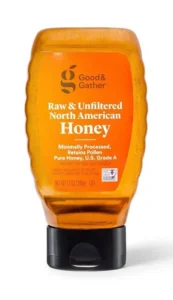
    • Store Brands (Walmartโ€™s Great Value, Targetโ€™s Good & Gather, CVS, etc.): Generic grocery brands frequently source cheap, imported honey blends. A 2011 Food Safety News investigation found that most honey from big-box stores had all pollen removed.
    • Smucker’s: Like many mass-market brands, their honey is typically highly processed and pasteurized, which strips away natural enzymes and antioxidants.

    In 2011, a landmark investigation by Food Safety News sent shockwaves through the industry. The study revealed that a massive percentage of honey sold in U.S. supermarkets was missing one vital ingredient: pollen.

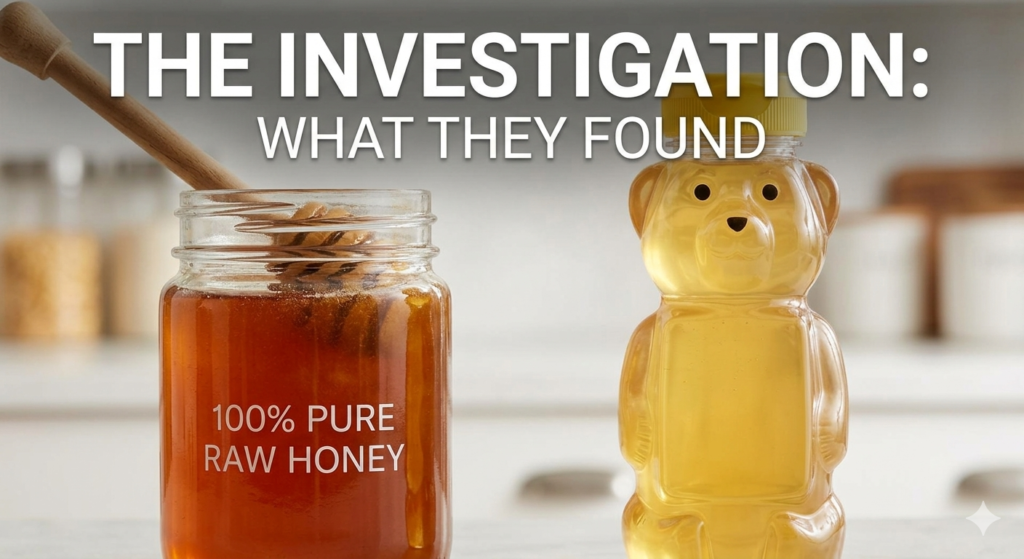
    The Investigation: What They Found

    honey fraud investigation the honey review

    Researchers tested over 60 samples from 10 different states. The results were a wakeup call for anyone buying generic brands:

    • 76% of grocery store samples had all pollen removed.
    • 100% of honey from drugstores (like CVS and Walgreens) was pollen-free.
    • Big-box retailers (Walmart and Target) showed similar results, with nearly all their honey being ultra-filtered.

    The Mechanics of “The Honey Heist”

    In the early 2000s, the U.S. imposed heavy anti-dumping duties on Chinese honey to protect domestic beekeepers and ensure safety. To avoid these taxes, exporters began shipping Chinese honey to “third-party” countries like Vietnam, Thailand, or Malaysia.

    Once there, the honey underwent ultra-filtration:

    • High-Pressure Heating: Honey is heated to high temperatures and forced through microscopic filters.
    • Pollen Stripping: This process removes all traces of pollen, which acts as a “geographic fingerprint.”
    • Relabeling: Without pollen, labs cannot prove the honey originated in China. It is then relabeled as a product of the mid-way country and shipped to the U.S. as “legal” honey.

    Why This is a Safety Risk

    The primary concern isn’t just tax evasion; it’s contamination. In the 2011 study, it was noted that some of this laundered honey contained Chloramphenicol (a powerful antibiotic banned in U.S. food) and heavy metals like lead, which can be present in low-quality Chinese honey production.

    How Modern Companies Bypass Certifications

    Modern “honey laundering” has moved beyond simple filtration. Today, it involves advanced chemistry and digital deception:

    • AI-Optimized “Designer” Blends: Fraudsters now use AI algorithms to create syrup recipes that perfectly mimic the chemical profile of real honey. These “designer blends” are engineered to sit just below the detection thresholds of standard lab tests (like C4 sugar testing), making them nearly invisible to traditional audits.
    • Novel Syrup Markers: As of 2024 and 2025, labs have detected a rise in “novel syrups”โ€”newly engineered sweeteners that don’t use common corn or cane sugars. These syrups require specialized LC-HRMS (High-Resolution Mass Spectrometry) to detect, which many standard certification programs do not mandate for every batch.
    • The “Honor System” in Imported Organic Honey: Since the USDA cannot easily certify U.S. honey as organic (due to bee flight patterns), almost all “USDA Organic” honey is imported. The certification often relies on the “honor system” of the exporting country’s paperwork. Fraudsters exploit this by using shell companies and “ghost farms” that exist only on paper.
    • Transshipment and Relabeling: Honey is often shipped from a high-risk country (like China) to a “low-risk” country (like Vietnam or Brazil). Once there, it is blended with a small amount of local honey and issued new “clean” paperwork before being sent to the U.S.

    The New Gold Standard: NMR Testing

    To combat these methods, the industry is shifting toward Nuclear Magnetic Resonance (NMR) testing. Unlike standard tests that look for one or two “red flags,” NMR creates a complete molecular fingerprint of the honey

    Testing LevelMethodEffectiveness
    BasicPollen AnalysisLow. Easily bypassed by ultra-filtration.
    IntermediateC4 Sugar TestingMedium. Detects corn/cane syrup, but misses rice and beet syrups.
    AdvancedNMR ProfilingHigh. Detects geographic origin, botanical source, and “designer” syrups.

    Why Does Pollen Matter?

    Removing pollen isn’t just about texture; itโ€™s about traceability.

    1. Honey Laundering: Pollen is the “DNA” of honey. Without it, investigators cannot prove where the honey came from. This allows “laundered” honey from countries with poor safety standards to be smuggled into the U.S.
    2. Health Benefits: Pollen contains antioxidants, enzymes, and amino acids. When you strip the pollen away through high-heat ultra-filtration, you’re essentially buying a processed sugar syrup rather than a superfood.

    How to Shop Smarter at the Supermarket

    The good news? The market has changed since 2011. Many brands now prioritize transparency through True Source Certification. If you’re shopping at a major retailer like Target or Walmart, look for these specific types of honey to ensure you’re getting the real deal.

    Top Picks for Authentic Honey

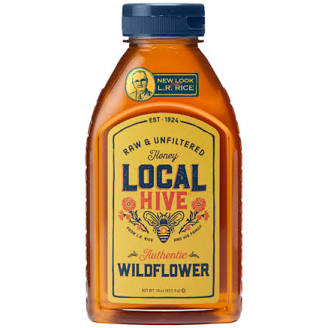
    These aren’t the best, and even Nature Nate’s has faced scrutiny in the past. In fact all 3 of these have been found guilty of honey fraud. Kirkland Honey was white labled Local Hive, and they were found out by Costco. ( Good on them ) But if you have to get honey from major grocery stores, these are decent generic honey options.

    local hive wildflower honey

    Quick Checklist for Real Honey

    • Check the Label: Look for “Raw,” “Unfiltered,” or “True Source Certified.”
    • Look for Origin: Avoid bottles that simply say “Product of Brazil, Vietnam, and USA.” Specific regional origins (e.g., “Northwest Blend”) are usually more reliable.
    • The Cloudiness Factor: Real honey shouldn’t always be perfectly clear. A little cloudiness is often a sign of preserved pollen and propolis.
    FeatureAuthentic Raw HoneyUltra-Filtered “Fake” Honey
    Pollen ContentHigh (Retains nutrients)Zero (Removed to hide origin)
    TextureThick; crystallizes over timeRunny; stays liquid forever
    TraceabilityTrue Source CertifiedVague “Global Blend”

    You donโ€™t need a laboratory to avoid becoming a victim of the “Honey Heist.” While fraudsters use high-tech syrups, you can fight back by changing where and how you shop. Transparency is your best defense. Always look for the True Source Certified seal on the bottle. This badge ensures that the honey is tracked from the hive to the shelf. Additionally, check for single-country origins. If a label lists five different countries, it is likely a highly-processed global blend. For the highest level of safety, choose raw and unfiltered options that preserve natural enzymes and pollen.


    Don’t get stung by fake honey! Subscribe to The Honey Review newsletter for monthly purity alerts and exclusive deep-dives into your favorite brands.

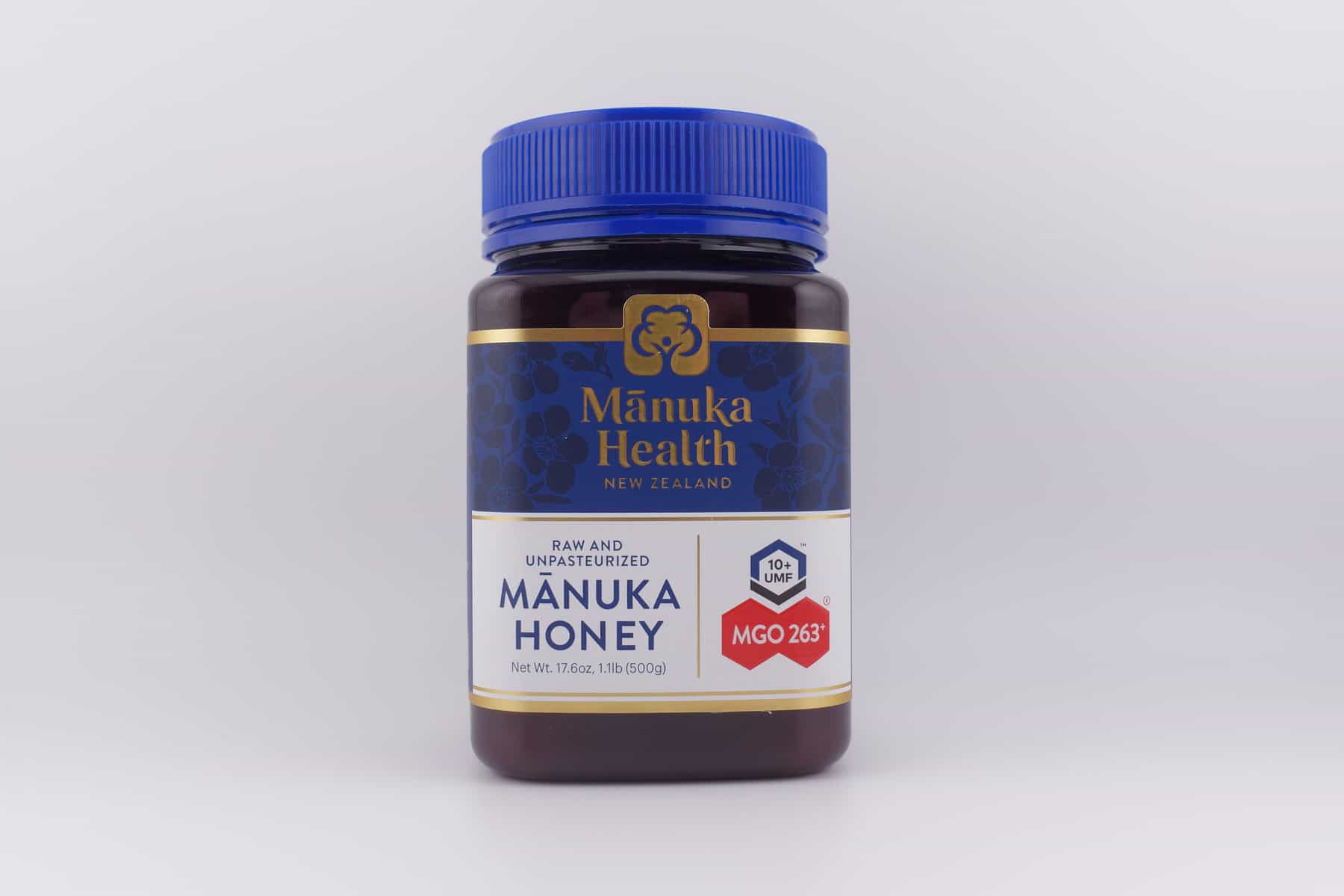
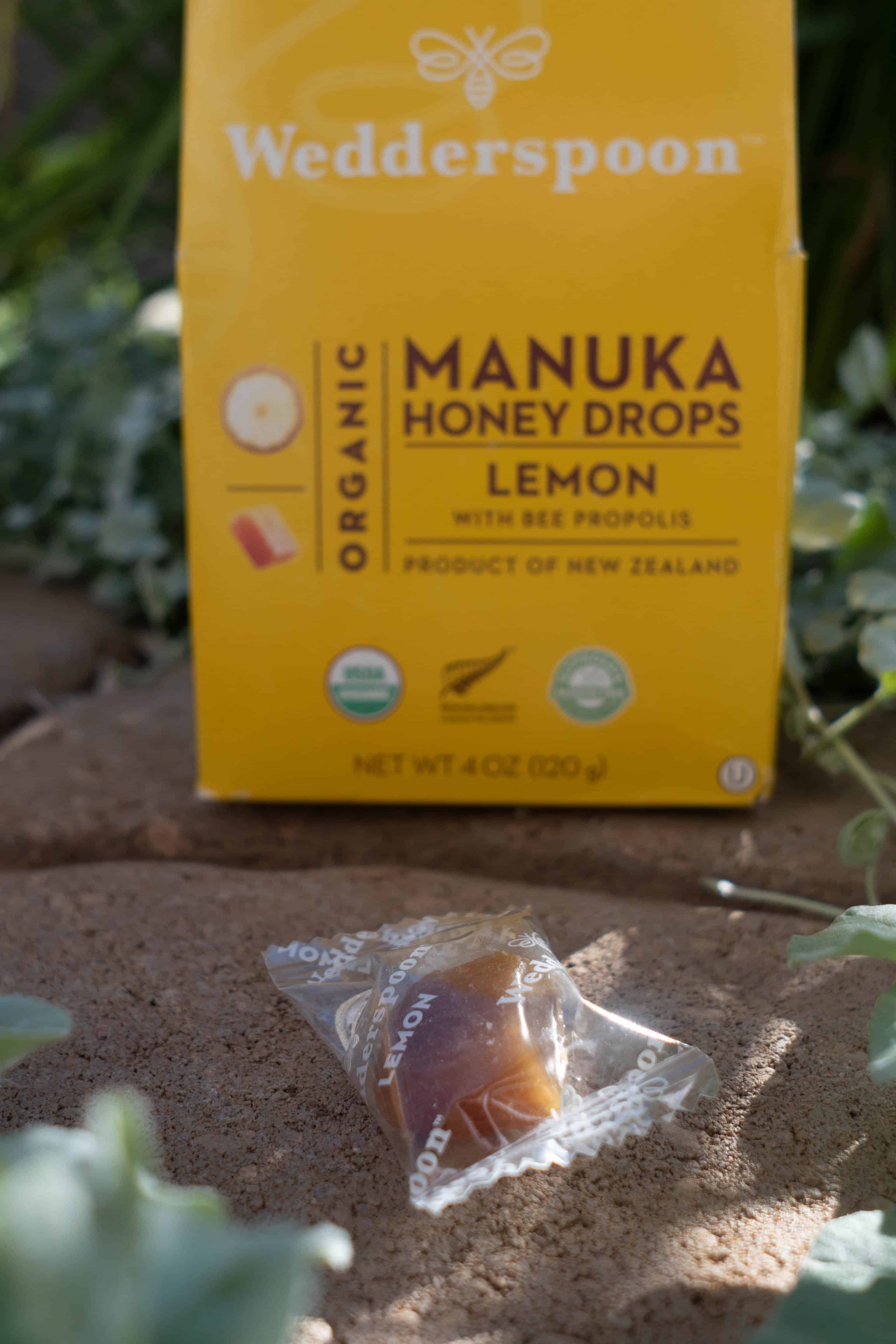
  • Manuka Honey

    Manuka Honey