Category: News

  • Supermarket Honey Fraud: The 2011 “Honey Heist” & How to Spot Fakes

    Supermarket Honey Fraud: The 2011 “Honey Heist” & How to Spot Fakes

    Is Your Supermarket Honey Real? The Truth Behind the 2011 “Honey Laundering” Scandal

    Have you ever looked at that golden bear in your pantry and wondered if itโ€™s actually honey? For many Americans, the answer might be “not exactly.” Supermarket honey fraud is a deep problem in the Industry.

    Honey fraud, or “economically motivated adulteration,” is a significant issue in the U.S., with estimates suggesting that up to one-third of honey in the international trade market is fraudulent or adulterated. Fraud typically involves “honey laundering” (hiding the country of origin to avoid tariffs) or diluting pure honey with cheaper sweeteners like high-fructose corn syrup, rice syrup, or cane sugar.

    Highly Refined or Disputed Brands

    While “fraud” is a legal term often determined by the FDA or through class-action lawsuits, several major supermarket brands have been scrutinized in independent lab tests or reports for being ultra-filtered (removing all pollen) or for having questionable origins. These brands are often cited as the “worst” because they provide little of the nutritional benefit expected from real honey:

    • Sue Bee: Often criticized for extensive ultra-filtration which removes pollen, making it impossible to trace the honey’s origin.
    • Store Brands (Walmartโ€™s Great Value, Targetโ€™s Good & Gather, CVS, etc.): Generic grocery brands frequently source cheap, imported honey blends. A 2011 Food Safety News investigation found that most honey from big-box stores had all pollen removed.
    • Smucker’s: Like many mass-market brands, their honey is typically highly processed and pasteurized, which strips away natural enzymes and antioxidants.

    In 2011, a landmark investigation by Food Safety News sent shockwaves through the industry. The study revealed that a massive percentage of honey sold in U.S. supermarkets was missing one vital ingredient: pollen.

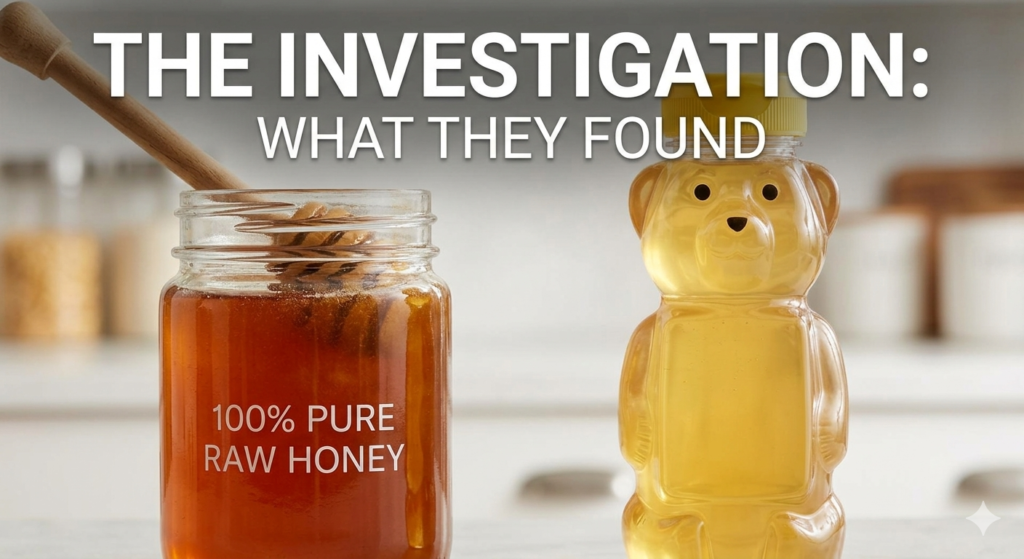
    The Investigation: What They Found
    honey fraud investigation the honey review

    Researchers tested over 60 samples from 10 different states. The results were a wakeup call for anyone buying generic brands:

    • 76% of grocery store samples had all pollen removed.
    • 100% of honey from drugstores (like CVS and Walgreens) was pollen-free.
    • Big-box retailers (Walmart and Target) showed similar results, with nearly all their honey being ultra-filtered.

    The Mechanics of “The Honey Heist”

    In the early 2000s, the U.S. imposed heavy anti-dumping duties on Chinese honey to protect domestic beekeepers and ensure safety. To avoid these taxes, exporters began shipping Chinese honey to “third-party” countries like Vietnam, Thailand, or Malaysia.

    Once there, the honey underwent ultra-filtration:

    • High-Pressure Heating: Honey is heated to high temperatures and forced through microscopic filters.
    • Pollen Stripping: This process removes all traces of pollen, which acts as a “geographic fingerprint.”
    • Relabeling: Without pollen, labs cannot prove the honey originated in China. It is then relabeled as a product of the mid-way country and shipped to the U.S. as “legal” honey.

    Why This is a Safety Risk

    The primary concern isn’t just tax evasion; it’s contamination. In the 2011 study, it was noted that some of this laundered honey contained Chloramphenicol (a powerful antibiotic banned in U.S. food) and heavy metals like lead, which can be present in low-quality Chinese honey production.

    How Modern Companies Bypass Certifications

    Modern “honey laundering” has moved beyond simple filtration. Today, it involves advanced chemistry and digital deception:

    • AI-Optimized “Designer” Blends: Fraudsters now use AI algorithms to create syrup recipes that perfectly mimic the chemical profile of real honey. These “designer blends” are engineered to sit just below the detection thresholds of standard lab tests (like C4 sugar testing), making them nearly invisible to traditional audits.
    • Novel Syrup Markers: As of 2024 and 2025, labs have detected a rise in “novel syrups”โ€”newly engineered sweeteners that don’t use common corn or cane sugars. These syrups require specialized LC-HRMS (High-Resolution Mass Spectrometry) to detect, which many standard certification programs do not mandate for every batch.
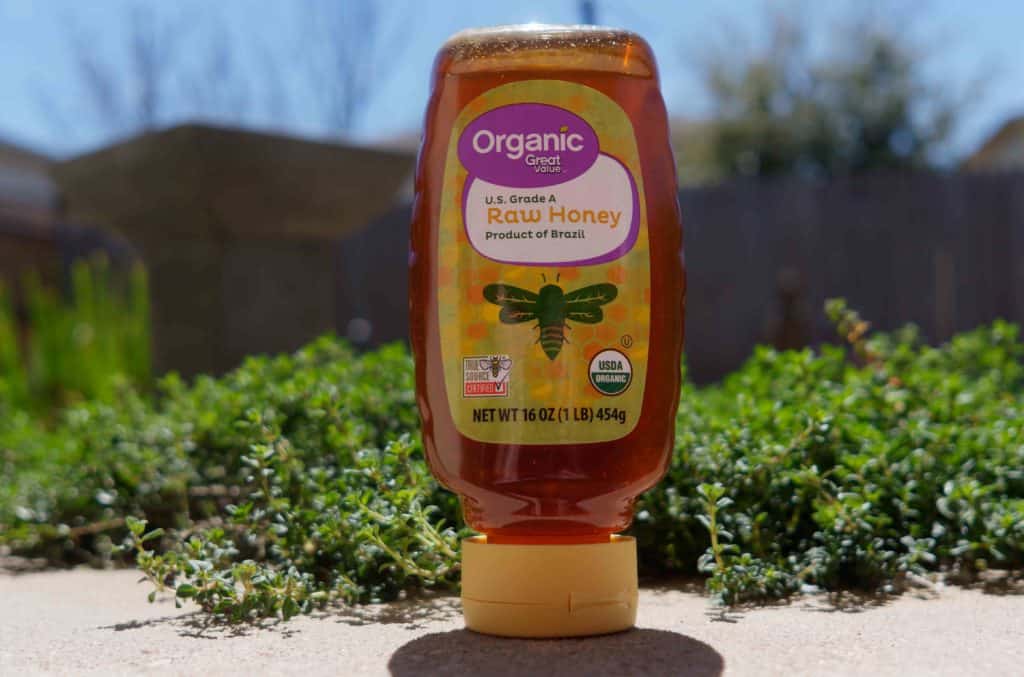
    • The “Honor System” in Imported Organic Honey: Since the USDA cannot easily certify U.S. honey as organic (due to bee flight patterns), almost all “USDA Organic” honey is imported. The certification often relies on the “honor system” of the exporting country’s paperwork. Fraudsters exploit this by using shell companies and “ghost farms” that exist only on paper.
    • Transshipment and Relabeling: Honey is often shipped from a high-risk country (like China) to a “low-risk” country (like Vietnam or Brazil). Once there, it is blended with a small amount of local honey and issued new “clean” paperwork before being sent to the U.S.

    The New Gold Standard: NMR Testing

    To combat these methods, the industry is shifting toward Nuclear Magnetic Resonance (NMR) testing. Unlike standard tests that look for one or two “red flags,” NMR creates a complete molecular fingerprint of the honey

    Testing LevelMethodEffectiveness
    BasicPollen AnalysisLow. Easily bypassed by ultra-filtration.
    IntermediateC4 Sugar TestingMedium. Detects corn/cane syrup, but misses rice and beet syrups.
    AdvancedNMR ProfilingHigh. Detects geographic origin, botanical source, and “designer” syrups.

    Why Does Pollen Matter?

    Removing pollen isn’t just about texture; itโ€™s about traceability.

    1. Honey Laundering: Pollen is the “DNA” of honey. Without it, investigators cannot prove where the honey came from. This allows “laundered” honey from countries with poor safety standards to be smuggled into the U.S.
    2. Health Benefits: Pollen contains antioxidants, enzymes, and amino acids. When you strip the pollen away through high-heat ultra-filtration, you’re essentially buying a processed sugar syrup rather than a superfood.

    How to Shop Smarter at the Supermarket

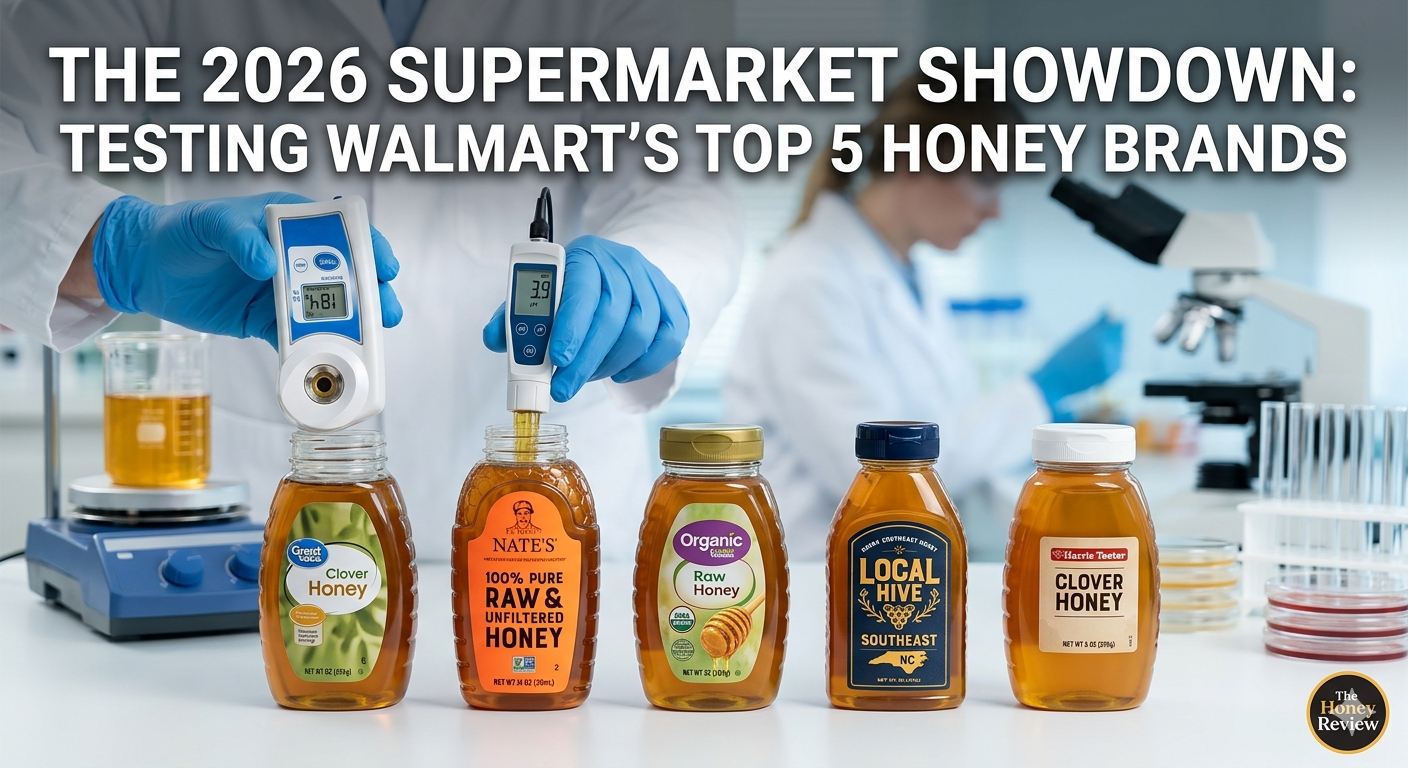
    The good news? The market has changed since 2011. Many brands now prioritize transparency through True Source Certification. If you’re shopping at a major retailer like Target or Walmart, look for these specific types of honey to ensure you’re getting the real deal.

    Top Picks for Authentic Honey

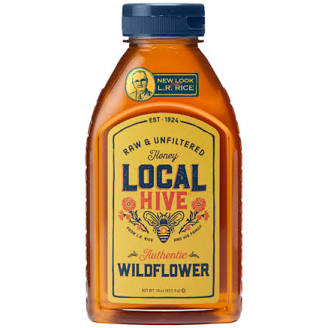
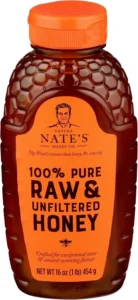
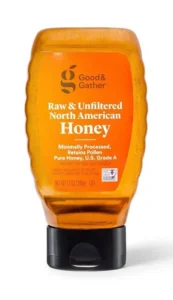
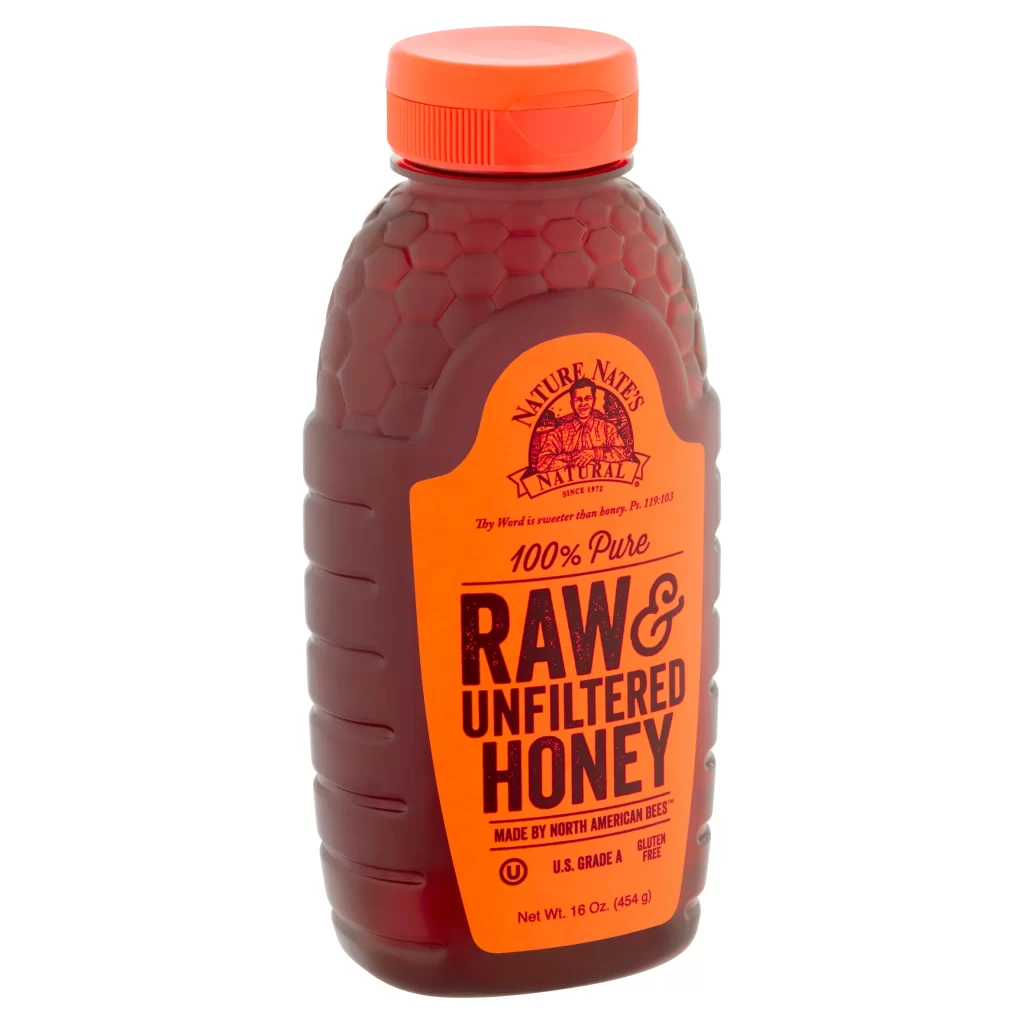
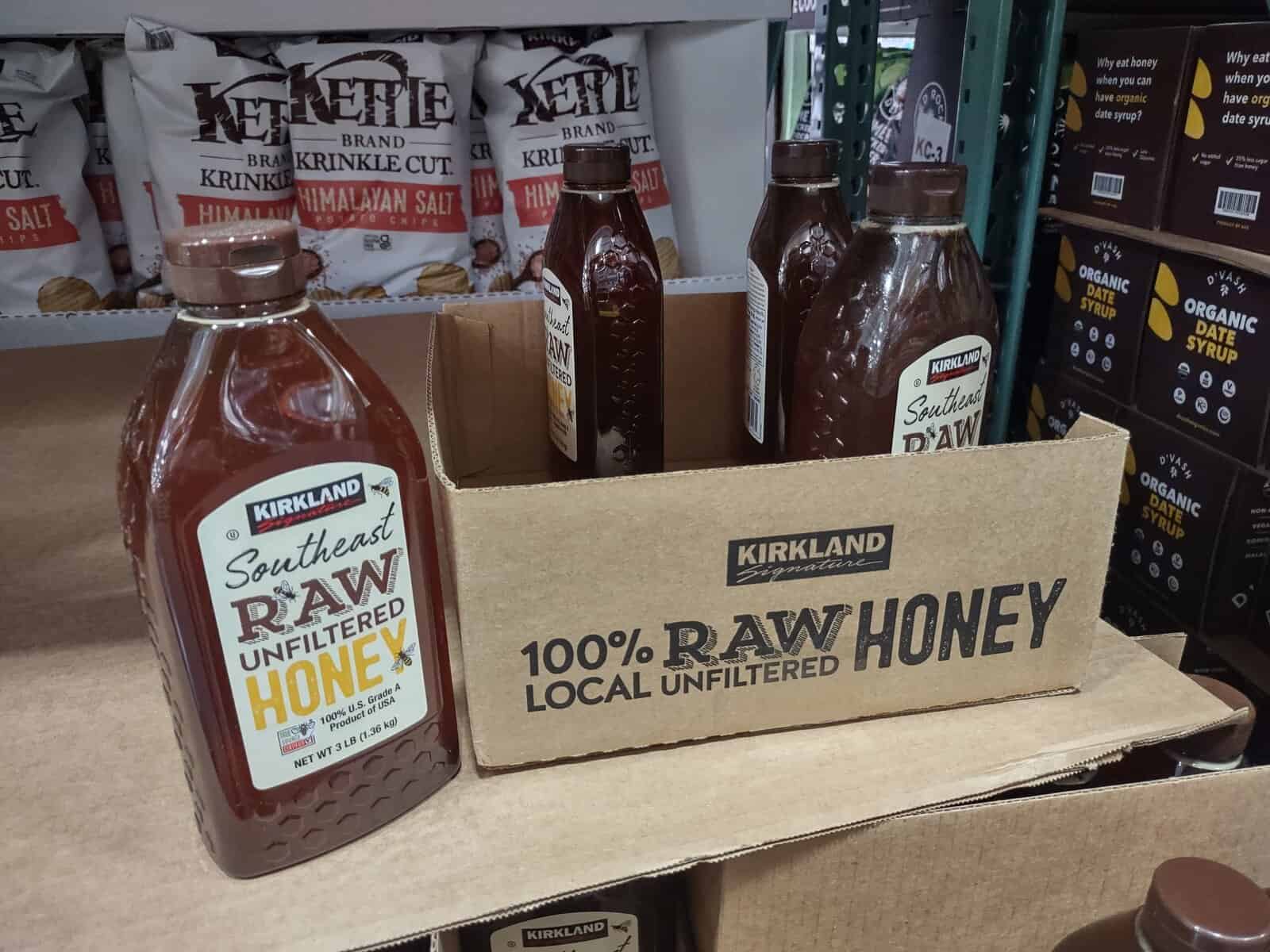
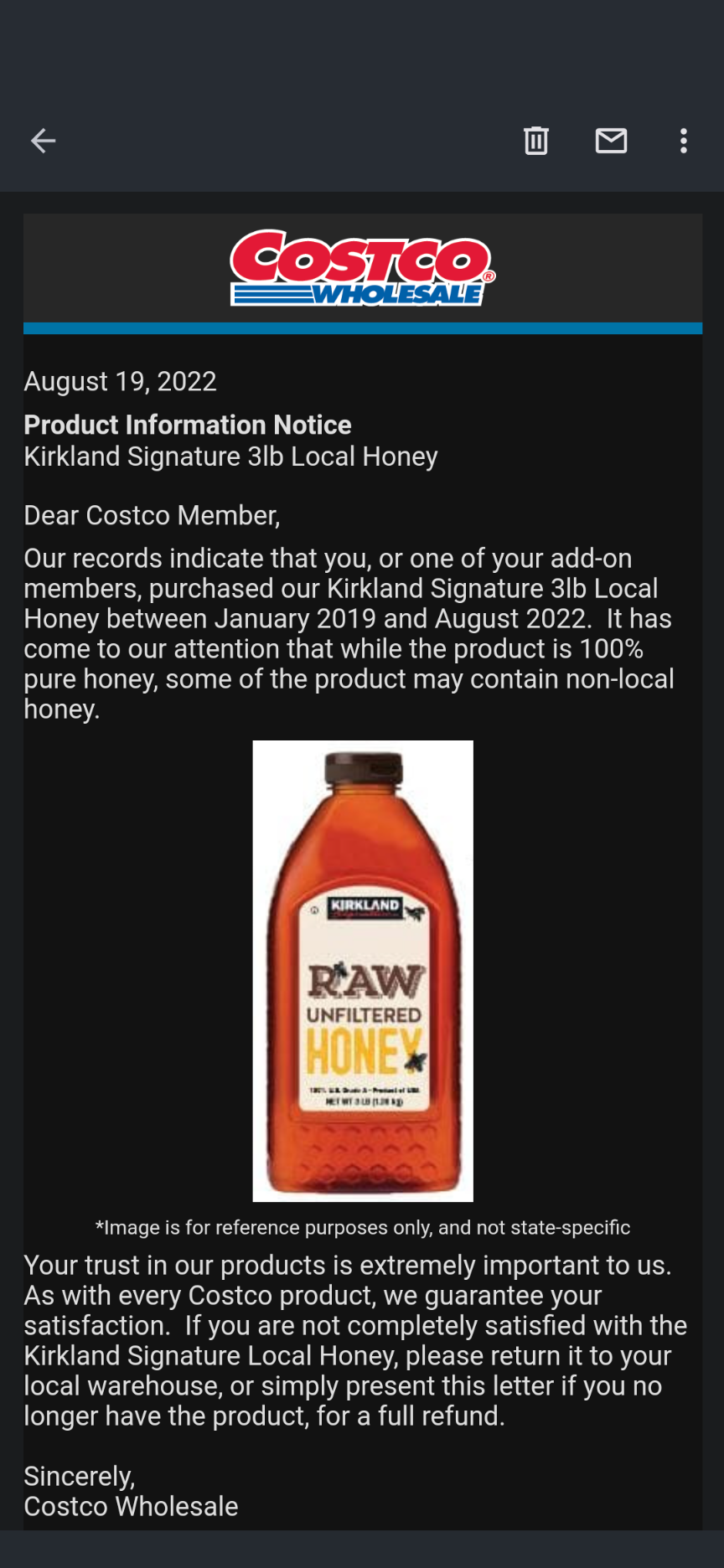
    These aren’t the best, and even Nature Nate’s has faced scrutiny in the past. In fact all 3 of these have been found guilty of honey fraud. Kirkland Honey was white labled Local Hive, and they were found out by Costco. ( Good on them ) But if you have to get honey from major grocery stores, these are decent generic honey options.

    local hive wildflower honey

    Quick Checklist for Real Honey

    • Check the Label: Look for “Raw,” “Unfiltered,” or “True Source Certified.”
    • Look for Origin: Avoid bottles that simply say “Product of Brazil, Vietnam, and USA.” Specific regional origins (e.g., “Northwest Blend”) are usually more reliable.
    • The Cloudiness Factor: Real honey shouldn’t always be perfectly clear. A little cloudiness is often a sign of preserved pollen and propolis.
    FeatureAuthentic Raw HoneyUltra-Filtered “Fake” Honey
    Pollen ContentHigh (Retains nutrients)Zero (Removed to hide origin)
    TextureThick; crystallizes over timeRunny; stays liquid forever
    TraceabilityTrue Source CertifiedVague “Global Blend”

    You donโ€™t need a laboratory to avoid becoming a victim of the “Honey Heist.” While fraudsters use high-tech syrups, you can fight back by changing where and how you shop. Transparency is your best defense. Always look for the True Source Certified seal on the bottle. This badge ensures that the honey is tracked from the hive to the shelf. Additionally, check for single-country origins. If a label lists five different countries, it is likely a highly-processed global blend. For the highest level of safety, choose raw and unfiltered options that preserve natural enzymes and pollen.


    Don’t get stung by fake honey! Subscribe to The Honey Review newsletter for monthly purity alerts and exclusive deep-dives into your favorite brands.

  • Raw Honey: A Sticky Truth They Donโ€™t Want You to Taste

    Raw Honey: A Sticky Truth They Donโ€™t Want You to Taste

    Letโ€™s get real. Most of whatโ€™s sold as โ€œhoneyโ€ in grocery stores isnโ€™t honeyโ€”itโ€™s heat-treated syrup wrapped in golden lies. If the jar on your shelf came from a big-box brand, chances are itโ€™s been stripped of everything good: enzymes, pollen, even origin transparency. That doesnโ€™t just dilute the flavorโ€”it erases the story.

    Raw honey, on the other hand, doesnโ€™t play by those rules. Itโ€™s messy, local, inconsistentโ€”and absolutely glorious for it.

    So why arenโ€™t more people tasting the truth? Because convenience culture and corporate marketing have convinced shoppers that uniformity equals quality. It doesnโ€™t.

    The Great Honey Hoax

    Pasteurized honey may pour faster and look prettier, but itโ€™s a nutritional imposter. Heating honey destroys the enzymes that give it antioxidant power. It also erases any trace of pollenโ€”the one ingredient that links it to place.

    And without pollen? Youโ€™ve got sugar water in disguise.

    Common Question

    โ€œIs raw honey healthier than organic?โ€ or โ€œDoes heating honey destroy its benefits?โ€

    Absolutely. Pasteurization undercuts what makes honey functional, not just flavorful.

    Why Raw Honey Breaks the Mold (and Why Thatโ€™s Good)

    People love neat rows of identical jars. But raw honey laughs at uniformity. Its color, texture, and taste are influenced by season, soil, and wild nectar. One batch might crystallize, the next might drizzle like molasses. Thatโ€™s not a flawโ€”itโ€™s a fingerprint.

    Try explaining that to someone who thinks honey only comes in a plastic bear.
    FYI, Bears don’t make Honey. Bees do.

    Raw honey deserves a rebrandโ€”from quaint health food to rebellious masterpiece.

    The Grocery Store Conspiracy: What Big Honey Isnโ€™t Telling You

    Letโ€™s name names. Major brandsโ€”yes, even some labeled โ€œorganicโ€โ€”often ultrafilter their product to remove pollen. Why? Because it lets them dodge questions about origin. I really dislike the organic label, at least here in the US.

    Nature Nate’s : Criticized for heating and high HMF levels

    Sue Bee : Has faced scrutiny over blending and sourcing transparency

    Golden Blossom Honey : Marketed as premium, but often pasteurized and filtered.

    Busy Bee Honey : Frequently cited in studies for ultrafiltration and import blending.

    Trader Joe’s Honey : Mixed reviews, some jars pass muster, others raise questions.

    No pollen means no traceability. And without traceability, companies can blend honeys from multiple countries (sometimes including those with lax food safety laws) and label it โ€œpure.โ€

    So you think youโ€™re buying U.S.-made honey. You’re probably eating a cocktail of international syrups.

    Common Question

    โ€œWhere does my honey come from?โ€ and โ€œIs imported honey safe?โ€


    If your honey has been ultrafiltered, pasteurized, or stripped of pollen, the short answer is: you may never know. As a Beekeeper, if you can’t trace it, don’t taste it.

    Reclaiming Flavor: Raw Honey as Protest

    Enough doomscrolling. Letโ€™s talk delight.

    Eating raw honey is an act of rebellion. Itโ€™s choosing flavor over uniformity, traceability over marketing, and real over pretty. It’s supporting beekeepers who fight monoculture, who let bees forage in wild pastures, who treat hives like ecosystemsโ€”not factories.

    Here’s what raw honey gives you:

    • Bittersweet tangs from buckwheat fields
    • Citrus sparkle from coastal groves
    • Herbal nuance from mountain wildflowers

    And no two jars taste the same. That unpredictability? Itโ€™s a feature. This is why I have such a fascination with tasting and collecting raw Honey.

    Five Bold Ways to Use Raw Honey (That Might Upset a Chef)

    1. Drizzle it over blue cheese. Yes, even the funky stuff. Let the saltiness dance with raw honeyโ€™s natural acid.
    2. Slather it on pizza crust. Pineapple is the easy controversy. Real honey is the upgrade nobody saw coming. Although Mike’s Hot Honey caught on, and now that is everywhere. Makes me wonder about their legitimacy.
    3. Stir it into mezcal. Raw honey amplifies earthy cocktails with fire-kissed sweetness.
    4. Use it as a marinadeโ€”without measuring. You donโ€™t need perfection. You need instinct.
    5. Eat it from the spoon, unapologetically. Yes, even in front of guests.
      Seriously, a tablespoon a night will do wonders for your kids. Mine love it.

    Whoโ€™s Making the Good Stuff? (Hint: Not the Usual Suspects)

    Skip brands that promise consistency. Thatโ€™s code for over-processed.

    Go for:

    • Apiaries that post harvest dates (rare, but love to see it)
    • Wildflower blends from regions you recognize
    • Honeys that crystallize with pride – yes this is a good thing.

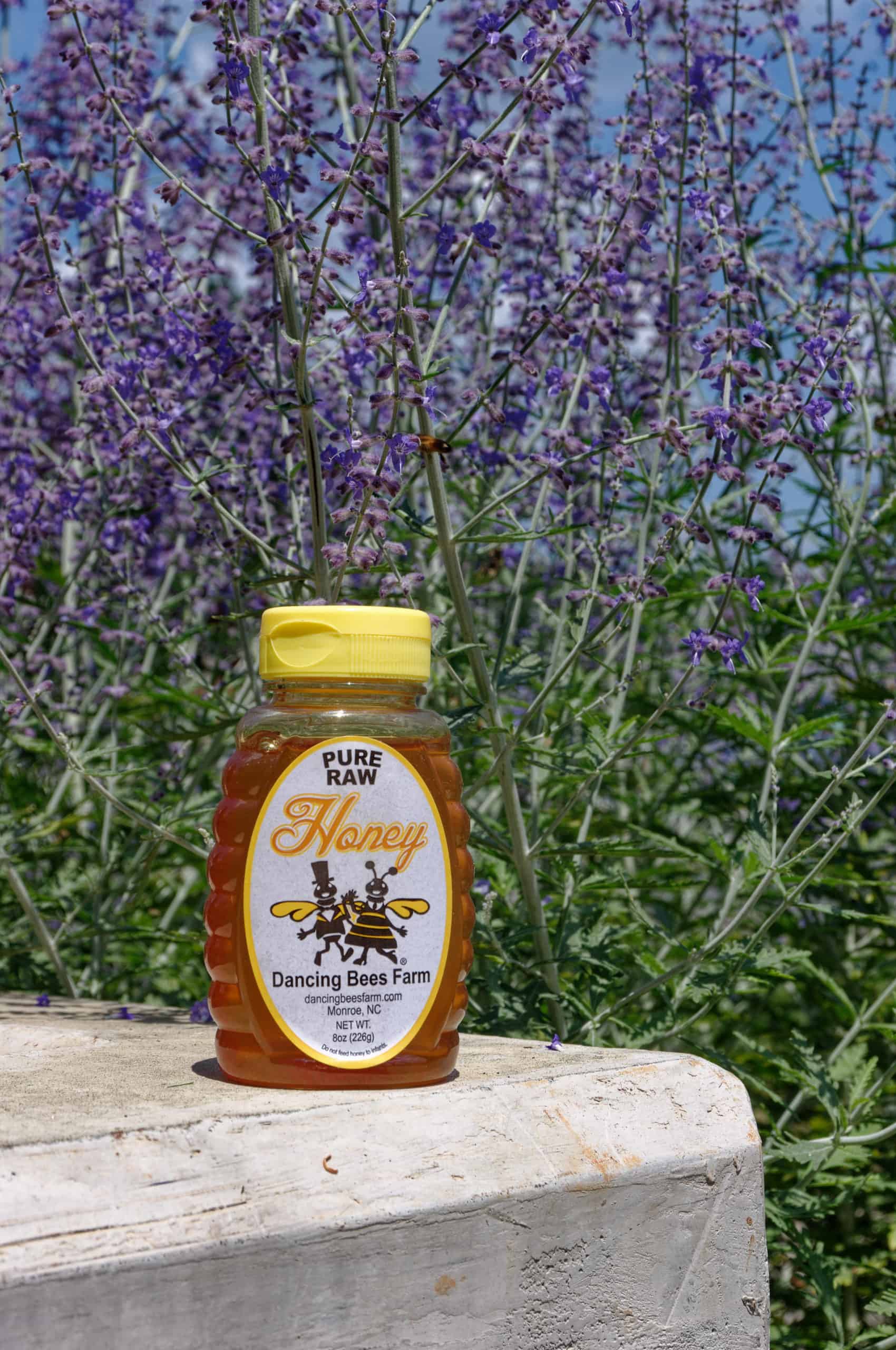
    On The Honey Review, weโ€™ve championed Texas Lemonade, local wildflower jars from NC, and even Costcoโ€™s raw honey when it passes the sniff test. But I call it like it isโ€”and I’m not afraid to say, โ€œthis jar tastes like regret.โ€


    Raw Honey vs. Fake Honey: The Truth Beneath the Lid

    What They DoRaw Honey Fake Honey
    ProcessingUnheated, unfilteredPasteurized, ultrafiltered
    Pollen ContentPreserved (traceable origin)Removed (no traceability)
    Flavor ProfileVaried by season & regionFlat, blended for consistency
    TextureMay crystallize naturallyAlways liquid due to heating
    Label TransparencyOften includes source + harvestVague terms like โ€œnatural blendโ€ “organic” “pure” “raw”
    Health BenefitsContains enzymes & antioxidantsMostly sugar, lacks active compounds
    Sourcing IntegrityLocal apiaries, single-origin jarsBlended international syrups
    Price PointHigher but reflects qualityLowerโ€”but quality is compromised
    Environmental ImpactSupports ethical beekeepingMay fund exploitative mass farming

    That honesty? Itโ€™s what makes The Honey Review an extension of me. Readers crave bold opinions, not just tasting notes. I try to do both.


    Final Buzz: Donโ€™t Be Afraid of the Sticky Truth

    Raw honey is untamed. It doesnโ€™t cater to mass markets. It might challenge your palate. It might change your kitchen. And once you taste what real honey can be, youโ€™ll never squeeze a plastic bear again.

  • Honey To Avoid: Nature Nate’s

    Honey To Avoid: Nature Nate’s

    The Truth About Nature Nate’s Honey: Heated, Not Raw, and High in HMF

    Honey has been cherished for thousands of years, not just for its sweet taste but also for its numerous health benefits. However, not all honey is created equal. The quality and purity of honey can vary significantly depending on how it is processed. One brand that has come under scrutiny is Nature Nate’s Honey. Despite being marketed as “100% pure, raw, and unfiltered,” there are concerns about its production practices and the presence of potentially harmful compounds.

    In this article, we will delve into the details of these concerns and explore why they matter, and why this a Honey to avoid.

    What do these terms mean?

    Hydroxymethylfurfural (HMF): This compound forms when honey is heated. High levels of HMF can be toxic and potentially carcinogenic.

    Health Benefits of Raw Honey: Raw honey is packed with nutrients, including all B-complex vitamins, vitamins A, C, D, E, and K, and minerals like magnesium, sulfur, phosphorus, iron, calcium, and potassium.

    Heating Honey: Heating honey above 105 degrees Fahrenheit destroys most of its beneficial enzymes, amino acids, and phytonutrients. This is why beekeepers will often advise against pouring boiling water into Tea and Honey.

    You can relate this process to how they’re treating modern Milk.
    However, honey pasteurization shouldn’t be relative to Milk.
    Which sounds like massive factory honey, not backyard bee honey.

    Class Action Lawsuit: In March 2020, a class action lawsuit was filed against Nature Nate’s Honey for allegedly heating their honey and having high levels of HMF.

    Adulteration Concerns: There were concerns about possible adulteration of Nature Nate’s Honey with added syrups, which is not expected in “100% pure and raw honey”.

    The Misleading Branding of Nature Nate’s Honey

    Nature Nate’s Honey is marketed as “100% pure, raw, and unfiltered.” This branding suggests that the honey is collected directly from the honeycombs of free-buzzing bees, strained to remove unwanted particles, and then bottled without any further processing.

    However, testing of Nature Nate’s honey samples has shown that this is not the case. The honey has been heated to make it easier to process and flow, which contradicts the “raw” label.

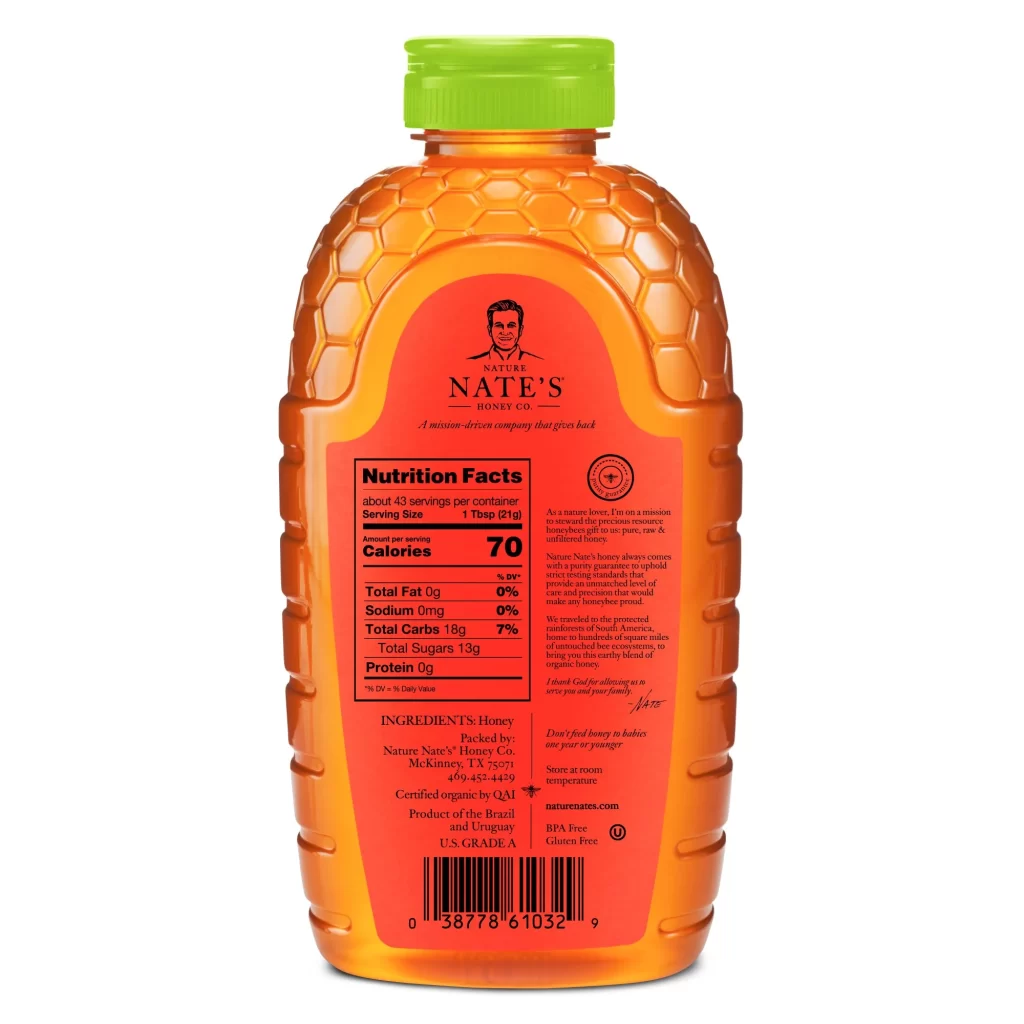
    Always check where it’s from. Product of BRAZIL and URUGUAY!

    The Importance of Raw Honey

    Raw honey is prized for its incredible health benefits. It contains all of the B-complex vitamins, vitamins A, C, D, E, and K, as well as minerals like magnesium, sulfur, phosphorus, iron, calcium, and potassium. Raw honey is also rich in live enzymes, amino acids, phytonutrients, and cancer-fighting antioxidants. These beneficial compounds are what make raw honey a superfood.

    However, heating honey destroys most of these beneficial enzymes, amino acids, and phytonutrients. When honey is heated above 105 degrees Fahrenheit, it loses its raw status and many of its health benefits. This is why it is crucial to ensure that honey labeled as “raw” has not been subjected to high temperatures.

    The Toxic Compound HMF

    One of the most concerning findings in the testing of Nature Nate’s honey is the presence of high levels of hydroxymethylfurfural (HMF). I know, its a mouthful to try and pronounce.

    HMF is a compound that forms when honey is heated. While small amounts of HMF are naturally present in honey, high levels can be toxic and potentially carcinogenic.

    The Codex Alimentarius, a global reference standard for consumer protection, has determined that the maximum safe limit for HMF in raw honey is 40 mg/kg. However, samples of Nature Nate’s honey tested HMF values as high as 232 mg/kg.

    These levels are not only far above the safe limit, but they also indicate that the honey has been heated up to 120 degrees.

    Why is HMF toxic and potentially cancer causing?

    Hydroxymethylfurfural (HMF) is a compound that forms when honey is heated. While small amounts of HMF are naturally present in honey, high levels can be toxic and potentially carcinogenic. Here are some reasons why HMF is considered harmful:

    1. Genotoxicity: HMF has been shown to induce genotoxic effects, which means it can damage genetic information within a cell, causing mutations that may lead to cancer. Studies have revealed that HMF may induce genotoxic and mutagenic effects in bacterial and human cells.
    2. Carcinogenicity: HMF can be converted in the body to 5-sulfoxymethylfurfural (SMF), a compound that has been shown to be genotoxic. Animal experiments have demonstrated that HMF can promote colon and liver cancer in rats and mice.
    3. Toxicity to Bees: High levels of HMF have been shown to be toxic to bees. Studies from the 1970s and 1980s found that feeding bees sugar syrup with HMF values of 150 mg/kg caused a mortality rate of 50% within 16 days. This suggests that high levels of HMF can be harmful to other living beings as well.
    4. Potential Health Risks: The presence of high levels of HMF in honey raises concerns about its safety for human consumption. While the exact impact on human health is still being studied, the potential for genotoxic and carcinogenic effects makes it a compound to be cautious about.

    These factors highlight the importance of ensuring that honey is not heated to high temperatures, as this can lead to the formation of harmful levels of HMF. Choosing raw, unfiltered honey from reputable sources can help minimize the risk of exposure to this toxic compound.

    The Class Action Lawsuit

    In March 2020, a class action lawsuit was filed against Nature Nate’s Honey. The lawsuit alleged that the honey was heated and contained high levels of HMF, not “100% pure and raw.”

    The lawsuit also raised concerns about possible adulteration of the honey with added syrups.

    The court dismissed the case with prejudice, meaning it cannot be refiled. However, the dismissal was based on procedural grounds rather than the merits of the case. The concerns about the heating and adulteration of Nature Nate’s honey remain unresolved.

    The Health Risks of High HMF Levels

    High levels of HMF in honey are not just a concern for bees. Studies have shown that HMF can be toxic to humans as well.

    Animal experiments have revealed that HMF may induce genotoxic and mutagenic effects in bacterial and human cells. HMF also promotes colon and liver cancer in rats and mice.

    These findings suggest that consuming honey with high levels of HMF could pose serious health risks.

    Adulteration Concerns

    Another concern raised in the lawsuit was the possible adulteration of Nature Nate’s honey with added syrups. Adulteration can occur either by adding syrups directly to the honey or by feeding the bees heated sugar syrups. Both practices are harmful and compromise the quality and purity of the honey.

    Consumers expect “100% pure and raw honey” to be free from any added syrups. The presence of syrups in Nature Nate’s honey raises questions about the company’s quality control and the integrity of its suppliers.

    The Need for Transparency and Quality Control

    To truly be called “100% pure, raw, and unfiltered,” Nature Nate’s Honey needs to eliminate the heating process and tighten its vetting standards for suppliers.

    Transparency in production practices and rigorous quality control are essential to ensure that consumers are getting the high-quality honey they expect.

    Finding Authentic Raw Honey

    For those seeking the health benefits of raw honey, it is important to choose honey from reputable sources. Small beekeepers who produce honey from bees buzzing around healthy, biodiverse ecosystems are often the best choice.

    These beekeepers prioritize the health of their bees and the purity of their honey, ensuring that it retains all its beneficial properties.

    I recently wanted to bring attention back to this company once I saw they are now contributing to the Manuka Honey space. I mean, C’MON!

    Conclusion

    Nature Nate's Raw and Unfiltered Honey

    Nature Nate’s Honey has come under scrutiny for its misleading branding and questionable production practices. The presence of high levels of HMF and concerns about adulteration raise serious questions about the quality and purity of the honey.

    Consumers deserve transparency and honesty from honey producers, and it is crucial to choose honey from reputable sources to ensure its health benefits.

    If you are looking for truly raw honey, be sure to do your research and choose honey from small, reputable beekeepers who prioritize the health of their bees and the purity of their honey.

    By doing so, you can enjoy the incredible health benefits of raw honey without the risks associated with heated and adulterated honey and better know which Honey to avoid.

    • Kirkland Signature Local Honey Pulled From Shelves

      Kirkland Signature Local Honey Pulled From Shelves

      If you’re a Costco member, you may have noticed that the Kirkland Signature honey has been pulled temporarily. The honey is being re labeled to ensure that it isn’t misleading to it’s members. I reviewed Kirkland Signature twice, the Texas “Local” blend and the Southeast ” Local” blend. And what I found mirror’s Costco’s statement

      Read More


    • Supermarket Honey Fraud: The 2011 “Honey Heist” & How to Spot Fakes

      Supermarket Honey Fraud: The 2011 “Honey Heist” & How to Spot Fakes

      Is Your Supermarket Honey Real? The Truth Behind the 2011 “Honey Laundering” Scandal Have you ever looked at that golden bear in your pantry and wondered if itโ€™s actually honey? For many Americans, the answer might be “not exactly.” Supermarket honey fraud is a deep problem in the Industry. Honey fraud, or “economically motivated adulteration,”

      Read More


    • Manuka Honey

      Manuka Honey

      Read More


    • Texas Honey

      Read More