Tag: Fraud

  • Forensic Audit Report: Federal Enforcement Actions Targeting Fraudulent and Adulterated Honey Markets (2013–2025 FY)

    Forensic Audit Report: Federal Enforcement Actions Targeting Fraudulent and Adulterated Honey Markets (2013–2025 FY)

    Forensic Audit Report: Federal Enforcement Actions Targeting Fraudulent and Adulterated Honey Markets (2013–2025 FY)

    U.S. Honey Importation and Domestic Distribution Channels & Economically Motivated Adulteration (EMA), Tariff Evasion, and Mislabeled Chinese-Origin Honey

    Executive Summary

    This forensic audit report reviews the coordinated enforcement efforts of the U.S. Department of Justice (DOJ)and the Food and Drug Administration (FDA)to combat illegal activities within the global and domestic honey market. Honey is consistently identified as one of the most adulterated foods in the world. The investigation focuses on two distinct yet interrelated issues: the criminal evasion of anti-dumping duties via transshipment and mislabeling, and the detection of economically motivated adulteration (EMA)

    —specifically, the dilution of honey with cheap sugar syrups and contamination with unapproved antibiotics. Data indicates that while significant criminal penalties were applied in major historical cases, the regulatory detection of adulterated imports remains a persistent requirement.

    Methodology

    The scope of this audit covers enforcement activities from 2013 through the FDA’s projected 2025 Fiscal Year (FY) assignments. It utilizes enforcement data provided by the DOJ and FDA to trace the pathways of fraudulent products and assess the scale of tariff evasion. Additionally, testing parameters and agricultural baselines were cross-referenced with data from USDA FoodData Central

    Findings of Fact: DOJ Criminal Enforcement Actions

    Investigations by the Department of Justice

    confirm major schemes orchestrated to evade anti-dumping duties on Chinese-origin honey and distribute adulterated products within the United States.

    Major Corporate Conspiracy Case (2013)

    The DOJ charged two major commercial companies and five individuals following a nationwide investigation into the illegal importation of honey from China.

    • Fraudulent Modus Operandi: The schemers mislabeled Chinese honey to declare a different origin, successfully avoiding required anti-dumping duties.
    • Adulteration and Contamination: Testing revealed the product was adulterated with chloramphenicol, an unapproved veterinary antibiotic.
    • Financial Impact: The scheme allegedly avoided over $180 million in legally required duties.
    • Enforcement Outcome: Honey Holding, Inc. (doing business as Honey Solutions) and Groeb Farms both entered deferred prosecution agreements, accepted financial penalties, and were mandated to implement compliance programs.
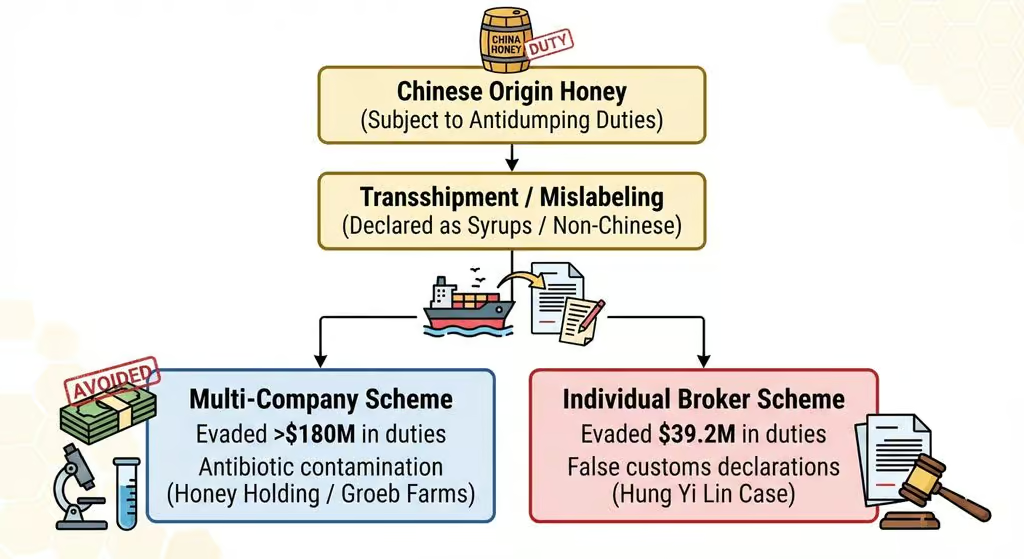
    Flowchart illustrating honey fraud schemes and enforcement actions.
    Diagram showing different honey fraud schemes and regulatory enforcement actions from 2013 to 2025.

    California Broker Tariff Evasion (2013)

    In a separate action, a California honey broker, Hung Yi Lin, was targeted for fraudulent customs declarations.

    • Fraudulent Modus Operandi: Lin falsely declared hundreds of shipping containers of Chinese-origin honey as “sugars” and “syrups.”
    • Financial Impact: This misclassification scheme resulted in the evasion of $39.2 million in tariffs.
    • Enforcement Outcome: Hung Yi Lin was sentenced to three years in federal prison.

    Findings of Fact: FDA Surveillance and Adulteration Detection

    The FDA plays the critical role of detecting EMA, defined as the intentional addition of cheaper sweeteners (such as corn syrup, rice syrup, or cane sugar) to honey to maximize profits. A review of FDA surveillance data for imported honey shows fluctuating violation rates:

    FDA Sampling Data (Imported Honey)
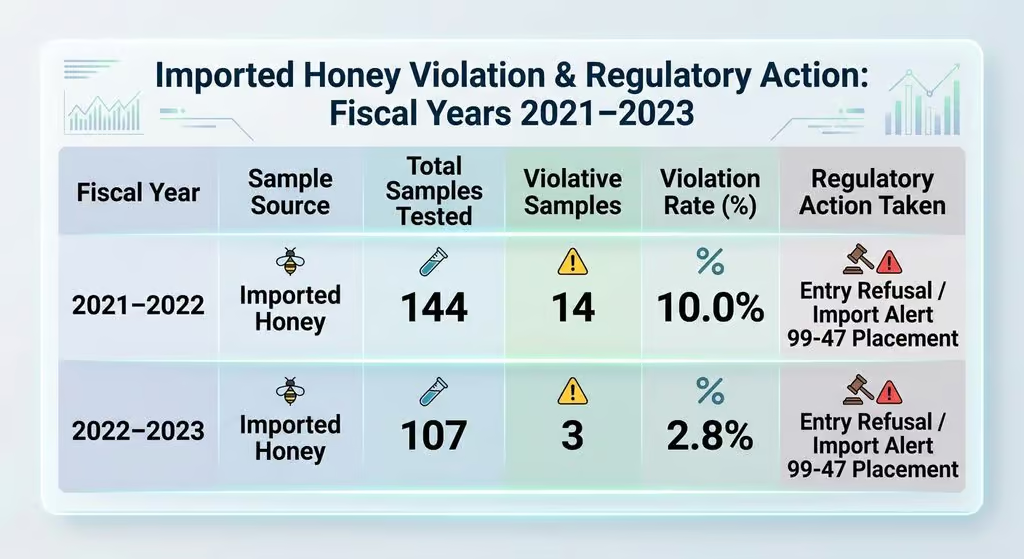
    Imported honey violation statistics and regulatory actions for 2021-2023.
    Data on honey violations and enforcement actions from 2021 to 2023, highlighting regulatory responses to adulteration.

    Regulatory Response

    When the FDA detects a violative sample, the following regulatory actions are taken immediately:

    • Refusal of entry into the United States.
    • Placement of the offending company or product on Import Alert 99-47, facilitating detention without physical examination of future shipments.

    Future Scope (2025 FY)

    To better assess the purity of the marketplace, the FDA’s 2025 FY assignment has officially expanded its testing scope to include both imported and domestic honey products

    .

    Evolution of Authenticity Testing Protocols

    To detect food fraud effectively, laboratories must utilize multiple screening methodologies. Historically, the FDA and the honey industry have relied on the SCIRA test (AOAC method 998.12). This test effectively detects added C4 sugar syrups obtained from corn and cane sugar. However, it does not detect C3 sugar syrups, such as those derived from beet, rice, or wheat.

    To close this detection gap, the National Honey Packers and Dealer’s Association (NHPDA)

    is working with the FDA to develop advanced C3 adulteration testing. Currently, the most sophisticated screening method is referred to as “State of the Art” (SOTA) testing. Endorsed by the majority of contract labs, this three-test approach includes:

    • EA/LC-IRMS: 13C Stable Carbon Isotope Ratio method paired with a liquid chromatograph.
    • NMR: H1 Nuclear Magnetic Resonance Profiling.
    • HRMS: Liquid Chromatography-High Resolution Mass Spectrometry.

    Industry and Policy Implications

    A review of the industry context shows that the lack of a standardized legal definition of honey creates vulnerabilities that facilitate fraud. Currently, the Agricultural Marketing Service (AMS)

    U.S. Grade A extracted honey must meet applicable requirements and achieve a minimum total score of 90 points. However, AMS grading does not provide an anti-fraud legal definition.

    • Current Deficiency: The U.S. currently lacks a comprehensive federal “Standard of Identity” for honey.
    • Proposed Resolution: U.S. honey producers are advocating for Congress to establish this standard, modeled on the international Codex Alimentarius.
    • Expected Benefits: A clear standard would legally define what constitutes “honey,” set strict limits on additives and contaminants, and provide an enforceable metric to combat misbranding, EMA, and fraudulent labeling.

    Audit Conclusion

    The combined evidence indicates that the U.S. honey market remains a lucrative target for international fraud, primarily driven by the desire to evade anti-dumping duties on Chinese products and increase profit margins through adulteration with cheap syrups.

    Criminal prosecutions by the DOJ

    have successfully targeted major conspirators, proving that tariff evasion and antibiotic contamination were occurring on a massive financial scale exceeding $180 million. FDA data shows that EMA remains a persistent threat among imported products, with a 10% violation rate recorded as recently as 2022. The regulatory approach is now shifting toward a more comprehensive market survey—including domestic products—supported by advanced SOTA testing methodologies.

    Ultimately, industry advocates maintain that a federal Standard of Identity is required as a final backstop to prevent continued misbranding and protect supply chain integrity

    .

    .

    Frequently Asked Questions: Honey Authenticity, Processing, and Safety

    Are most store-bought honeys fake or adulterated?

    Independent surveys indicate a high rate of purity in the retail market. In an RQA, Inc. survey of 74 retail honey samples across 11 US markets, 95% of the collected samples were verified as pure honey. Testing conducted by Eurofins revealed that 10 out of the 11 brands surveyed sold 100% pure honey.

    What is Economically Motivated Adulteration (EMA) in honey?

    Honey is consistently recognized as one of the most adulterated foods globally. EMA in the honey industry primarily involves diluting pure honey with non-honey sugar syrups. While standard FDA SCIRA testing can detect added C4 sugars (like corn and cane syrup), it fails to detect C3 sugar syrups (such as beet, rice, and wheat syrups).

    What are the most advanced methods used to test honey authenticity?

    To combat food fraud, the National Honey Packers and Dealer’s Association (NHPDA) recommends third-party testing using advanced methodologies. The most sophisticated “State of the Art” (SOTA) testing package includes a combination of three methods:
    EA/LC-IRMS: Stable Carbon Isotope Ratio method paired with a liquid chromatograph.
    NMR: H1 Nuclear Magnetic Resonance Profiling.
    HRMS: Liquid Chromatography-High Resolution Mass Spectrometry.

    Why do mass-market honey brands ultra-filter their honey?

    Commercial brands often pump honey through microscopic filters to create a perfectly clear, liquid aesthetic that does not crystallize on store shelves. This ultra-filtration process completely removes natural pollen, making it impossible to trace the honey’s exact geographic and floral origins.

    Does heating honey during commercial processing affect its quality?

    Processing honey at temperatures exceeding 104°F destroys natural beneficial enzymes like diastase and invertase. Intense thermal manipulation required for ultra-filtration and factory bottling often spikes Hydroxymethylfurfural (HMF) levels, indicating the honey has been thermally degraded. Excessive HMF levels can degrade into 5-sulfoxymethylfurfural (SMF), a known mutagen presenting high genotoxicity risks.

    How can consumers verify domestic honey purity?

    Consumers should look for brands that offer direct batch-testing transparency or rely on third-party auditing systems like True Source Certified. True Source Certification requires rigorous third-party testing and fully traceable supply chains to ensure the honey has not been economically adulterated with cheap syrups.

    Is it safe to infuse raw honey with fresh, high-moisture ingredients?

    Infusing honey with fresh ingredients like raw garlic or jalapeños introduces significant safety risks. Fresh produce contains high water levels; if the honey’s overall moisture content rises above 20%, natural osmophilic yeasts can multiply and cause unintended fermentation. More severely, infusing high-moisture, low-acid ingredients creates a potential threat for Clostridium botulinum spores to activate in the anaerobic environment beneath the honey’s surface, producing deadly botulinum toxin.

    How are commercial infused honeys made safely?

    Commercially safe infused honeys rely on fully dried or dehydrated ingredients (such as dried chili flakes or freeze-dried fruit powders) to ensure the water activity remains too low for bacterial growth. Alternatively, they use food-grade essential oils or alcohol-based extracts to add flavor without altering the honey’s structural integrity. If a small-batch producer uses fresh ingredients, the honey should generally be kept refrigerated to stall bacterial activity.

  • Designer Honey Risks Health and Beekeepers’ Incomes

    Designer Honey Risks Health and Beekeepers’ Incomes


    Designer Honey in Supermarkets Risks Health and Beekeepers’ Incomes

    Howdy y’all! Today, we’re diving into a sticky situation that’s been buzzing around the honey world. We’re talking about designer honey in supermarkets and how it’s putting our health and hardworking beekeepers’ incomes at risk. So grab a cup of sweet tea, sit back, and let’s get into it.

    Honey Fraud: A Growing Concern

    First things first, let’s talk about honey fraud. It’s a real problem, folks. A significant portion of honey entering the EU is flagged as potentially fraudulent. These sneaky folks are using advanced syrups as diluting agents, making it hard to tell the real deal from the fake stuff. And let me tell ya, this ain’t just a European problem – it’s happening right here in the good ol’ USA too.

    Health Risks of Adulterated Honey

    Now, you might be wondering, “What’s the big deal if my honey’s a little watered down?” Well, let me tell ya, it’s a big deal. Adulterated honey can cause all sorts of health issues like diabetes, obesity, and liver damage. It’s not just about the taste – it’s about your health.

    Economic Impact on Beekeepers

    But it ain’t just our health that’s at risk. Genuine beekeepers are facing unfair competition from these fraudulent honey peddlers. It’s hard enough keeping bees happy and healthy without having to compete with folks who are cutting corners. This unfair competition is putting honest beekeepers at risk of losing their businesses and the vital crop pollination services they provide.

    Technological Solutions to the Rescue

    Thankfully, researchers are stepping up to the plate with some fancy new technology. They’re using advanced techniques like Fluorescence Excitation-Emission Spectroscopy (FLE) to detect honey fraud. It’s a mouthful, I know, but it’s making a big difference in identifying the real deal from the imposters.

    Regulatory Challenges

    The EU is having a tough time regulating and enforcing honey standards due to the complexity of international trade and the sophistication of adulteration methods. It’s a big ol’ mess, and it’s gonna take some serious effort to clean it up.

    Consumer Awareness

    One of the best ways to fight honey fraud is through consumer awareness. We need to educate folks on how to identify genuine honey and understand the implications of honey fraud. Knowledge is power, y’all. How does it benefit the Industry?

    1. Empowering Consumers: When consumers are well-informed, they can make better purchasing decisions. By knowing how to identify genuine honey, they can avoid buying adulterated products that may pose health risks.
    2. Supporting Genuine Beekeepers: Educated consumers are more likely to support local and ethical beekeepers. This helps sustain the livelihoods of those who are committed to producing high-quality, authentic honey.
    3. Driving Market Demand: As more consumers demand genuine honey, it puts pressure on retailers and producers to ensure their products are authentic. This can lead to better industry practices and reduced instances of honey fraud.
    4. Health Benefits: Genuine honey offers numerous health benefits, from its natural antibacterial properties to its role in boosting the immune system. By choosing real honey, consumers can enjoy these benefits without the risks associated with adulterated products.


    This blog was started with the mission to educate and inform consumers about the importance of genuine honey. By sharing knowledge and insights, I aim to empower readers to make informed choices and support ethical beekeeping practices. Together, we can combat honey fraud and ensure that the honey we enjoy is pure, authentic, and beneficial for our health and the environment.

    If you support this mission, consider supporting the cause and subscribe.

    Environmental Impact

    Honey fraud doesn’t just affect us humans – it has environmental consequences too. Genuine beekeepers play a crucial role in pollination and biodiversity. When they suffer, so does our environment.

    Collaborative Efforts

    Tackling honey fraud ain’t a one-person job. It’s gonna take collaboration between governments, industry stakeholders, and researchers to develop and implement effective detection methods and policies. We’re all in this together.

    Market Trends

    On a brighter note, the demand for organic and locally-sourced honey is on the rise. As consumers become more conscious of the quality and origin of their food products, they’re seeking out the real deal. And that’s good news for our hardworking beekeepers.

    But let me explain Organic Honey in the US.

    Organic Honey in the US: A Myth!

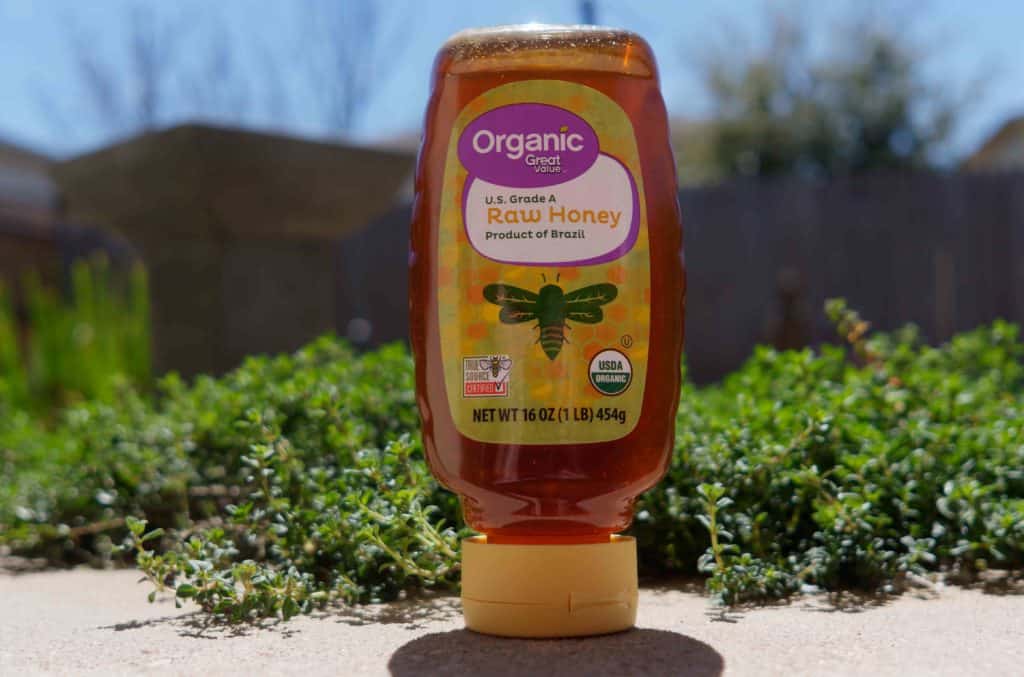
    great value organic raw honey

    Organic Honey in the US: A Myth!

    Many consumers are drawn to the idea of “organic” honey, believing it to be healthier and more environmentally friendly. However, the concept of organic honey in the United States is more myth than reality.

    The Challenge of Certifying Organic Honey

    In the US, honey cannot be certified as organic by the USDA because bees have a foraging range of several miles. This makes it nearly impossible to control where they collect nectar and pollen. For honey to be truly organic, bees would need to forage exclusively on organically managed flowers, which is not feasible.

    Imported Organic Honey

    Any honey labeled as “Certified Organic” in the US is typically imported from other countries with different standards. This can lead to confusion and mistrust among consumers.

    Environmental and Ethical Considerations

    Producing organic honey would require keeping bees in a controlled environment, such as a greenhouse, to ensure they only visit organic plants. This approach is impractical, inhumane, and detrimental to the environment. Bees play a crucial role in pollination and biodiversity, and restricting their natural behavior would have negative ecological impacts.

    The Reality of Local Honey

    While the organic label may be elusive, locally sourced honey offers a more transparent and beneficial alternative. Local beekeepers often use sustainable and ethical practices, and consumers can directly verify the authenticity and quality of the honey. Supporting local honey also helps sustain small-scale beekeepers and reduces the carbon footprint associated with transporting honey over long distances.

    While the idea of organic honey is appealing, it remains a myth in the US due to the challenges of certifying and controlling bee foraging. Instead, consumers can turn to locally sourced honey for a more transparent, ethical, and environmentally friendly option. Beware of designer honey that may not be as genuine as it seems.


    Local Honey vs Organic

    Transparency and Traceability

    • Direct Connection: Buying locally sourced honey allows consumers to visit apiaries and meet beekeepers.
    • Verification: Consumers can verify the authenticity and quality of the honey.

    Supporting Local Economy

    • Sustaining Beekeepers: Purchasing local honey supports small-scale beekeepers.
    • Ethical Practices: Local beekeepers are more likely to use sustainable and ethical practices.

    Environmental Benefits

    • Reduced Carbon Footprint: Locally sourced honey has a smaller carbon footprint.
    • Promotes Biodiversity: Supporting local beekeepers contributes to environmental sustainability.

    Health Benefits

    • Nutritional Value: Locally sourced honey is often raw and unprocessed, retaining more natural enzymes and nutrients.
    • Healthier Choice: Raw honey provides greater health benefits compared to processed honey.

    Challenges with Organic Certification & Designer Honey

    • Foraging Range: Bees can travel several miles, making it difficult to ensure they only visit organically managed flowers.
    • Meaningless Label: The organic label is less meaningful for honey due to the challenges in controlling bee foraging.

    Consumer Trust

    • Direct Interaction: Consumers can interact with local producers and learn about their practices.
    • Building Trust: Trust is easier to establish with local honey compared to distant sources.

    What Can You Do to Help?

    Now that you’re informed, here is what you can do to help:

    1. Educate Yourself: Learn how to identify real raw honey. The Honey Review offers tips and tricks to help you distinguish genuine honey from adulterated products.
    2. Buy Local: Support local beekeepers by purchasing honey directly from them. This not only ensures you’re getting authentic honey but also helps sustain local beekeeping businesses.
    3. Check Labels: Look for certifications like “True Source Certified” or “USDA Organic” on honey labels. These certifications indicate that the honey has been sourced and processed according to specific standards.
    4. Avoid Cheap Honey: Be wary of honey that is significantly cheaper than other brands. Low prices can be an indicator of adulteration.
    5. Spread Awareness: Share information about honey fraud with friends and family. The more people know about the issue, the better equipped they will be to make informed purchasing decisions.
    6. Support Ethical Brands: Choose brands that are transparent about their sourcing and production methods. The Honey Review provides reviews of various honey products, highlighting those that are genuine and high-quality.

    By taking these steps, consumers can help protect their health, support honest beekeepers, and contribute to the fight against designer honey and honey fraud.

    There you have it, folks. Honey fraud is a serious issue that’s affecting our health, our beekeepers, and our environment. But with a little knowledge and a lot of collaboration, we can make a difference. So next time you’re at the store, take a moment to think about where your honey comes from. Support your local beekeepers and enjoy the sweet taste of genuine honey.

    Y’all take care now, and happy honey hunting!