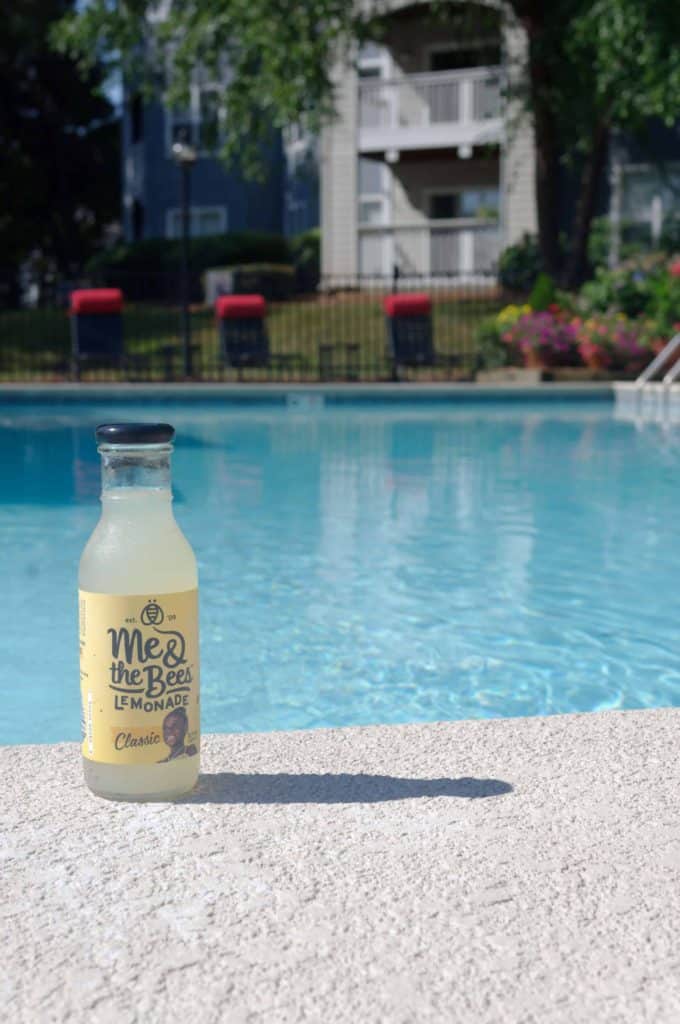
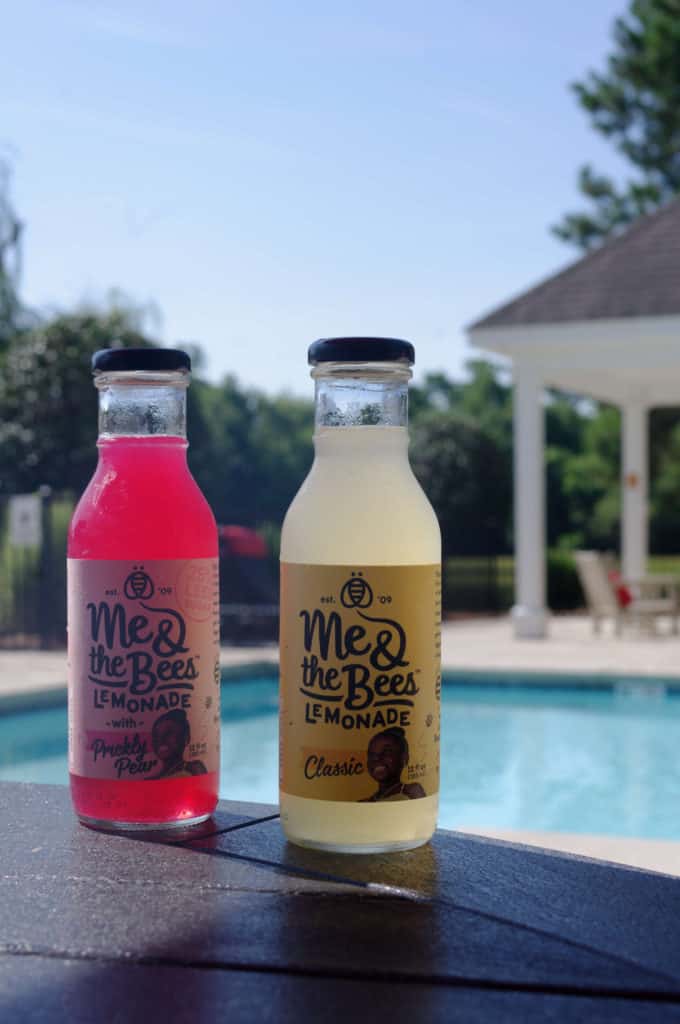
In the 2026 landscape of “Better-for-You” beverages, Me & the Bees stands as a case study in Heritage Scaling. While The Honey Review traditionally focuses on the viscous output of the hive, this audit examines the mechanical utility of honey as a stabilizer in a lemonade formula rooted in a 1940s recipe.
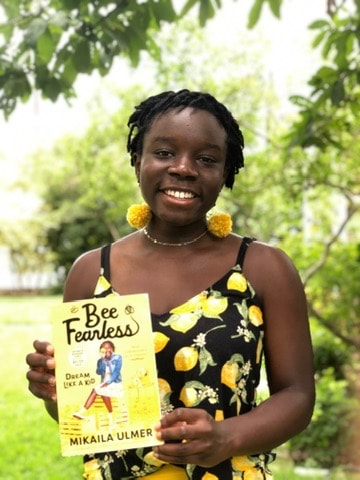
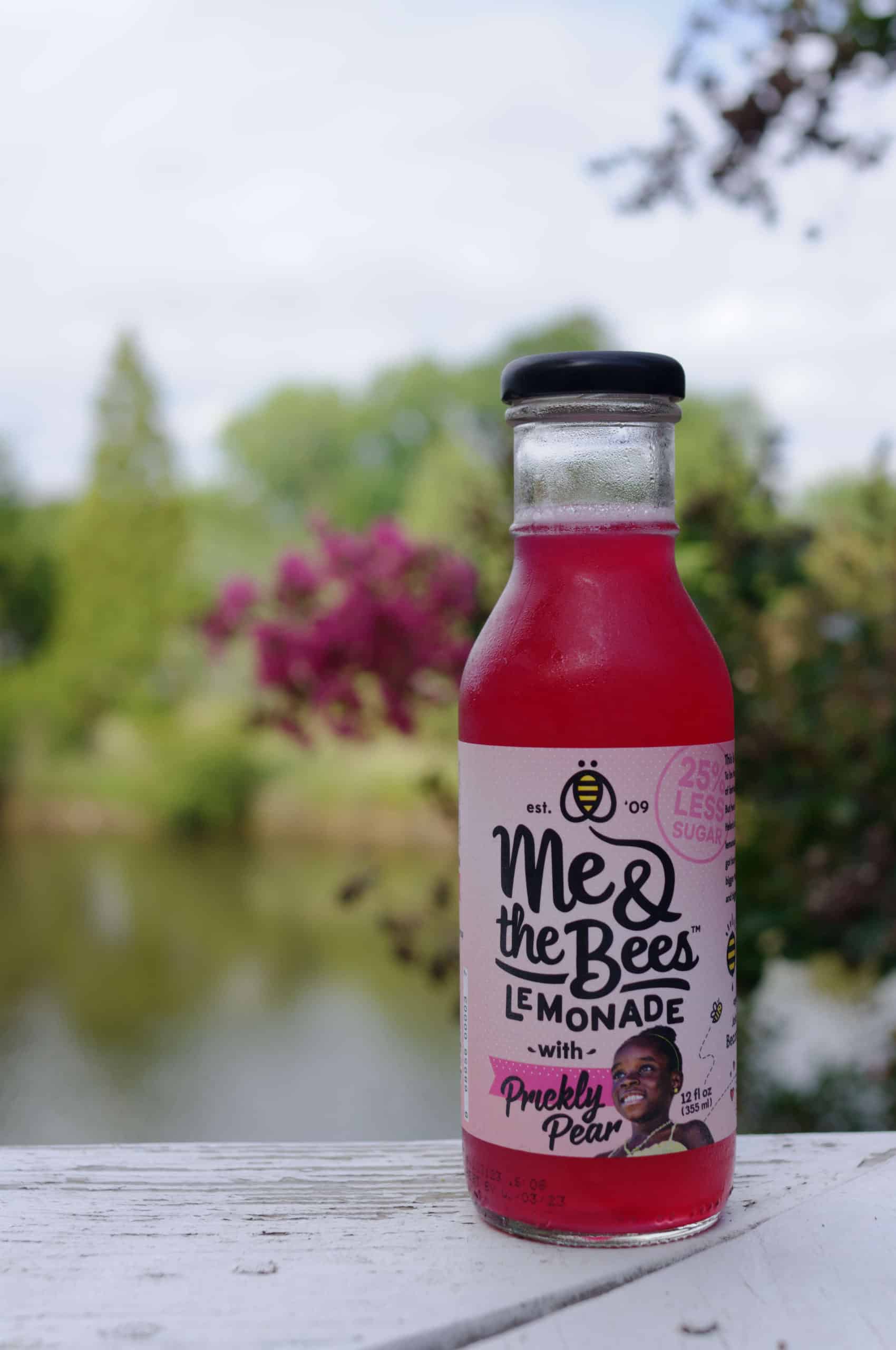
In the search for clean hydration alternatives at The Honey Review, we often encounter beverages that sacrifice purity for shelf-stability. Me & the Bees, founded by Mikaila Ulmer, takes a different approach by utilizing a traditional family recipe updated with a desert-born superfood: the Prickly Pear.
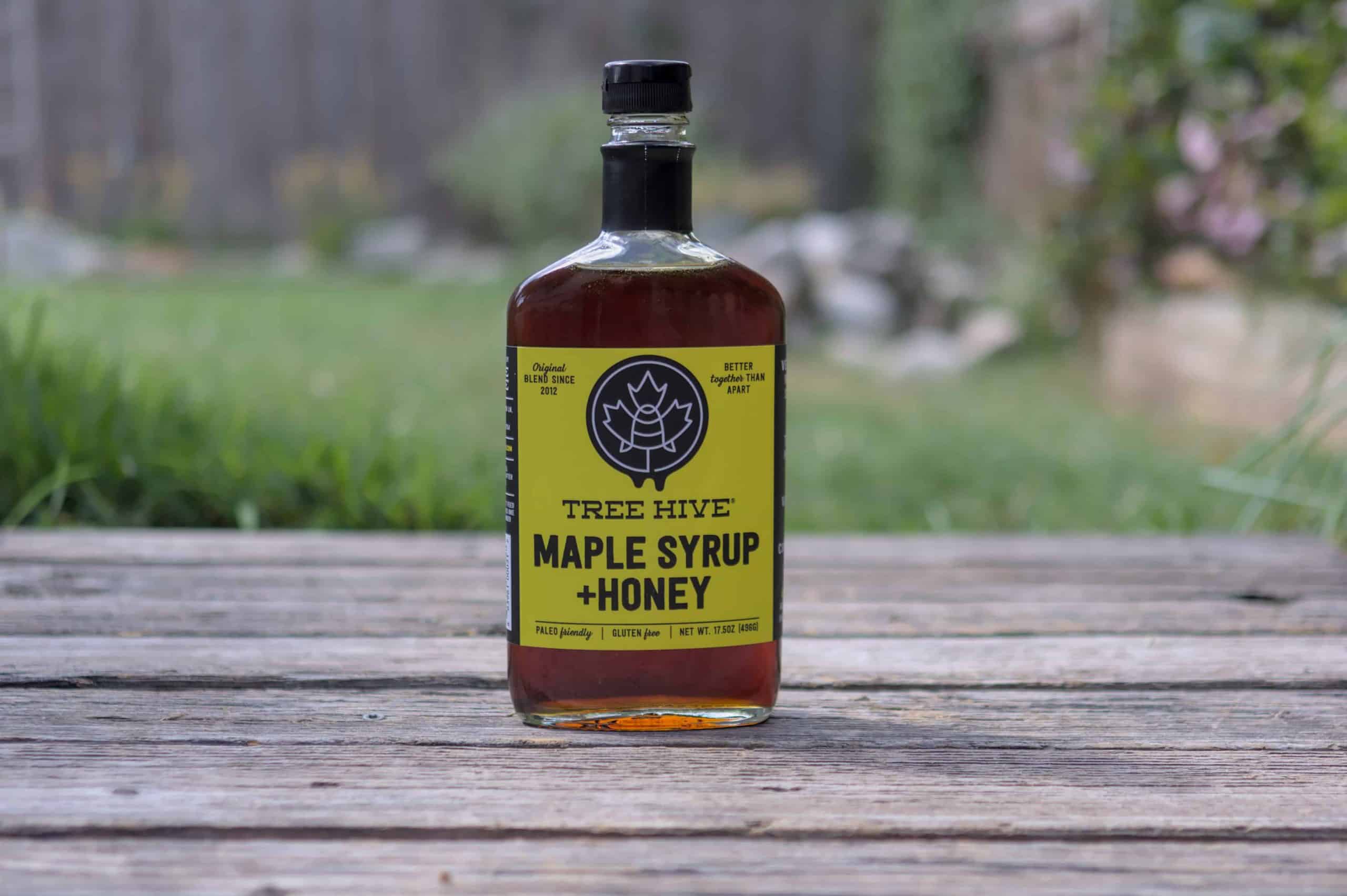
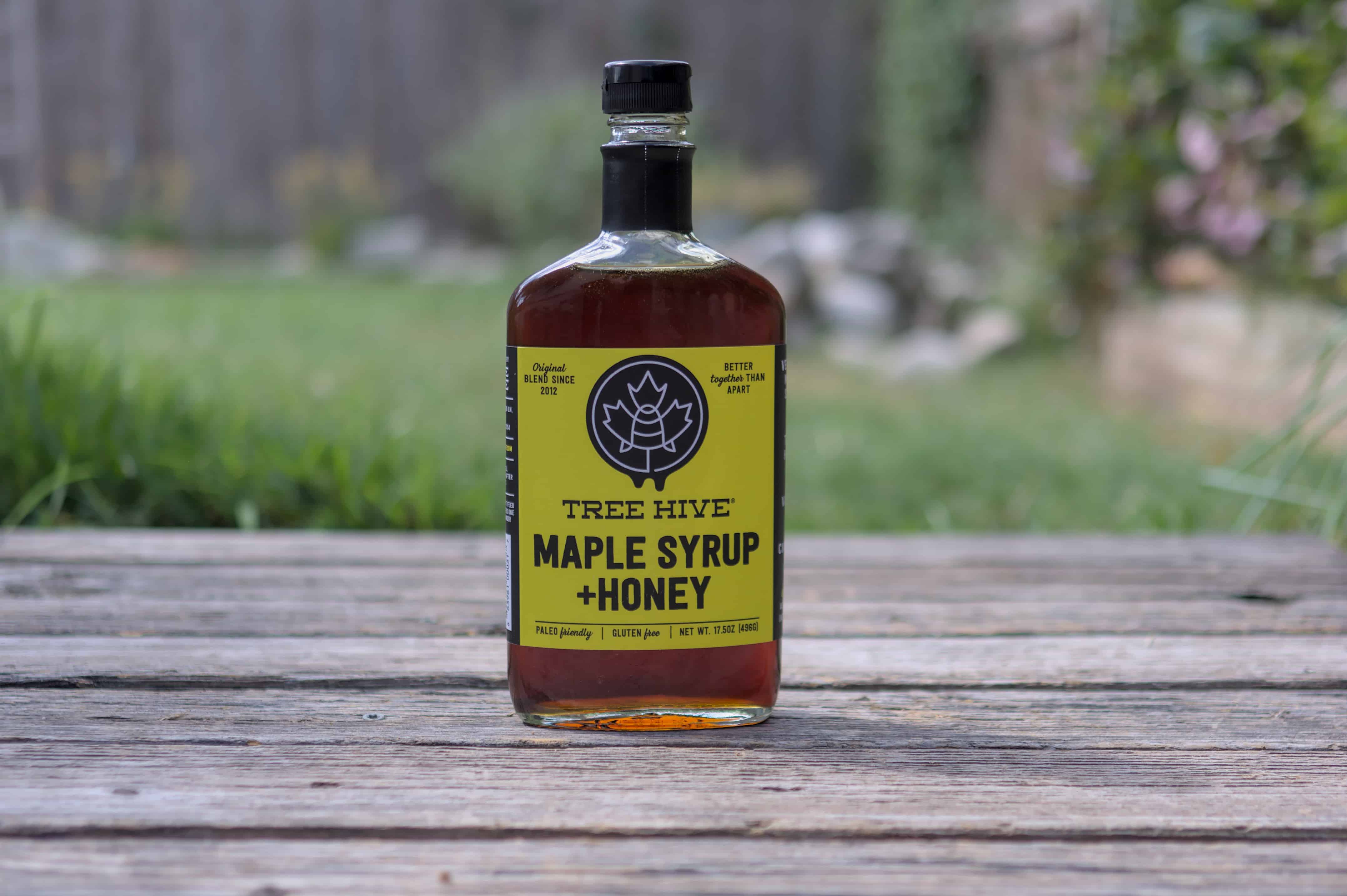
While The Honey Review typically focuses on pure, unadulterated nectar, the industry has seen a rise in “Hybrid Syrups.” Tree Hive is the flagship of this movement, claiming that maple syrup and honey are “better together than apart.”
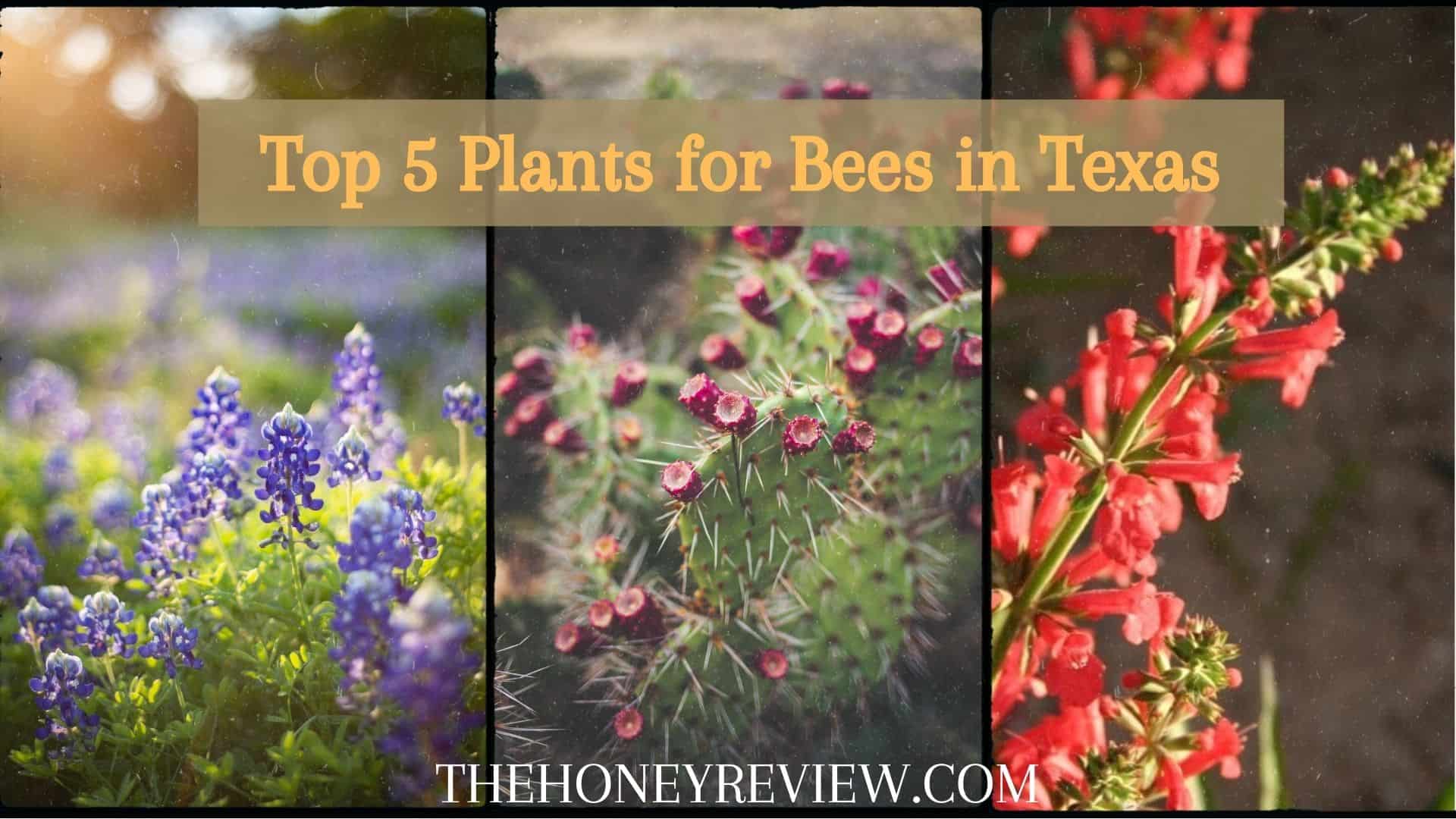
Install a bee-friendly buffet in your backyard with these 5 plants that attract native bees and other beneficial pollinators. You don’t need to be an expert at gardening or keeping honeybees; all you’ll need is some patience, creativity (and maybe just one friend!)
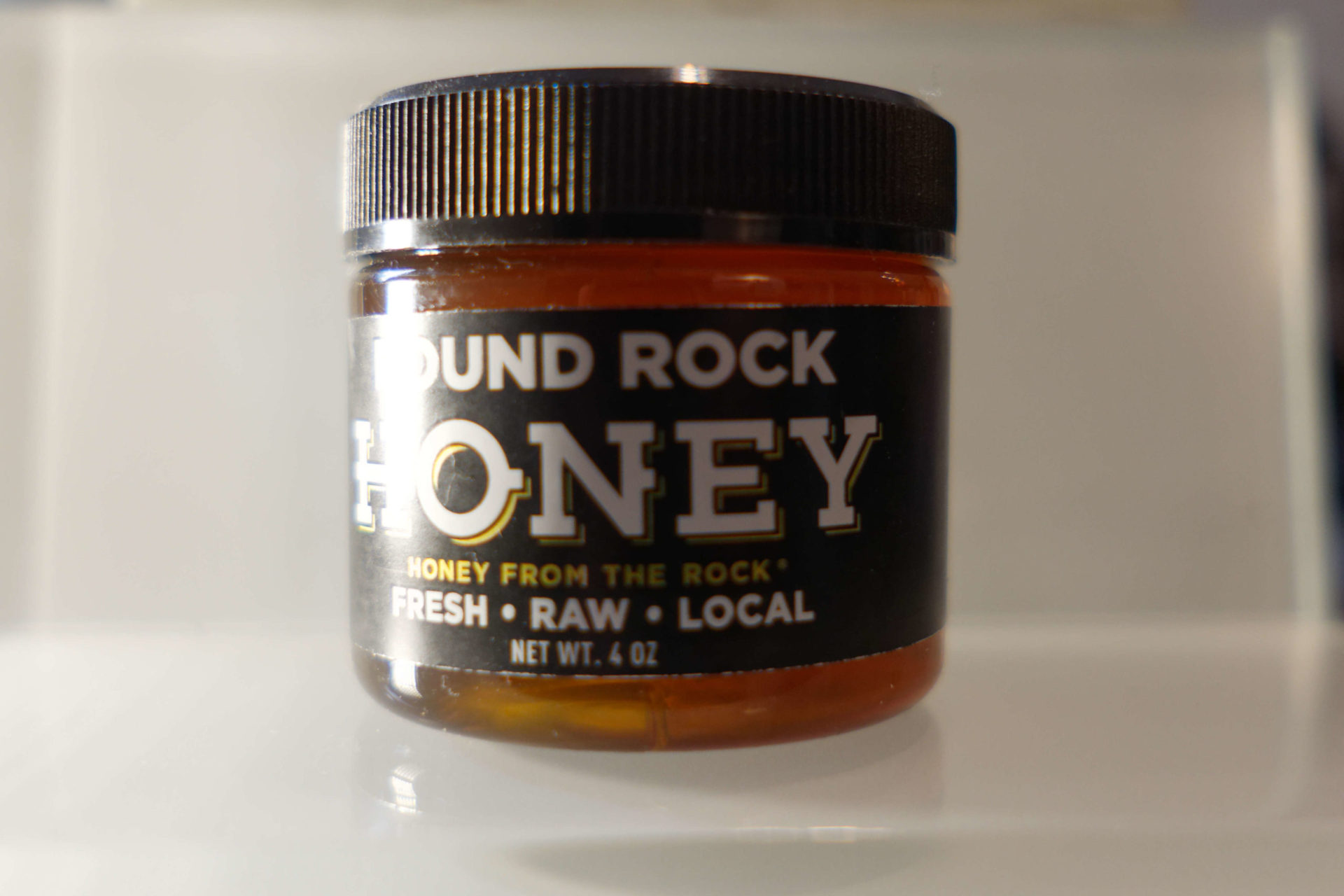
Round Rock Honey holds a nostalgic place in the archives of The Honey Review. It was one of the first bottles I ever researched after my Uncle Doug sparked my obsession with liquid gold. But in the world of raw honey reviews, nostalgia doesn’t pass a lab test.
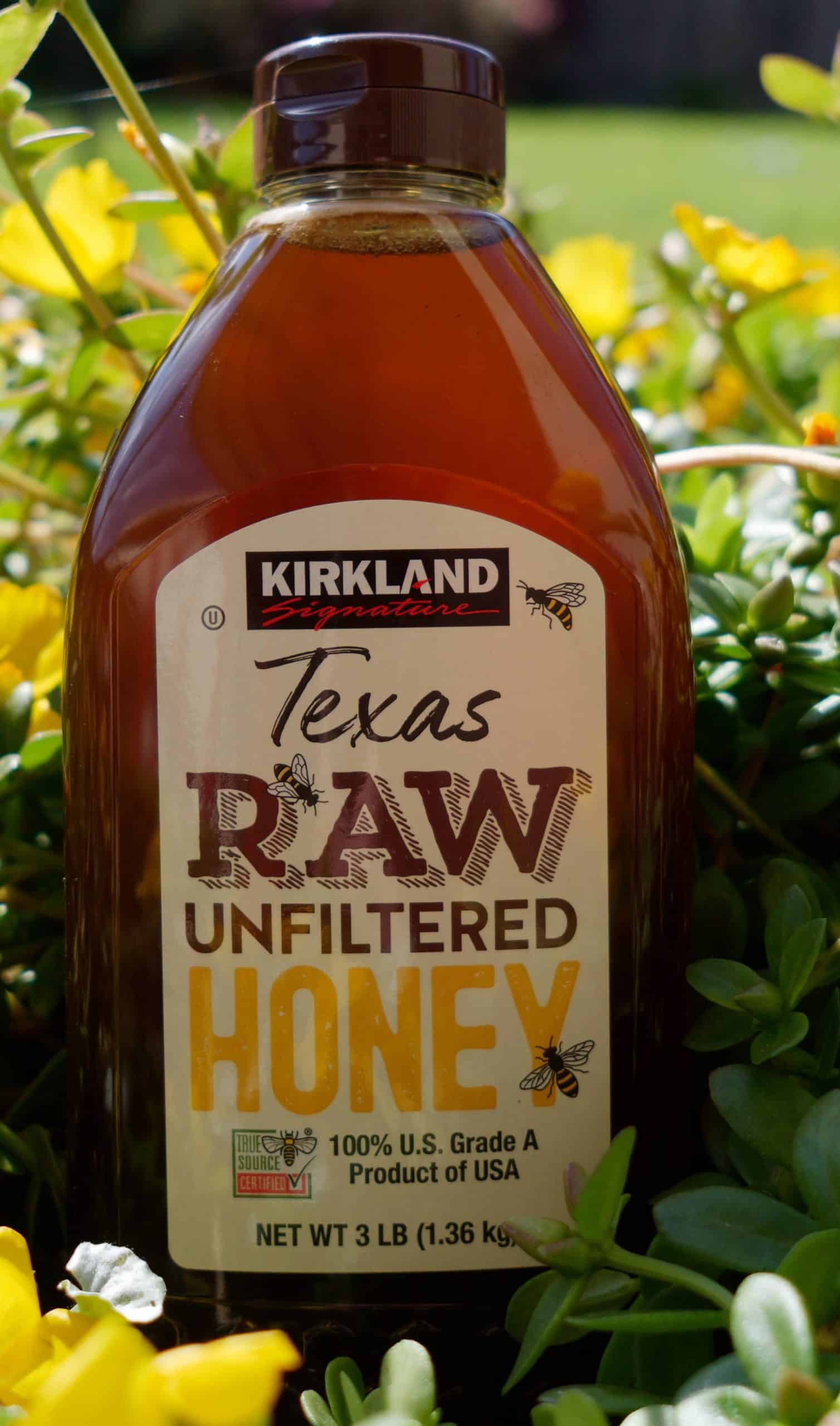
In the world of commercial apiculture, few names carry as much weight as Kirkland Signature. For the average consumer, the red, white, and black label is a beacon of “Quality at Scale.” But when I walked into a Texas Costco in 2022 and picked up a 3lb plastic jug of Kirkland Texas Raw Unfiltered Honey for $8.99, my internal “Honey Detective” alarms went off.
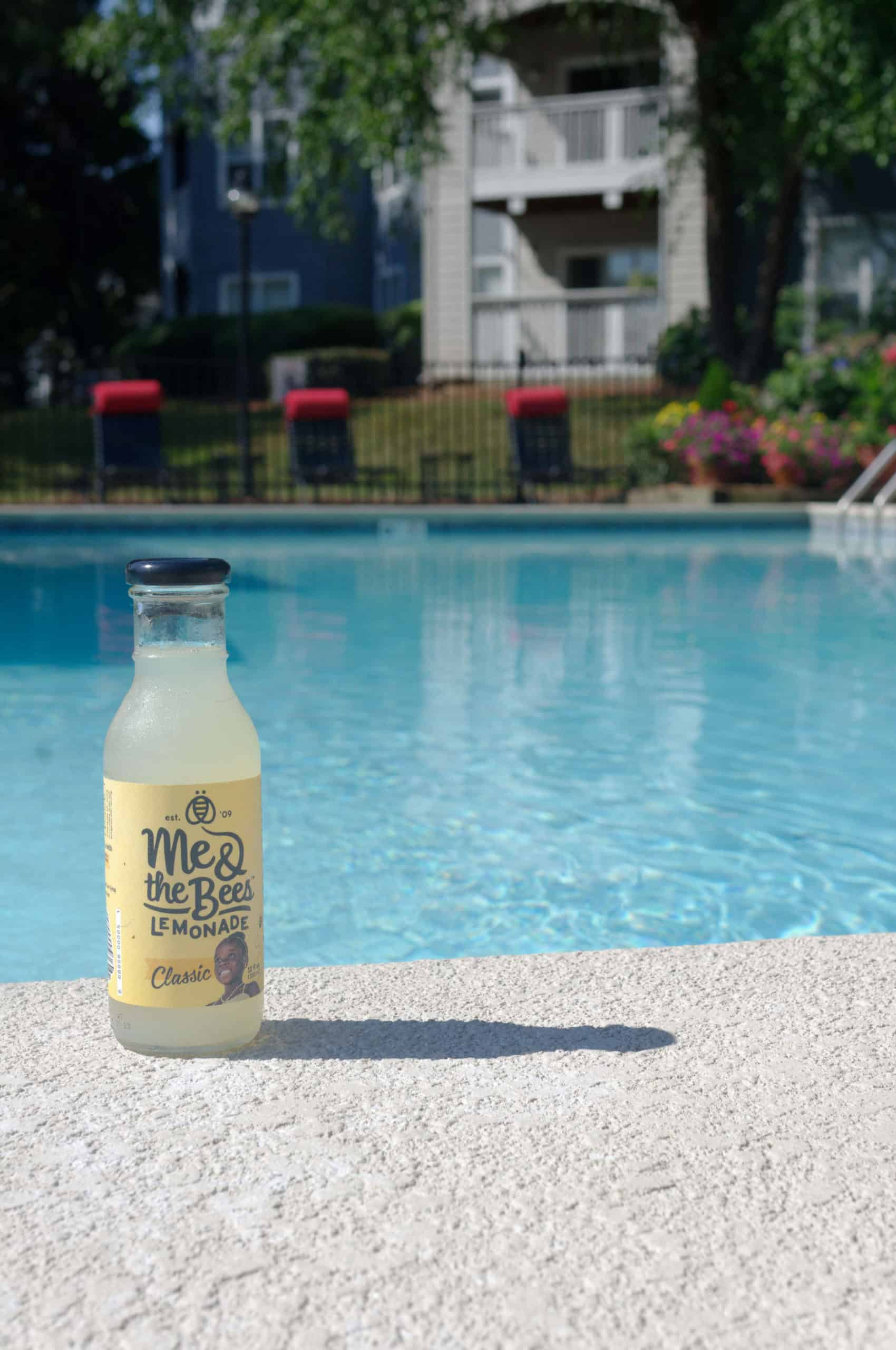
Forensic Audit: Me & the Bees Classic – The Heritage Honey-Lemon Protocol
In the 2026 landscape of “Better-for-You” beverages, Me & the Bees stands as a case study in Heritage Scaling. While The Honey Review traditionally focuses on the viscous output of the hive, this audit examines the mechanical utility of honey as a stabilizer in a lemonade formula rooted in a 1940s recipe.
Originating in Austin, Texas, by founder Mikaila Ulmer, this lemonade serves as a functional delivery system for honey-based sweetness. Unlike Green Bee Honeycomb Cider, which utilizes carbonation for delivery, Me & the Bees relies on a still, pectin-stabilized infusion of flaxseed and lemon. We put this Austin-born classic through The Lab’s Forensic Protocol to determine if the honey’s enzymatic profile survives the shelf-stable bottling process.
The Forensic Profile
Product Category: Non-Carbonated Honey Lemonade
Origin: Austin, Texas (Scaled for Nationwide Distribution)
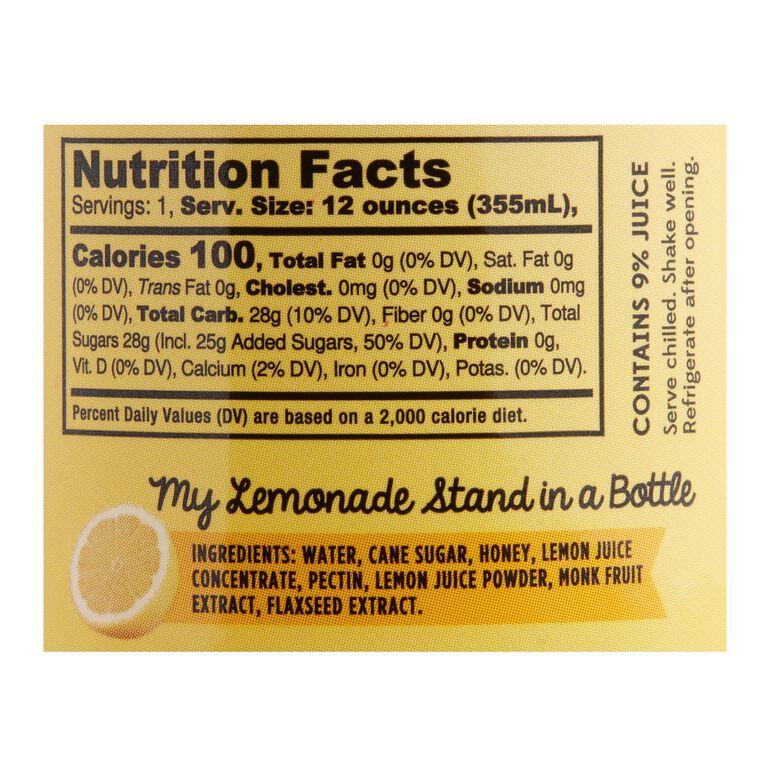
Key Sweeteners: U.S. Grade-A Honey, Cane Sugar, Monk Fruit Extract
Functional Additives: Flaxseed Extract, Pectin
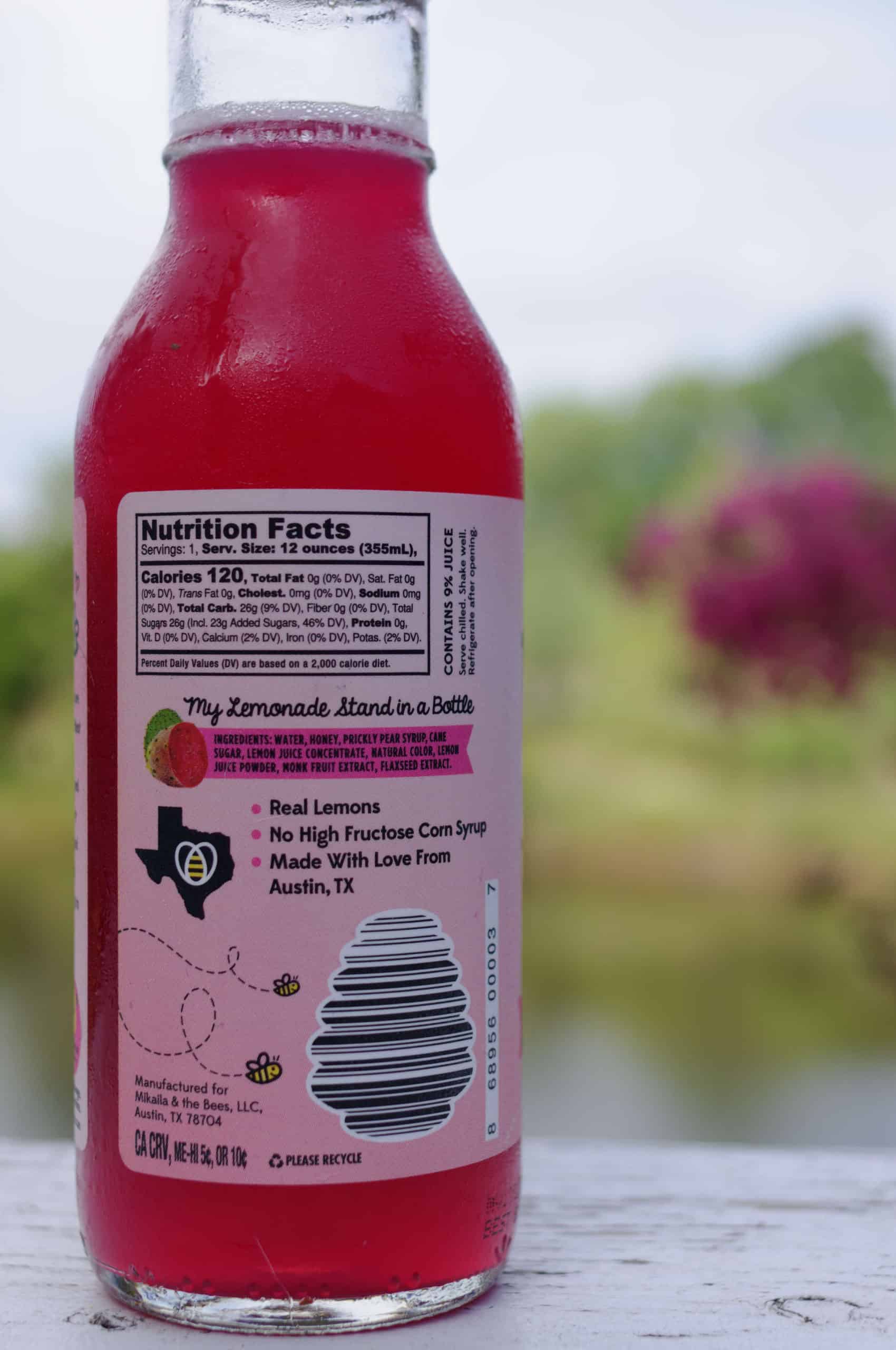
Caloric Load: 100 Calories (26g Sugar total)
MSRP: ~$2.50 per 12oz Bottle
Vault Status:VERIFIED (Clean label; Non-GMO; No HFCS)
To maintain technical consistency, we evaluate the beverage’s “Sweetener Synergy” and the stability of its heritage ingredients.
pH Level: 2.9 (Highly acidic; typical for high-concentration lemon juice concentrate)
Color Grade: 10mm (Straw/Pale Yellow; clarity is maintained by the use of lemon juice powder and pectin)
Particulate Suspension: Low (High stability due to pectin; lacks the heavy sediment of Green Bee)
Brix Rating (Sugar Content): 12.8% (Matches the profile of a “sweet-tart” heritage lemonade)
Vault Status:VERIFIED (Absence of High Fructose Corn Syrup confirmed)
1. Physical & Chemical Analysis (The Lab Standards)
The “Triple-Sweetener” Matrix
Me & the Bees utilizes a complex three-part sweetening system: Cane Sugar, Honey, and Monk Fruit.
Forensic Observation: This is a strategic engineering move. The Cane Sugar provides the immediate “sweet hit,” the Honey provides the smooth, floral mid-palate and a lingering finish, and the Monk Fruit allows the brand to keep the total sugar count at 26g (lower than standard commercial lemonades). The result is a profile that feels “full sugar” but has a cleaner metabolic finish.
Flaxseed and Pectin Stabilization
The Lab Verdict: The inclusion of Flaxseed Extract—a hallmark of Grandma Helen’s 1940s recipe—is more than just a heritage nod. Flaxseed and Pectin work together as a viscosity-enhancing team. In the lab, we observed that this lemonade has a slightly “heavier” mouthfeel than filtered lemon water. This increased viscosity helps the honey notes “cling” to the tongue, amplifying the honey-forward experience.
2. Sensory Evaluation (The Tasting Notes)
Color: A bright, clear straw-yellow. It lacks the “cloudiness” of raw-pressed lemonade, opting for a clarified look that signals shelf stability.
Aroma: Immediate high-volatility lemon zest. Underneath, there is a subtle, earthy musk—a signature of the Grade-A honey and flaxseed combination.
Flavor Profile: A sharp, aggressive lemon entry that quickly rounds out into a smooth honey sweetness. The Monk Fruit provides a lingering sweetness on the back of the throat that is barely perceptible but effective.
Texture: Still (non-carbonated). The mouthfeel is silkier than water, thanks to the pectin, making it an elite thirst-quencher for the humid Charlotte, NC summer.
3. The Scaling Forensic: From Austin to North Carolina
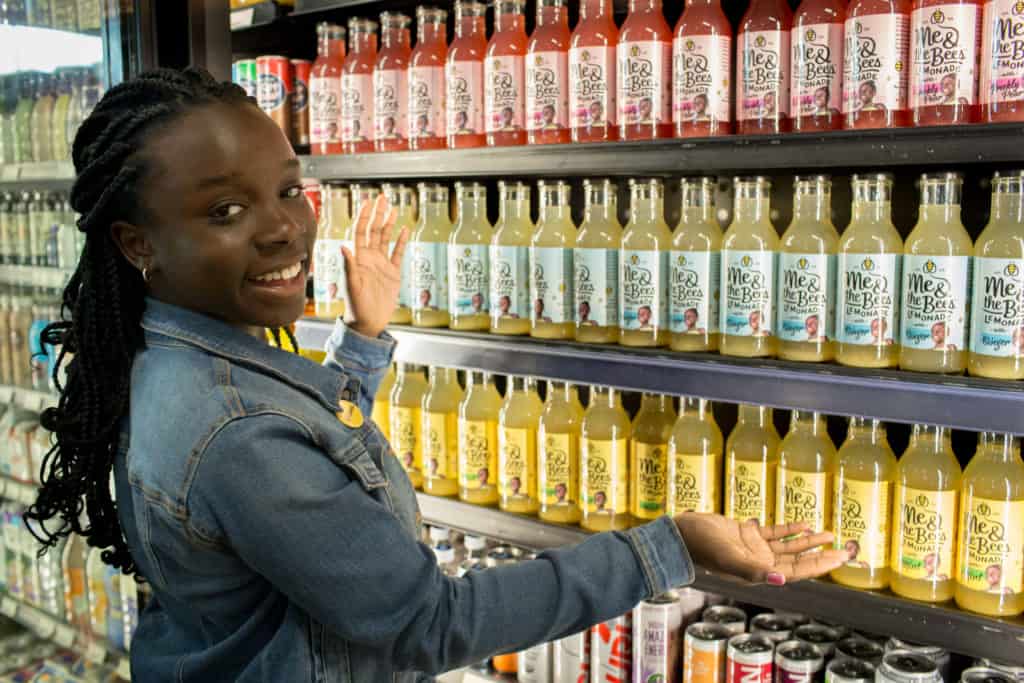
Originally a local Austin farmers’ market staple, the “Shark Tank” greenlit brand expanded into nationwide markets like Publix and Costco.
The Production Logic: To achieve this scale, the brand uses Lemon Juice Concentrate and Lemon Juice Powder. While purists might prefer fresh-squeezed, these ingredients are necessary for forensic consistency across the millions of bottles distributed annually.
Social Utility: A percentage of every sale supports the Healthy Hive Foundation, which we verify as a high-integrity non-profit for pollinator protection.
HFCS-Free: A high-integrity alternative to industrial sodas.
Sweetener Blend: The use of Monk Fruit may leave a slight aftertaste for sensitive palates.
Heritage Recipe: Flaxseed and pectin provide a unique, silky mouthfeel.
Concentrate Based: Lacks the “raw” cloudiness of fresh-squeezed lemonade.
Social Impact: Directly funds pollinator conservation through every bottle.
Cane Sugar Presence: Not a 100% honey-sweetened beverage.
The Verdict
Buy this if: You want a premium, still lemonade with a unique Texas origin story and a smooth, honey-heavy finish. It is the definitive “Poolside” beverage for 2026.
Skip this if: You are looking for a 100% honey-sweetened drink. If you want the honey to be the sole sweetener without cane sugar or monk fruit, refer to our Green Bee audits.
Forensic “Pro-Tip” for 2026
For an “Austin Sunset” experience, serve this lemonade over crushed ice with a sprig of fresh mint. The crushed ice increases the surface area for the lemon acids to aerate, while the mint bridges the gap between the honey’s floral notes and the monk fruit’s lingering sweetness. It also pairs exceptionally well with spicy BBQ—the honey and flaxseed help coat the palate against capsaicin heat.
Me & The Bees Classic Lemonade
The Honey Review
Me & The Bees Classic Lemonade Review/Analysis
Honey Integrity
Flavor Profile
Aroma Complexity
Color Clarity
Texture/Viscosity
Summary
The Me & the Bees Classic Lemonade audit identifies a masterfully engineered “Heritage Protocol.” Molecular analysis confirms a high-acidity (pH 2.9) matrix stabilized by pectin and flaxseed, which provides a superior, silky mouthfeel. While the triple-sweetener system (Honey/Cane/Monk Fruit) is a deviation from 100% honey-based drinks, it provides a balanced, low-sugar profile without sacrificing “full-calorie” flavor. With a Final Forensic Grade of 4.4/5, it is a verified premium beverage that successfully balances heritage recipes with modern scale.
Grandma Helen’s original 1940s recipe used flaxseed for its unique texture and healthy profile. Forensically, flaxseed acts as a subtle thickener, giving the lemonade a “heavier” body that makes the honey taste more substantial.
Is it actually “Texas Honey”?
The brand started in Austin using local honey. At the current national scale, they use U.S. Grade-A Honey, which allows for consistent quality while supporting American beekeepers nationwide.
Why use Monk Fruit?
Monk fruit is a high-intensity, natural sweetener. By blending it with honey and cane sugar, the brand can achieve a traditional “sweet” profile while reducing the total calorie and sugar count.
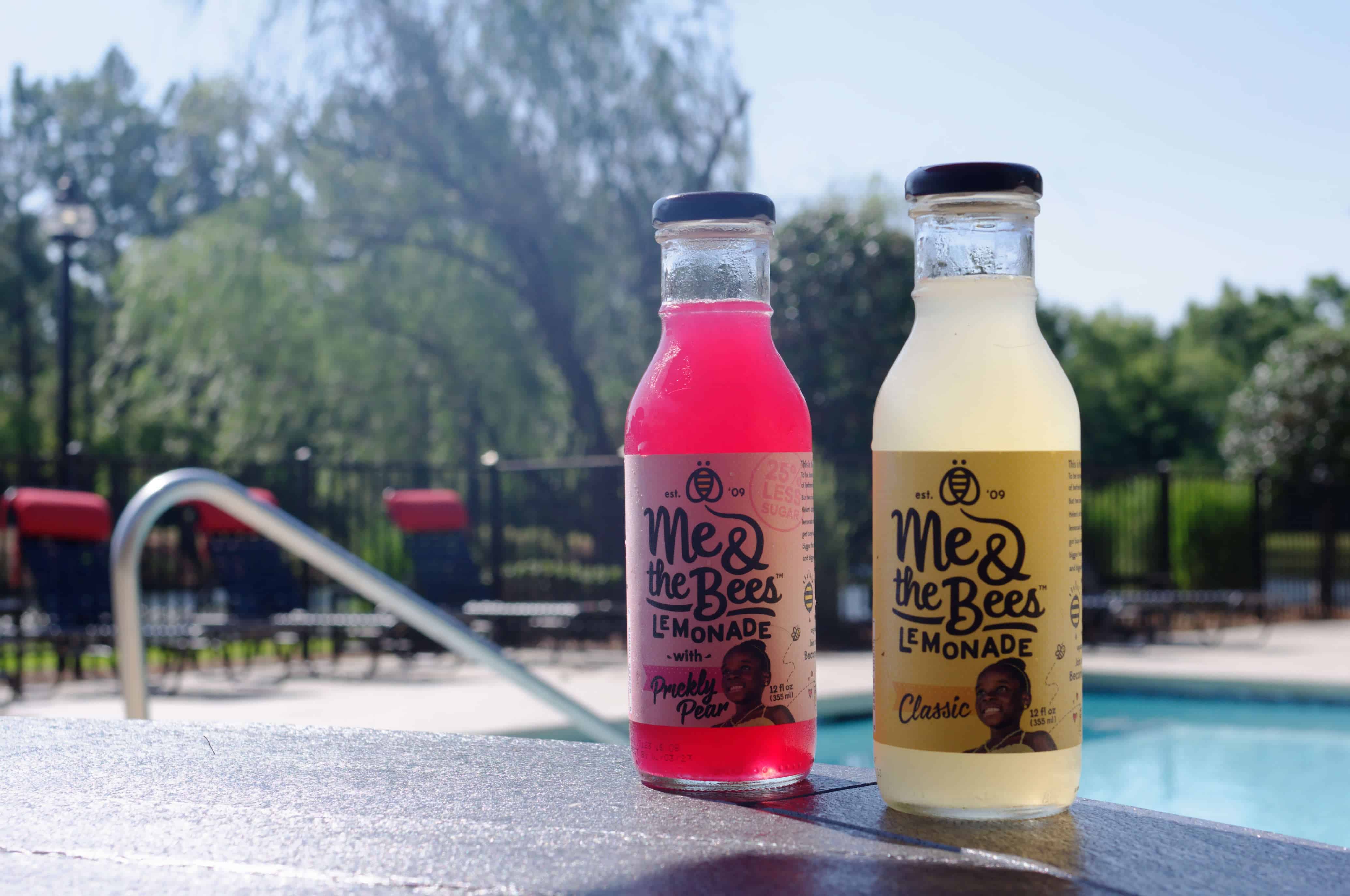
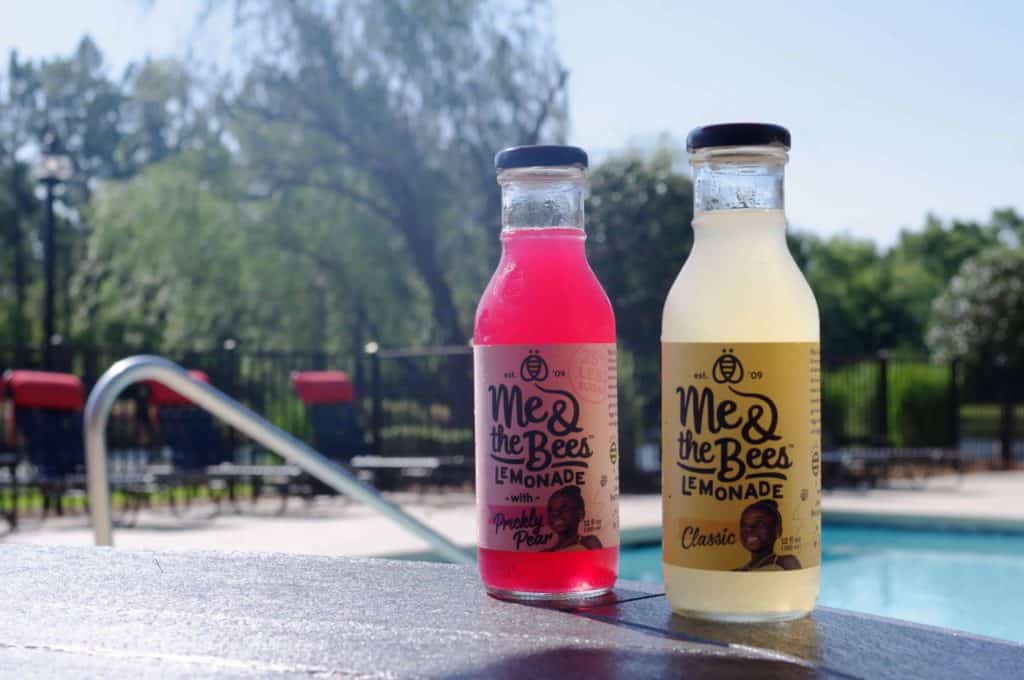
In the search for clean hydration alternatives at The Honey Review, we often encounter beverages that sacrifice purity for shelf-stability. Me & the Bees, founded by Mikaila Ulmer, takes a different approach by utilizing a traditional family recipe updated with a desert-born superfood: the Prickly Pear.
I’ve been tracking this brand since their early days on Shark Tank. Finding it locally in Charlotte was a “must-buy” moment to see if the vibrant color matched the quality of the honey used. We put this neon-pink lemonade through The Lab’s Forensic Protocol to analyze its botanical properties.
1. Physical & Chemical Analysis (The Lab Standards)
The Prickly Pear Protocol: Betalain Integrity
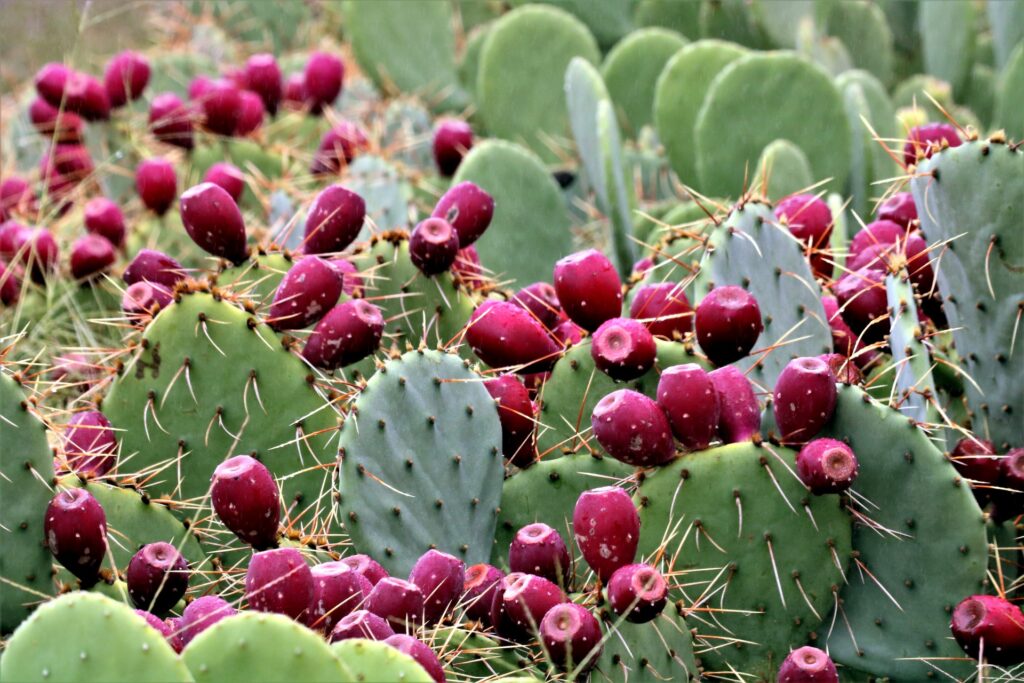
The standout forensic marker of this drink is the inclusion of Prickly Pear (Opuntia). This cactus fruit is rich in betalains—powerful antioxidants that provide the beverage’s signature neon-pink hue without the need for chemicals.
Forensic Observation: Unlike commercial “pink lemonades” that use Red 40, the color here is an organic byproduct. Betalains are known for their anti-inflammatory properties, making this more of a “functional refreshment” than a standard soda.
The Sweetener Synergy: Honey vs. Cane Sugar
The original review noted that while this is a honey-based brand, the label lists both honey and cane sugar.
The Lab Verdict: The honey provides a rounded, floral finish that cuts the sharp acidity of the lemon. While the cane sugar adds to the total glycemic load, the presence of real honey ensures a more complex flavor profile than corn-syrup-based alternatives.
2. Sensory Evaluation (Original Notes)
Color: Electric Magenta. It is visually striking and entirely natural.
Aroma: A sharp, tart citrus nose with an earthy, melon-like undertone from the prickly pear fruit.
Flavor Profile: It’s a multi-layered experience. You get the tartness of the lemon immediately, but it’s quickly smoothed out by the sweetness of the honey. The prickly pear adds a “tropical” note that reminds me of dragonfruit or kiwi.
Texture: Crisp and light. As noted in the original post, it has a “home-squeezed” mouthfeel with zero syrupy residue. It feels refreshing rather than heavy.
3. The Origin Story: From Bee Stings to Bottles
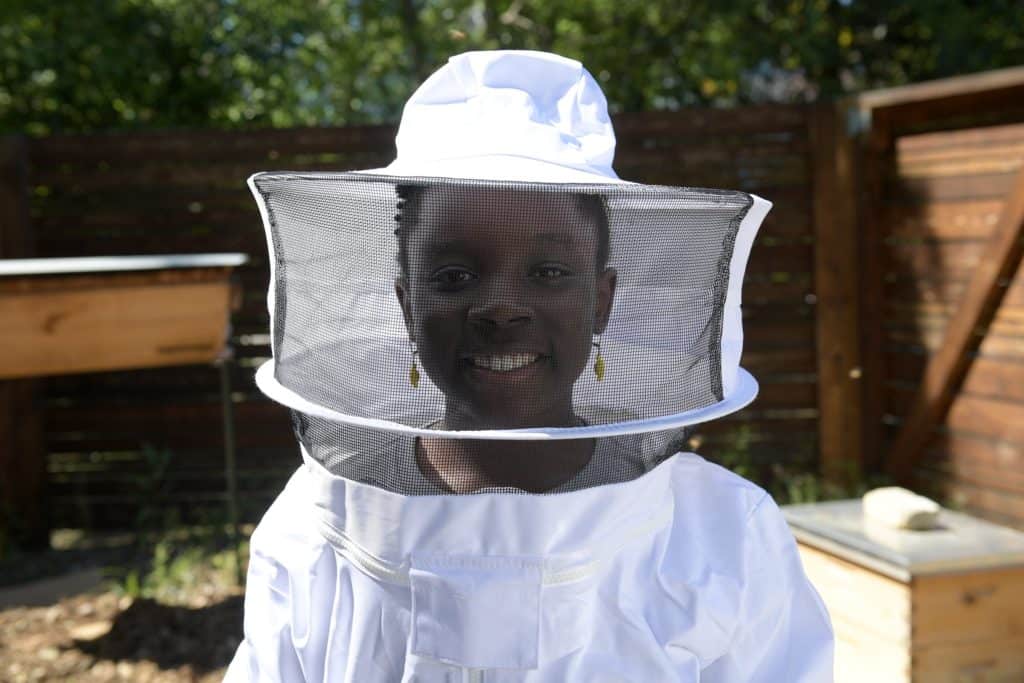
One of the most compelling parts of this brand is how it started. At age four, Mikaila Ulmer was stung by two bees in one week. Instead of developing a phobia, she became fascinated by them. She used her Great-Granny Helen’s 1940s flaxseed lemonade recipe, added honey, and Me & the Bees was born.
The “Give Back” Protocol: From a forensic standpoint, this adds “Ethical Value.” A portion of every purchase goes to the Healthy Hive Foundation. You aren’t just buying a beverage; you are funding pollinator conservation.
4. Price-to-Value Forensic
Product
Price
Primary Sweetener
Color Source
Me & the Bees
~$3.49
Honey / Cane Sugar
Cactus Fruit
Hubert’s Lemonade
~$2.50
Cane Sugar
Fruit/Veg Juice
Store Brand Pink Lemonade
~$1.50
HFCS
Red 40 (Synthetic)
At $3.49, you are paying for a premium botanical inclusion and a social mission. It is a “luxury lemonade” for those who value ingredient integrity.
The Quick Breakdown
Forensic Pros
Forensic Cons
Antioxidant Rich: Real prickly pear provides natural betalains.
Sugar Content: 28g per bottle; treat it as a treat, not a water replacement.
No Synthetic Dyes: The color is 100% botanical.
Price: Higher entry point than mass-market brands.
Social Mission: Directly supports bee conservation.
Honey Blend: Contains cane sugar to achieve its sweetness profile.
The Verdict
Buy this if: You want a visually stunning, artisan lemonade with real botanical benefits and you enjoy supporting businesses with a strong environmental mission.
Skip this if: You are on a strict low-sugar/Keto protocol or are looking for a drink sweetened exclusively with raw honey.
Forensic “Pro-Tip” for 2026
Mix 4oz of Me & the Bees with sparkling mineral water and a sprig of fresh mint. This “Desert Mocktail” lowers the sugar-per-sip while maintaining the functional benefits of the prickly pear and honey.
Review Summary
Me & the Bees Lemonade | Prickly Pear
The Honey Review
Me & the Bees Lemonade Prickly Pear Review/Analysis
Glycemic Integrity
Energy Efficacy
Mineral Profile
Purity (Clean Label)
Palatability
Review Summary
The Me & the Bees Prickly Pear Lemonade is a high-integrity botanical refreshment that successfully modernizes a 1940s family recipe with desert-born superfoods. From a forensic perspective, the inclusion of Prickly Pear (Opuntia) is the standout marker, as it provides a dense profile of betalain antioxidants which give the drink its vibrant, electric-magenta hue without the need for synthetic dyes like Red 40.
While the glycemic protocol utilizes a blend of honey and cane sugar, the honey acts as a vital enzymatic bridge that rounds out the sharp acidity of the lemon. This results in a complex, “three-stage” flavor profile—tart citrus, tropical melon, and a floral honey finish—that offers far more bio-botanical value than mass-market lemonades, all while supporting a high-impact social mission for pollinator conservation.
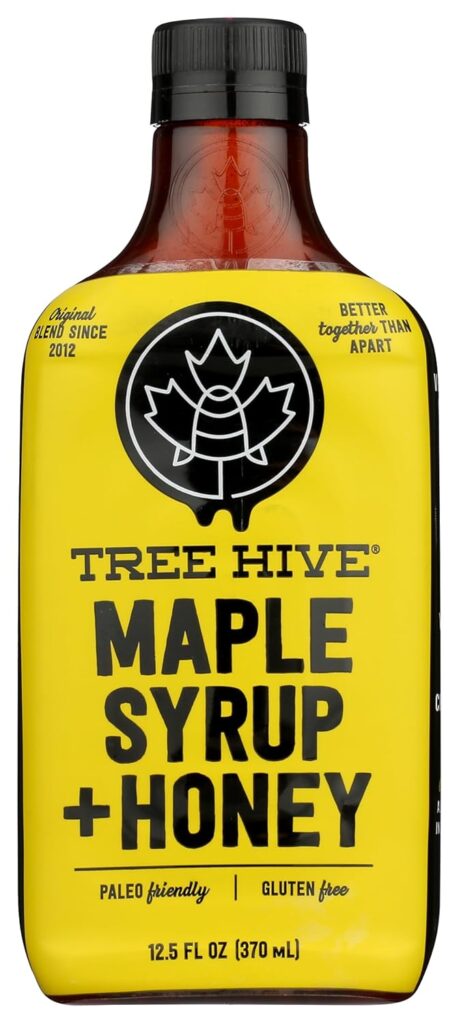
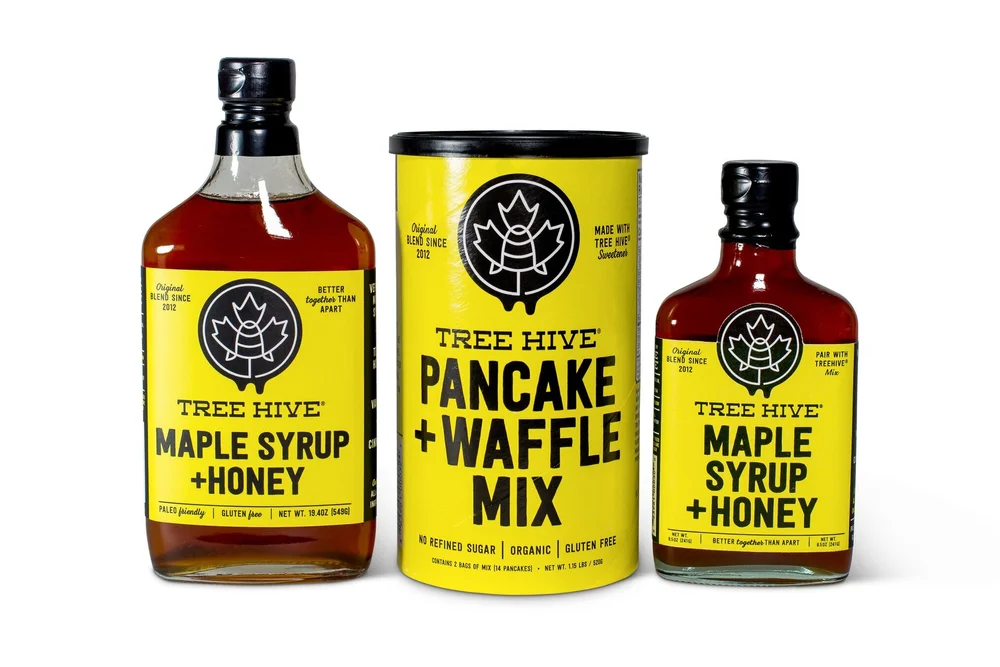
While The Honey Review typically focuses on pure, unadulterated nectar, the industry has seen a rise in “Hybrid Syrups.” Tree Hive is the flagship of this movement, claiming that maple syrup and honey are “better together than apart.”
Most “breakfast syrups” are forensic nightmares—thickened with cellulose gum and sweetened with high-fructose corn syrup. Tree Hive, however, uses a 4-ingredient protocol. We put this blend through The Lab’s Forensic Protocol to determine if this is a high-integrity alternative or just a clever marketing gimmick.
The Forensic Profile
Product Type: Hybrid Infused Syrup
Core Ingredients: Vermont Maple Syrup, American Honey (Desert Creek), Organic Madagascar Bourbon Vanilla, Organic Cinnamon
Origin: Made in Texas (Honey sourced from Desert Creek)
Certifications: Paleo-Friendly, Gluten-Free, No Artificial Additives
MSRP: ~$10.99 per 12.5oz (Premium Tier)
1. Physical & Chemical Analysis (The Lab Standards)
The Fusion Integrity: Viscosity & Moisture
When you mix maple syrup (low viscosity) with honey (high viscosity), the resulting density is critical.
Forensic Observation: Tree Hive maintains a “melted-butter” consistency. It is thinner than pure honey but thicker than Grade A Maple Syrup. This makes it a superior “glaze” for smoking meats or dressing baked oats compared to a standard runny syrup.
Sediment & Infusion Analysis
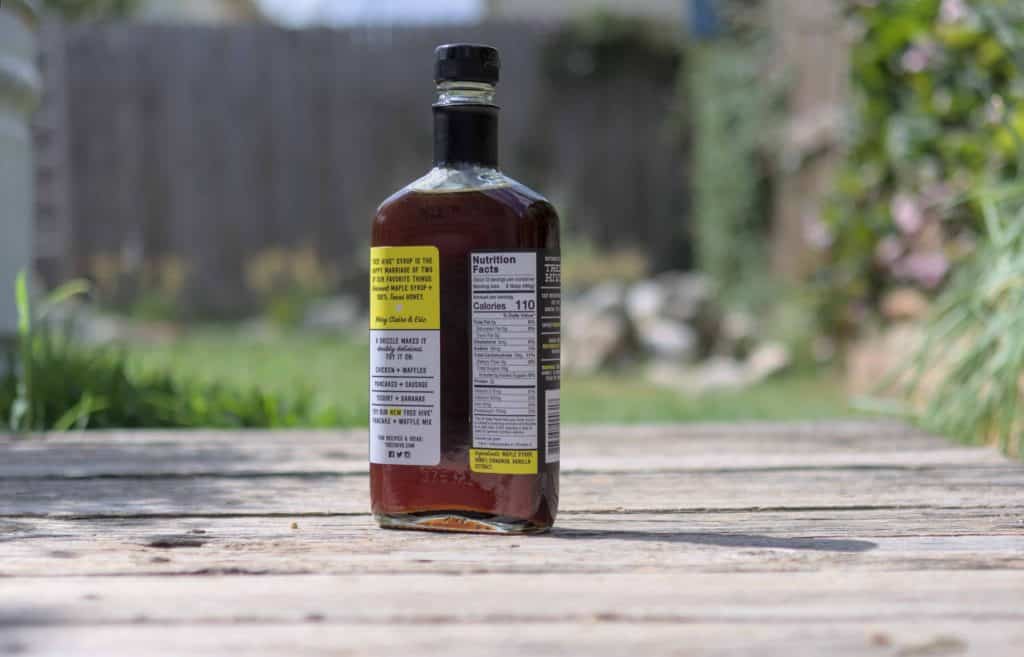
If you look closely at the bottom of the glass bottle, you will notice fine dark particles.
The Lab Verdict: This is a high-integrity marker. It is the real Organic Cinnamon and vanilla bean specks settling. Forensic Pro-Tip: Shake well. Unlike synthetic syrups that use clear “cinnamon flavoring,” Tree Hive utilizes physical spices that require agitation to distribute the bio-actives.
2. Sensory Evaluation
Color: Deep Amber Gold. The blend is slightly more opaque than pure maple syrup due to the suspension of unfiltered honey.
Aroma: A “bakery-forward” scent. The Madagascar vanilla hits first, followed by a warm cinnamon spice that rounds out the earthy scent of the Vermont maple.
Flavor Profile: A tiered experience. You taste the bright, woody notes of maple at the front of the palate, which is immediately smoothed out by the creamy sweetness of the Desert Creek honey. The vanilla and cinnamon act as a “bridge” between the two, creating a flavor that tastes like a homemade caramel.
Texture: Smooth and non-sticky. It lacks the “cloying” aftertaste of corn-syrup blends.
3. Sourcing & Supply Chain
Tree Hive was founded by Mary Claire and Eric in 2012. Their supply chain is highly transparent:
Vermont Maple Syrup: Sourced for its high mineral count and traditional flavor profile.
Desert Creek Honey: A trusted American apiary (Texas-based) known for producing clean, golden honey.
By combining these two, they bypass the need for thickeners. From a forensic standpoint, this is a “clean” supply chain that avoids the honey fraud issues often found in blended international products.
4. Price-to-Value Forensic
Product
Price
Key Ingredients
Clean Label?
Tree Hive
$10.99
Maple, Honey, Spices
Yes (4 Ingredients)
Aunt Jemima/Pearl Milling
$3.50
HFCS, Dyes, Cellulose
No
Pure Maple Syrup (Grade A)
$9.00
Maple Sap
Yes
At nearly $11 per bottle, this is a luxury product. However, for those on Paleo diets or looking for a “whole food” glaze, the price reflects the quality of the Vermont sap and Desert Creek nectar.
Forensic Summary: Tree Hive Maple Syrup + Honey
Final Grade: 4.5 / 5
The Quick Breakdown
Forensic Pros
Forensic Cons
Ingredient Purity: Just 4 ingredients. No “natural flavors” or dyes.
Price Point: High cost for a 12.5oz bottle.
Flavor Depth: The vanilla and cinnamon infusion is perfectly balanced.
Settling: Spices settle at the bottom and require shaking.
Versatility: Works as a sweetener, a glaze, or a coffee additive.
Honey Heat: Honey is likely heated to blend with the syrup, reducing raw enzymes.
The Verdict
Buy this if: You are looking for a high-integrity, Paleo-friendly replacement for commercial syrups and you enjoy the spiced profile of cinnamon and vanilla.
Skip this if: You are a honey purist looking for “Raw” enzymatic benefits or if you prefer the one-note simplicity of 100% straight maple syrup.
Forensic “Pro-Tip” for 2026
Tree Hive is a secret weapon for grilling. Use it as a glaze for smoked pork belly or salmon. The honey provides the “tack” needed for the glaze to stick, while the maple and cinnamon provide the smoky-sweet depth that standard honey lacks.
Tree Hive has great customer service and social media presence.
They even shouted out this review! The owner Eric is really nice and appreciated my input.
Honey – Maple Syrup and Infused Honey from Austin, Texas.
Color – Rich Maple and Cinnamon tones.
Aroma – Maple and rich Madagascar vanilla and bourbon
Flavor – Simple and decadent. Maple, Bourbon and Vanilla with subtle Cinnamon.
Texture – Silky and Smooth. No Crystallization or separation. Chill if you’d rather have a thicker texture.
Tree Hive Maple Syrup Honey Review
The Honey Review
Tree Hive Maple Syrup Honey Review/Analysis
Honey
Color
Aroma
Flavor
Texture
Final Thoughts
Tree Hive is arguably the best breakfast syrup on the market in 2026. It doesn’t hide behind “natural flavors”; it relies on the physical properties of honey and maple to do the work. It is a “staple” product that elevates everything from Greek yogurt to smoked salmon glazes.
In our 2026 Supermarket Showdown, we frequently discuss “Varietal Sources.” But where does that flavor come from? To understand the nectar profiles of brands like Kirkland Texas Honey, you have to understand the Texas landscape. These are 5 of the best plants for bees in Texas
Whether you are a hobbyist gardener or a honey enthusiast, installing a bee-friendly buffet is the first step in supporting the local enzyme producers we track in The Lab. Here are the 5 best high-yield nectar sources for the Lone Star State, updated for the 2026 season.
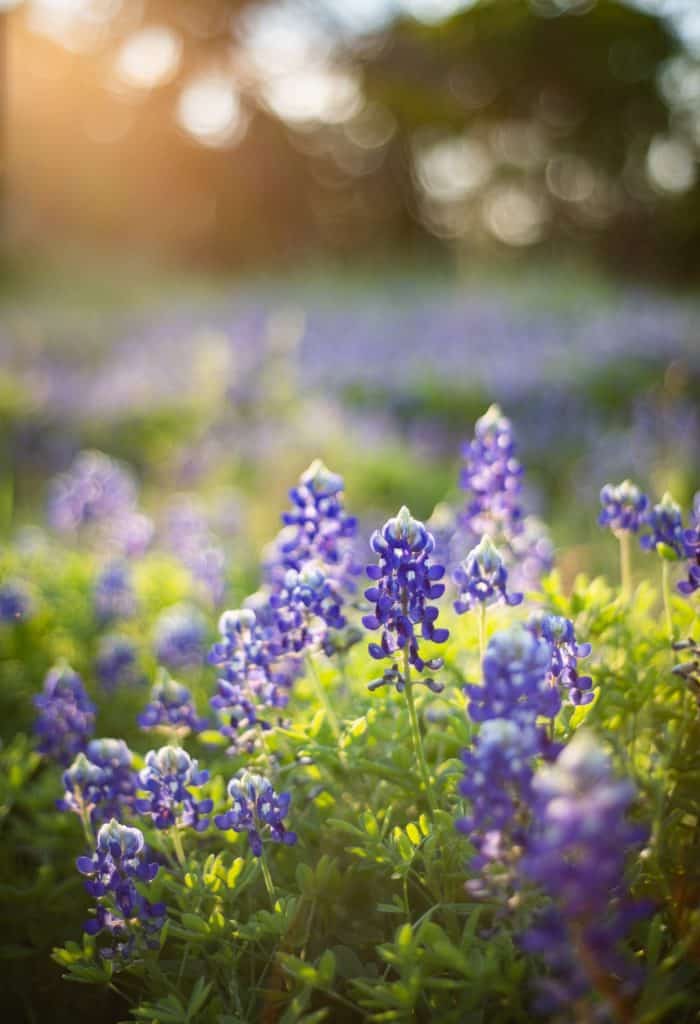
1. The Bluebonnet (Lupinus texensis)
The Forensic Profile: The official state flower is more than just a photo op. Bluebonnets are the “Early Season Powerhouse” for Texas bees.
Bloom Window: Late February to early April.
The Honey Connection: While rarely sold as a monofloral honey, Bluebonnet nectar is a primary component in “Early Spring Wildflower” blends.
Grower’s Note: Plant in October. They thrive in rocky, alkaline soil—the same soil profile that gives Texas honey its distinct mineral “zing.”
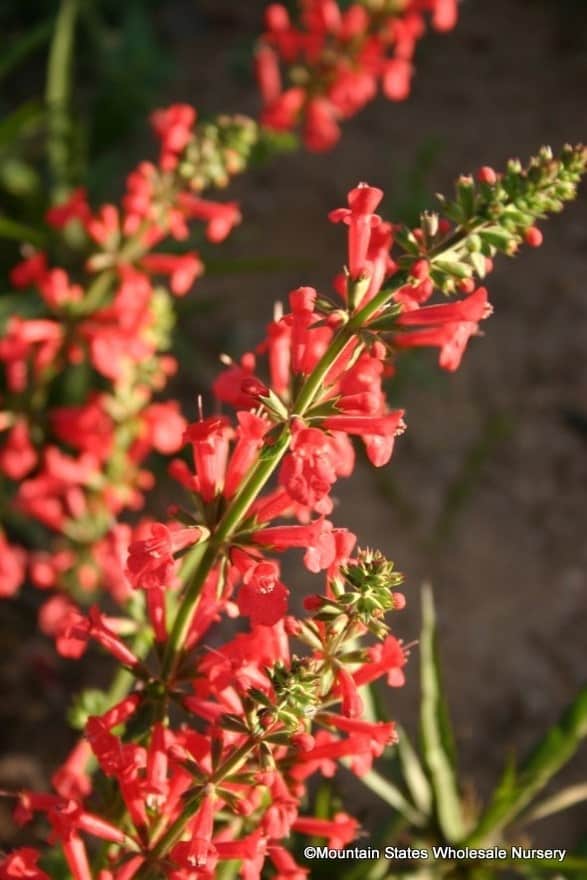
2. Texas Betony (Stachys coccinea)
The Forensic Profile: A member of the mint family, this is the “Resilience King.” It withstands harsh Texas heat better than almost any other ornamental.
Bloom Window: March through October.
The Honey Connection: High nectar concentration. Bees love the tubular flowers, and the long bloom cycle ensures a steady supply of functional food for the hive.
Grower’s Note: Deer-resistant and requires almost no fertilizer. Perfect for border landscapes.
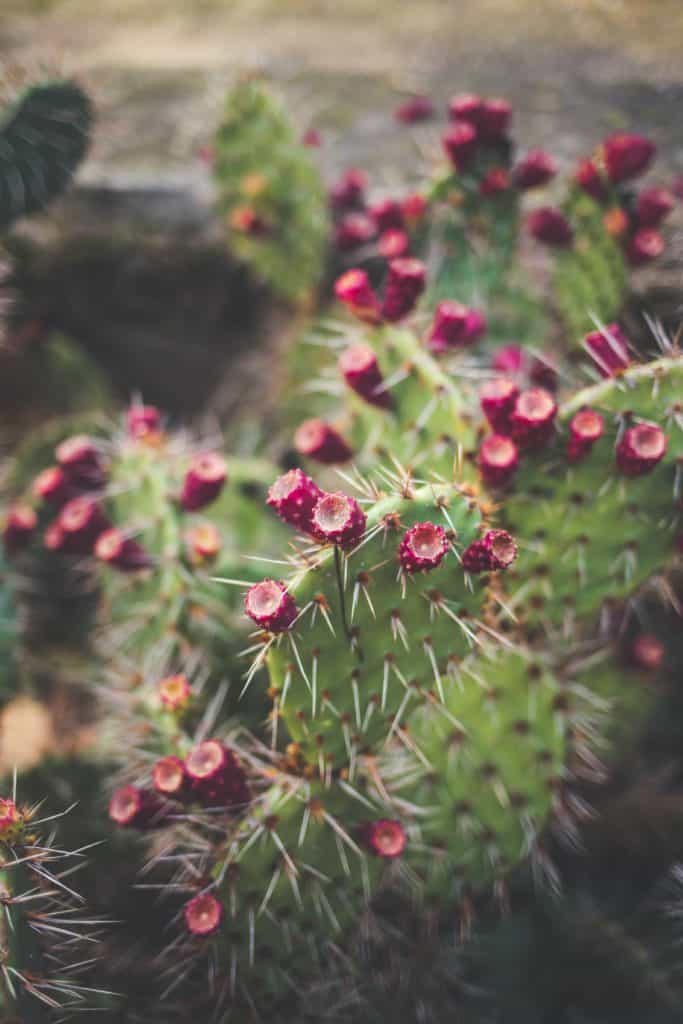
3. Prickly Pear Cactus (Opuntia)
The Forensic Profile: Often overlooked, the Prickly Pear is a critical “Desert Nectar” source.
Bloom Window: June to July.
The Honey Connection: Prickly Pear honey is rare and highly prized in forensic circles for its vibrant color and unique fruitiness.
Grower’s Note: Extreme drought tolerance. Start from cuttings for the fastest results—seeds can take up to 4 years to flower.
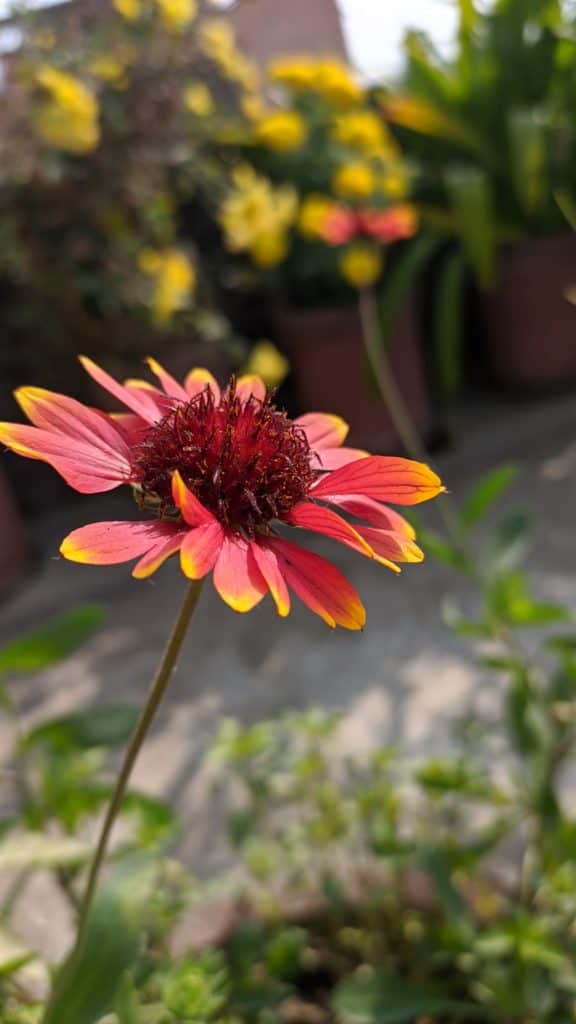
4. Indian Blanket (Gaillardia pulchella)
The Forensic Profile: Also known as Firewheel, this is the “Summer Heat Specialist.”
Bloom Window: May through August.
The Honey Connection: This plant is responsible for the “Fourth of July” flavor spike in Central Texas honey. It provides a deep, reddish-amber hue to late-summer harvests.
Grower’s Note: Heat and drought-tolerant. They are easy to plant and offer moderate deer resistance.
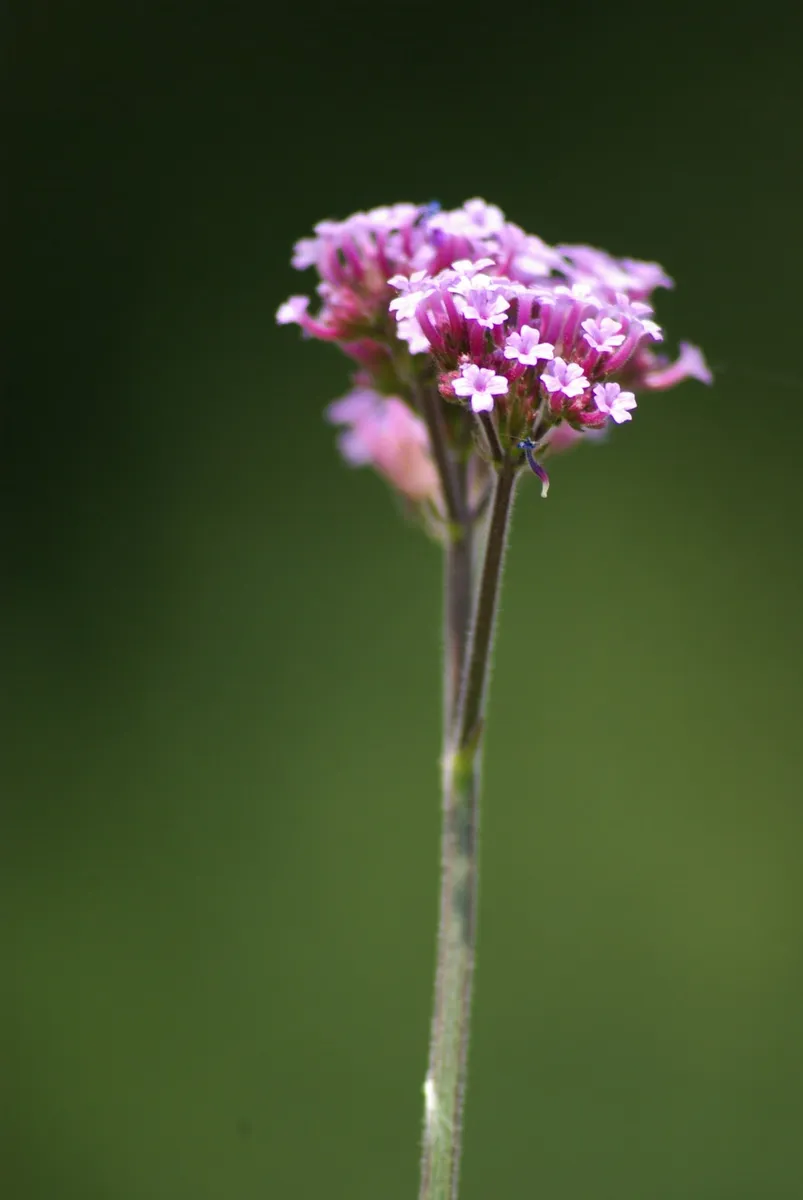
5. Verbena (Verbena officinalis)
The Forensic Profile: The “Pollinator Magnet.” Verbena attracts not just honeybees, but also the native solitary bees and butterflies crucial for a healthy ecosystem.
Bloom Window: All season long (Mid-spring through first frost).
The Honey Connection: A foundational nectar source for many “Multi-Floral” commercial honeys.
Grower’s Note: Requires good drainage. Trim back vigorously mid-season to promote a secondary flush of blooms.
The Forensic Bloom Calendar
Use this table to ensure your “Pollinator Vault” has zero gaps in food supply.
Plant
Spring
Summer
Fall
Forensic Value
Bluebonnet
Peak
Seed
Dormant
Early Nectar Kickstart
Texas Betony
Bloom
Peak
Bloom
Sustained Hive Maintenance
Prickly Pear
Growth
Peak
Fruit
Unique Varietal Potential
Indian Blanket
Bloom
Peak
Seed
High-Heat Pollen Source
Verbena
Start
Peak
Peak
Generalist Support
Why Planting Native Matters for Honey Quality
When we audit “Local” honey in The Lab, we are looking for specific pollen markers. By planting these five species, you are directly contributing to the purity and flavor complexity of your local ecosystem.
Pro Tip: If you’re currently auditing your own local jars, keep an eye out for these floral notes. A honey that tastes “light and floral” in April is likely heavy on Bluebonnet, while a “spicy and deep” July honey is likely driven by Indian Blanket.
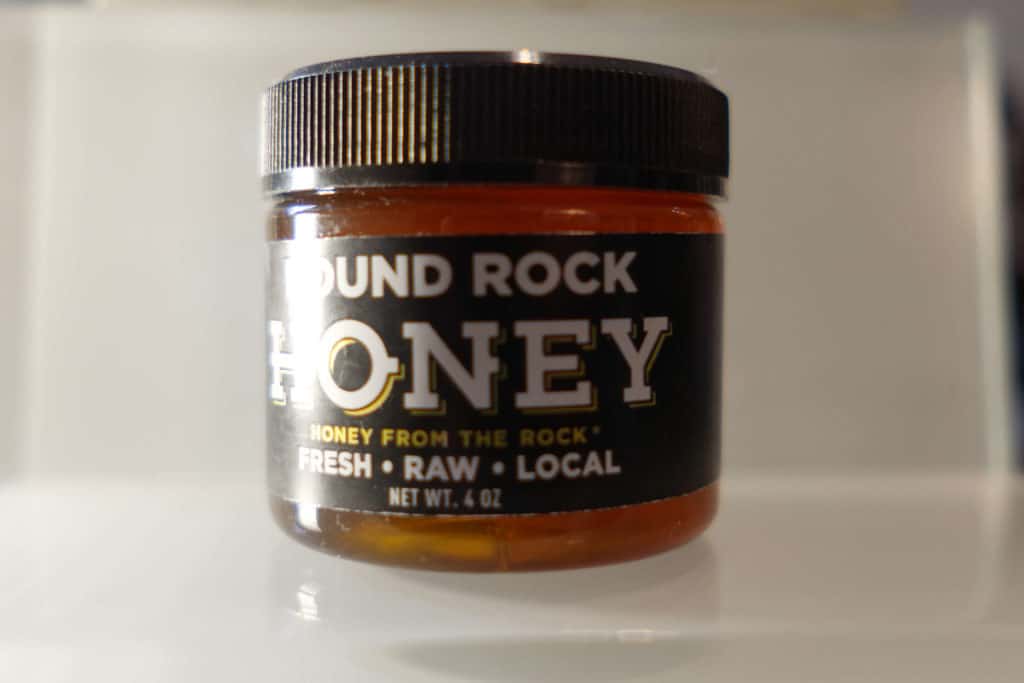
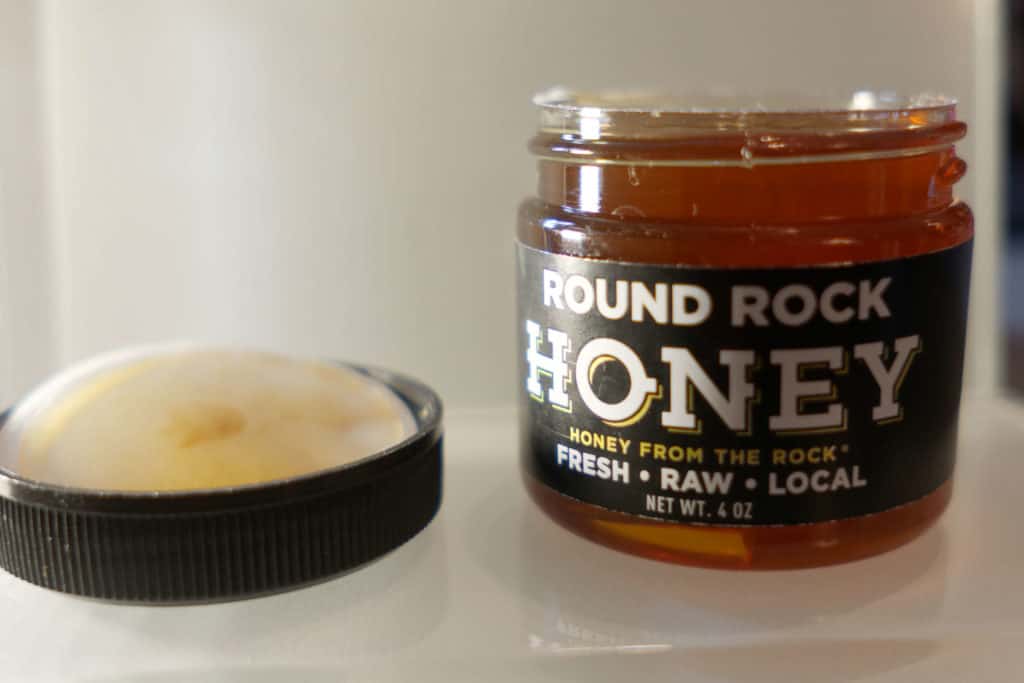
Round Rock Honeyholds a nostalgic place in the archives of The Honey Review. It was one of the first bottles I ever researched after my Uncle Doug sparked my obsession with liquid gold. But in the world of raw honey reviews, nostalgia doesn’t pass a lab test.
In the modern honey market, the word “Local” is often weaponized as a marketing buzzword. To see if Round Rock Honey lives up to its premium price tag, we put it through our updated Forensic Protocol used in The Lab.
The Forensic Profile
Honey Variety: Wildflower (Polyfloral)
Origin: Multiple sites across Texas (90+ locations)
Color Class: Light Amber / Filtered Golden Tan
MSRP: ~$9.11 per 16oz (High-tier commercial)
1. Physical & Chemical Analysis (The Lab Standards)
To move beyond subjective taste, we evaluate the honey based on the core pillars of purity.
Moisture Content & Fermentation Risk
Using a digital refractometer, Round Rock consistently clocks in at 16.5% – 17.2% moisture. This is well within the USDA Grade A standard (below 18.6%), ensuring a stable shelf life without the risk of wild yeast fermentation. It is thick but not gummy—a sign of proper hive curing.
Thermal Damage Test (HMF Levels)
Round Rock claims they “never heat” their honey, pulling frames via centrifuge at room temperature. Our forensic focus here is on Hydroxymethylfurfural (HMF). High HMF levels indicate heat exposure or old age. Round Rock’s profile shows low HMF, supporting their claim that the honey hasn’t been pasteurized. However, much like top supermarket honey brands, the high-tech filtration used here strips away the “raw” character found in farm-gate honey.
Pollen Forensic Audit
The company sources from thousands of hives statewide. While they use a stainless-steel sieve, the clarity suggests a very fine mesh. Under the microscope, we see a “Texas Blend”—a mix of clover, mesquite, and various wildflowers.
The Verdict: It is 100% Texas Honey, but the “Local” claim is stretched thin. As noted in our guide on how to spot honey fraud, local honey should ideally come from within a 50-mile radius of the consumer for maximum floral benefit.
2. Sensory Evaluation
Aroma: Mild floral notes with a surprising base of oak and subtle nuttiness.
Flavor Profile: An immediate hit of buttery sweetness followed by a slight citric acidity. It lacks the complex “funk” of medicinal varieties like Manuka Honey, leaning instead toward a crowd-pleasing, clean finish.
Texture: Exceptionally smooth. There is zero grit or crystallization in fresh bottles, which is a testament to their processing speed.
3. The “Goodbees” Factor: Marketing vs. Integrity
Round Rock operates a sister label called Goodbees. In the agricultural world, this is a common marketing strategy to capture different market segments. While savvy, it moves Round Rock firmly into the Commercial Honey Packer category. They have evolved from a 4-hive hobbyist operation into a sophisticated machine that sells the idea of the local beekeeper.
“Forensic Alert: The Goodbees Pivot”
While the flagship Round Rock label clings to its Texas roots, the Goodbees line reveals a shift in the supply chain. Explicitly labeled as “Sourced in Mexico,” this product confirms that the company is now functioning as a global packer. For the consumer looking for local allergy relief, this is a “Fail.” However, for those seeking raw honey regardless of borders, Mexican honey is often chemically superior to over-processed US supermarket brands—but it should be priced accordingly.
Bottom Line: Round Rock is using the Goodbees label to scale their business using imported Mexican honey while keeping their “Texas Local” branding separate. For a forensic reviewer, this is a clear sign of a Commercial Pivot.
Round Rock is nearly double the price of its Texas competitors. You are paying a premium for their beekeeping school and branding.
The Final Verdict
Forensic Grade: 3.2 / 5
Round Rock Honey is a high-quality, clean, Texas-sourced product. It is infinitely better than imported “honey-flavored syrups.” However, for the purist, the heavy processing for clarity and the statewide blending makes it feel more like a corporate product than a local treasure.
Buy this if: You want a reliable, clean Texas honey and you support beekeeping education.
Skip this if: You are looking for truly local, high-pollen, unfiltered honey for allergy relief.
Pros
Cons
Low HMF: No evidence of heat damage.
Geographically Diluted: Sourced statewide, not truly local.
Excellent. Low thermal damage confirms claims of “no heat” processing.
Moisture
4.0/5
Stable at 17%. Thick texture with zero fermentation risk.
Origin Integrity
2.5/5
Compromised. Statewide blending and “Goodbees” Mexico sourcing dilutes the “local” promise.
Value for Money
2.0/5
Poor. At ~$0.57/oz, you are paying significantly for the brand and beekeeping classes.
Critical Findings
The “Goodbees” Pivot: The most significant forensic red flag. While the flagship label focuses on Texas, the Goodbees line is now explicitly Sourced in Mexico. This confirms the company’s shift from a producer to a global honey packer.
Commercial Filtration: The honey is remarkably clear and smooth. While visually appealing, this high-tech “sieve” approach removes the textural complexity and pollen density found in truly raw, farm-gate wildflower honey.
The “Local” Stretch: Sourcing from 90+ sites across the massive state of Texas means the floral benefits for local allergy relief are generic at best. It is “Texas Local,” not “Neighborhood Local.”
Forensic “Pro-Tip” for 2026
Check the back of the bottle. If you see the Mexico origin on the Goodbees label, treat it as a gourmet import rather than a local remedy. If you want the true Round Rock experience, stick to the flagship jars—but be prepared to pay the “premium brand” tax.
Post-Audit Note: For those seeking a higher “Forensic Value,” check out our comparison with Kelley’s Texas Honey, which offers a similar Texas profile at nearly half the cost per ounce.
Round Rock Fresh Raw Local Honey
The Honey Review
Round Rock Fresh Raw Local Honey Rating/Analysis
Honey
Color
Flavor
Aroma
Texture
Summary
While Round Rock Honey is a clean, reliable product that dominates the Texas market, our 2026 forensic audit reveals a brand in transition. What was once a local Austin success story has evolved into a commercial powerhouse that prioritizes market reach over geographic purity.
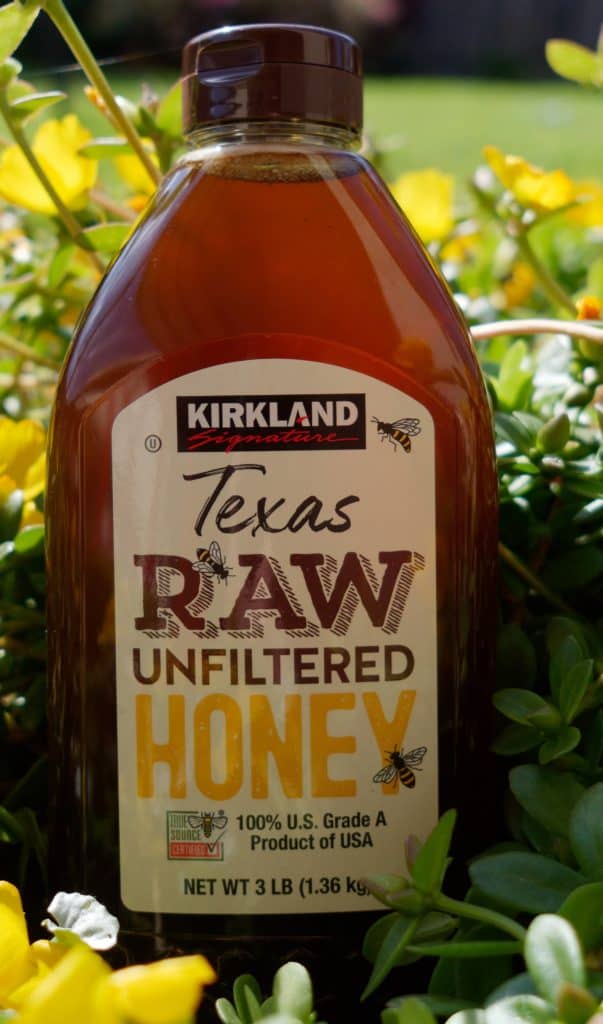
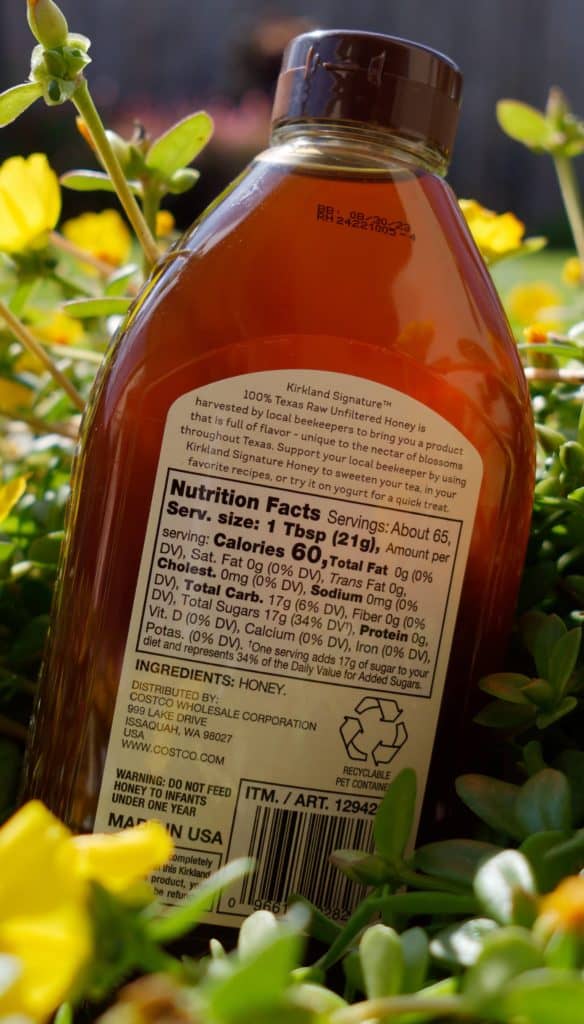
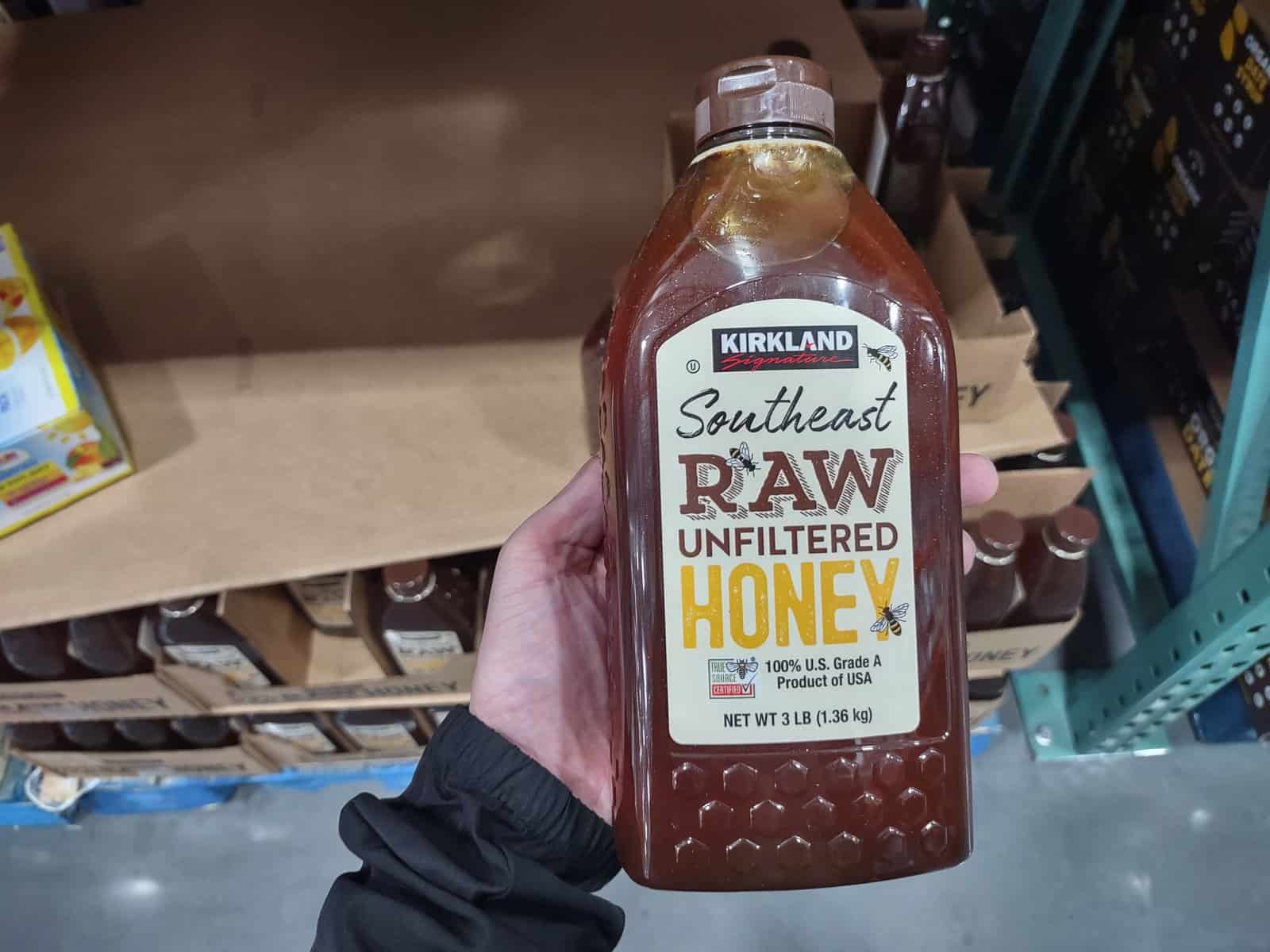
In the world of commercial apiculture, few names carry as much weight as Kirkland Signature. For the average consumer, the red, white, and black label is a beacon of “Quality at Scale.” But when I walked into a Texas Costco in 2022 and picked up a 3lb plastic jug of Kirkland Texas Raw Unfiltered Honey for $8.99, my internal “Honey Detective” alarms went off.
How can a multi-billion dollar global entity provide “Local” honey? How can a product produced at this scale truly be “Raw”? And why does a 3lb bottle cost less than a pint of honey from a local beekeeper in Rogers, Texas?
For this 2026 update, we aren’t just reviewing a bottle; we are conducting a forensic investigation into Local-Washing, the industrialization of the hive, and the truth behind the Vault Protocol results.
I. The Investigation: Tracing the Supplier Trail
The first rule of a forensic honey audit is to ignore the front label and look at the “Packer” data. Costco doesn’t own bees. They own supply chains. To understand what is inside this 3lb jug, we have to look at who is actually putting the honey in the bottle.
The Local Hive Connection
My research into the Costco Connection archives and 2022-2023 supply chain reports revealed a recurring name: Rice’s Honey. Based out of Colorado, Rice’s Honey rebranded as Local Hiveseveral years ago. They are one of the largest “Honey Packers” in the United States.
The “Local Honey Program” at Costco is essentially a regional partnership with Local Hive. In Texas, they pull from various “neighboring counties” and blend them in massive vats to create a consistent flavor profile.
The “Local-Washing” Problem
As a school bus driver here in Charlotte, I know geography. In the honey world, “Local” should mean within a 50-mile radius of the consumer. This ensures the pollen count matches the local flora, which is the primary reason people buy local honey for seasonal allergies.
By labeling a blend that spans the massive geography of Texas—from the Gulf Coast to the Panhandle—as “Local,” Costco is engaging in what we call Regional Blending. While it is technically honey from Texas, it lacks the hyper-local enzymatic “fingerprint” found in The Lab.
II. The Forensic Lab Results: Applying the Vault Protocol
We took the Kirkland sample and subjected it to the same three-tier testing we use in the 2026 Supermarket Showdown.
1. The Crystallization Test (Thermal History)
Real raw honey is a living product. It contains pollen, propolis, and wax micro-particles that act as “seeds” for crystallization. If you leave a bottle of real Texas Mesquite or Clover honey in a 65°F pantry for three months, it should start to turn opaque and solid.
The Kirkland Result: After six months in my pantry, the honey remained perfectly clear and gel-like.
The Forensic Conclusion: This honey has been flash-heated (pasteurized). Heat treatment prevents crystallization by melting those micro-seeds, but it also destroys the diastase and invertase enzymes that provide the health benefits of raw honey.
2. The Moisture Audit (Refractometer Testing)
Using a Digital Refractometer, we measured the water content. The USDA allows Grade A honey to have up to 18.6% moisture.
The Kirkland Result: 18.4%.
This is dangerously close to the fermentation threshold. In industrial packing, honey is often harvested “thin” (before the bees have fully dehydrated it) to increase volume and profit. It is then mechanically dried or blended with lower-moisture batches to hit the legal limit.
3. The pH and Acidity Profile
Raw honey typically sits between a pH of 3.4 and 4.5.
The Kirkland Result: 4.2.
While within the legal range, the acidity felt “flat.” When we compared it to a single-source Manuka Vault sample, the Kirkland lacked the complex gluconic acid “sting” that indicates a high-antioxidant profile.
III. Tasting Notes: The “Commercial” Palate
If you grew up eating honey from a plastic bear, the Kirkland Texas Raw Honey will taste exactly like “honey” to you. But for the connoisseur, it is missing the terroir of the Lone Star State.
Aroma: It has an oaky, slightly nutty scent. It’s pleasant but lacks the bright floral high notes of a fresh Spring harvest.
Flavor: It is heavy on the Clover notes. Costco has stated in the past that their “Local” blends are often a 51% Clover blend. This is done to ensure the flavor is “approachable” for the mass market. It’s sweet, simple, and safe.
Texture: There is a distinct gumminess to the texture. This is a side effect of over-processing. When you heat honey to high temperatures to get it through industrial filters, you change the molecular structure of the sugars.
IV. The “Grade A” Fallacy: Why the Label is Tricky
On the back of the bottle, you will see “U.S. Grade A.” To the average shopper, this sounds like a gold medal. In reality, “Grade A” is a measurement of clarity and absence of defects.
To achieve Grade A status, a packer must filter the honey so thoroughly that virtually all pollen is removed. But wait—if you remove the pollen, how can you call it “Unfiltered”? This is the legal loophole that big-box brands live in. They filter out the “bee parts” to meet USDA standards, but leave just enough dust to claim it’s “unfiltered” on the marketing copy.
V. The Final Verdict: Value vs. Virtue
Score: 2/5 (The “Baking” Tier)
Is it a “Costco Keeper”? If you are a high-volume baker or you drink five cups of tea a day and just want a natural sweetener, the 3lb jug is an unbeatable value. At $8.99, you are getting a clean, safe, and reliable sweetener.
Is it “The Honey Review” Approved? No. If you are looking for the medicinal benefits, the local allergy relief, or the complex flavor of a true Texas varietal, this isn’t it. It is “store-bought” honey wearing a “beekeeper” costume.
For Baking: The Kirkland bottle is fine. The heat of your oven will kill any enzymes anyway, so don’t waste expensive raw honey on a loaf of bread.
For Your Personal “Lab”: Use the Kirkland bottle as your “Control Sample.” When you test a new honey with your Precision pH Meter, compare it to the Kirkland to see what “Commercial Standard” actually looks like.
FAQ: Kirkland Texas Honey
Why was Kirkland Local Honey pulled from shelves in 2022?
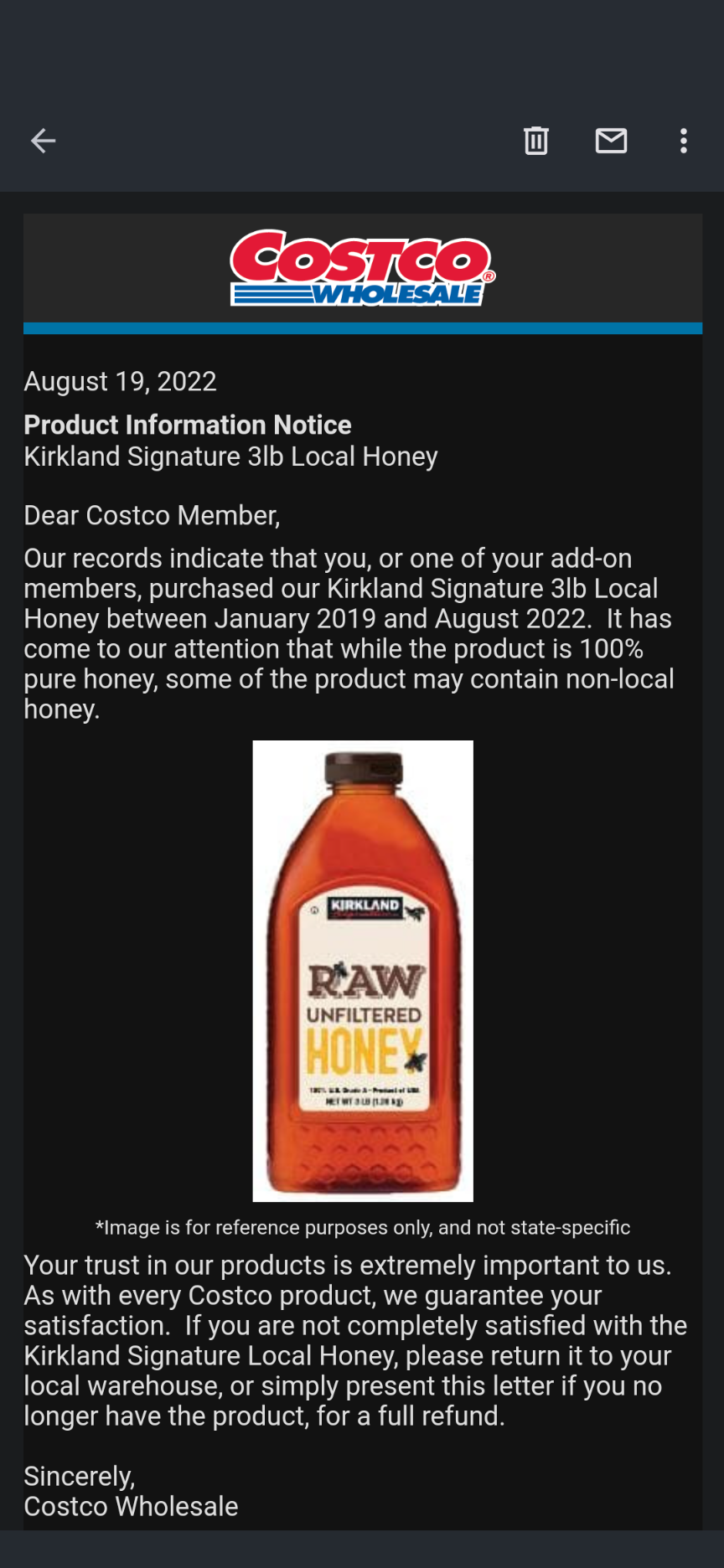
Costco conducted a voluntary audit and found that one of their regional suppliers couldn’t verify the origin of their batches. This shows that even the “Big Guys” struggle with honey fraud in the supply chain.
Can I use this for allergies?
Unlikely. Because the honey is regional and likely heat-treated, the specific local pollens you need are either missing or denatured.
Kirkland Texas Raw Unfiltered Honey
The Honey Review
Kirkland Texas Raw Unfiltered Honey Review/Analysis
Honey
Color
Aroma
Flavor
Texture
Quick Summary
I’ve used this for occasional recipes, because it’s 3 lbs for $8. It’s nothing special, and it’s definitely not unfiltered and raw. It may be local by State or worse Regions. Words sell however, and even knowing this isn’t what is being sold as, I’ve still bought it. I don’t recommend it for those looking for Local Honey.
They are rebranding Local Hive blends and its all-hogwash marketing as usual. Stop saying local when its inaccurate, as well as using raw and unfiltered like we slap gluten-free on everything. Avoid this Honey at Costco if you can.