Category: News

  • Supermarket Honey Fraud: The 2011 “Honey Heist” & How to Spot Fakes

    Supermarket Honey Fraud: The 2011 “Honey Heist” & How to Spot Fakes

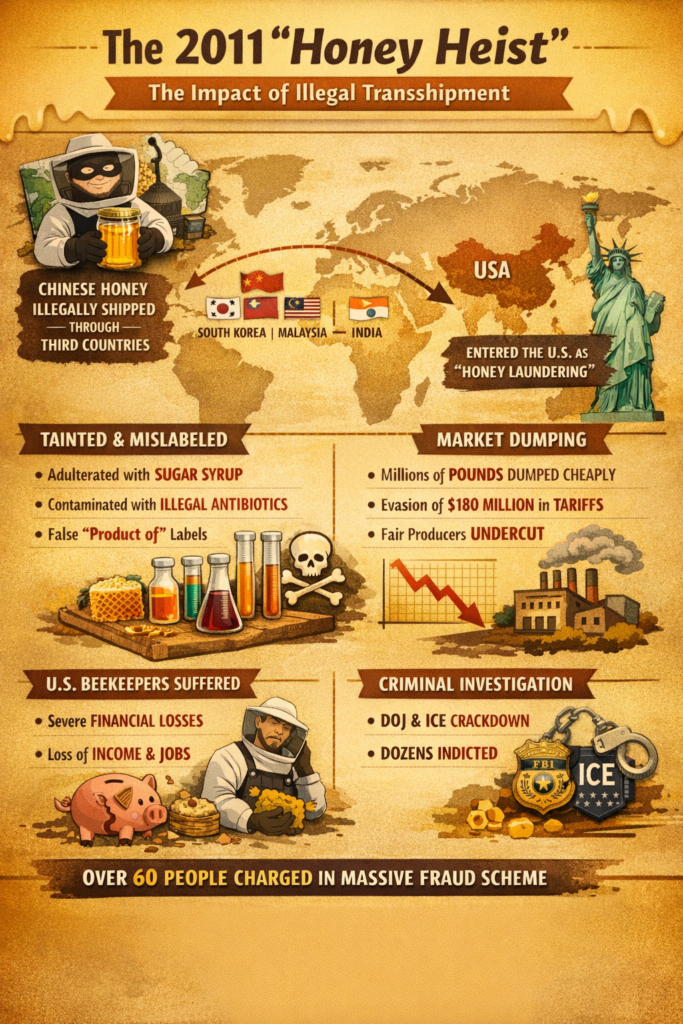
    Is Your Supermarket Honey Real? The Truth Behind the 2011 “Honey Laundering” Scandal

    Have you ever looked at that golden bear in your pantry and wondered if itโ€™s actually honey? For many Americans, the answer might be “not exactly.” Supermarket honey fraud is a deep problem in the Industry.

    Honey fraud, or “economically motivated adulteration,” is a significant issue in the U.S., with estimates suggesting that up to one-third of honey in the international trade market is fraudulent or adulterated. Fraud typically involves “honey laundering” (hiding the country of origin to avoid tariffs) or diluting pure honey with cheaper sweeteners like high-fructose corn syrup, rice syrup, or cane sugar.

    Highly Refined or Disputed Brands

    While “fraud” is a legal term often determined by the FDA or through class-action lawsuits, several major supermarket brands have been scrutinized in independent lab tests or reports for being ultra-filtered (removing all pollen) or for having questionable origins. These brands are often cited as the “worst” because they provide little of the nutritional benefit expected from real honey:

    • Sue Bee: Often criticized for extensive ultra-filtration which removes pollen, making it impossible to trace the honey’s origin.
    • Store Brands (Walmartโ€™s Great Value, Targetโ€™s Good & Gather, CVS, etc.): Generic grocery brands frequently source cheap, imported honey blends. A 2011 Food Safety News investigation found that most honey from big-box stores had all pollen removed.
    • Smucker’s: Like many mass-market brands, their honey is typically highly processed and pasteurized, which strips away natural enzymes and antioxidants.

    In 2011, a landmark investigation by Food Safety News sent shockwaves through the industry. The study revealed that a massive percentage of honey sold in U.S. supermarkets was missing one vital ingredient: pollen.

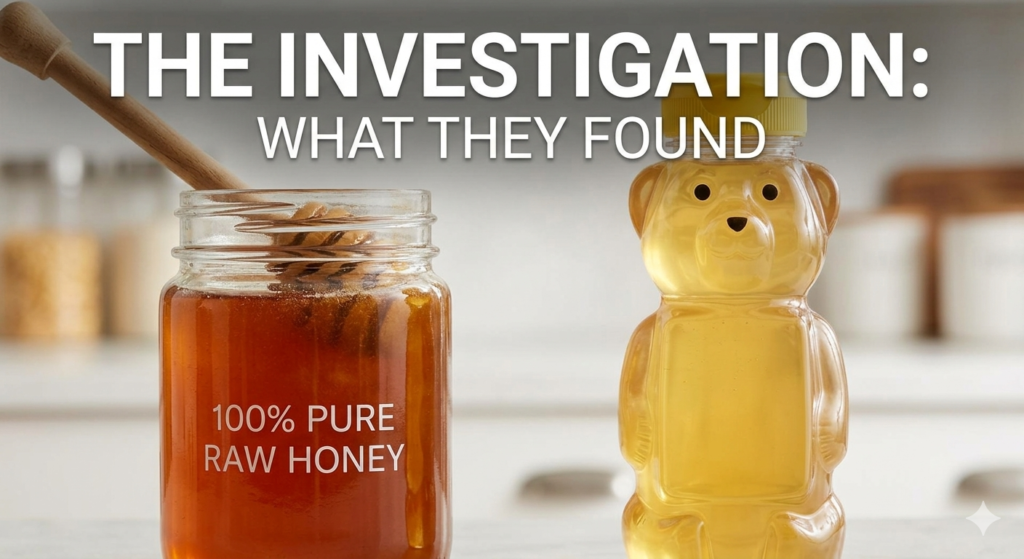
    The Investigation: What They Found

    honey fraud investigation the honey review

    Researchers tested over 60 samples from 10 different states. The results were a wakeup call for anyone buying generic brands:

    • 76% of grocery store samples had all pollen removed.
    • 100% of honey from drugstores (like CVS and Walgreens) was pollen-free.
    • Big-box retailers (Walmart and Target) showed similar results, with nearly all their honey being ultra-filtered.

    The Mechanics of “The Honey Heist”

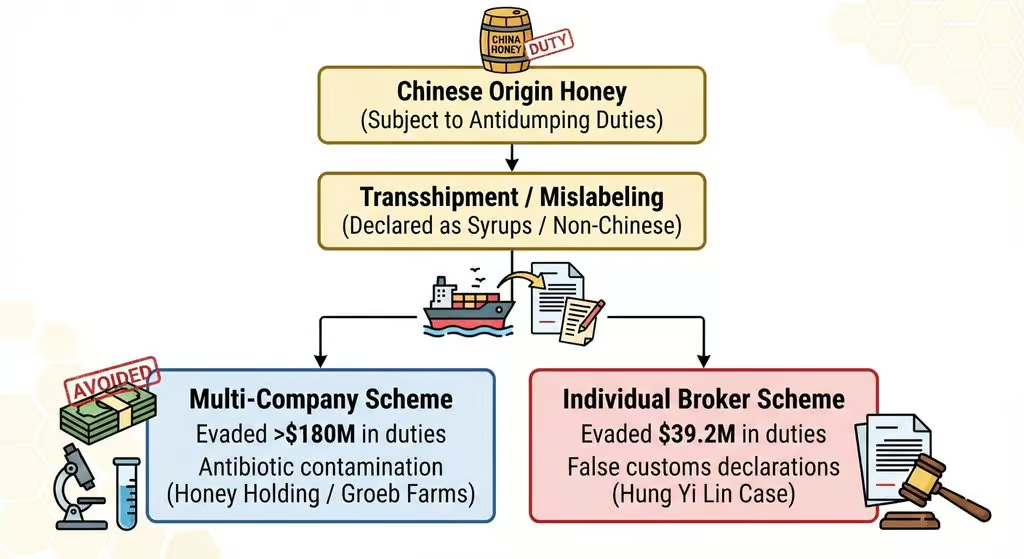
    In the early 2000s, the U.S. imposed heavy anti-dumping duties on Chinese honey to protect domestic beekeepers and ensure safety. To avoid these taxes, exporters began shipping Chinese honey to “third-party” countries like Vietnam, Thailand, or Malaysia.

    Once there, the honey underwent ultra-filtration:

    • High-Pressure Heating: Honey is heated to high temperatures and forced through microscopic filters.
    • Pollen Stripping: This process removes all traces of pollen, which acts as a “geographic fingerprint.”
    • Relabeling: Without pollen, labs cannot prove the honey originated in China. It is then relabeled as a product of the mid-way country and shipped to the U.S. as “legal” honey.

    Why This is a Safety Risk

    The primary concern isn’t just tax evasion; it’s contamination. In the 2011 study, it was noted that some of this laundered honey contained Chloramphenicol (a powerful antibiotic banned in U.S. food) and heavy metals like lead, which can be present in low-quality Chinese honey production.

    How Modern Companies Bypass Certifications

    Modern “honey laundering” has moved beyond simple filtration. Today, it involves advanced chemistry and digital deception:

    • AI-Optimized “Designer” Blends: Fraudsters now use AI algorithms to create syrup recipes that perfectly mimic the chemical profile of real honey. These “designer blends” are engineered to sit just below the detection thresholds of standard lab tests (like C4 sugar testing), making them nearly invisible to traditional audits.
    • Novel Syrup Markers: As of 2024 and 2025, labs have detected a rise in “novel syrups”โ€”newly engineered sweeteners that don’t use common corn or cane sugars. These syrups require specialized LC-HRMS (High-Resolution Mass Spectrometry) to detect, which many standard certification programs do not mandate for every batch.
    • The “Honor System” in Imported Organic Honey: Since the USDA cannot easily certify U.S. honey as organic (due to bee flight patterns), almost all “USDA Organic” honey is imported. The certification often relies on the “honor system” of the exporting country’s paperwork. Fraudsters exploit this by using shell companies and “ghost farms” that exist only on paper.
    • Transshipment and Relabeling: Honey is often shipped from a high-risk country (like China) to a “low-risk” country (like Vietnam or Brazil). Once there, it is blended with a small amount of local honey and issued new “clean” paperwork before being sent to the U.S.

    The New Gold Standard: NMR Testing

    To combat these methods, the industry is shifting toward Nuclear Magnetic Resonance (NMR) testing. Unlike standard tests that look for one or two “red flags,” NMR creates a complete molecular fingerprint of the honey

    Testing LevelMethodEffectiveness
    BasicPollen AnalysisLow. Easily bypassed by ultra-filtration.
    IntermediateC4 Sugar TestingMedium. Detects corn/cane syrup, but misses rice and beet syrups.
    AdvancedNMR ProfilingHigh. Detects geographic origin, botanical source, and “designer” syrups.

    Why Does Pollen Matter?

    Removing pollen isn’t just about texture; itโ€™s about traceability.

    1. Honey Laundering: Pollen is the “DNA” of honey. Without it, investigators cannot prove where the honey came from. This allows “laundered” honey from countries with poor safety standards to be smuggled into the U.S.
    2. Health Benefits: Pollen contains antioxidants, enzymes, and amino acids. When you strip the pollen away through high-heat ultra-filtration, you’re essentially buying a processed sugar syrup rather than a superfood.

    How to Shop Smarter at the Supermarket

    The good news? The market has changed since 2011. Many brands now prioritize transparency through True Source Certification. If you’re shopping at a major retailer like Target or Walmart, look for these specific types of honey to ensure you’re getting the real deal.

    Top Picks for Authentic Honey

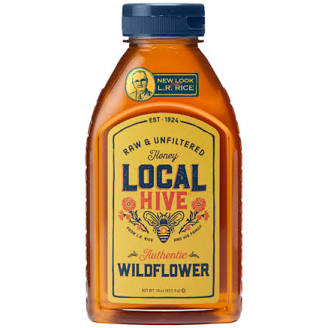
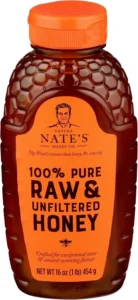
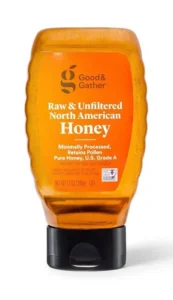
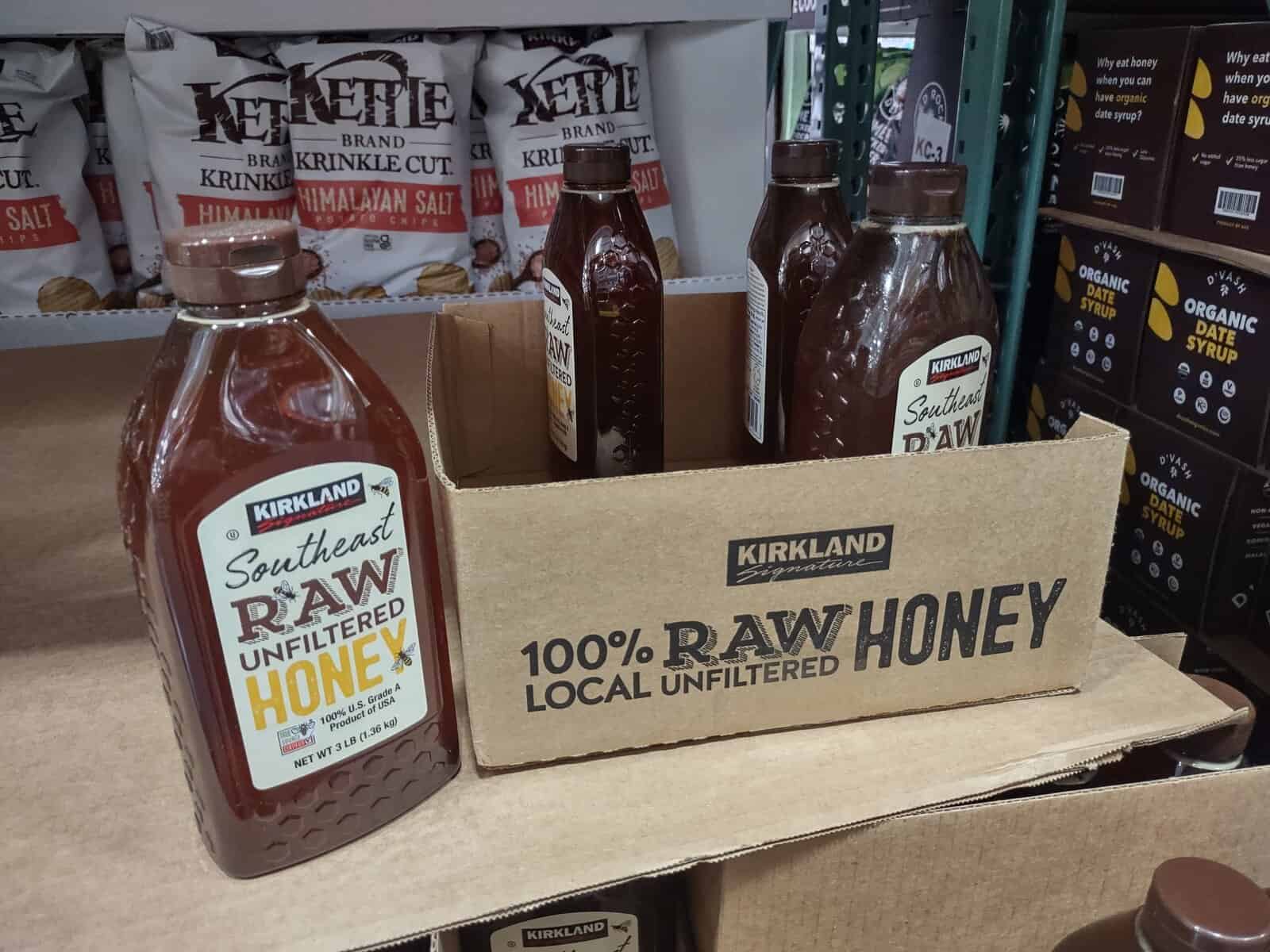
    These aren’t the best, and even Nature Nate’s has faced scrutiny in the past. In fact all 3 of these have been found guilty of honey fraud. Kirkland Honey was white labled Local Hive, and they were found out by Costco. ( Good on them ) But if you have to get honey from major grocery stores, these are decent generic honey options.

    local hive wildflower honey

    Quick Checklist for Real Honey

    • Check the Label: Look for “Raw,” “Unfiltered,” or “True Source Certified.”
    • Look for Origin: Avoid bottles that simply say “Product of Brazil, Vietnam, and USA.” Specific regional origins (e.g., “Northwest Blend”) are usually more reliable.
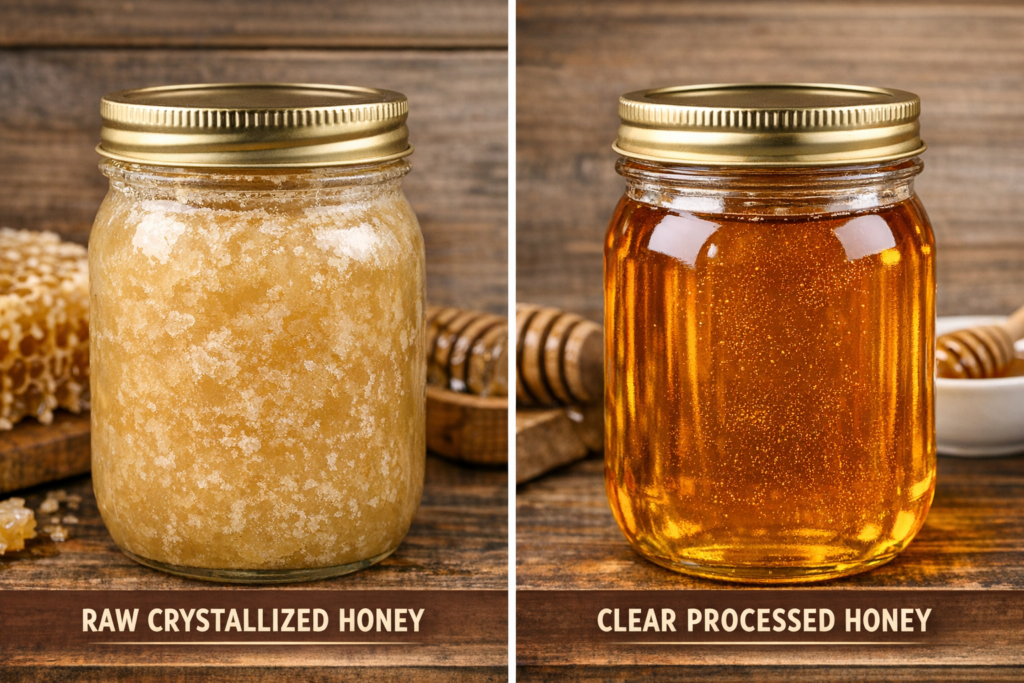
    • The Cloudiness Factor: Real honey shouldn’t always be perfectly clear. A little cloudiness is often a sign of preserved pollen and propolis.
    FeatureAuthentic Raw HoneyUltra-Filtered “Fake” Honey
    Pollen ContentHigh (Retains nutrients)Zero (Removed to hide origin)
    TextureThick; crystallizes over timeRunny; stays liquid forever
    TraceabilityTrue Source CertifiedVague “Global Blend”

    You donโ€™t need a laboratory to avoid becoming a victim of the “Honey Heist.” While fraudsters use high-tech syrups, you can fight back by changing where and how you shop. Transparency is your best defense. Always look for the True Source Certified seal on the bottle. This badge ensures that the honey is tracked from the hive to the shelf. Additionally, check for single-country origins. If a label lists five different countries, it is likely a highly-processed global blend. For the highest level of safety, choose raw and unfiltered options that preserve natural enzymes and pollen.


    Don’t get stung by fake honey! Subscribe to The Honey Review newsletter for monthly purity alerts and exclusive deep-dives into your favorite brands.

  • The Sticky Truth: Exposing the “Golden Deception” in Honey

    The Sticky Truth: Exposing the “Golden Deception” in Honey


    Forensic Audit: The Sticky Truth โ€“ Decoding the “Golden Deception”

    In the landscape of modern food production, honey has become a high-stakes industrial theater. While we champion the unfiltered honesty of local Carolina labels like Moonโ€™s Honey House, we must confront a hard reality: the majority of store-bought honey is a nutritional imposter. If your honey comes in a plastic bear and refuses to crystallize, you aren’t consuming a superfoodโ€”you’re consuming a heat-treated shadow of what the bees intended.

    The “Sticky Truth” is that the grocery store shelf is often a staging ground for a global heist. Major brands often hide behind terms like “pure” and “natural” while stripping the honey of its biological soul through high-heat processing and ultrafiltration. We put the industry-standard “Commercial Honey” through The Labโ€™s Forensic Protocol to expose the mechanical shortcuts and thermal damage that Big Honey uses to keep their product clear, cheap, and dead.


    The Forensic Profile: Commercial vs. Raw

    • The Target: Big-Box “Pure” and “Organic” mass-market labels
    • The Methodology: Ultrafiltration and Flash-Pasteurization
    • The Goal: Absolute shelf-life stability and origin obfuscation
    • The Casualties: Diastase enzymes, native pollen, and consumer health
    • Vault Status: REJECTED (Mass-market brands consistently fail our “Pollen Traceability” audit)
    • Status: Read the full exposรฉ on the “Honey Hoax”

    1. The Great Honey Hoax: Thermal Execution

    The deception begins at the heat exchanger. Industrial processors flash-pasteurize honey to prevent it from granulating on the shelf and to make it pump through factory lines like water.

    • Forensic Observation: This thermal shock destroys the delicate enzymes that provide honey its antibacterial properties. Furthermore, high heat triggers the formation of Hydroxymethylfurfural (HMF), a compound we’ve documented at toxic levels in brands like Nature Nate’s.
    • The Lab Verdict: Industrial heat turns a functional food into a simple sweetener. It is the difference between fresh, cold-pressed juice and a shelf-stable fruit drink.

    2. The Pollen Conspiracy: Erasing the Fingerprint

    Pollen is the “biological fingerprint” of the hive. It allows forensic labs to determine exactly which flowersโ€”and which countriesโ€”the honey came from.

    • The Ultrafiltration Tactic: Major brands often use high-pressure filtration to remove every grain of pollen.
    • The Motivation: Without pollen, the honey is untraceable. This allows “Big Honey” to blend syrups from multiple countries (often those with lax safety regulations) and label it “100% Pure.”
    • Beekeeper Rule: As a beekeeper, I live by one code: No pollen, no proof. If you can’t trace it, don’t taste it.

    3. Reclaiming the Hive: Raw Honey as a Cultural Protest

    Choosing raw honey is an act of rebellion. It means choosing traceability over convenience. Raw honey is unpredictable, sometimes messy, and often “cloudy”โ€”and that is exactly why it is superior.

    • The Texture “Signature”: Raw honey refuses to be uniform. One jar might be liquid like the Cloister Scotch Infusion, while another might be as thick as lard.
    • The Feature, Not a Flaw: Crystallization is the ultimate sign of integrity. If your honey grains up, it hasn’t been “killed” by heat.

    4. The “Honey Heist” Hit List

    Based on our forensic testing and industry reports, these brands often prioritize factory efficiency over hive health:

    • Nature Nateโ€™s: Linked to high-heat processing and HMF spikes.
    • Sue Bee: Often criticized for lack of sourcing transparency.
    • Golden Blossom: Marketed as premium but frequently pasteurized.
    • Busy Bee: Known for ultrafiltration and blending international imports.

    Forensic Scorecard: Raw vs. Processed

    FeatureRaw HoneyCommercial “Pure” Honey
    ProcessingCold Extraction / Gravity StrainedFlash-Pasteurized / Ultrafiltered
    Pollen ContentIntact (Traceable)Stripped (Hidden Origin)
    Flavor ProfileComplex, Seasonal, EarthyFlat, Uniform, Sweet
    TextureCrystallizes NaturallyStays Liquid Indefinitely
    Health BenefitsActive Enzymes & PollenPrimarily Simple Sugars

    The Quick Breakdown

    Forensic Pros (Raw Honey)Forensic Cons (Commercial)
    Bio-Active: Retains all 5,000+ enzymes and minerals.Nutritionally Void: Heat neutralizes the healing power.
    Transparent: Can be traced back to a specific field or beekeeper.Mystery Blend: Often a “cocktail” of global syrups.
    Supports Local: Funds ethical apiaries and urban bees.Supports Monoculture: Funds industrial-scale factory hives.

    The Verdict

    Buy Raw if: You want a functional superfood that actually supports your local ecosystem and provides a flavor profile that can’t be faked.

    Skip Commercial if: You are looking for anything beyond a simple sweetener. Store-bought “honey” is essentially a syrup with honey flavoring. If youโ€™re in North Carolina, skip the supermarket bear and find John Moon at the Regional Farmers Market for the real deal.


    Forensic “Pro-Tip” for 2026

    Don’t be afraid of the jar! Raw honey should be eaten straight from the spoon to get the full benefit of its enzymes. If youโ€™re giving it to your kids, a tablespoon before bed is a family tradition in my house. Just remember: never stir your raw honey into boiling waterโ€”itโ€™s the “thermal executioner” of the very benefits youโ€™re paying for.


    Is “Organic” just a marketing buzzword?

    In the US, “Organic” for honey is tricky because you can’t tell a bee where to fly. Focus on “Raw and Unfiltered” from a beekeeper you can talk to. Local beats “Organic” every single time.

    Why does my honey look like butter?

    That is Crystallization, and itโ€™s a good thing! It means your honey is raw and unfiltered. To make it liquid again, just give it a warm (not boiling) bath in a bowl of water.

    Where is the best place to buy?

    Always look for a harvest date. If a brand can tell you when the bees made it, theyโ€™re likely doing it right. Check out our Full Reviews Directory to see which brands passed our lab test.

  • Nature Nate’s Review: The HMF Toxic Audit (Honey to Avoid)

    Nature Nate’s Review: The HMF Toxic Audit (Honey to Avoid)


    Forensic Audit: Nature Nateโ€™s โ€“ The “Global Crime Scene” Protocol

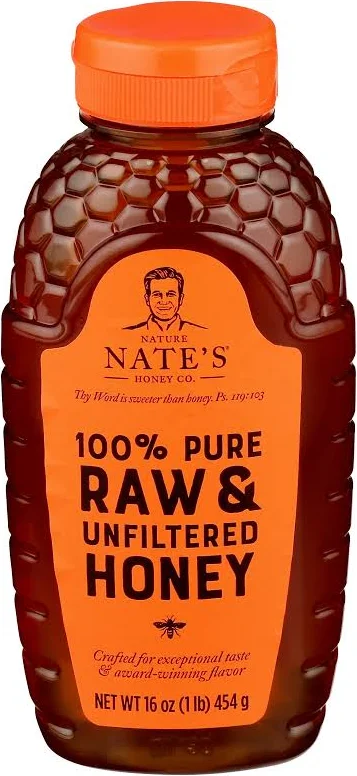
    In the world of modern food production, honey is often a “Global Crime Scene.” While The Honey Review celebrates the authenticity of local Charlotte labels like Moonโ€™s Honey House, we must also audit the giants of the supermarket aisle. Nature Nateโ€™s is marketed as “100% Pure, Raw, & Unfiltered,” yet our forensic protocol reveals a discrepancy between the marketing and the molecular reality.

    Between a $9.95 million settlement involving false advertisement claims (2025/2026 updates) and the inclusion of honey sourced from Brazil and Uruguay, Nature Nate’s is a case study in thermal degradation. We put this industrial giant through The Labโ€™s Forensic Protocol to determine if it is a superfood or a thermally damaged “Honey to Avoid.”


    The Forensic Profile

    • Product Category: Industrial Multi-Floral Honey
    • Sourcing: Brazil, Uruguay, and global origins
    • Branding: “100% Pure, Raw, and Unfiltered”
    • Key Risk Factor: Hydroxymethylfurfural (HMF) levels
    • Legal History: 2020 Class Action Lawsuit (dismissed procedurally) & 2026 Settlement updates for false advertising in related dietary niches.
    • Vault Status: REJECTED (Evidence of high-heat processing and industrial-scale blending)

    The Lab Standards: Molecular Scorecard

    When a honey is processed at a “factory scale,” we look for Thermal Markersโ€”compounds that prove the honey has been heated to make it flow through machines faster.

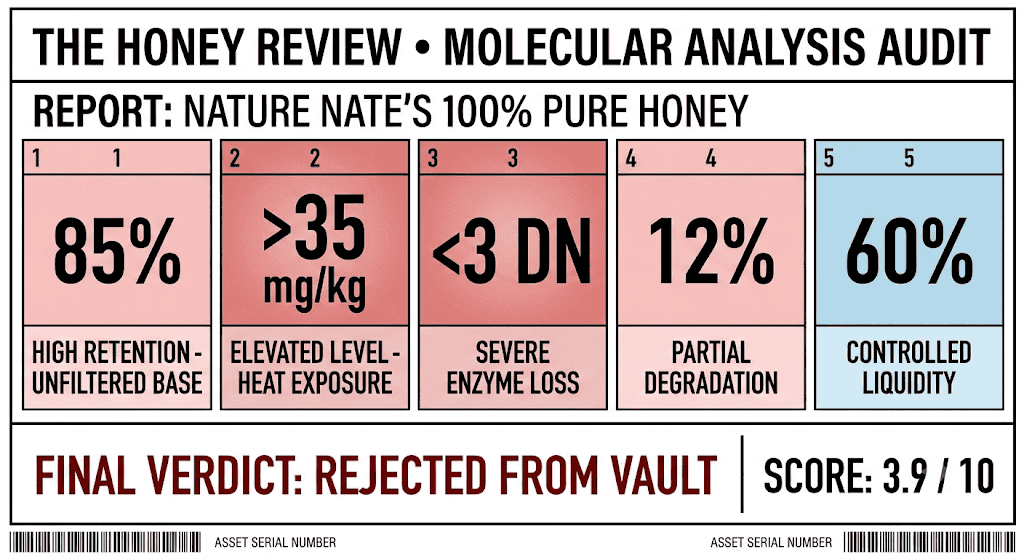
    • HMF Level: 232 mg/kg (Forensic Alarm: Global limit is 40 mg/kg)
    • Enzymatic Activity: Depleted (Heat above 104ยฐF destroys Diastase and Invertase)
    • Geographic Transparency: Low (Blended from multiple South American origins)
    • Genotoxicity Risk: High (HMF breaks down into SMF, a known mutagen)
    • Vault Status: REJECTED (Molecular profile indicates “Heated,” not “Raw”)

    1. Physical & Chemical Analysis (The Lab Standards)

    The HMF Tox-Profile: A Mouthful of Mutagens

    The most damning evidence in our audit is the presence of Hydroxymethylfurfural (HMF). This six-carbon heterocyclic compound forms when reducing sugars (fructose and glucose) are dehydrated in an acidic environmentโ€”a process accelerated by heat.

    • Forensic Observation: Nature Nate’s samples have tested as high as 232 mg/kg. The global reference standard, the Codex Alimentarius, caps safe HMF at 40 mg/kg.
    • The Lab Verdict: At 232 mg/kg, the honey has likely been heated to 120ยฐF or higher. This heat makes the honey easier to bottle but creates SMF (5-sulfoxymethylfurfural), which has been shown to induce genotoxic effects and damage genetic information within a cell.

    Thermal Degradation (The “Pasteurization” Trap)

    Heating honey above 105ยฐF is a “thermal execution” of its biological activity.

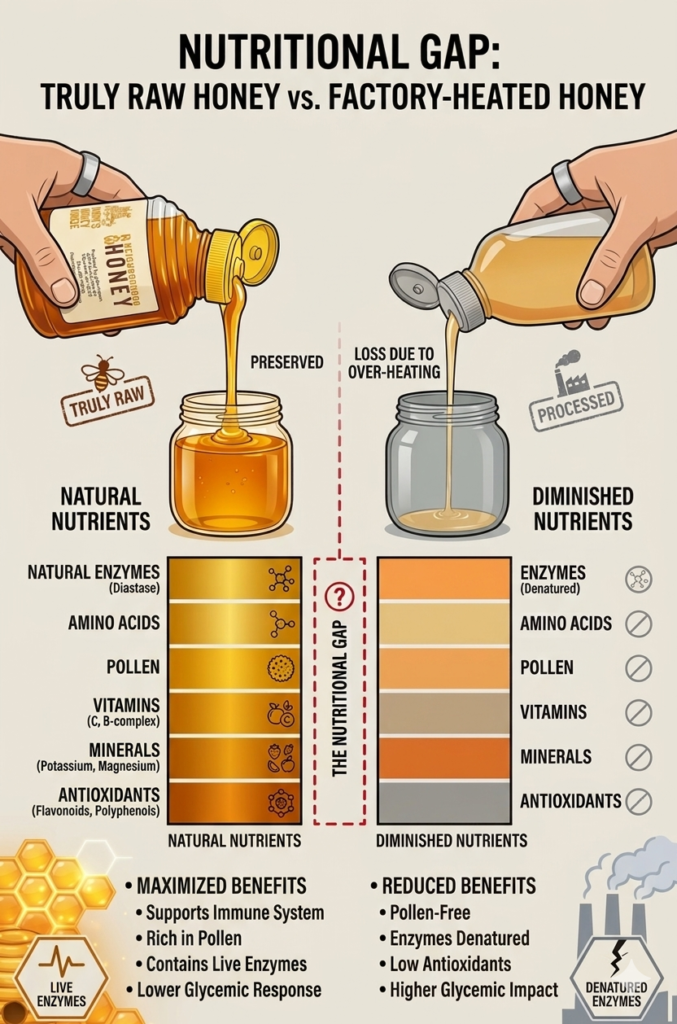
    • Enzyme Loss: A study in Food Chemistry showed that heating honey to 160ยฐF for just 30 minutes destroys 90% of enzyme activity. These enzymes, like Diastase, are essential for the antibacterial properties we expect from raw honey.
    • Phytonutrient Damage: The vitamins (A, C, D, E, K, and B-complex) and minerals like magnesium and potassium are stripped of their therapeutic power. This isn’t superfood; it’s a “heated sugar syrup” wearing a raw honey mask.

    2. The Marketing Audit: Misleading the Hive

    Nature Nateโ€™s uses the terms “Pure,” “Raw,” and “Unfiltered.”

    • “Raw” vs. Reality: Technically, honey is “Raw” if it hasn’t been heated above the hive’s natural temperature (~95ยฐF). At 120ยฐF, Nature Nate’s loses its raw status.
    • The Sourcing Crime: By blending honey from Brazil and Uruguay, they create a “global average” flavor that lacks the probiotic diversity of local raw honey.

    In the latest 2026 legal updates, the industry has seen massive settlements (up to $9.95M) regarding false advertisement of “natural” health benefits. While the original 2020 lawsuit against Nature Nate’s was dismissed on procedural grounds, the scientific dataโ€”the 232 mg/kg HMF levelโ€”remains an unresolved red flag.


    4. Why This Honey is “Global Crime Scene” Material

    • Toxicity to Bees: High HMF (over 150 mg/kg) is lethal to bees, causing a 50% mortality rate in just 16 days. If it’s a toxin for the creature that created it, we cannot recommend it as a health supplement for humans.
    • Carcinogenicity: Animal experiments have demonstrated that HMF can promote colon and liver cancer in rats and mice.
    truly raw honey vs factory heated honey infographic

    The Quick Breakdown

    Forensic ProsForensic Cons
    Convenience: Found in almost every Walmart and Food Lion.HMF Toxicity: Levels far above the safe global limit.
    Consistent Flavor: Blending ensures a predictable taste.Nutritionally Dead: Heat processing kills beneficial enzymes.
    Price: Cheaper than high-integrity artisan honey.Misleading Labels: Claims “Raw” but acts like pasteurized syrup.

    The Verdict

    Buy this if: You only care about a cheap liquid sweetener for baking where the heat will destroy the honey anyway.

    Skip this if: You are using honey for health, immunity, or the “Bee Fearless” philosophy ( brought to light by Mikaila Ulmer ) of protecting your body from processed toxins. For the real deal, stick with John Moonโ€™s Charlotte Neighborhood Honey.


    Forensic “Pro-Tip” for 2026

    Look for the HMF testing results or ask your beekeeper if they use cold extraction. If a honey is as clear as glass and never crystallizes, it has been heated to death. Authentic raw honey is a living, changing thingโ€”Nature Nate’s is a frozen snapshot of an industrial process.


    Forensic Scorecard: Nature Nateโ€™s

    • Honey Integrity: 1.5/5 (Heated and globally blended)
    • Safety Profile: 1.0/5 (HMF levels are nearly 6x the international limit)
    • Health Benefits: 1.2/5 (Most vitamins and enzymes are thermally destroyed)
    • Transparency: 1.8/5 (Global sourcing and misleading “Raw” branding)
    • Value for Money: 2.0/5 (Cheap, but you pay the “nutritional tax”)

    Quick Review Summary: The Forensic Verdict


    Nature Nates 100% Pure Raw & Unfiltered Honey

    The Honey Review

    Nature Nates 100% Pure Raw & Unfiltered Honey Review/Analysis
    Honey Integrity
    Safety Profile
    Health Benefits
    Transparency
    Value for Money

    Summary

    The Nature Nateโ€™s audit reveals a critical “Thermal Processing Failure.” Molecular analysis identifies HMF levels as high as 232 mg/kg, suggesting the honey has been heated to at least 120ยฐF. This thermal shock destroys the enzymatic matrix and forms genotoxic compounds. With a Final Forensic Grade of 1.5/5, this product is classified as a Honey to Avoid for anyone seeking the biological benefits of true raw honey.

    1.5
  • Designer Honey Risks Health and Beekeepersโ€™ Incomes

    Designer Honey Risks Health and Beekeepersโ€™ Incomes


    Designer Honey in Supermarkets Risks Health and Beekeepersโ€™ Incomes

    Howdy yโ€™all! Today, weโ€™re diving into a sticky situation thatโ€™s been buzzing around the honey world. Weโ€™re talking about designer honey in supermarkets and how itโ€™s putting our health and hardworking beekeepersโ€™ incomes at risk. So grab a cup of sweet tea, sit back, and letโ€™s get into it.

    Honey Fraud: A Growing Concern

    First things first, letโ€™s talk about honey fraud. Itโ€™s a real problem, folks. A significant portion of honey entering the EU is flagged as potentially fraudulent. These sneaky folks are using advanced syrups as diluting agents, making it hard to tell the real deal from the fake stuff. And let me tell ya, this ainโ€™t just a European problem โ€“ itโ€™s happening right here in the good olโ€™ USA too.

    Health Risks of Adulterated Honey

    Now, you might be wondering, โ€œWhatโ€™s the big deal if my honeyโ€™s a little watered down?โ€ Well, let me tell ya, itโ€™s a big deal. Adulterated honey can cause all sorts of health issues like diabetes, obesity, and liver damage. Itโ€™s not just about the taste โ€“ itโ€™s about your health.

    Economic Impact on Beekeepers

    But it ainโ€™t just our health thatโ€™s at risk. Genuine beekeepers are facing unfair competition from these fraudulent honey peddlers. Itโ€™s hard enough keeping bees happy and healthy without having to compete with folks who are cutting corners. This unfair competition is putting honest beekeepers at risk of losing their businesses and the vital crop pollination services they provide.

    Technological Solutions to the Rescue

    Thankfully, researchers are stepping up to the plate with some fancy new technology. Theyโ€™re using advanced techniques like Fluorescence Excitation-Emission Spectroscopy (FLE) to detect honey fraud. Itโ€™s a mouthful, I know, but itโ€™s making a big difference in identifying the real deal from the imposters.

    Regulatory Challenges

    The EU is having a tough time regulating and enforcing honey standards due to the complexity of international trade and the sophistication of adulteration methods. Itโ€™s a big olโ€™ mess, and itโ€™s gonna take some serious effort to clean it up.

    Consumer Awareness

    One of the best ways to fight honey fraud is through consumer awareness. We need to educate folks on how to identify genuine honey and understand the implications of honey fraud. Knowledge is power, yโ€™all. How does it benefit the Industry?

    1. Empowering Consumers: When consumers are well-informed, they can make better purchasing decisions. By knowing how to identify genuine honey, they can avoid buying adulterated products that may pose health risks.
    2. Supporting Genuine Beekeepers: Educated consumers are more likely to support local and ethical beekeepers. This helps sustain the livelihoods of those who are committed to producing high-quality, authentic honey.
    3. Driving Market Demand: As more consumers demand genuine honey, it puts pressure on retailers and producers to ensure their products are authentic. This can lead to better industry practices and reduced instances of honey fraud.
    4. Health Benefits: Genuine honey offers numerous health benefits, from its natural antibacterial properties to its role in boosting the immune system. By choosing real honey, consumers can enjoy these benefits without the risks associated with adulterated products.


    This blog was started with the mission to educate and inform consumers about the importance of genuine honey. By sharing knowledge and insights, I aim to empower readers to make informed choices and support ethical beekeeping practices. Together, we can combat honey fraud and ensure that the honey we enjoy is pure, authentic, and beneficial for our health and the environment.

    If you support this mission, consider supporting the cause and subscribe.

    Environmental Impact

    Honey fraud doesnโ€™t just affect us humans โ€“ it has environmental consequences too. Genuine beekeepers play a crucial role in pollination and biodiversity. When they suffer, so does our environment.

    Collaborative Efforts

    Tackling honey fraud ainโ€™t a one-person job. Itโ€™s gonna take collaboration between governments, industry stakeholders, and researchers to develop and implement effective detection methods and policies. Weโ€™re all in this together.

    Market Trends

    On a brighter note, the demand for organic and locally-sourced honey is on the rise. As consumers become more conscious of the quality and origin of their food products, theyโ€™re seeking out the real deal. And thatโ€™s good news for our hardworking beekeepers.

    But let me explain Organic Honey in the US.

    Organic Honey in the US: A Myth!

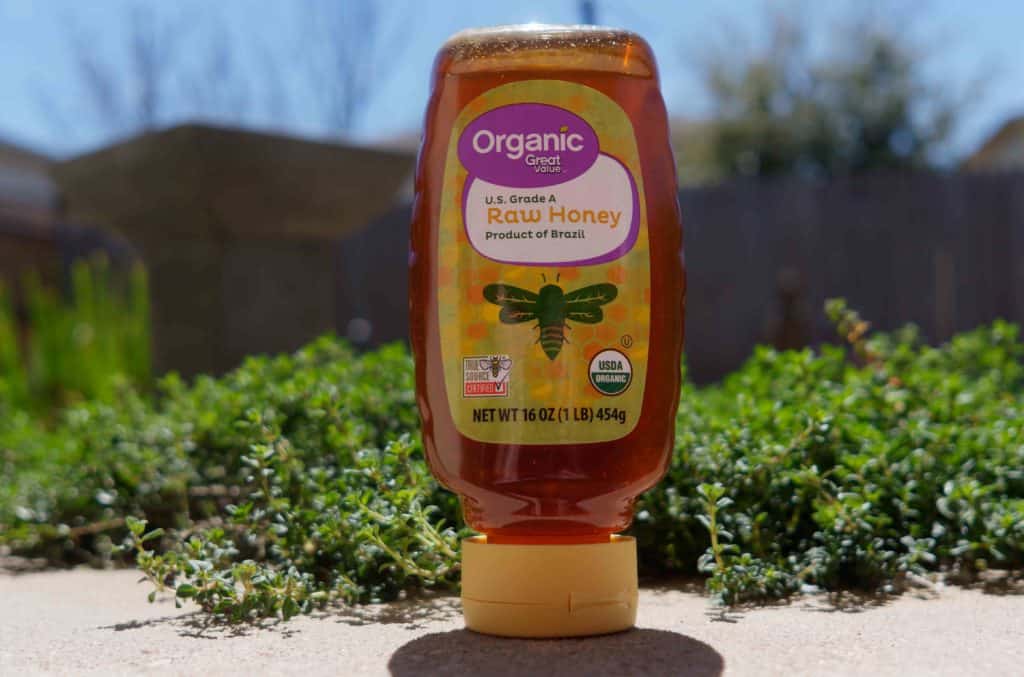
    great value organic raw honey

    Organic Honey in the US: A Myth!

    Many consumers are drawn to the idea of โ€œorganicโ€ honey, believing it to be healthier and more environmentally friendly. However, the concept of organic honey in the United States is more myth than reality.

    The Challenge of Certifying Organic Honey

    In the US, honey cannot be certified as organic by the USDA because bees have a foraging range of several miles. This makes it nearly impossible to control where they collect nectar and pollen. For honey to be truly organic, bees would need to forage exclusively on organically managed flowers, which is not feasible.

    Imported Organic Honey

    Any honey labeled as โ€œCertified Organicโ€ in the US is typically imported from other countries with different standards. This can lead to confusion and mistrust among consumers.

    Environmental and Ethical Considerations

    Producing organic honey would require keeping bees in a controlled environment, such as a greenhouse, to ensure they only visit organic plants. This approach is impractical, inhumane, and detrimental to the environment. Bees play a crucial role in pollination and biodiversity, and restricting their natural behavior would have negative ecological impacts.

    The Reality of Local Honey

    While the organic label may be elusive, locally sourced honey offers a more transparent and beneficial alternative. Local beekeepers often use sustainable and ethical practices, and consumers can directly verify the authenticity and quality of the honey. Supporting local honey also helps sustain small-scale beekeepers and reduces the carbon footprint associated with transporting honey over long distances.

    While the idea of organic honey is appealing, it remains a myth in the US due to the challenges of certifying and controlling bee foraging. Instead, consumers can turn to locally sourced honey for a more transparent, ethical, and environmentally friendly option. Beware of designer honey that may not be as genuine as it seems.


    Local Honey vs Organic

    Transparency and Traceability

    • Direct Connection: Buying locally sourced honey allows consumers to visit apiaries and meet beekeepers.
    • Verification: Consumers can verify the authenticity and quality of the honey.

    Supporting Local Economy

    • Sustaining Beekeepers: Purchasing local honey supports small-scale beekeepers.
    • Ethical Practices: Local beekeepers are more likely to use sustainable and ethical practices.

    Environmental Benefits

    • Reduced Carbon Footprint: Locally sourced honey has a smaller carbon footprint.
    • Promotes Biodiversity: Supporting local beekeepers contributes to environmental sustainability.

    Health Benefits

    • Nutritional Value: Locally sourced honey is often raw and unprocessed, retaining more natural enzymes and nutrients.
    • Healthier Choice: Raw honey provides greater health benefits compared to processed honey.

    Challenges with Organic Certification & Designer Honey

    • Foraging Range: Bees can travel several miles, making it difficult to ensure they only visit organically managed flowers.
    • Meaningless Label: The organic label is less meaningful for honey due to the challenges in controlling bee foraging.

    Consumer Trust

    • Direct Interaction: Consumers can interact with local producers and learn about their practices.
    • Building Trust: Trust is easier to establish with local honey compared to distant sources.

    What Can You Do to Help?

    Now that you’re informed, here is what you can do to help:

    1. Educate Yourself: Learn how to identify real raw honey. The Honey Review offers tips and tricks to help you distinguish genuine honey from adulterated products.
    2. Buy Local: Support local beekeepers by purchasing honey directly from them. This not only ensures youโ€™re getting authentic honey but also helps sustain local beekeeping businesses.
    3. Check Labels: Look for certifications like โ€œTrue Source Certifiedโ€ or โ€œUSDA Organicโ€ on honey labels. These certifications indicate that the honey has been sourced and processed according to specific standards.
    4. Avoid Cheap Honey: Be wary of honey that is significantly cheaper than other brands. Low prices can be an indicator of adulteration.
    5. Spread Awareness: Share information about honey fraud with friends and family. The more people know about the issue, the better equipped they will be to make informed purchasing decisions.
    6. Support Ethical Brands: Choose brands that are transparent about their sourcing and production methods. The Honey Review provides reviews of various honey products, highlighting those that are genuine and high-quality.

    By taking these steps, consumers can help protect their health, support honest beekeepers, and contribute to the fight against designer honey and honey fraud.

    There you have it, folks. Honey fraud is a serious issue thatโ€™s affecting our health, our beekeepers, and our environment. But with a little knowledge and a lot of collaboration, we can make a difference. So next time youโ€™re at the store, take a moment to think about where your honey comes from. Support your local beekeepers and enjoy the sweet taste of genuine honey.

    Yโ€™all take care now, and happy honey hunting!

    • The 2026 Honey Sommelierโ€™s Flavor Guide

      The 2026 Honey Sommelierโ€™s Flavor Guide

      In the professional world of apiculture, “sweet” is merely the baseline. To identify honey like a true Sommelier, you must possess the ability to dissect a jar into its molecular componentsโ€”aroma, viscosity, and the elusive “terroir” of the landscape. Whether you are auditing a rare jar from the Manuka Vault or comparing local varietals from…


    • The 2026 Supermarket Showdown: Testing Walmartโ€™s Top 5 Honey Brands

      The 2026 Supermarket Showdown: Testing Walmartโ€™s Top 5 Honey Brands

      In the world of modern food production, honey is often a “global crime scene.” Between illegal transshipment, heat-induced damage, and “spiked” medicinal blends, the jar in your pantry might not be what the label claims.


    • Supermarket Honey Fraud: The 2011 “Honey Heist” & How to Spot Fakes

      Supermarket Honey Fraud: The 2011 “Honey Heist” & How to Spot Fakes

      Have you ever looked at that golden bear in your pantry and wondered if itโ€™s actually honey? For many Americans, the answer might be “not exactly.” Supermarket honey fraud is a deep problem in the Industry.


  • Kirkland Signature Local Honey Pulled From Shelves

    Kirkland Signature Local Honey Pulled From Shelves

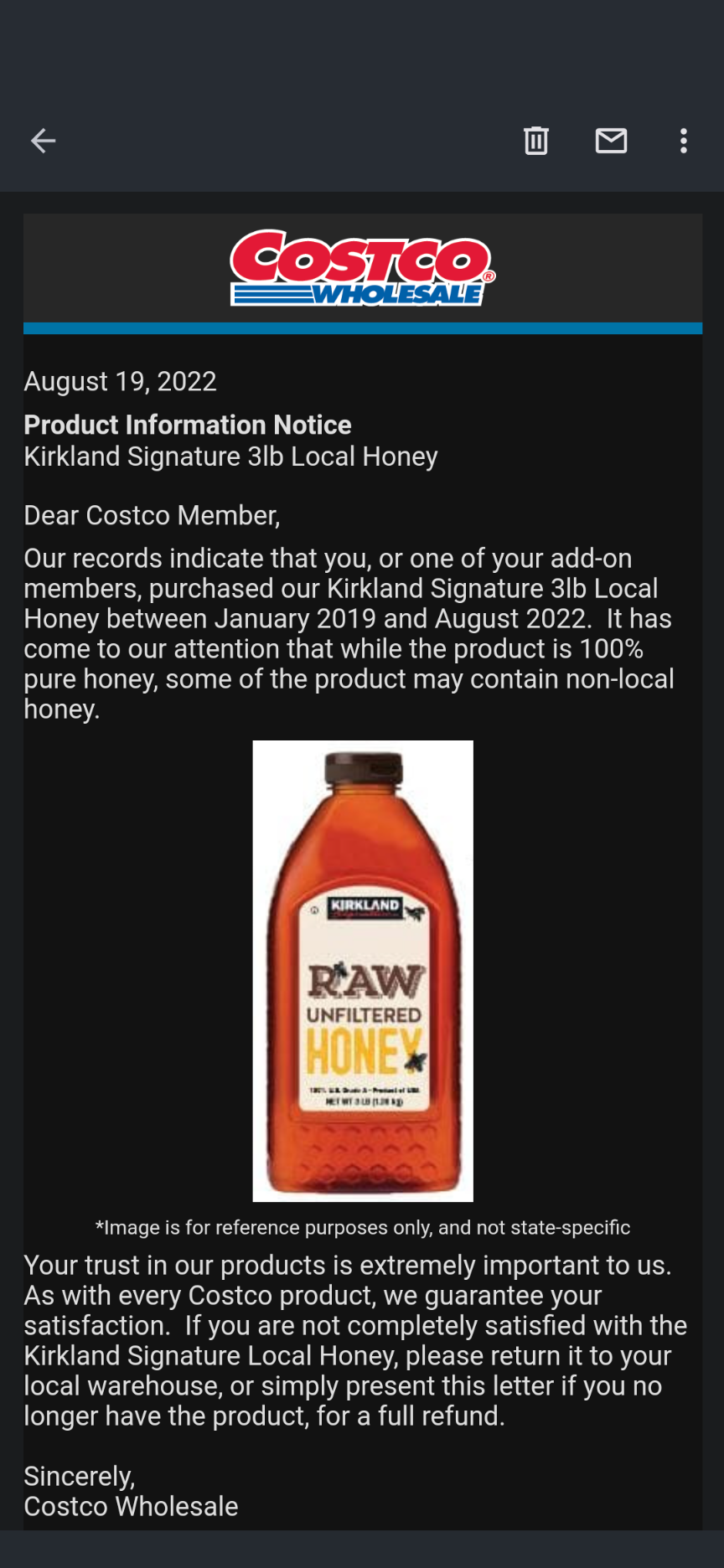
    If you’re a Costco member, you may have noticed that the Kirkland Signature honey has been pulled temporarily. The honey is being re labeled to ensure that it isn’t misleading to it’s members. I reviewed Kirkland Signature twice, the Texas “Local” blend and the Southeast ” Local” blend. And what I found mirror’s Costco’s statement regarding it’s Kirkland Signature Local Honey.

    Why Did Costco Pull Their Kirkland Signature Local Honey?

    Kirkland Signature Local Honey Pulled from Shelves, Recall Notice, Costco Email

    Seems the Vendor which is either Local Hive or Honeytree lied about their manufacturing process. I critiqued Costco for labeling this Honey as local and buying into Local Hive. As part of their local sourcing efforts, I just didn’t get it.

    It’s nice to see them trying to be accountable for the words they use that mislead customers and also hurt local beekeepers.

    We need less Honey Packers.

    This kind of transparency from Costco reinforces why they have such a strong following.

    My other website MyWholesaleLife has over 50k Costco members that rave about Costco’s commitment to it’s members. I stated awhile back that this Honey wasn’t raw or local, and our readers went up in arms!

    Customer Service Chat

    I asked how they knew the honey was blended and not local? She told me that they have partnerships with beekeepers. By working together, they were able to verify that it wasn’t from a local source.

    If Costco wanted to make the honey appear locally sourced they would need to partner with local beekeepers.

    We’ll see how Costco decides to rebrand the Honey.

    Christine says:
    “We take these issues very seriously and our membersโ€™ trust in Costco and the products we sell is extremely important to us. Upon learning of this issue, we removed all impacted product from our warehouses.
    We notified all members who purchased this product between January 2019 and August 2022 with instructions on how to get a full refund.”

    As for who those beekeepers are, I’m not sure. But they’re doing their job in protecting actual local beekeepers and keeping Costco’s vendors accountable.

    For further details and information about Kirkland Signature Local Honey recall click here.