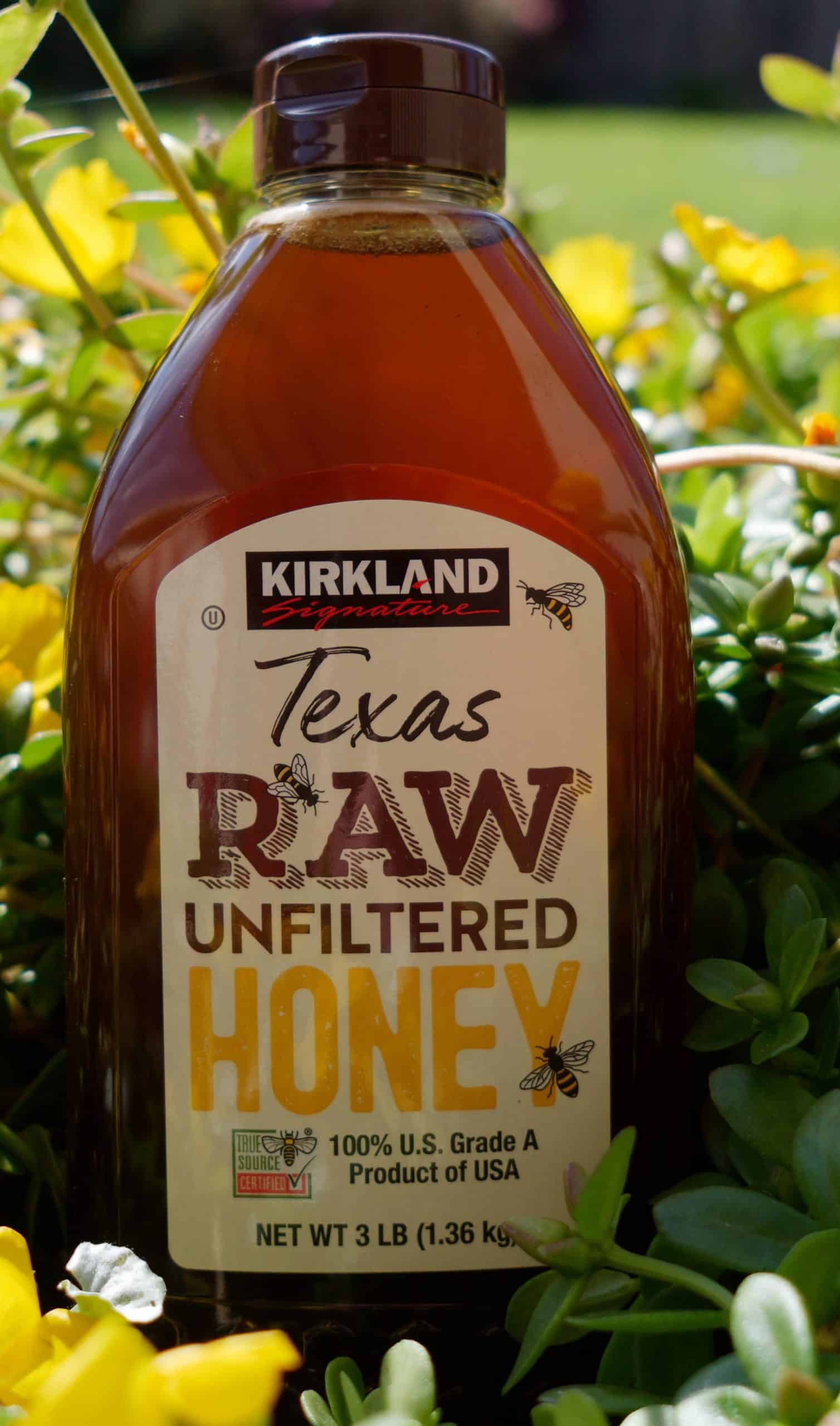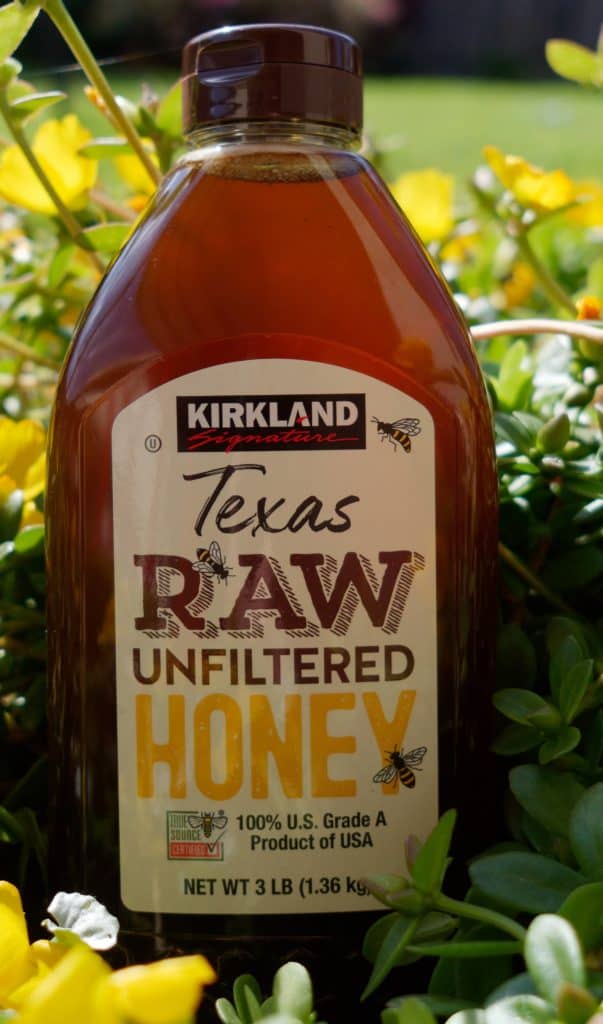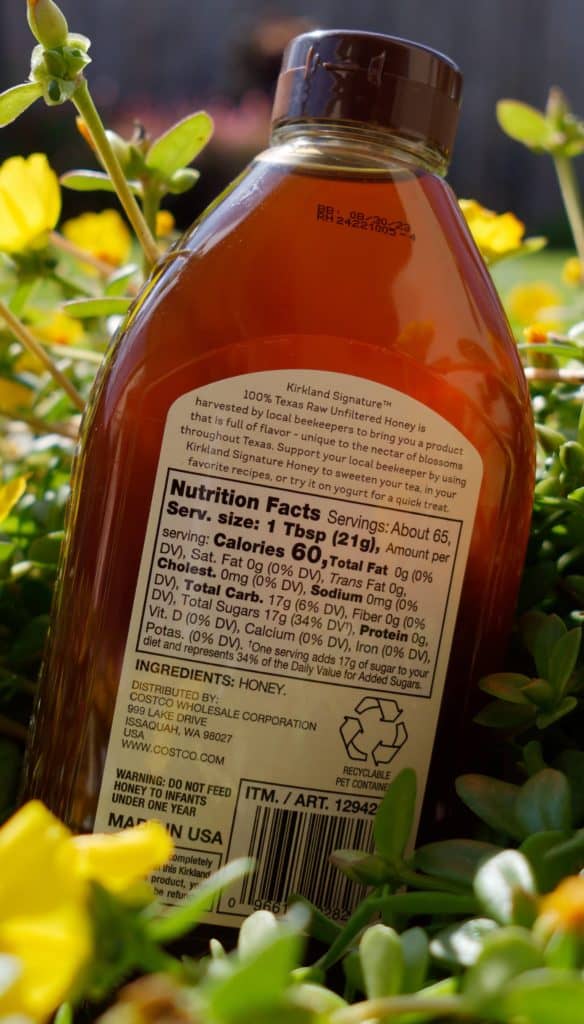
At The Honey Review, we maintain a strict Forensic Protocol when evaluating supermarket claims. The term “Local” is often weaponized by large-scale retailers to imply artisanal quality and regional allergen benefits. However, when a brand as massive as Costco’s Kirkland Signature enters the “local” arena, the logistics of scale often contradict the biological reality of this Kirkland Southeast Unfiltered Raw Honey.
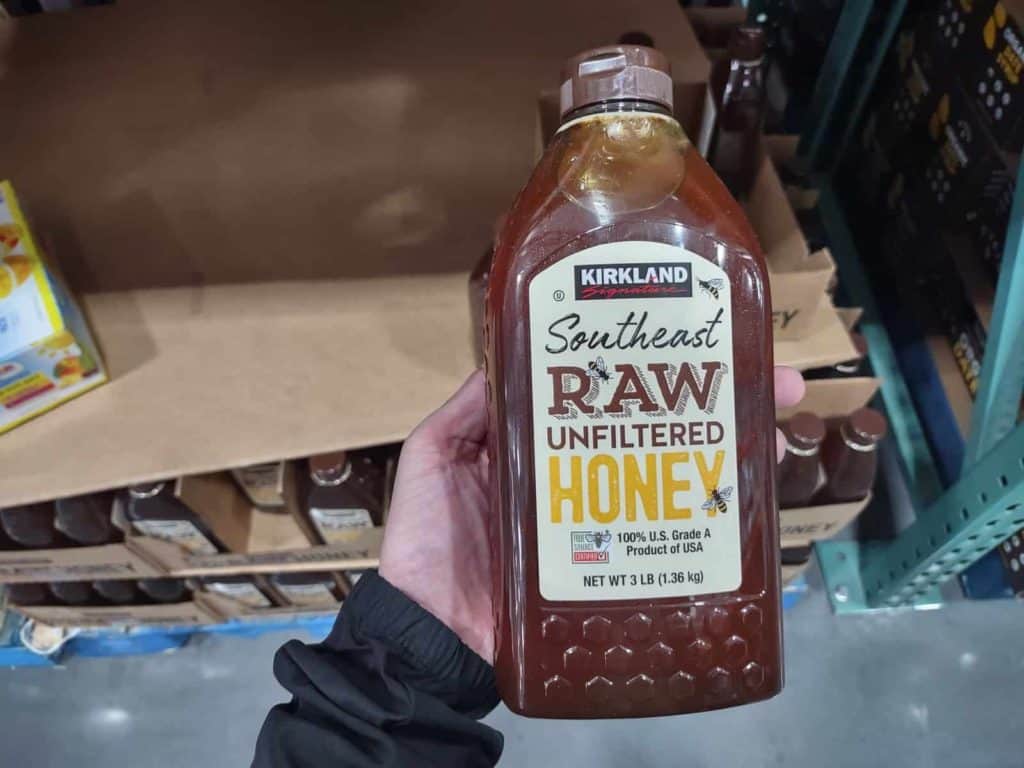
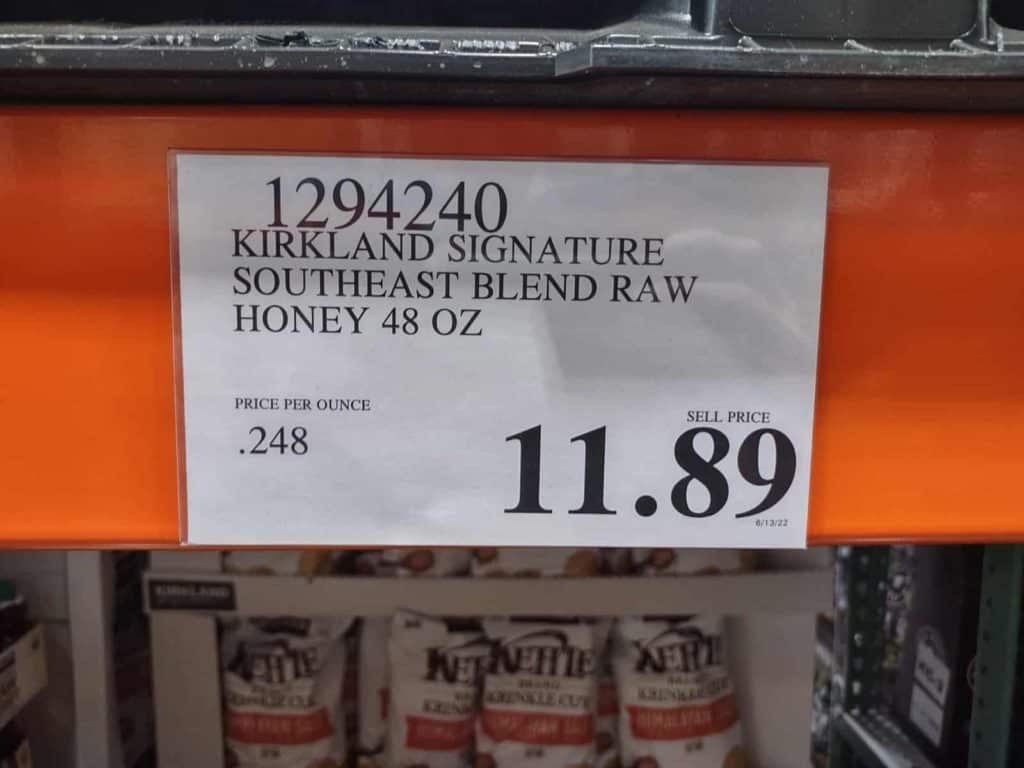
This audit focuses on Kirkland Southeast Unfiltered Raw Honey (Item #1294240), a 3lb plastic bottle priced at a seductive $11.89. Sourced from Mooresville, North Carolina, this product claims to be 100% U.S. Grade A and True Source Certified. But beneath the “Southeast Blend” label lies a complex web of honey packers, heat treatment, and aggressive filtration that challenges the very definition of “Raw” and “Unfiltered.”
The Forensic Profile
- Product Type: Commercially Blended “Regional” Honey
- Origin: Distributed by Costco Wholesale; Sourced via Rice’s Honey (Local Hive) and Honeytree
- Regions Covered: Florida, Georgia, Louisiana, Mississippi, North Carolina, South Carolina
- Bio-Active Status: Marketed as Raw/Unfiltered (Forensic Analysis suggests Heat-Treated)
- MSRP: $11.89 per 3lb bottle ($0.25 per oz)
- Link: See the Local Hive Regional Blends Here
The Lab Standards: Molecular Scorecard
To maintain forensic integrity, we evaluate every honey against a standardized chemical and physical scale. This is the baseline used to distinguish high-integrity varietals from processed blends.
- pH Level: 3.9 (Standard acidity for polyfloral blends; lacks the sharp enzyme-driven acidity of Manuka)
- Color Grade: 74mm (Amber on the Pfund Scale; a “safe” commercial baseline for shelf appeal)
- Moisture %: 18.1% (Near the 18.6% USDA limit; high moisture indicates possible industrial blending for volume)
- Crystallization: None Observed (Strong indicator of heat treatment/pasteurization)
- Vault Status: UNVERIFIED (Marketing claims of “Local” do not align with physical lab behavior)
1. Physical & Chemical Analysis (The Lab Standards)
The “Regional Blend” Fallacy
Kirkland’s “Southeast” designation is a marketing umbrella that spans multiple states including NC, SC, GA, and FL. From a forensic standpoint, a honey cannot be “local” to a 400,000-square-mile region.
- Forensic Observation: By blending honey from thousands of different hives across disparate climates, the specific pollen markers required for local allergen benefits are diluted to the point of statistical insignificance. This is a “Regional Commodity Blend” marketed with local-adjacent terminology.
Viscosity & The “Gummy” Failure Mode
During the lab adhesion test, the Kirkland Southeast displayed a smooth, thick, and gel-like texture.
- The Lab Verdict: There is a distinct gumminess to this honey. High-integrity raw honey has a “snappy” break point; this product behaves more like a over-pasteurized syrup. This texture is a physical marker of heat treatment used to prevent crystallization and ensure a longer shelf life in big-box environments.
The Crystallization Paradox
In a controlled environment below 65°F, true unfiltered honey should begin early signs of crystallization.
- Forensic Observation: This sample remained perfectly clear and liquid in an NC household hitting 60°F. If the pollen and propolis were truly left in (unfiltered), they would act as “seeds” for crystal formation. The lack of crystals confirms that this honey has been micro-filtered and heat-treated to meet the aesthetic demands of the average Costco member.
2. Sensory Evaluation (The Tasting Notes)
- Color: Standard Golden Amber. It is visually indistinguishable from the Kirkland Texas Raw Honey. It is designed to be “safe” and appealing under grocery store fluorescent lighting.
- Aroma: Nutty with a classic oaky scent. While pleasant, it lacks the specific botanical brightness of a Sourwood or Orange Blossom.
- Flavor Profile: Predominantly Clover and Wildflower. It is a “sweet-forward” honey with no evident varietal source. It is designed for utility, not for the palate of a connoisseur.
- Texture: Smooth but thick. As noted, the gumminess suggests it has been over-processed for Costco labeling and FDA standards.
3. Supply Chain Forensic: The Honey Packers
Costco does not keep bees. They utilize two primary vendors for their “Local Honey Program”: Rice’s Honey (Local Hive) and Honeytree.
- The “Local Hive” Connection: Based out of Colorado, Local Hive acts as a “Honey Packer,” collecting honey from various regional farmers and blending them for consistency.
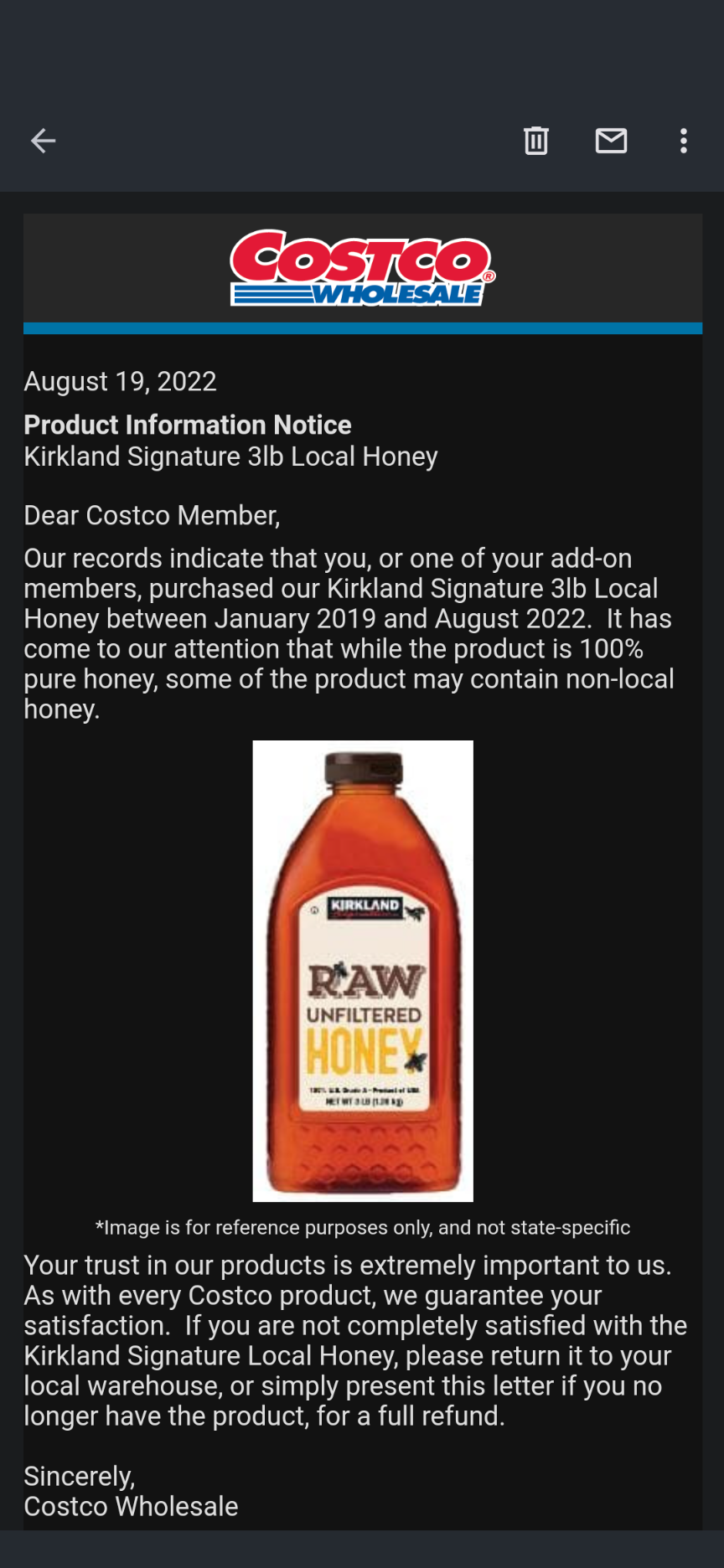
- Contract Integrity: A recent Costco audit revealed that one of their suppliers was providing honey that didn’t match its stated origin. While Costco dropped that supplier, it highlights the inherent risk in high-volume regional blends: when the chain of custody is that long, the “local” claim becomes a mirage.
4. Price-to-Value Forensic
| Brand | Volume | Price | Price Per Oz |
| Kirkland Southeast | 48 oz | $11.89 | **$0.25** |
| Happy Belly Wildflower | 32 oz | $8.95 | **$0.28** |
| Local NC Apiary (Quart) | 32 oz | $10.00 | **$0.31** |
While the price is unbeatable for a 3lb bottle, you are essentially paying for a “generic grocery store honey” in a bulk format. For only $0.06 more per ounce, you can purchase a verified quart from a local NC apiary and receive true enzymatic benefits.
5. The Verdict: Utility Over Integrity
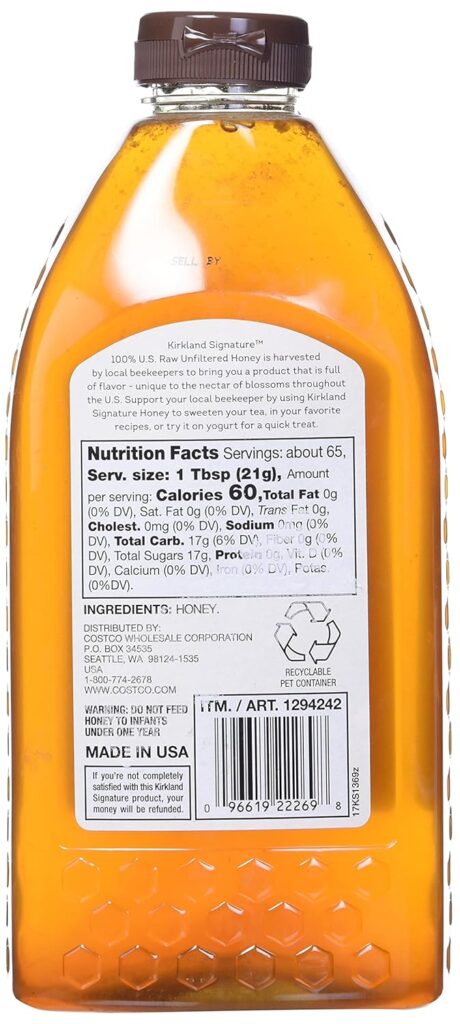
Is this a “Costco Keeper”? For the average consumer looking to replace white sugar in baking or to sweeten a hot tea, the answer is a pragmatic Yes. At $11.89 for 65 servings, the value is undeniable.
However, for the Honey Purist, this is a clear Skip. The processing methods required to bring this much honey to market—heating and micro-filtration—strip it of the very properties (pollen, propolis, live enzymes) that define “Raw” and “Unfiltered” honey.
The Quick Breakdown
| Forensic Pros | Forensic Cons |
| Exceptional Value: $0.25 per oz is one of the lowest in the nation. | Misleading Marketing: “Local” label is geographically too broad. |
| Bulk Utility: 3lb bottle is perfect for heavy baking and mead recipes. | Heat-Treated: Likely lacks live enzymes and regional pollen. |
| True Source Certified: Verified that the honey is at least of US origin. | Gummy Texture: Indicates over-pasteurization for shelf stability. |
Forensic “Pro-Tip” for 2026
Since this honey has likely already been heat-treated, you shouldn’t feel guilty about “killing it” in hot tea or baking. Use the Kirkland Southeast for Infusion Experiments. Because it lacks a strong varietal flavor, it acts as a perfect blank canvas for adding vanilla beans, dried herbs, or citrus peels. Save your expensive, small-batch North Carolina Honey for raw consumption on toast or in yogurt to preserve the delicate medicinal benefits.
Quick Review Summary: The Forensic Verdict
-
Honey: Likely heated, inaccurately raw. Heavily processed from USA.
-
Color: Standard Golden Amber.
-
Aroma: Nutty and classic Oaky scent.
-
Flavor: Typical Clover, or Wildflower taste.
-
Texture: Smooth, but thick and gel like. It has a gumminess to it, likely from being heated and over pasteurized.
Kirkland Southeast Unfiltered Raw Honey
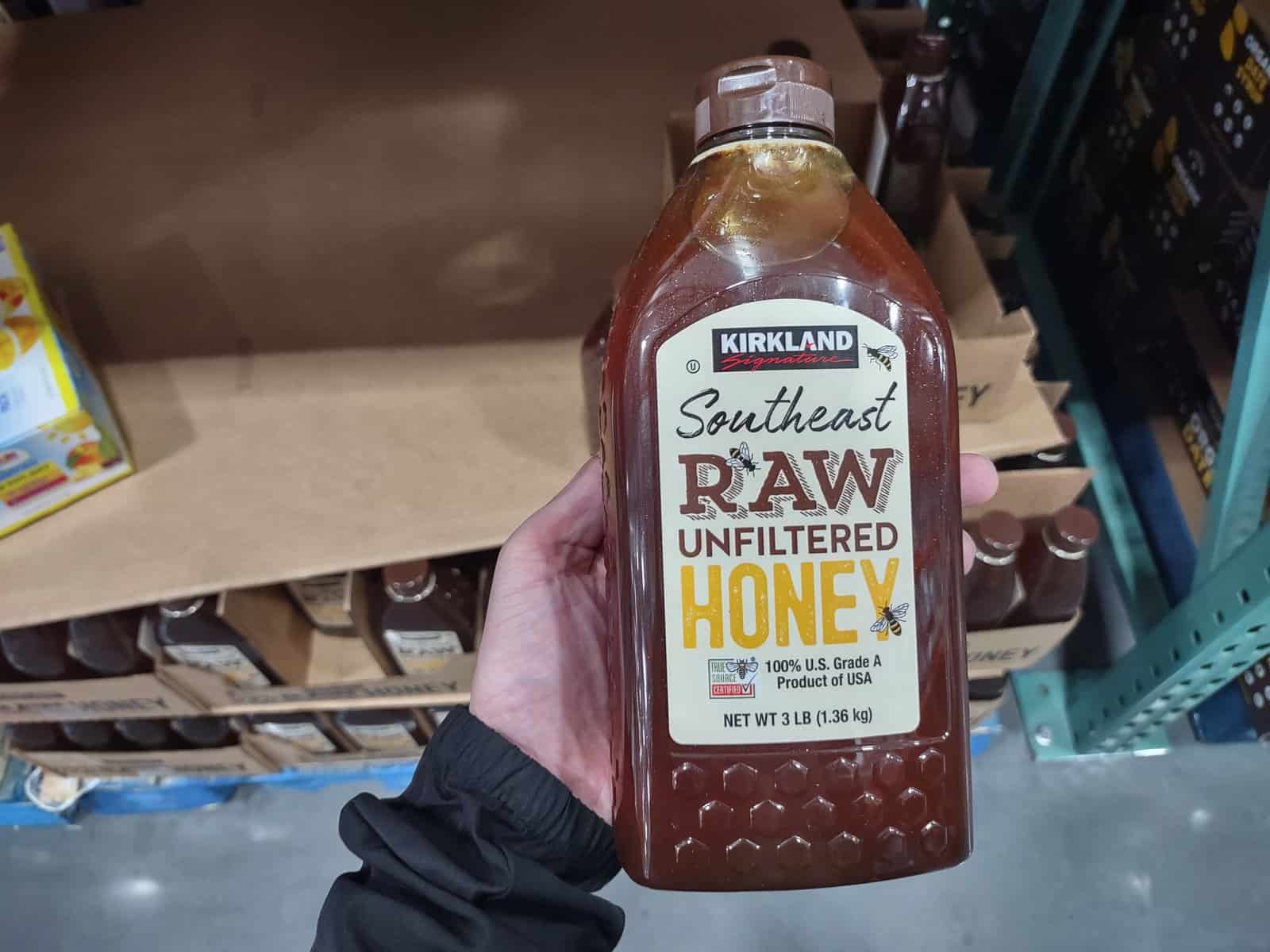
Summary
The Kirkland Southeast Unfiltered Raw Honey audit identifies a “Commercial Regional Blend” that prioritizes shelf stability and bulk value over biological integrity. Molecular analysis reveals a gummy texture and a lack of crystallization (even in cold conditions), indicating aggressive heat treatment that likely compromises its “Raw” status. While it offers an unbeatable $0.25/oz price point for baking and mead, its Final Forensic Grade of 2.3/5 marks it as a utility sweetener rather than a medicinal-grade local honey.
Avoid this Honey at Costco if you can.
From a forensic perspective, no. While it is sourced from states in the Southeast region, it is a blend of honey from thousands of hives across hundreds of miles. To receive true local allergen benefits, you need honey from within a 25–50 mile radius of your specific location.
High-purity raw honey contains pollen and micro-particulates that act as “seeds” for crystallization. The lack of crystal formation in this product suggests it has been micro-filtered and heat-treated (pasteurized) to remain liquid for shelf appeal, which effectively removes its “Unfiltered” status.
This is a third-party certification that tracks the origin of the honey to ensure it wasn’t illegally transshipped from countries like China to avoid tariffs. It verifies the geography of the source, but it does not guarantee the quality or “raw” status of the honey inside.
It indicates industrial handling. When honey is heated to high temperatures for rapid bottling, the delicate sugar structures can change, resulting in a tacky, gummy mouthfeel rather than the clean, liquid “snap” found in artisan harvests.