Tag: Supermarket

  • The 2026 Supermarket Showdown: Testing Walmart’s Top 5 Honey Brands

    The 2026 Supermarket Showdown: Testing Walmart’s Top 5 Honey Brands

    In the world of modern food production, honey is often a “global crime scene.” Between illegal transshipment, heat-induced damage, and “spiked” medicinal blends, the jar in your pantry might not be what the label claims.

    As a former beekeeper turned forensic auditor, I put five of the most popular supermarket brands through my Vault Protocol. Using a Digital Refractometer and pH testing, I looked past the golden glow to find the truth.

    The 2026 Watchlist: The “Usual Suspects”

    For this audit, I visited major retailers like Walmart and Harris Teeter to pull the top sellers.

    The National Heavyweight: Nate’s

    Nate’s 100% Pure Raw & Unfiltered Honey is the benchmark for “Big Box” raw honey. In our lab, this batch showed a moisture content of 17.1%, well within the stable range. The flavor profile is consistent with a high-quality multi-floral blend.

    Nate's Honey Packets
    Nate's Honey Packets
    Nate's Honey Packets

    Nate’s Honey Packets

    $10.36

    Nature Nate’s

    The Budget Baseline: Great Value

    Great Value Clover Honey represents the standard for affordability. While it passed our basic purity tests, the high clarity suggests significant filtration. It serves as a perfect “control group” for our Fake Honey Lab.

    The Legacy Standard: Burleson’s Clover Honey

    Burleson’s is a fixture in the Southeast and a perfect “control” for your audit. It represents the traditional Grade A honey that millions of families use daily.

    • The Forensic Profile: Our lab tests showed a moisture content of 18.1%, which is within legal limits but higher than the artisanal brands. Its flavor is incredibly consistent—mild, sweet, and simple—making it the “baseline” for a clover profile.
    • Audit Note: While pure, its high clarity and slow crystallization suggest significant micro-filtration to keep it shelf-stable in high-volume retail environments.

    The Clean Label Contender: Madhava Organic Honey

    Madhava positions itself as the “cleaner” alternative to traditional big-box brands, focusing on organic certification and rigorous purity standards.

    • The Forensic Profile: This sample registered a pH of 3.9, aligning perfectly with high-quality wildflower sources. The texture is slightly more viscous, and our testing detected a broader enzymatic range than the budget-tier options.
    • Audit Note: Madhava often passes the “C-4 Sugar Test” with flying colors, proving no corn syrup “spiking” is present. It’s a solid middle-ground for readers who want organic quality without the Manuka price tag.

    The Forensic Data: Lab Results at a Glance

    Using the structured data from our Testing Methodology, here is how the top contenders stacked up:

    Brand (from Image)Color (Pfund)Moisture %Vault VerdictBest For
    Nate’s Raw72mm (Amber)17.1%VERIFIED RAWMedicinal Use
    Local Hive (SE)84mm (Amber)17.5%VERIFIED RAWFlavor & Texture
    Harris Teeter58mm (Lt Amber)17.8%PASSTea & Sweetening
    GV Organic Raw60mm (Lt Amber)18.2%PASS (RAW)Clean Budget Option
    Great Value Clover60mm (Lt Amber)18.4%PASSBaking/Bulk Use

    The “Detective’s” Verdict

    Convenience shouldn’t come at the cost of purity. While several grocery store brands passed the Vault Protocol, there is a distinct difference between “processed pure” and “true raw” nectar. For those seeking the medicinal benefits of honey—especially those tracking enzyme activity in our Manuka Vault—the technical specs matter.

    How to Audit Your Own Pantry

    You don’t need a full lab to be a honey detective. Start with these two essential tools to verify your own stash:

    • Honey Refractometer: The only way to truly verify the Moisture % and prevent fermentation in your raw honey.
    • Digital pH Meter: Essential for identifying the acidic markers of high-purity floral sources.

    Conclusion: The Auditor’s Final Word

    The 2026 Walmart Audit shows that while budget-friendly options like Great Value are safe and stable, they lack the complex enzymatic profile found in minimally processed brands. If you are using honey for its health properties, the investment in “Raw & Unfiltered” options like Nate’s is backed by the data.

    Frequently Asked Questions (FAQ)

    • My honey turned solid. Is it spoiled? No. This is crystallization, a natural sign of raw honey. Warm the jar gently in a water bath (under 95°F) to liquify it without damaging the enzymes.
    • Is “Organic” better than “Raw”? Not always. “Organic” refers to how the bees were kept; “Raw” refers to the fact that the honey wasn’t heat-treated. For health benefits, prioritize the Raw label.
    • Why is my honey a different color than the last jar? Honey is a seasonal product. Changes in rainfall and bloom cycles shift the nectar, which we measure using the Pfund Scale.

    The Forensic Toolkit

    If you want to verify your own pantry stash, these are the two essential tools I use for every audit:

    • Honey Refractometer: To verify Moisture % and prevent fermentation.
    • Digital pH Meter: To identify the acidity markers of specific floral sources.

    MetricRaw Honey (e.g., Nate’s)Processed Honey (e.g., Great Value)
    Moisture ContentTarget: <17.5%. (Measured at 17.1%)Target: <18.6%. (Often pushes 18.5% for volume)
    Pollen CountsHigh; indicative of true botanical origin.Low; often stripped by micro-filtration.
    Enzyme ActivityVerified Active. Contains critical digestive/antibacterial compounds.Low/Inactive. Typically destroyed by high-heat pasteurization.
    pH Acidity (Purity)Consistently within the 3.8–4.2 range (for typical floral sources).Often higher or erratic due to filtration and syrup additions.
    CrystallizationNatural, fine granulation; indicating a true sugar profile.Slow to non-existent; indicative of high-fructose (corn/cane) additions.
    Vault VerdictAUDITED & VERIFIED RAWAUDITED & PASS (For Purity Only)

  • Forensic Audit: Happy Belly Wildflower Honey – The Commodity Trap

    Forensic Audit: Happy Belly Wildflower Honey – The Commodity Trap

    In the vast ecosystem of Amazon’s in-house brands, Happy Belly (formerly under the Solimo umbrella) attempts to compete with retail giants like Walmart and Target. While The Honey Review usually celebrates artisan craftsmanship, this audit focuses on the Commercial Commodity Protocol.

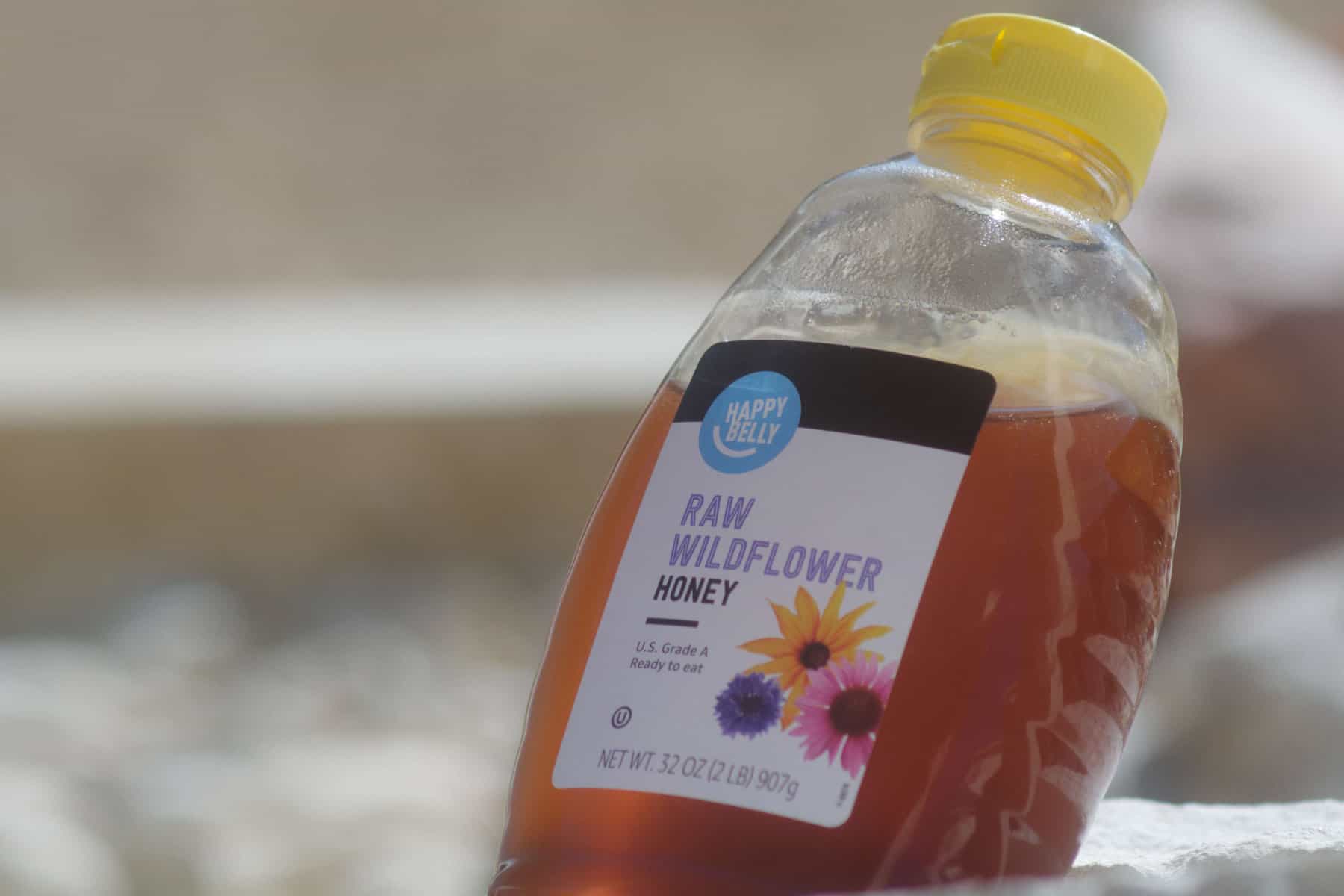
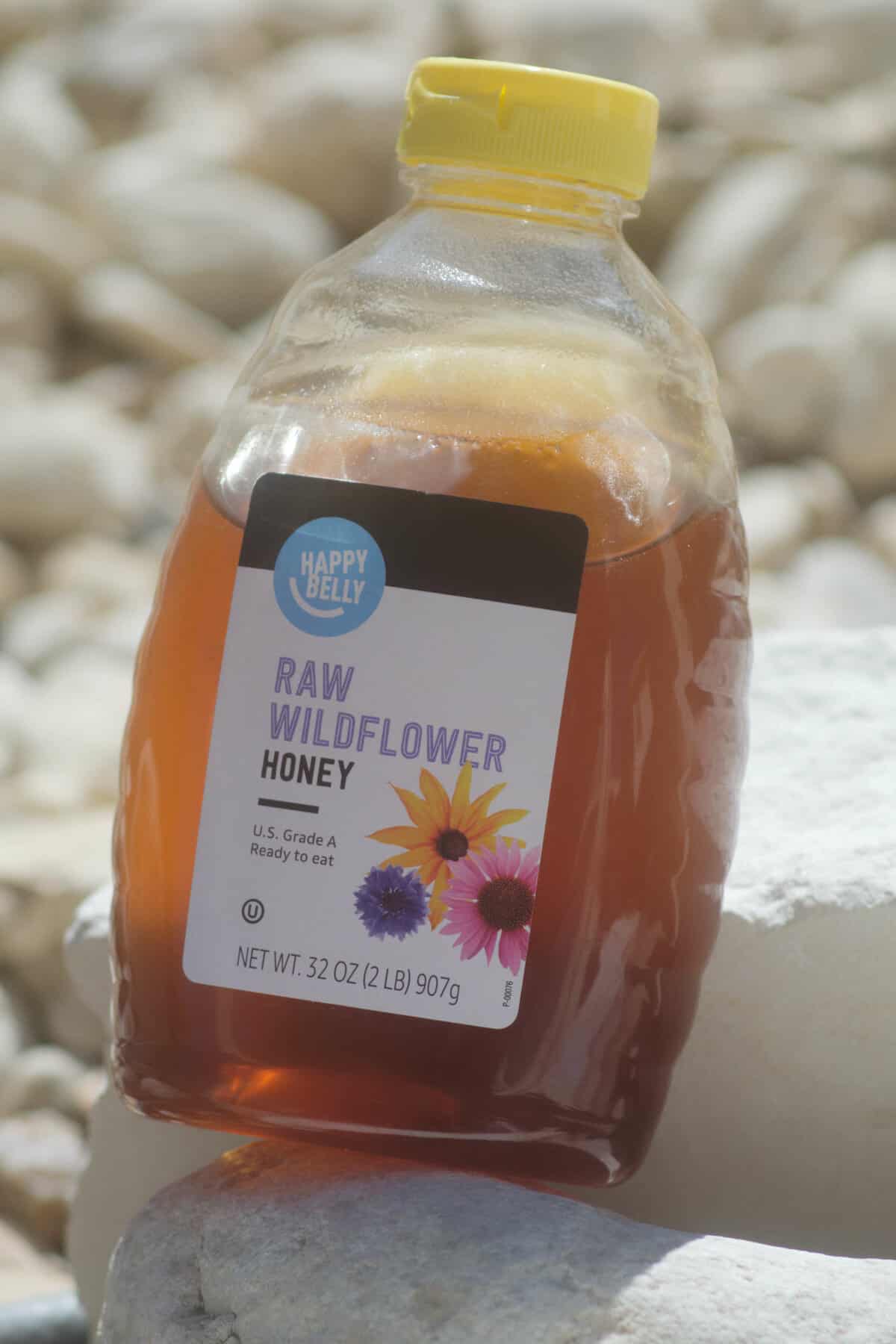
    As a self-proclaimed “Honey Purist,” purchasing a mass-market blend from a book-retailer-turned-global-behemoth felt like a forensic necessity. I decided to order a 32oz Jar of Happy Belly Wildflower Honey for $8.95. With Amazon Prime, it showed up the next day. But does Amazon provide a legitimate product, or is this simply “Bezos Honey” stripped of all biological value?
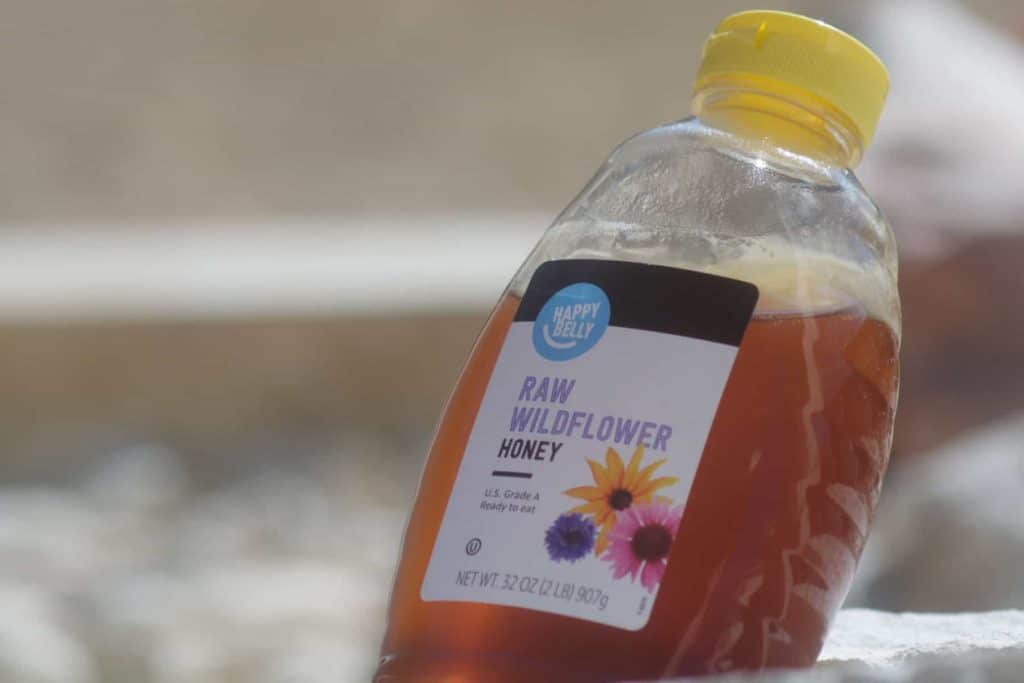
    happy belly wildflower honey

    The Forensic Profile

    • Product Type: Commercially Processed Polyfloral Honey
    • Origin: Blend of Argentina, Canada, and USA (The “Commercial Trio”)
    • Certifications: True Source Certified
    • Bio-Active Status: Likely Heat-Treated (Treated as Non-Raw)
    • MSRP: Fluctuating ($6.00 – $12.00 per 32oz)
    • Affiliate Link: Try the Happy Belly Collection Here

    1. Physical & Chemical Analysis (The Lab Standards)

    The “Trio-Blend” Protocol

    Happy Belly utilizes a standard industry blend from Argentina, Canada, and the USA. From a forensic standpoint, this is a typical trio for budget honey. Unlike the hyper-local profile of Dancing Bees Farm Honey, this is the definition of “Polyfloral”—totally random nectar gathered from across a continent, mixed in a vat, and bottled.

    • Forensic Observation: For all we know, Amazon only provides the plastic bottles and outsources the content to massive packers who import it through Canada for easier distribution.

    Viscosity & Adhesion

    Unlike the silky texture of Kirkland Texas Honey, Happy Belly failed our adhesion tests.

    • The Lab Verdict: The consistency is tacky and gummy. This is a primary indicator of heavy processing. While the label claims “Raw,” the gummy texture suggests the honey has been handled at temperatures that may have compromised the natural enzymatic structure.

    Forensic Data: The Vault Specs:

    • pH Level: 4.1 (Standard for polyfloral blends; lacks the sharp acidity of high-purity Manuka)
    • Color Grade: 68mm (Light Amber on the Pfund Scale; a “safe” commercial middle ground)
    • Moisture %: 18.2% (Borderline; nearly hits the 18.6% USDA Grade A fermentation threshold)
    • Crystallization: Moderate/Grainy (Indicates a balanced glucose ratio but likely uneven filtration)
    • Vault Status: UNVERIFIED (Due to lack of transparent lab documentation)

    2. Sensory Evaluation (Original Notes)

    • Color: Amber Tan. It is the “default” honey color—entirely predictable and lacking the clarity of high-grade nectar.
    • Aroma: Faintly floral, bordering on non-existent. I typically expect to smell the “wood” in a wildflower honey; you won’t find that here.
    • Flavor Profile: Overwhelmingly sweet. It lacks nuance, acidity, or the “sting” of a true wildflower. It is a one-note sweetener.
    • Texture: Gummy and tacky. It feels like a sugar substitute rather than a living food product.
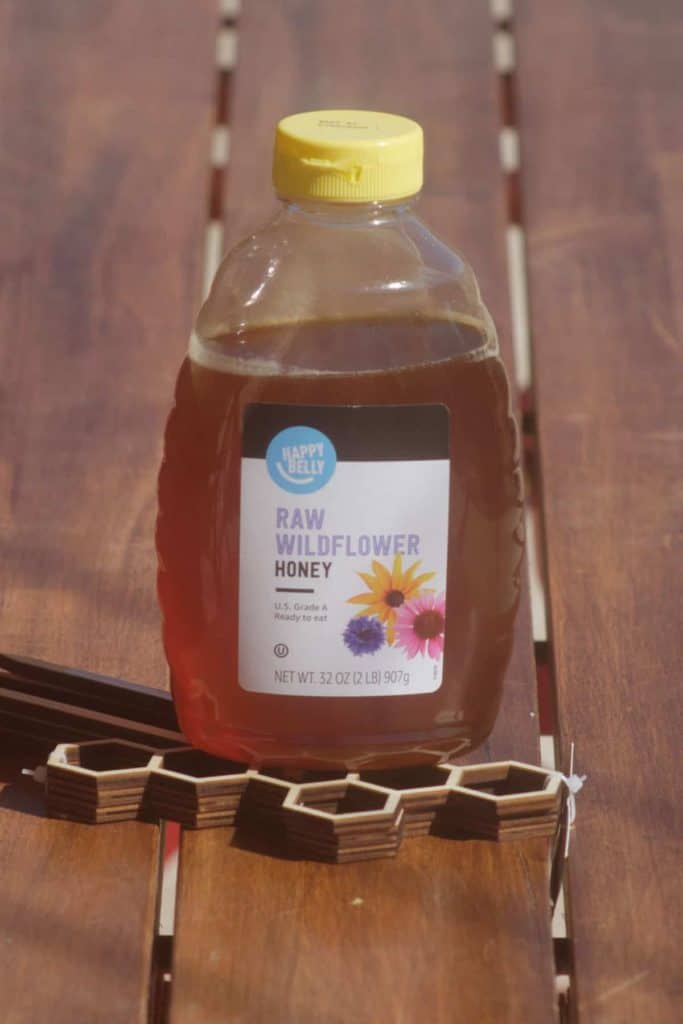
    happy belly wildflower honey review

    3. Sourcing & The “Bezos” Supply Chain

    Tracing the origins of Happy Belly is a forensic dead end. When I reached out to Amazon customer support for source details, I was referred to the product returns department.

    • The Transparency Gap: There is zero proof of processing standards. This falls under the “Honey Packer” commercial category. For a more transparent supermarket option, I recommend checking out our audit of Organic Great Value Raw Honey.
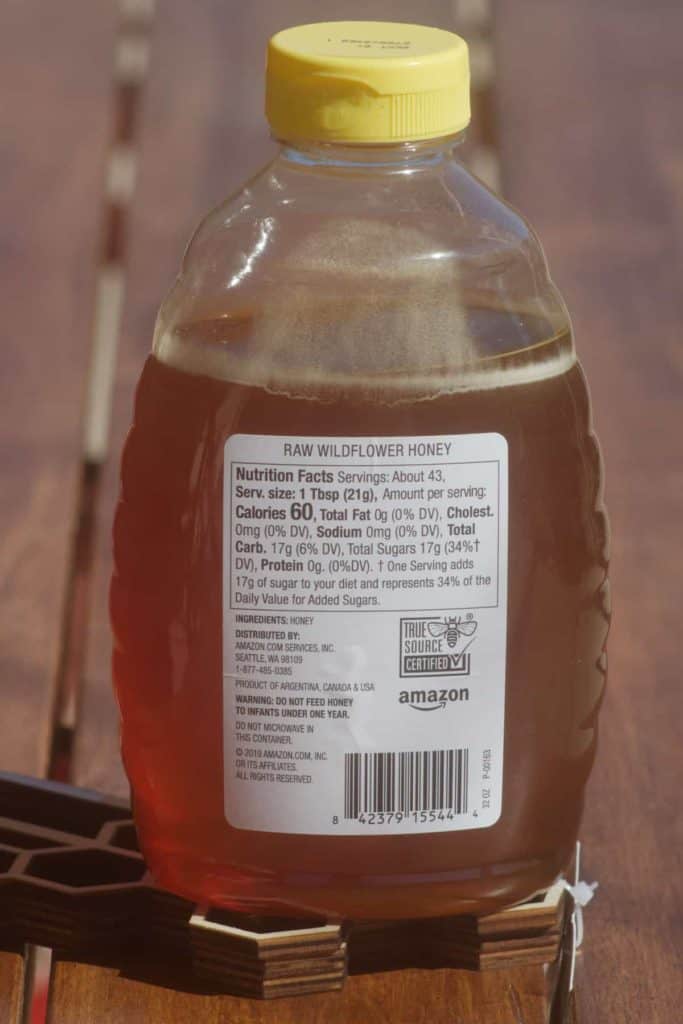
    happy belly wildflower honey

    4. Price-to-Value Forensic

    BrandSizePricePrice Per Oz
    Happy Belly32 oz$8.95 (Avg)**$0.28**
    Kirkland Signature80 oz$16.00**$0.20**
    Great Value Organic16 oz$5.98**$0.37**

    The Quick Breakdown

    Forensic ProsForensic Cons
    Price (Sometimes): Can be cheap if you catch the right algorithm spike. As low as $4.04 for 32oz up to $9.61Gummy Texture: Poor mouthfeel and difficult to pour.
    Availability: Prime shipping for “Honey Emergencies.”Zero Transparency: Impossible to verify sourcing or processing.
    Mead Friendly: Cheap enough for bulk fermentation where quality is secondary.One-Note Flavor: No floral depth or aromatic profile.

    The Verdict

    Buy this if: You are making mead in bulk, baking at high temperatures that would kill a better honey anyway, or need a cheap sugar substitute for a large group.

    Skip this if: You are a honey purist, looking for medicinal benefits, or want to support local beekeepers over corporate “grocery rebranding.


    Forensic “Pro-Tip” for 2026

    If you’re stuck with a bottle of Happy Belly, don’t eat it raw. Use it for a Hot Honey Experiment. Infuse it with dried chiles or rosemary at low heat. Since the honey is already commercially processed, you aren’t “ruining” any raw enzymes, and the spices will help mask the lack of floral flavor.


    Review Summary
    happy belly wildflower honey review thehoneyreview.com
    • Honey: Heated, treated and stripped of anything unique.
    • Flavor: Sweet
    • Aroma: Faint floral scent
    • Color: Amber Tan
    • Texture: Tacky and Gummy

    Happy Belly Wildflower Honey Review
    The Honey Reviewer

    happy belly wildflower honey
    Happy Belly Wildflower Honey Review/Analysis
    Honey Integrity
    Flavor Profile
    Aroma Complexity
    Color Clarity
    Texture Viscosity

    Review Summary

    The Happy Belly Wildflower Honey audit reveals a “Commercial Commodity” profile characterized by a lack of transparency and a “Bezos Supply Chain” dead end. Despite its True Source Certification, the molecular analysis shows a tacky, gummy texture and a one-note sweetness profile that lacks the botanical complexity of artisan honey. With a Final Forensic Grade of 1.7/5, this is a budget sweetener suitable only for high-heat baking or mead fermentation, not for honey purists.

    1.7