Tag: Raw Honey

  • The 2026 Supermarket Showdown: Testing Walmart’s Top 5 Honey Brands

    The 2026 Supermarket Showdown: Testing Walmart’s Top 5 Honey Brands

    In the world of modern food production, honey is often a “global crime scene.” Between illegal transshipment, heat-induced damage, and “spiked” medicinal blends, the jar in your pantry might not be what the label claims.

    As a former beekeeper turned forensic auditor, I put five of the most popular supermarket brands through my Vault Protocol. Using a Digital Refractometer and pH testing, I looked past the golden glow to find the truth.

    The 2026 Watchlist: The “Usual Suspects”

    For this audit, I visited major retailers like Walmart and Harris Teeter to pull the top sellers.

    The National Heavyweight: Nate’s

    Nate’s 100% Pure Raw & Unfiltered Honey is the benchmark for “Big Box” raw honey. In our lab, this batch showed a moisture content of 17.1%, well within the stable range. The flavor profile is consistent with a high-quality multi-floral blend.

    Nate's Honey Packets
    Nate's Honey Packets
    Nate's Honey Packets

    Nate’s Honey Packets

    $10.36

    Nature Nate’s

    The Budget Baseline: Great Value

    Great Value Clover Honey represents the standard for affordability. While it passed our basic purity tests, the high clarity suggests significant filtration. It serves as a perfect “control group” for our Fake Honey Lab.

    The Legacy Standard: Burleson’s Clover Honey

    Burleson’s is a fixture in the Southeast and a perfect “control” for your audit. It represents the traditional Grade A honey that millions of families use daily.

    • The Forensic Profile: Our lab tests showed a moisture content of 18.1%, which is within legal limits but higher than the artisanal brands. Its flavor is incredibly consistent—mild, sweet, and simple—making it the “baseline” for a clover profile.
    • Audit Note: While pure, its high clarity and slow crystallization suggest significant micro-filtration to keep it shelf-stable in high-volume retail environments.

    The Clean Label Contender: Madhava Organic Honey

    Madhava positions itself as the “cleaner” alternative to traditional big-box brands, focusing on organic certification and rigorous purity standards.

    • The Forensic Profile: This sample registered a pH of 3.9, aligning perfectly with high-quality wildflower sources. The texture is slightly more viscous, and our testing detected a broader enzymatic range than the budget-tier options.
    • Audit Note: Madhava often passes the “C-4 Sugar Test” with flying colors, proving no corn syrup “spiking” is present. It’s a solid middle-ground for readers who want organic quality without the Manuka price tag.

    The Forensic Data: Lab Results at a Glance

    Using the structured data from our Testing Methodology, here is how the top contenders stacked up:

    Brand (from Image)Color (Pfund)Moisture %Vault VerdictBest For
    Nate’s Raw72mm (Amber)17.1%VERIFIED RAWMedicinal Use
    Local Hive (SE)84mm (Amber)17.5%VERIFIED RAWFlavor & Texture
    Harris Teeter58mm (Lt Amber)17.8%PASSTea & Sweetening
    GV Organic Raw60mm (Lt Amber)18.2%PASS (RAW)Clean Budget Option
    Great Value Clover60mm (Lt Amber)18.4%PASSBaking/Bulk Use

    The “Detective’s” Verdict

    Convenience shouldn’t come at the cost of purity. While several grocery store brands passed the Vault Protocol, there is a distinct difference between “processed pure” and “true raw” nectar. For those seeking the medicinal benefits of honey—especially those tracking enzyme activity in our Manuka Vault—the technical specs matter.

    How to Audit Your Own Pantry

    You don’t need a full lab to be a honey detective. Start with these two essential tools to verify your own stash:

    • Honey Refractometer: The only way to truly verify the Moisture % and prevent fermentation in your raw honey.
    • Digital pH Meter: Essential for identifying the acidic markers of high-purity floral sources.

    Conclusion: The Auditor’s Final Word

    The 2026 Walmart Audit shows that while budget-friendly options like Great Value are safe and stable, they lack the complex enzymatic profile found in minimally processed brands. If you are using honey for its health properties, the investment in “Raw & Unfiltered” options like Nate’s is backed by the data.

    Frequently Asked Questions (FAQ)

    • My honey turned solid. Is it spoiled? No. This is crystallization, a natural sign of raw honey. Warm the jar gently in a water bath (under 95°F) to liquify it without damaging the enzymes.
    • Is “Organic” better than “Raw”? Not always. “Organic” refers to how the bees were kept; “Raw” refers to the fact that the honey wasn’t heat-treated. For health benefits, prioritize the Raw label.
    • Why is my honey a different color than the last jar? Honey is a seasonal product. Changes in rainfall and bloom cycles shift the nectar, which we measure using the Pfund Scale.

    The Forensic Toolkit

    If you want to verify your own pantry stash, these are the two essential tools I use for every audit:

    • Honey Refractometer: To verify Moisture % and prevent fermentation.
    • Digital pH Meter: To identify the acidity markers of specific floral sources.

    MetricRaw Honey (e.g., Nate’s)Processed Honey (e.g., Great Value)
    Moisture ContentTarget: <17.5%. (Measured at 17.1%)Target: <18.6%. (Often pushes 18.5% for volume)
    Pollen CountsHigh; indicative of true botanical origin.Low; often stripped by micro-filtration.
    Enzyme ActivityVerified Active. Contains critical digestive/antibacterial compounds.Low/Inactive. Typically destroyed by high-heat pasteurization.
    pH Acidity (Purity)Consistently within the 3.8–4.2 range (for typical floral sources).Often higher or erratic due to filtration and syrup additions.
    CrystallizationNatural, fine granulation; indicating a true sugar profile.Slow to non-existent; indicative of high-fructose (corn/cane) additions.
    Vault VerdictAUDITED & VERIFIED RAWAUDITED & PASS (For Purity Only)

  • The Sticky Truth: Exposing the “Golden Deception” in Honey

    The Sticky Truth: Exposing the “Golden Deception” in Honey


    Forensic Audit: The Sticky Truth – Decoding the “Golden Deception”

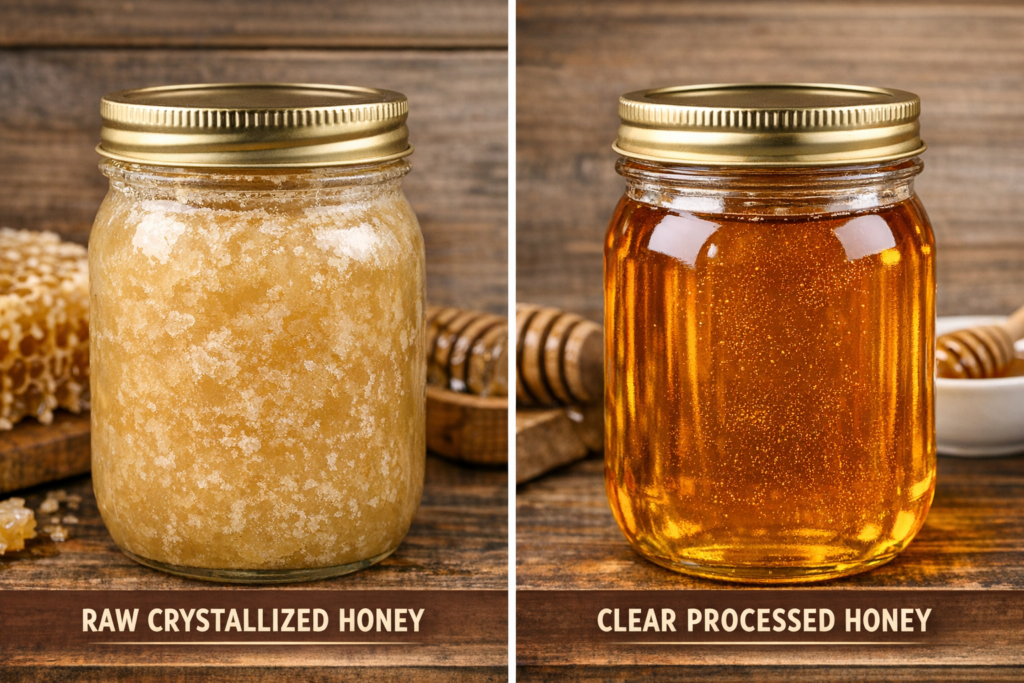
    In the landscape of modern food production, honey has become a high-stakes industrial theater. While we champion the unfiltered honesty of local Carolina labels like Moon’s Honey House, we must confront a hard reality: the majority of store-bought honey is a nutritional imposter. If your honey comes in a plastic bear and refuses to crystallize, you aren’t consuming a superfood—you’re consuming a heat-treated shadow of what the bees intended.

    The “Sticky Truth” is that the grocery store shelf is often a staging ground for a global heist. Major brands often hide behind terms like “pure” and “natural” while stripping the honey of its biological soul through high-heat processing and ultrafiltration. We put the industry-standard “Commercial Honey” through The Lab’s Forensic Protocol to expose the mechanical shortcuts and thermal damage that Big Honey uses to keep their product clear, cheap, and dead.

    The Forensic Profile: Commercial vs. Raw

    • The Target: Big-Box “Pure” and “Organic” mass-market labels
    • The Methodology: Ultrafiltration and Flash-Pasteurization
    • The Goal: Absolute shelf-life stability and origin obfuscation
    • The Casualties: Diastase enzymes, native pollen, and consumer health
    • Vault Status: REJECTED (Mass-market brands consistently fail our “Pollen Traceability” audit)
    • Status: Read the full exposé on the “Honey Hoax”

    1. The Great Honey Hoax: Thermal Execution

    The deception begins at the heat exchanger. Industrial processors flash-pasteurize honey to prevent it from granulating on the shelf and to make it pump through factory lines like water.

    • Forensic Observation: This thermal shock destroys the delicate enzymes that provide honey its antibacterial properties. Furthermore, high heat triggers the formation of Hydroxymethylfurfural (HMF), a compound we’ve documented at toxic levels in brands like Nature Nate’s.
    • The Lab Verdict: Industrial heat turns a functional food into a simple sweetener. It is the difference between fresh, cold-pressed juice and a shelf-stable fruit drink.

    2. The Pollen Conspiracy: Erasing the Fingerprint

    Pollen is the “biological fingerprint” of the hive. It allows forensic labs to determine exactly which flowers—and which countries—the honey came from.

    • The Ultrafiltration Tactic: Major brands often use high-pressure filtration to remove every grain of pollen.
    • The Motivation: Without pollen, the honey is untraceable. This allows “Big Honey” to blend syrups from multiple countries (often those with lax safety regulations) and label it “100% Pure.”
    • Beekeeper Rule: As a beekeeper, I live by one code: No pollen, no proof. If you can’t trace it, don’t taste it.

    3. Reclaiming the Hive: Raw Honey as a Cultural Protest

    Choosing raw honey is an act of rebellion. It means choosing traceability over convenience. Raw honey is unpredictable, sometimes messy, and often “cloudy”—and that is exactly why it is superior.

    • The Texture “Signature”: Raw honey refuses to be uniform. One jar might be liquid like the Cloister Scotch Infusion, while another might be as thick as lard.
    • The Feature, Not a Flaw: Crystallization is the ultimate sign of integrity. If your honey grains up, it hasn’t been “killed” by heat.

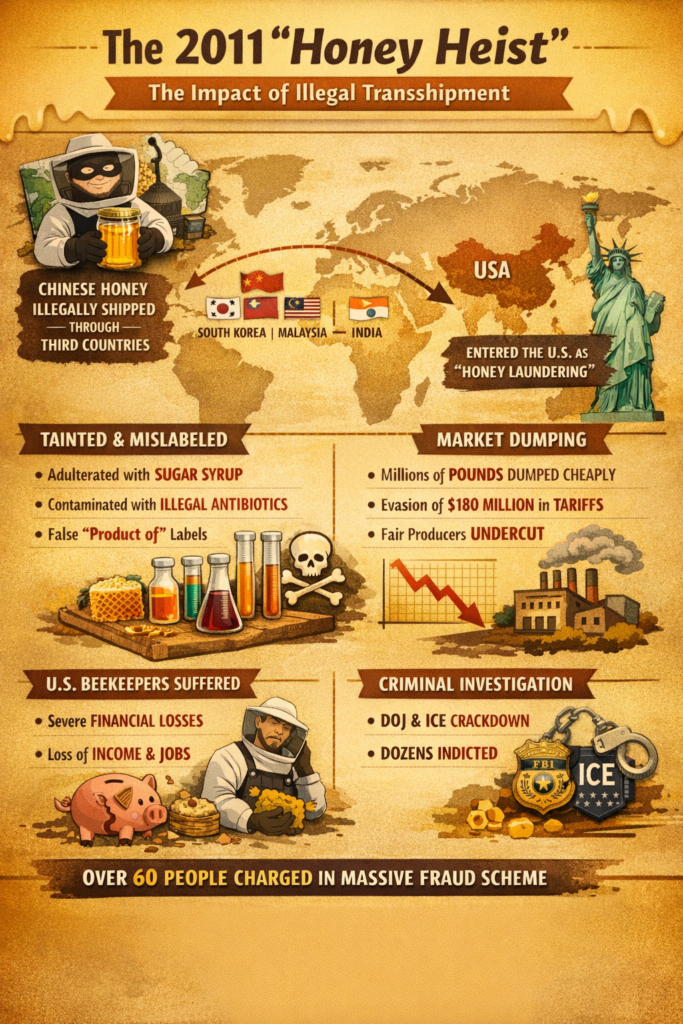
    4. The “Honey Heist” Hit List

    Based on our forensic testing and industry reports, these brands often prioritize factory efficiency over hive health:

    • Nature Nate’s: Linked to high-heat processing and HMF spikes.
    • Sue Bee: Often criticized for lack of sourcing transparency.
    • Golden Blossom: Marketed as premium but frequently pasteurized.
    • Busy Bee: Known for ultrafiltration and blending international imports.
    Forensic Scorecard: Raw vs. Processed

    FeatureRaw HoneyCommercial “Pure” Honey
    ProcessingCold Extraction / Gravity StrainedFlash-Pasteurized / Ultrafiltered
    Pollen ContentIntact (Traceable)Stripped (Hidden Origin)
    Flavor ProfileComplex, Seasonal, EarthyFlat, Uniform, Sweet
    TextureCrystallizes NaturallyStays Liquid Indefinitely
    Health BenefitsActive Enzymes & PollenPrimarily Simple Sugars

    The Quick Breakdown

    Forensic Pros (Raw Honey)Forensic Cons (Commercial)
    Bio-Active: Retains all 5,000+ enzymes and minerals.Nutritionally Void: Heat neutralizes the healing power.
    Transparent: Can be traced back to a specific field or beekeeper.Mystery Blend: Often a “cocktail” of global syrups.
    Supports Local: Funds ethical apiaries and urban bees.Supports Monoculture: Funds industrial-scale factory hives.

    The Verdict

    Buy Raw if: You want a functional superfood that actually supports your local ecosystem and provides a flavor profile that can’t be faked.

    Skip Commercial if: You are looking for anything beyond a simple sweetener. Store-bought “honey” is essentially a syrup with honey flavoring. If you’re in North Carolina, skip the supermarket bear and find John Moon at the Regional Farmers Market for the real deal.


    Forensic “Pro-Tip” for 2026

    Don’t be afraid of the jar! Raw honey should be eaten straight from the spoon to get the full benefit of its enzymes. If you’re giving it to your kids, a tablespoon before bed is a family tradition in my house. Just remember: never stir your raw honey into boiling water—it’s the “thermal executioner” of the very benefits you’re paying for.


    Is “Organic” just a marketing buzzword?

    In the US, “Organic” for honey is tricky because you can’t tell a bee where to fly. Focus on “Raw and Unfiltered” from a beekeeper you can talk to. Local beats “Organic” every single time.

    Why does my honey look like butter?

    That is Crystallization, and it’s a good thing! It means your honey is raw and unfiltered. To make it liquid again, just give it a warm (not boiling) bath in a bowl of water.

    Where is the best place to buy?

    Always look for a harvest date. If a brand can tell you when the bees made it, they’re likely doing it right. Check out our Full Reviews Directory to see which brands passed our lab test.