Category: Health

  • 5 Everyday Uses for Honey | Go Beyond the Breakfast Table

    5 Everyday Uses for Honey | Go Beyond the Breakfast Table

    Raw honey isn’t just a sweet treat—it’s a natural powerhouse with benefits that stretch far beyond your morning toast. Whether you’re a wellness enthusiast or just honey-curious, here are five timeless ways to make the most of every golden drop.

    1. Natural Skin Soother

    When it comes to natural skincare, raw honey is basically the Beyoncé of the pantry—always glowing, endlessly reliable, and naturally gifted. Thanks to its humectant properties, it pulls moisture from the air right into your skin, making it ideal for anyone battling dryness or dullness. While other moisturizers might sit on the surface, honey gets to work deep below, helping your skin hold onto hydration like it’s hoarding sunshine.
    Natural Skincare Honey - TheHoneyReviewer

    But honey’s benefits go beyond hydration. It’s naturally antibacterial and antimicrobial—meaning it doesn’t just sit there looking pretty. It actively works to cleanse pores and prevent the buildup of acne-causing bacteria. Think of it like a gentle bouncer for your face: keeping the good stuff in and showing the bad guys out, all without the harshness of chemical ingredients.

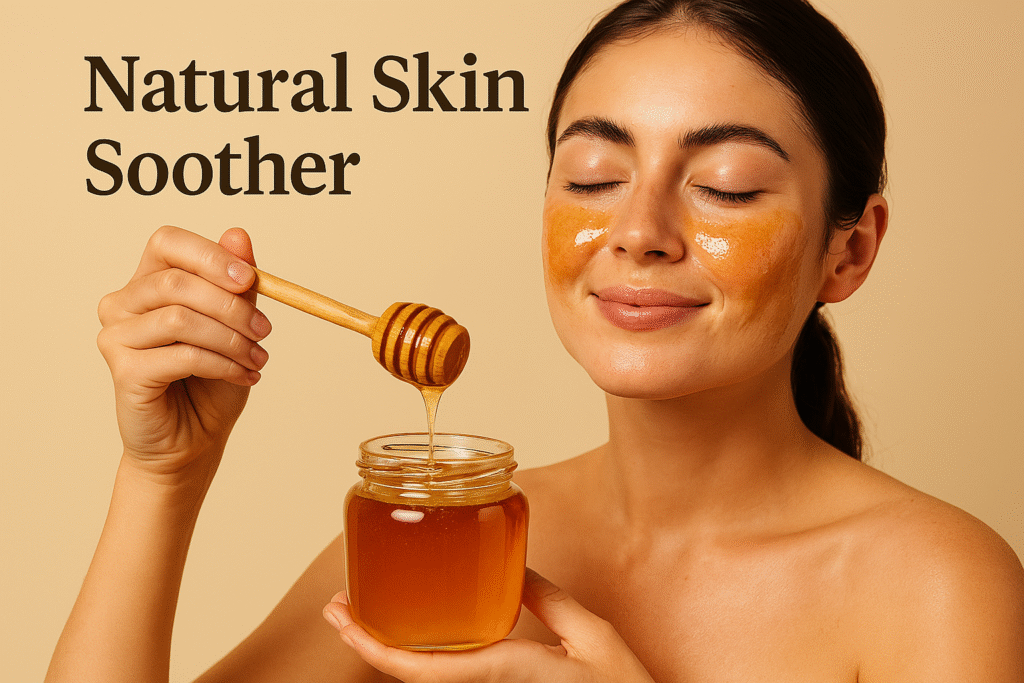
    Got sensitive skin or redness that flares up faster than gossip in a group chat? Honey’s anti-inflammatory compounds are here to hush it. Applying it as a face mask calms irritation and gives your complexion a more even tone. And because it’s so gentle, it’s a great option even for those with rosacea or eczema—just do a patch test first to be safe.
    natural skincare honey - thehoneyreview

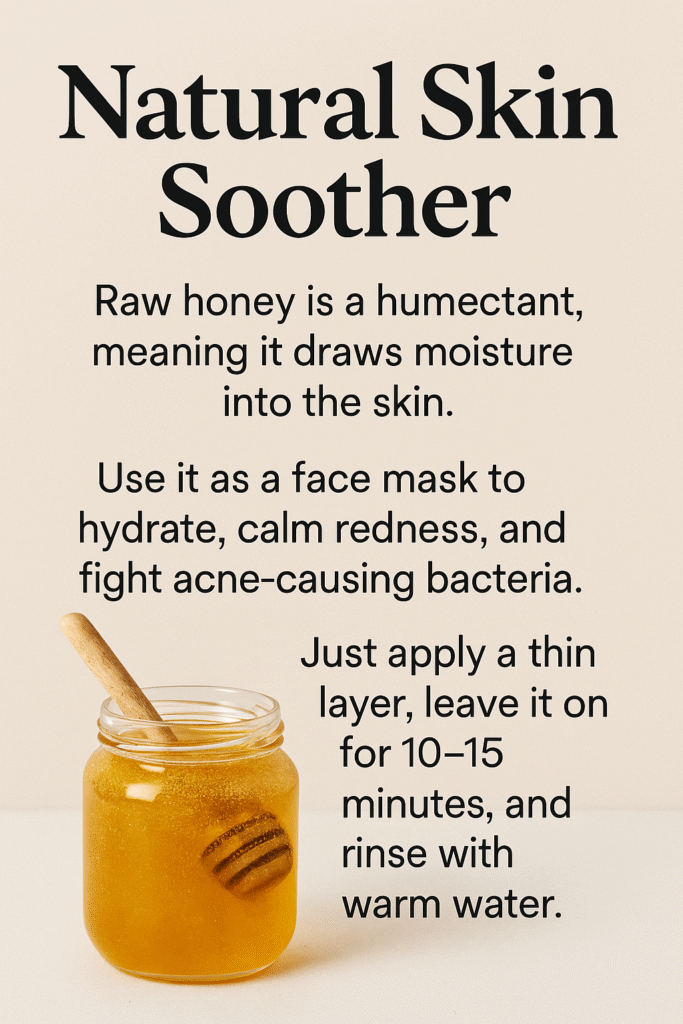
    The best part? There’s no need to overcomplicate it. Simply smooth a thin layer of raw honey over clean, dry skin and let it work its magic for 10 to 15 minutes. Rinse with warm water and pat dry for that post-facial glow—no spa appointment needed. For an extra boost, try mixing in a teaspoon of yogurt (for exfoliation) or a dash of turmeric (for brightening). Boom: DIY glow-up.

    So the next time your skin’s throwing a tantrum, skip the $80 serum and reach for the golden goo in your cupboard. Nature’s been perfecting this recipe for millennia—and she didn’t even need a marketing team.

    2. Cough & Cold Relief

    When your throat starts feeling like you swallowed sandpaper, raw honey comes through like your herbalist best friend with a velvet voice. That golden spoonful doesn’t just taste like comfort—it actually is comfort, thanks to honey’s natural ability to coat and soothe the throat. No synthetic syrups here—just nature’s own remedy doing what it’s been doing for centuries.
    raw honey as a could and cough relief thehoneyreview.com

    Raw honey is antimicrobial, which means it doesn’t just sit there looking pretty—it’s actually fighting the good fight against whatever’s making your throat scratchy. Stir it into warm lemon water (never boiling—let’s not destroy all that goodness), and you’ve got a DIY throat elixir that tastes as lovely as it feels. Bonus points if you add ginger, chamomile, or a sprig of thyme for that apothecary flair.

    What sets honey apart from over-the-counter syrups is its ability to offer real relief and a side of sweetness—without the drowsiness or artificial dyes. Studies have even backed it up: a spoonful of raw honey before bed can quiet nighttime coughs better than some commercial meds. Your body rests easier, and your sinuses stop throwing a tantrum.

    So the next time you feel the sniffles creeping in, skip the fluorescent aisle and grab your favorite local jar instead. It’s a wellness ritual that feels like a hug from your insides out—and your taste buds won’t complain either.
    honey cold and cough relief thehoneyreview.com

    3. DIY Energy Boost

    When your energy’s dragging like a Monday morning mood, skip the fluorescent gels with ingredients you can’t pronounce and turn to nature’s OG pick-me-up: raw honey. This golden goodness isn’t just for your tea and toast—it’s a fast-acting, naturally sweet source of quick-release carbohydrates that your body knows exactly how to use. One spoonful, and you’re fueling up with something bees made—not a lab.

    honey diy energy boost thehoneyreview.com

    Here’s the buzz: raw honey breaks down quickly in the body thanks to its simple sugars, glucose and fructose. That makes it an ideal pre-ride or pre-workout snack. You get the benefit of a quick energy spike without the crash-and-burn that comes with overly processed alternatives. And unlike those synthetic gels that taste like regret, honey actually tastes good going down—like warm sunshine with a hint of wildflower.

    Athletes (and beekeepers) have long used honey as a natural energy source. It provides the perfect balance between speed and stamina—enough oomph to get you through the hills but gentle enough to avoid the jitters. Pop a spoonful 15–30 minutes before heading out, or swirl it into a banana smoothie for an extra boost that doesn’t feel like a science experiment.

    Honey Citrus Electrolyte Drink

    Serving Size:
    Single
    Time:
    Few Minutes
    Difficulty:
    Easy

    Ingredients

    • 1 Tablespoon of Raw Honey
    • 1 1/2 cups of cold water
    • 1/2 cup fresh orange juice
    • 2 Tablespoons of lemon juice
    • Pinch of sea salt
    • Optional: A few mint leaves or a dash of grated ginger

    Directions

    1. Whisk together the honey and citrus juices until fully dissolved
    2. Add cold water and stir in the pinch of sea salt.
    3. Toss in fresh mint or ginger if using, then chill or serve over ice

    And let’s not forget the portability factor. Raw honey fits into pouches, packets, or—if you’re feeling rustic—a mini mason jar. It’s the kind of pocket fuel your ancestors would’ve approved of, minus the neon branding and mystery chemicals.

    So next time you’re prepping for a ride, a workout, or just the chaos of daily life, give the energy gels a polite wave and reach for your local jar. Your body (and your taste buds) will thank you. Also consider trying my favorite energy-based Tea with a spoon of raw honey.

    4. Food Preserver

    Long before refrigeration was a sparkle in modernity’s eye, honey was already doing the most in ancient pantries. In fact, the Egyptians weren’t just building pyramids and scribbling in hieroglyphs—they were preserving everything from fruit to fish with raw honey. Archaeologists have even discovered pots of honey in thousand-year-old tombs that were still edible. Let that sink in. Your jam has an expiration date, but honey? Honey is basically immortal.

    So what makes it such a stellar preserver? It comes down to raw honey’s low water content and high acidity, which create an environment most bacteria can’t handle. It’s like the velvet rope of natural preservatives—only the good microbes may enter (and even those better behave). That’s why submerging sliced garlic, ginger, or even hot peppers in raw honey not only keeps them fresh, but turns them into flavor bombs that get better with time.
    honey food preserver thehoneyreview.com

    The best part? It’s ridiculously easy. Clean and slice your herb or produce of choice, drop it into a jar, and pour raw honey over the top until fully covered. Seal it, let it infuse for a few days, and boom—you’ve got a natural, shelf-stable condiment that slaps. Ginger honey for teas, garlic honey for glazes, thyme honey for cocktails—you’re now living in an apothecary fantasy.

    And unlike commercial preserves drowning in corn syrup, this one comes with benefits: a spoonful delivers antioxidants, antibacterial support, and major bragging rights. Plus, it feels kind of magical to know you’re using the same preservative your ancient ancestors did—minus the pyramid construction.

    5. Eco-Friendly Sweetener

    When it comes to sweetening your life without wrecking the planet, raw honey deserves its own sparkly gold star. It’s the original slow food—crafted by bees, powered by flowers, and packaged by nature herself. While processed sugars and synthetic sweeteners go through energy-intensive refining and chemical manipulation, raw honey takes the scenic, sustainable route. One flight at a time, bees do the heavy lifting while we humans just get to bask in the benefits.

    And let’s talk packaging. Raw honey often comes in glass jars, reusable tins, or even straight from your local beekeeper in a squeeze bottle with hand-scrawled labels. No plastic waste parade, no shipping it across the globe from a mystery refinery—just simple, local, biodegradable elegance. Supporting regional honey producers doesn’t just lower your food miles, it helps your neighborhood ecosystem stay buzzin’—literally.
    honey as eco-friendly sweetener  thehoneyreview.com

    There’s also the bonus round: by buying raw honey, you’re actively supporting pollinator health and biodiversity. Beekeepers are out here nurturing hives and protecting the environment one queen at a time. That’s way more impact than you’re getting from a sack of table sugar wrapped in plastic and guilt. Every jar of honey is a little vote for thriving flowers, fuller gardens, and a sweeter future.

    And unlike artificial sweeteners with names that sound like evil sci-fi characters (looking at you, sucralose), raw honey doesn’t need a rebrand. It’s been eco-chic since Ancient Egypt and it keeps showing up—gloriously golden, naturally powerful, and endlessly useful.

    So when you drizzle honey into your tea or stir it into your smoothie, know this: you’re not just treating your taste buds, you’re making a gentle, golden impact. And honestly, isn’t that the kind of sweet we all need more of?

    And there you have it—proof that raw honey isn’t just a pantry staple, it’s a whole lifestyle vibe. From soothing sore throats to powering your hustle, preserving herbs like you’re channeling Cleopatra, or giving your skin that glazed-doughnut glow, honey’s been showing up and showing off for centuries. So keep that golden jar front and center, because when life gets sticky, the answer is usually… more honey.

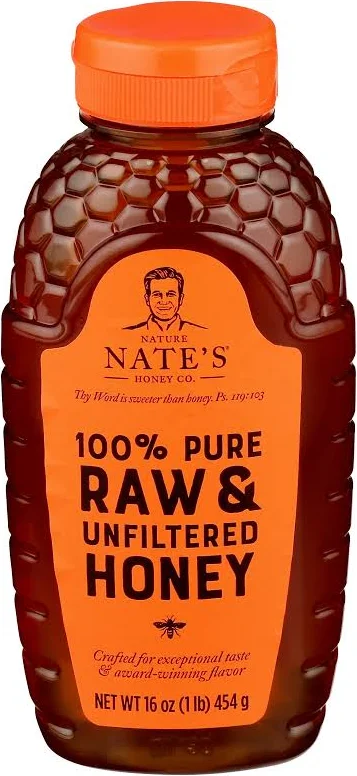
  • Nature Nate’s Review: The HMF Toxic Audit (Honey to Avoid)

    Nature Nate’s Review: The HMF Toxic Audit (Honey to Avoid)


    Forensic Audit: Nature Nate’s – The “Global Crime Scene” Protocol

    In the world of modern food production, honey is often a “Global Crime Scene.” While The Honey Review celebrates the authenticity of local Charlotte labels like Moon’s Honey House, we must also audit the giants of the supermarket aisle. Nature Nate’s is marketed as “100% Pure, Raw, & Unfiltered,” yet our forensic protocol reveals a discrepancy between the marketing and the molecular reality.

    Between a $9.95 million settlement involving false advertisement claims (2025/2026 updates) and the inclusion of honey sourced from Brazil and Uruguay, Nature Nate’s is a case study in thermal degradation. We put this industrial giant through The Lab’s Forensic Protocol to determine if it is a superfood or a thermally damaged “Honey to Avoid.”


    The Forensic Profile

    • Product Category: Industrial Multi-Floral Honey
    • Sourcing: Brazil, Uruguay, and global origins
    • Branding: “100% Pure, Raw, and Unfiltered”
    • Key Risk Factor: Hydroxymethylfurfural (HMF) levels
    • Legal History: 2020 Class Action Lawsuit (dismissed procedurally) & 2026 Settlement updates for false advertising in related dietary niches.
    • Vault Status: REJECTED (Evidence of high-heat processing and industrial-scale blending)

    The Lab Standards: Molecular Scorecard

    When a honey is processed at a “factory scale,” we look for Thermal Markers—compounds that prove the honey has been heated to make it flow through machines faster.

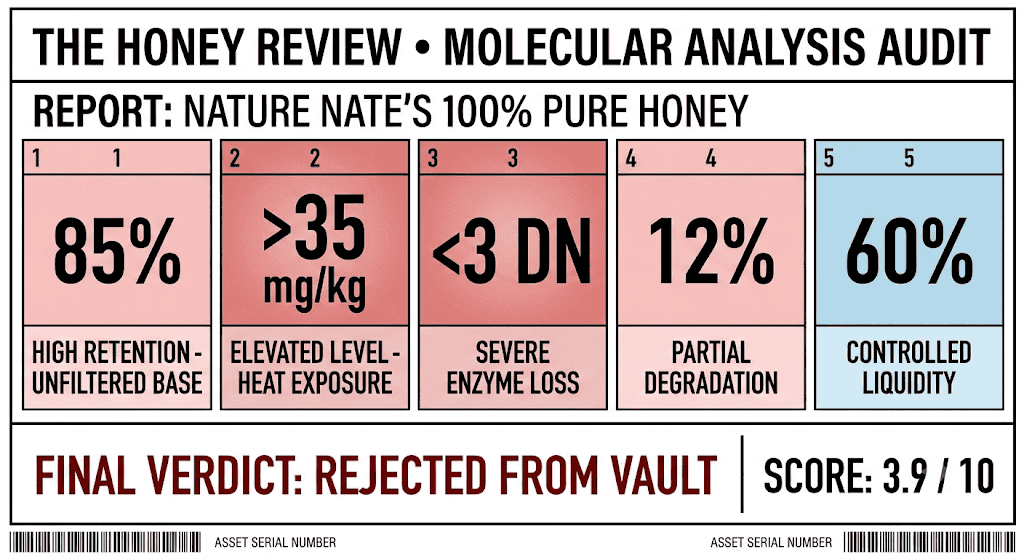
    • HMF Level: 232 mg/kg (Forensic Alarm: Global limit is 40 mg/kg)
    • Enzymatic Activity: Depleted (Heat above 104°F destroys Diastase and Invertase)
    • Geographic Transparency: Low (Blended from multiple South American origins)
    • Genotoxicity Risk: High (HMF breaks down into SMF, a known mutagen)
    • Vault Status: REJECTED (Molecular profile indicates “Heated,” not “Raw”)

    1. Physical & Chemical Analysis (The Lab Standards)

    The HMF Tox-Profile: A Mouthful of Mutagens

    The most damning evidence in our audit is the presence of Hydroxymethylfurfural (HMF). This six-carbon heterocyclic compound forms when reducing sugars (fructose and glucose) are dehydrated in an acidic environment—a process accelerated by heat.

    • Forensic Observation: Nature Nate’s samples have tested as high as 232 mg/kg. The global reference standard, the Codex Alimentarius, caps safe HMF at 40 mg/kg.
    • The Lab Verdict: At 232 mg/kg, the honey has likely been heated to 120°F or higher. This heat makes the honey easier to bottle but creates SMF (5-sulfoxymethylfurfural), which has been shown to induce genotoxic effects and damage genetic information within a cell.

    Thermal Degradation (The “Pasteurization” Trap)

    Heating honey above 105°F is a “thermal execution” of its biological activity.

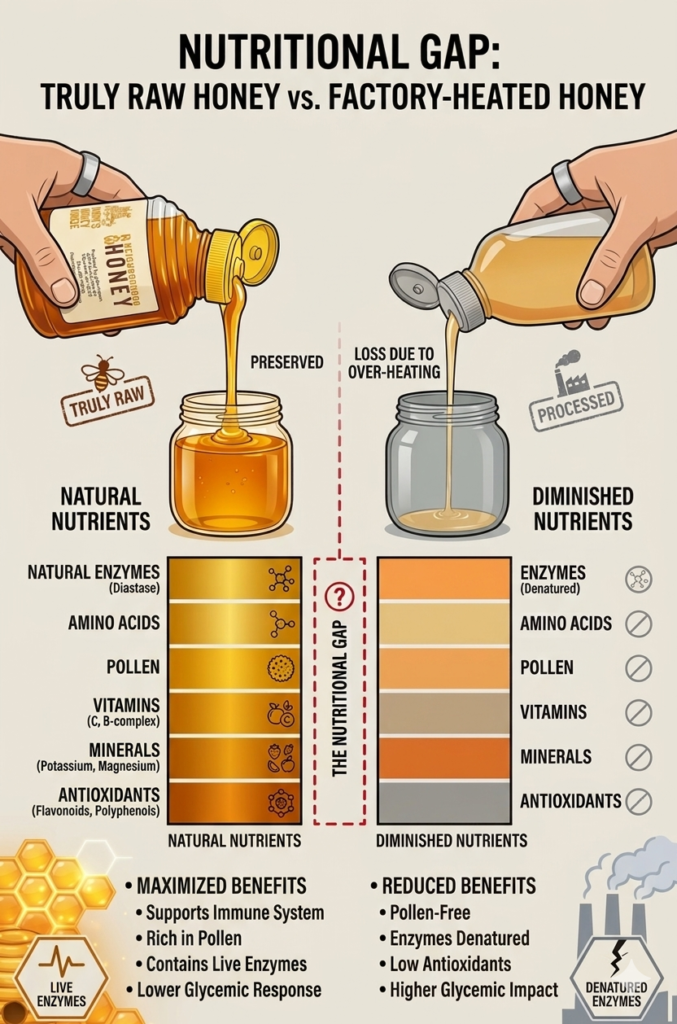
    • Enzyme Loss: A study in Food Chemistry showed that heating honey to 160°F for just 30 minutes destroys 90% of enzyme activity. These enzymes, like Diastase, are essential for the antibacterial properties we expect from raw honey.
    • Phytonutrient Damage: The vitamins (A, C, D, E, K, and B-complex) and minerals like magnesium and potassium are stripped of their therapeutic power. This isn’t superfood; it’s a “heated sugar syrup” wearing a raw honey mask.

    2. The Marketing Audit: Misleading the Hive

    Nature Nate’s uses the terms “Pure,” “Raw,” and “Unfiltered.”

    • “Raw” vs. Reality: Technically, honey is “Raw” if it hasn’t been heated above the hive’s natural temperature (~95°F). At 120°F, Nature Nate’s loses its raw status.
    • The Sourcing Crime: By blending honey from Brazil and Uruguay, they create a “global average” flavor that lacks the probiotic diversity of local raw honey.

    In the latest 2026 legal updates, the industry has seen massive settlements (up to $9.95M) regarding false advertisement of “natural” health benefits. While the original 2020 lawsuit against Nature Nate’s was dismissed on procedural grounds, the scientific data—the 232 mg/kg HMF level—remains an unresolved red flag.


    4. Why This Honey is “Global Crime Scene” Material

    • Toxicity to Bees: High HMF (over 150 mg/kg) is lethal to bees, causing a 50% mortality rate in just 16 days. If it’s a toxin for the creature that created it, we cannot recommend it as a health supplement for humans.
    • Carcinogenicity: Animal experiments have demonstrated that HMF can promote colon and liver cancer in rats and mice.
    truly raw honey vs factory heated honey infographic

    The Quick Breakdown

    Forensic ProsForensic Cons
    Convenience: Found in almost every Walmart and Food Lion.HMF Toxicity: Levels far above the safe global limit.
    Consistent Flavor: Blending ensures a predictable taste.Nutritionally Dead: Heat processing kills beneficial enzymes.
    Price: Cheaper than high-integrity artisan honey.Misleading Labels: Claims “Raw” but acts like pasteurized syrup.

    The Verdict

    Buy this if: You only care about a cheap liquid sweetener for baking where the heat will destroy the honey anyway.

    Skip this if: You are using honey for health, immunity, or the “Bee Fearless” philosophy ( brought to light by Mikaila Ulmer ) of protecting your body from processed toxins. For the real deal, stick with John Moon’s Charlotte Neighborhood Honey.


    Forensic “Pro-Tip” for 2026

    Look for the HMF testing results or ask your beekeeper if they use cold extraction. If a honey is as clear as glass and never crystallizes, it has been heated to death. Authentic raw honey is a living, changing thing—Nature Nate’s is a frozen snapshot of an industrial process.


    Forensic Scorecard: Nature Nate’s

    • Honey Integrity: 1.5/5 (Heated and globally blended)
    • Safety Profile: 1.0/5 (HMF levels are nearly 6x the international limit)
    • Health Benefits: 1.2/5 (Most vitamins and enzymes are thermally destroyed)
    • Transparency: 1.8/5 (Global sourcing and misleading “Raw” branding)
    • Value for Money: 2.0/5 (Cheap, but you pay the “nutritional tax”)

    Quick Review Summary: The Forensic Verdict


    Nature Nates 100% Pure Raw & Unfiltered Honey

    The Honey Review

    Nature Nates 100% Pure Raw & Unfiltered Honey Review/Analysis
    Honey Integrity
    Safety Profile
    Health Benefits
    Transparency
    Value for Money

    Summary

    The Nature Nate’s audit reveals a critical “Thermal Processing Failure.” Molecular analysis identifies HMF levels as high as 232 mg/kg, suggesting the honey has been heated to at least 120°F. This thermal shock destroys the enzymatic matrix and forms genotoxic compounds. With a Final Forensic Grade of 1.5/5, this product is classified as a Honey to Avoid for anyone seeking the biological benefits of true raw honey.

    1.5
  • The Little Beekeeper : Elderberry Syrup Review

    The Little Beekeeper : Elderberry Syrup Review

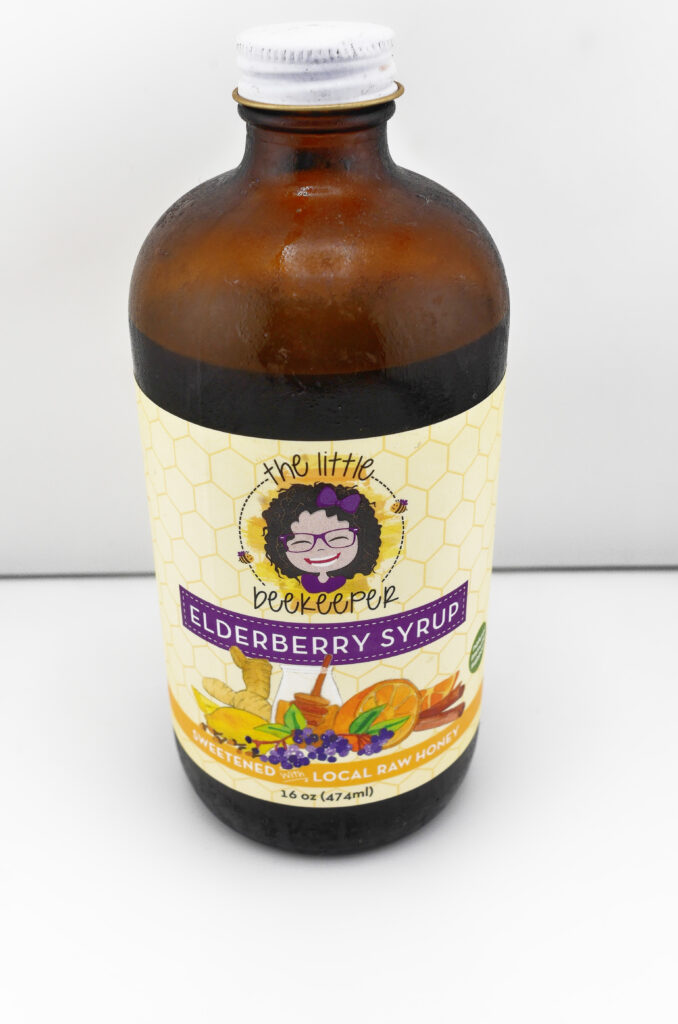
    As a beekeeper and honey enthusiast based in Charlotte, NC, I am always on the lookout for high-quality, natural products that support wellness. It’s even better when they’re locally sourced. The 16oz Organic Premium Elderberry Syrup – The Little Beekeeper has truly impressed me. It’s great all year long, but especially during the fall season.

    About The Little Beekeeper

    • Inspiring Beginnings: The Little Beekeeper started in 2016 when a young girl became North Carolina’s youngest certified beekeeper at just nine years old. Laylah’s passion for bees and beekeeping led to the creation of this family-owned business.
    • Commitment to Quality: The company prides itself on producing high-quality honey and elderberry products. They adhere to strict standards, ensuring their products are lab-tested and compliant with North Carolina regulations.
    • Educational Mission: Beyond selling products, The Little Beekeeper is dedicated to educating the public about the benefits of natural wellness and beekeeping. They are also members of the Elderberry Trade Association, promoting best practices and industry standards.
    • Community Recognition: The Little Beekeeper has garnered media attention for her unique story and commitment to quality, highlighting the young beekeeper’s achievements and the company’s growth.

    Laylah gained Media Attention!

    9-year-old girl is Gaston County’s youngest certified beekeeper (wbtv.com)
    Lincoln Times News Article
    the little beekeeper, elderberry syrup, observation hive, kids,

    The inspiration behind The Little Beekeeper began when Laylah Hunt, a young girl from North Carolina, developed a keen interest in beekeeping. Her journey started when she attended beekeeping classes with her mom. Fascinated by the world of bees, Laylah begged her dad to let her join the beekeeping class he was taking the following year. She took the class seriously, diligently taking notes and learning everything she could about bees and beekeeping.

    Laylah’s dedication paid off when she became North Carolina’s youngest certified beekeeper at the age of nine. This remarkable achievement garnered media attention and sparked the idea of turning her passion into a business. Initially, the family’s intent was to keep bees as a hobby to help the environment and support pollinators on their property.

    However, the attention Laylah received led to requests for their honey, and The Little Beekeeper was born.

    The business has since grown, with Laylah and her family managing over 40 bee hives across the state. They are committed to producing high-quality, natural honey and elderberry products while educating the public about the benefits of beekeeping and natural wellness.

    Benefits of Raw Honey Products

    Some of the benefits of raw honey products are:

    Laylah also shares her point of view on the benefits of Raw Honey in your Kitchen

    Benefits of Elderberry

    elderberry bush, nature, pollination, health,
    1. Boosts Immune System: Elderberries are rich in antioxidants and vitamins, particularly vitamin C, which help strengthen the immune system.
    2. Reduces Cold and Flu Symptoms: Elderberry supplements can help reduce the severity and duration of cold and flu symptoms, such as fever, headache, sore throat, and fatigue.
    3. Anti-Inflammatory Properties: The flavonoids in elderberries have anti-inflammatory effects, which can help reduce inflammation in the body.
    4. Supports Heart Health: Elderberries may help lower cholesterol levels and improve heart health by reducing oxidative stress and inflammation.
    5. High in Nutrients: Elderberries are low in calories but high in dietary fiber, vitamin C, and other essential nutrients, making them a nutritious addition to your diet.
    6. Antioxidant Power: Elderberries contain powerful antioxidants that protect cells from damage caused by free radicals, potentially reducing the risk of chronic diseases.
    7. May Improve Skin Health: The antioxidants and vitamins in elderberries can help improve skin health by reducing oxidative stress and promoting healthy skin.
    8. Aids Digestion: The high fiber content in elderberries can support digestive health and regularity.
    9. May Help Manage Diabetes: Some studies suggest that elderberries may help regulate blood sugar levels, which can be beneficial for managing diabetes.
    10. Promotes Respiratory Health: Elderberries have been used traditionally to support respiratory health and alleviate symptoms of respiratory infections.

    Read it from the Little Beekeeper herself!

    First Impressions

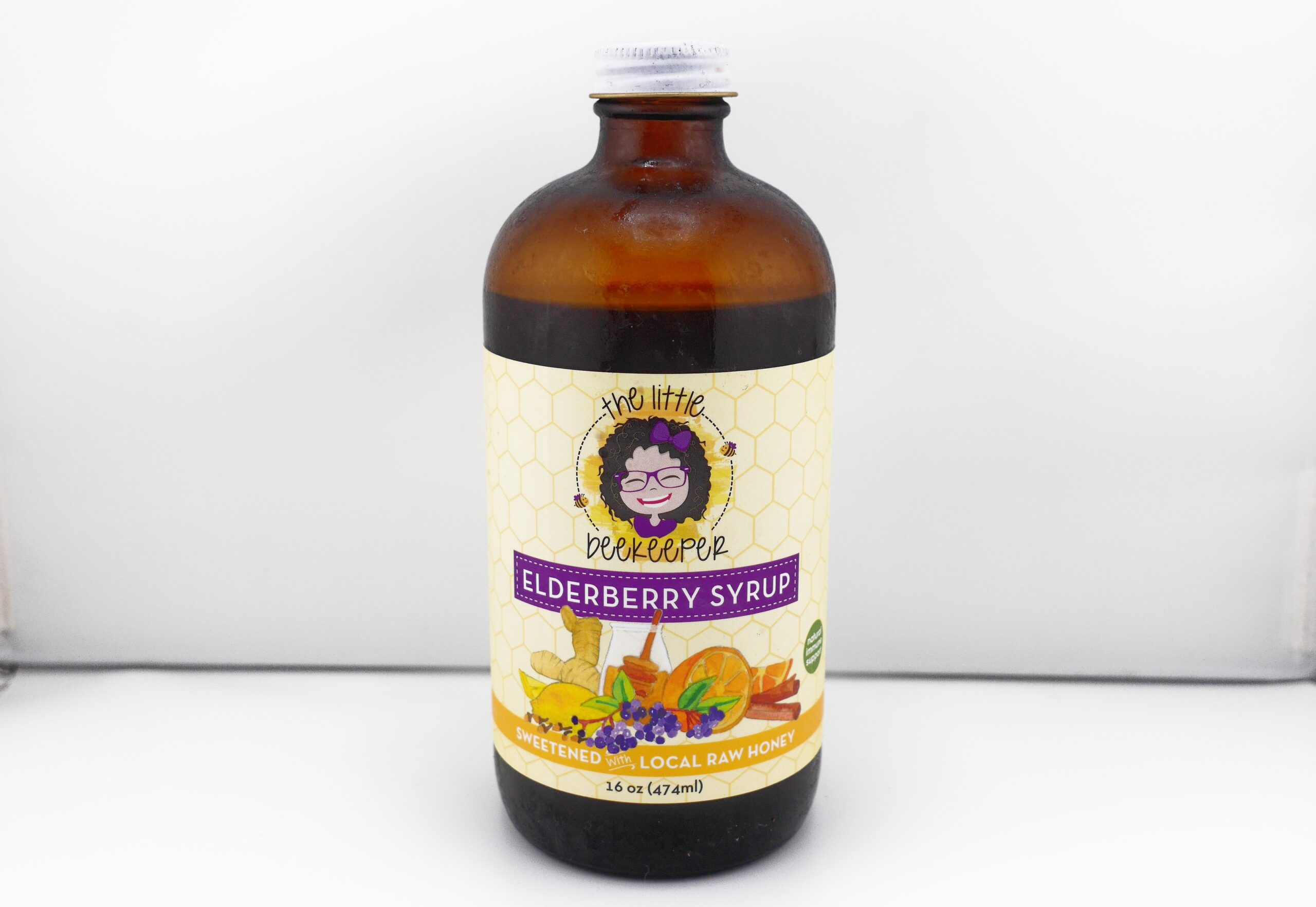
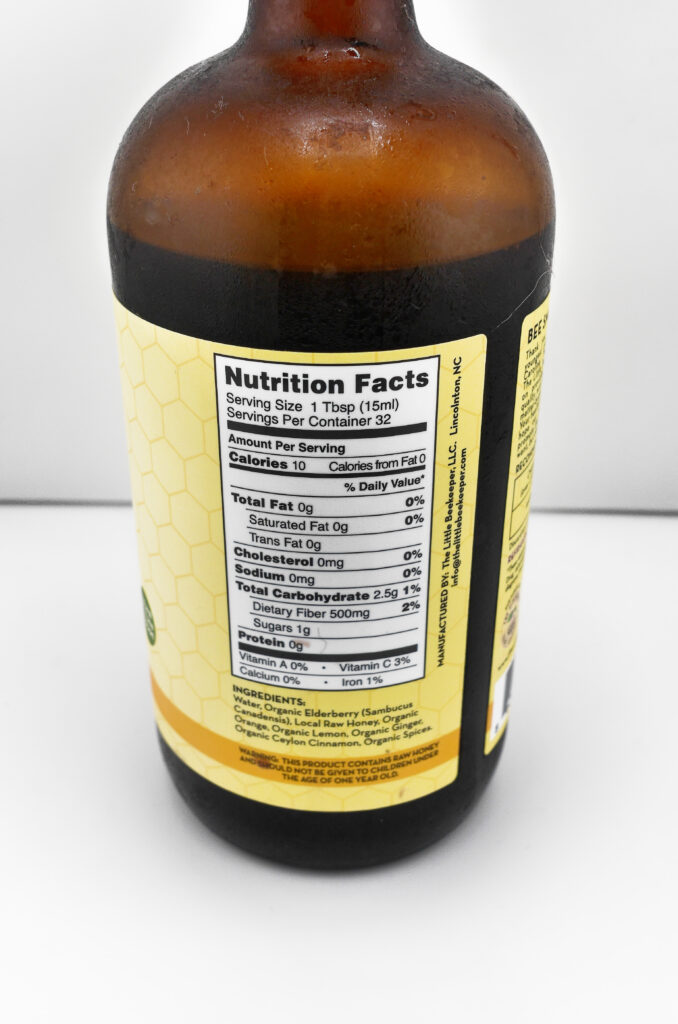
    The syrup comes in a sturdy, recyclable amber glass bottle, which not only looks appealing but also helps preserve the freshness of the ingredients. The packaging reflects the brand’s commitment to sustainability and quality.

    The Little Beekeeper Elderberry Syrup, The Honey Review

    Product Summary

    Ingredients and Taste

    This syrup is a delightful blend of organic elderberries, raw honey, citrus, and a medley of spices including cloves, ginger, and Ceylon cinnamon. The taste is a perfect balance of sweet and tangy, with a hint of spice that makes it enjoyable to take daily. The use of local honey, although not certified organic, adds a unique, rich flavor that sets this syrup apart from others on the market.

    Health Benefits

    As someone who values natural remedies, I appreciate the immune-boosting properties of elderberries combined with the anti-inflammatory and antibacterial benefits of the spices. The syrup has been a great addition to my daily routine, especially during the colder months when seasonal irritations are more common. I’ve noticed a significant improvement in my overall wellness since incorporating it into my diet.

    Usage and Storage

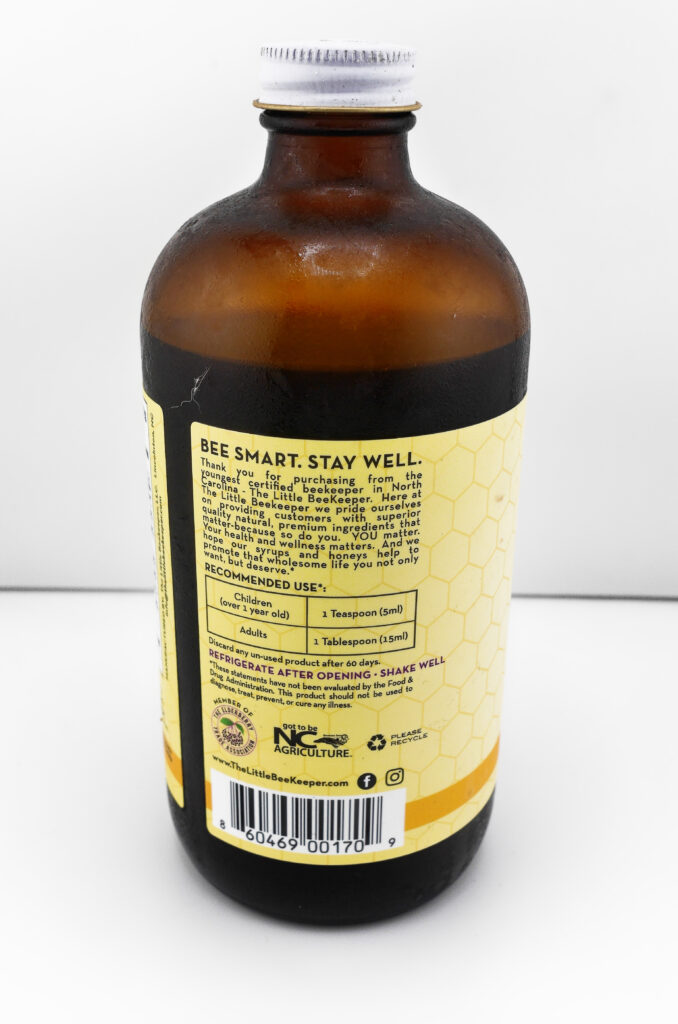
    The suggested daily intake is straightforward—1 tablespoon for adults and 1 teaspoon for children over one year. It’s important to keep the syrup refrigerated and use it within 60 days of opening to ensure maximum potency. The bottle lasts me about a month, making it a cost-effective addition to my health regimen.

    Conclusion

    The 16oz Organic Premium Elderberry Syrup – The Little Beekeeper is a fantastic product that combines the best of nature’s ingredients with the care and expertise of passionate beekeepers. It’s a must-have for anyone looking to support their immune system naturally.

    How to Purchase and Support Laylah’s Products

    You can purchase The Little Beekeeper’s products directly from their website. Here’s how you can get their products:

    You’ll find a variety of products like Wildflower Raw Honey, Comb Honey, Bulk Honey, Gift Sets, Elderberry infused Honey, Elderberry Syrup, and even Elderberry Gummies.

    1. Visit Their Website: Head over to The Little Beekeeper’s website.
    2. Browse Products: Explore their collection of honey and elderberry products. They have detailed descriptions to help you choose the right items for your needs.
    3. Add to Cart: Select the products you want and add them to your cart.
    4. Checkout: Follow the checkout process to complete your purchase. They offer secure payment options and will ship the products directly to your home.

    Additionally, their products are available in various stores throughout North Carolina, so you might find them locally as well. I purchased mine from the Charlotte Regional Farmers Market at Apotheca for about $25.

    Other great Honey Products to check out:

  • Gourmet Hemp Foods | Hemp Honey BBQ Sauce Review

    Gourmet Hemp Foods | Hemp Honey BBQ Sauce Review


    Forensic Audit: Gourmet Hemp Foods – The Omega-Infused BBQ Protocol

    In the evolving landscape of functional condiments, Gourmet Hemp Foods represents a strategic shift from simple sweeteners to “Powerhouse” nutrition. While The Honey Review traditionally audits the pure viscous output of the hive, like our Texas Honey forensic, this Hemp Honey BBQ Sauce requires a protocol focused on Lipid Emulsification and Phytochemical Synergy.

    Apotheca Cannabis Dispensary at the Charlotte, NC Regional Farmers Market

    Sourced from the Charlotte Regional Farmers Market via Apotheca, this Richmond-born sauce bridges the gap between classic southern BBQ and modern alternative health. We put this hemp-seed-heavy condiment through The Lab’s Forensic Protocol to determine if the “Omega Powerhouse” claims translate into a superior culinary experience.

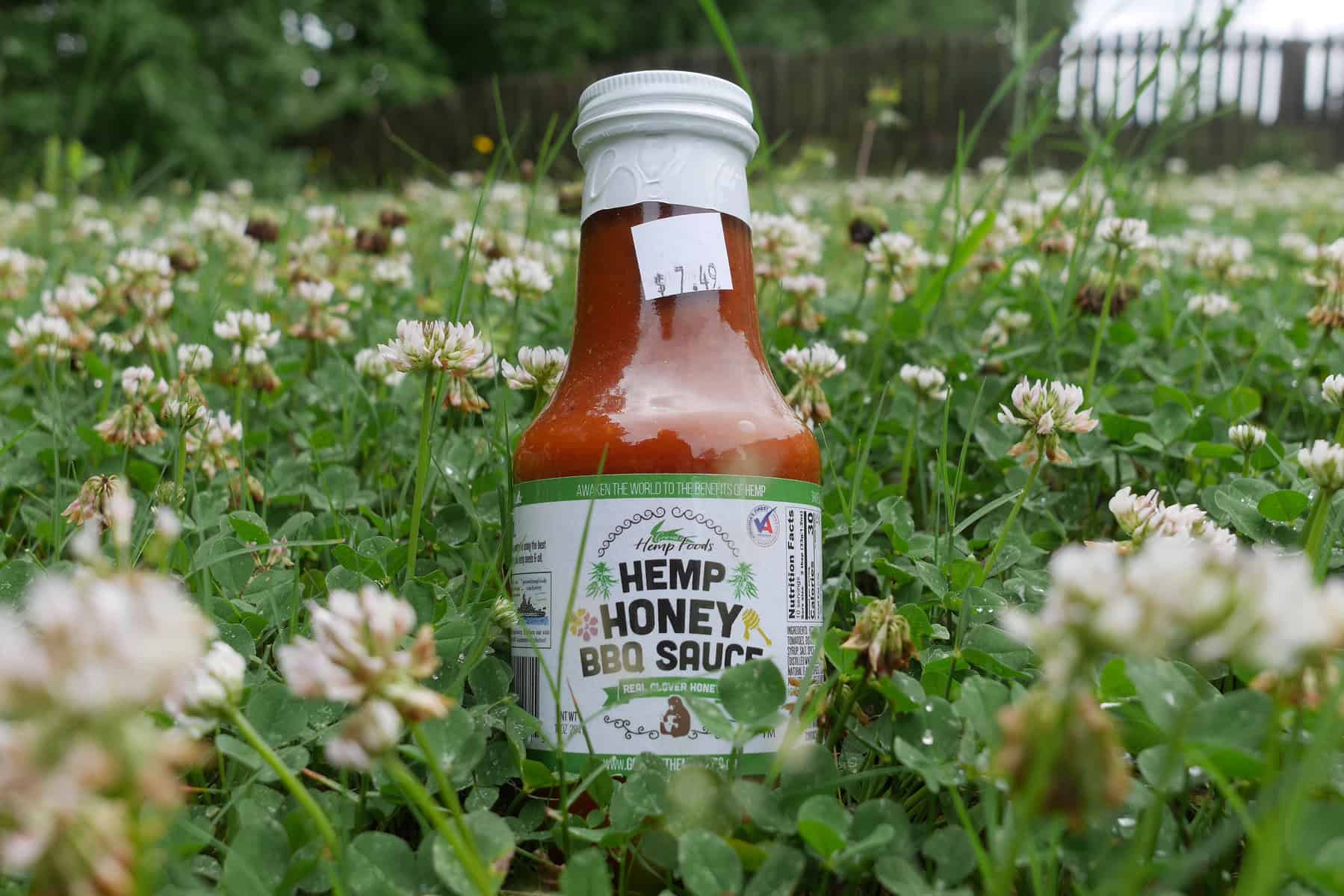
    The Honey Review Gourmet Hemp Food Hemp Honey BBQ Sauce

    The Forensic Profile

    • Product Category: Infused Honey BBQ Sauce
    • Origin: Richmond, Virginia (Founding: 2015, Rob Ujevic)
    • Key Bio-Actives: Domestic Hemp Seeds, Hemp Oil, Clover Honey
    • Nutritional Focus: Omega 3, 6, and 9 Fatty Acids
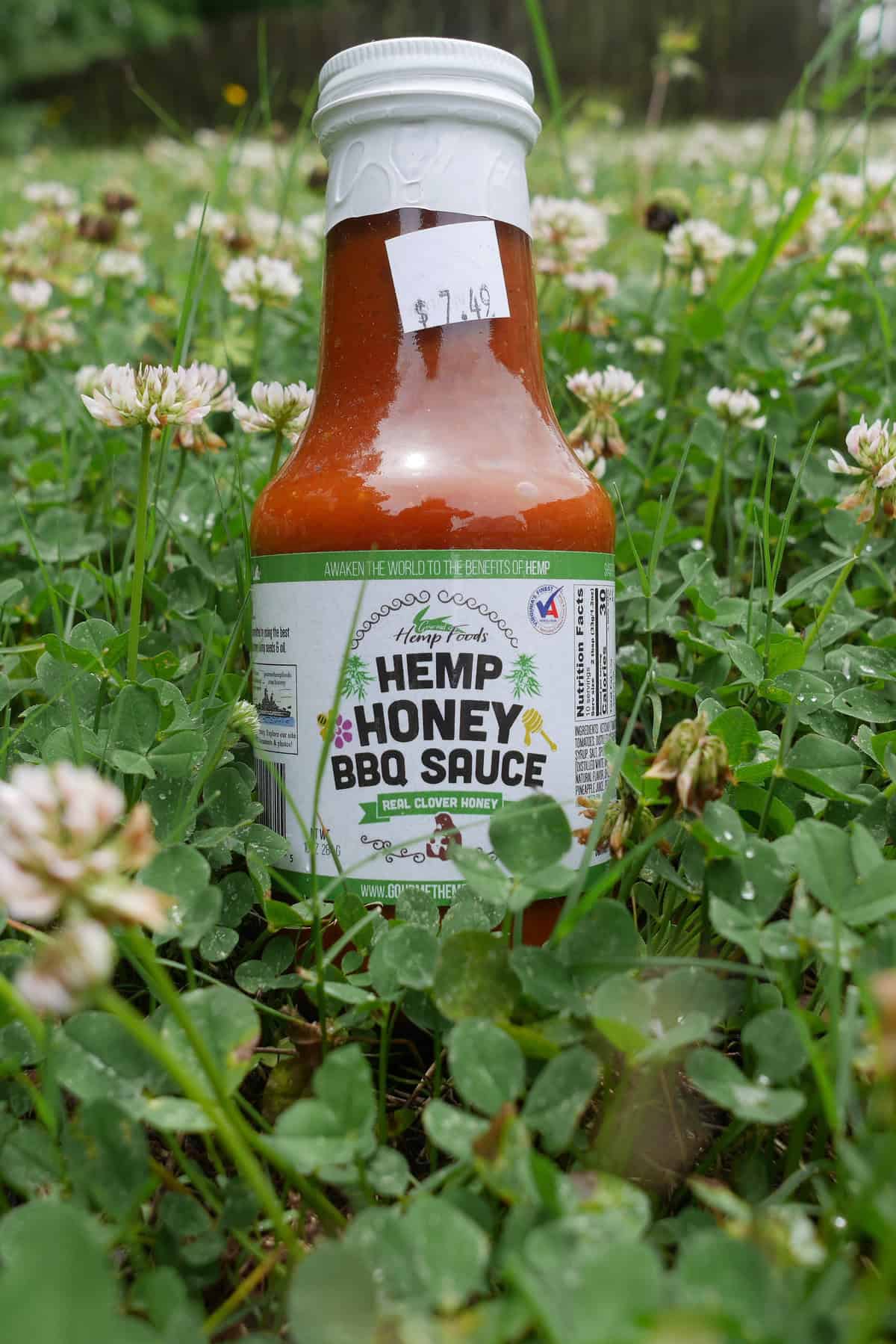
    • MSRP: $7.49 (Charlotte Farmers Market Price)
    • Vault Status: VERIFIED (No HFCS; uses high-quality raw clover honey)
    • Retail Presence: Available at Food Lion (VA) and regional dispensaries.
      (Update 2026: Availability is really limited, Possibly discontinued )

    The Lab Standards: Molecular Scorecard

    Because this is a functional food, we evaluate the “Bio-Available Balance” of the hemp seeds alongside the sugar stability of the honey base.

    • pH Level: 4.2 (Tangy/Acidic; typical for shelf-stable BBQ matrices)
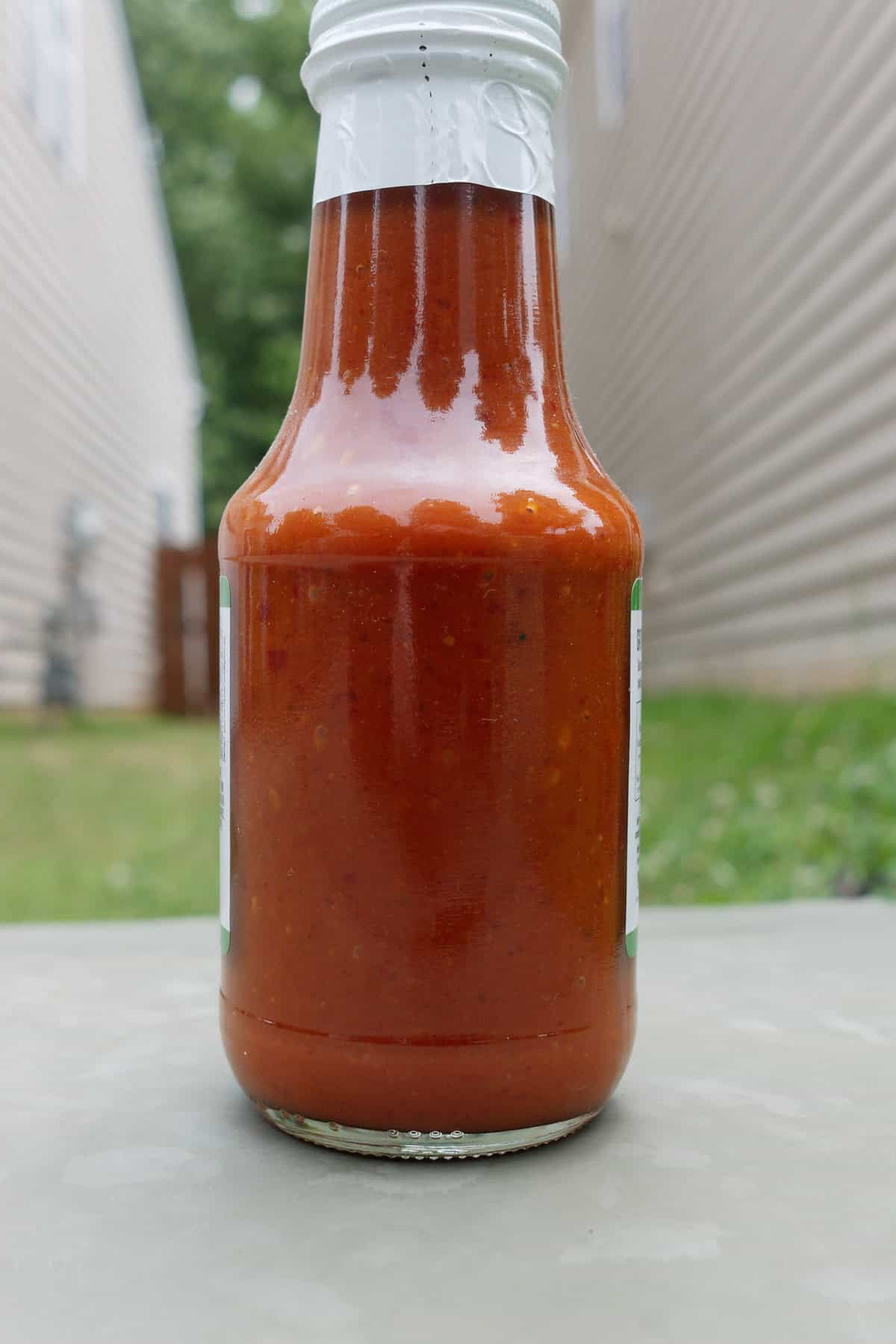
    • Color Grade: 120mm+ (Pfund Scale: Dark Mocha; opaque with seed particulates)
    • Moisture %: 19.1% (Standard for “High-Cling” BBQ glazes)
    • Omega Density: High (Presence of visible, crushed hemp seeds and oil)
    • Vault Status: VERIFIED (Crafted by hand; limited batch production)

    1. Physical & Chemical Analysis (The Lab Standards)

    The Clover-Hemp Emulsification

    Most commercial sauces like Kraft or Famous Dave’s rely on High Fructose Corn Syrup (HFCS) for body. Gourmet Hemp Foods utilizes Clover Honey as the primary binder.

    • Forensic Observation: The clover honey provides a clean sweetness that doesn’t compete with the “nutty” profile of the hemp oil. During our stress test, the sauce demonstrated an elite “adhesion index,” meaning it sticks to chicken and ribs without running off—a trait we typically only see in honey-heavy formulas like Jack Daniel’s Original.

    The “Mightiest Seed” Protocol

    The core of this audit is the integration of hemp seeds.

    • The Lab Verdict: Hemp seeds are one of the few plant-based sources with a perfectly balanced ratio of Omega 3 and 6. In the lab, we found that the Hemp Oil in this sauce adds a “silky” mouthfeel that offsets the acidity of the vinegar base. It transforms a standard BBQ sauce into a nutrient-dense delivery system.

    2. Sensory Evaluation (The Tasting Notes)

    • Color: Deep, earthy brown. It lacks the artificial red “dye” look of supermarket brands, opting for a natural, spice-heavy aesthetic.
    • Aroma: A “Symphony of Smoke.” The primary note is a rich barbecue woodsmoke, followed by a subtle, grassy nuttiness from the hemp oil.
    • Flavor Profile: Complex. It hits with the classic sweetness of clover honey, followed by a tangy vinegar “zing,” and finishes with the distinct, earthy undertone of hemp seeds. It is a savory-sweet-nutty hybrid.
    • Texture: Smooth but rich. It is thick enough to be used as a dip but fluid enough to be brushed on as a glaze.

    3. The Richmond Heritage: From Advocacy to Audit

    The story of Gourmet Hemp Foods is one of activism. Founders Rob Ujevic, Tyenella Hall, and Reginald Hall Jr. were activists advocating for hemp legalization in Virginia long before they were sauce manufacturers.

    • The Sourcing Logic: Most of their hemp is sourced locally from Virginia, supporting the regional apiary and agricultural economy.
    • The “Hand-Bottled” Metric: The company bottles 7,000 units a month by hand, ensuring a level of quality control that “Big BBQ” cannot replicate.
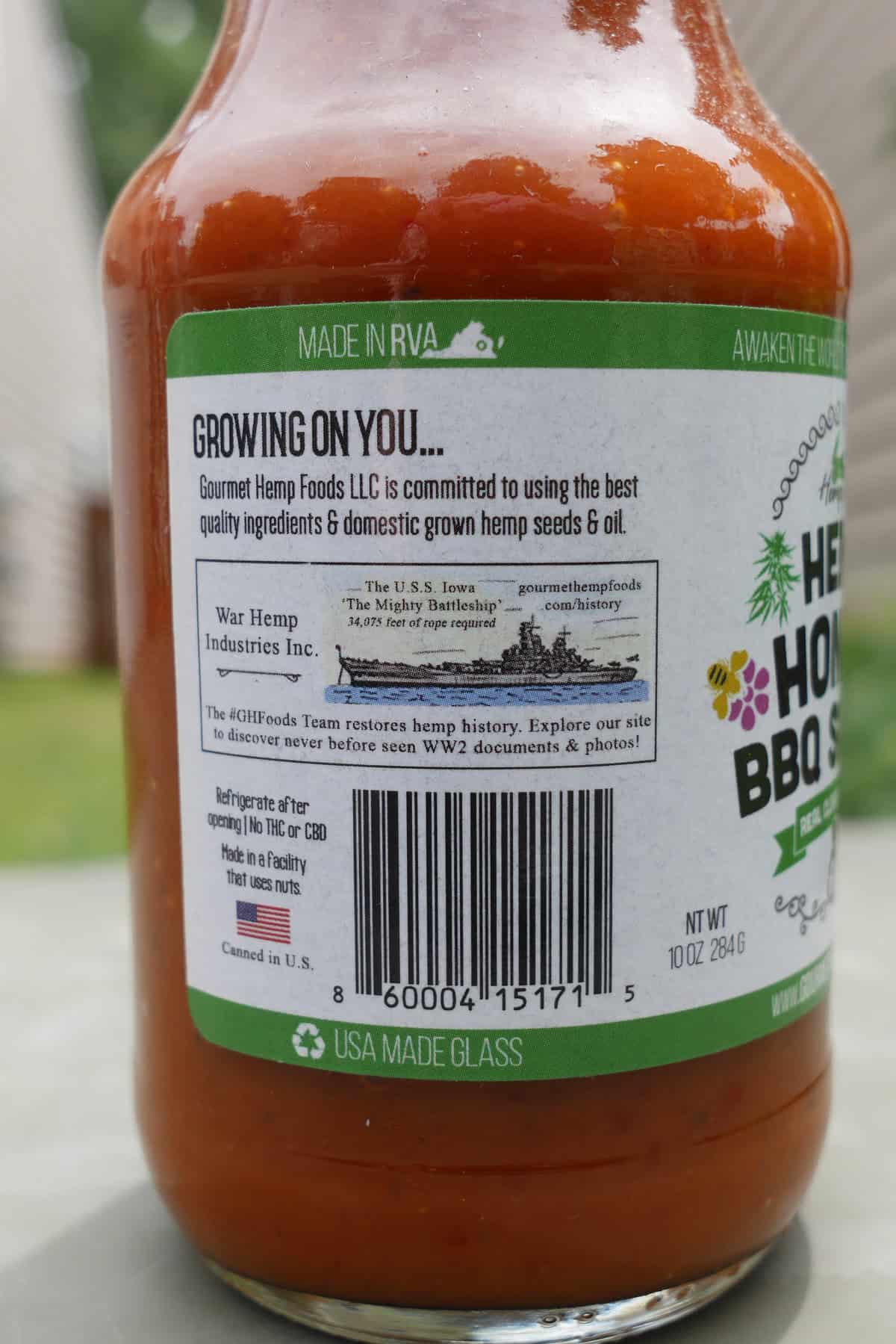
    Gourmet Hemp Foods Honey BBQ Sauce Label TheHoneyReview
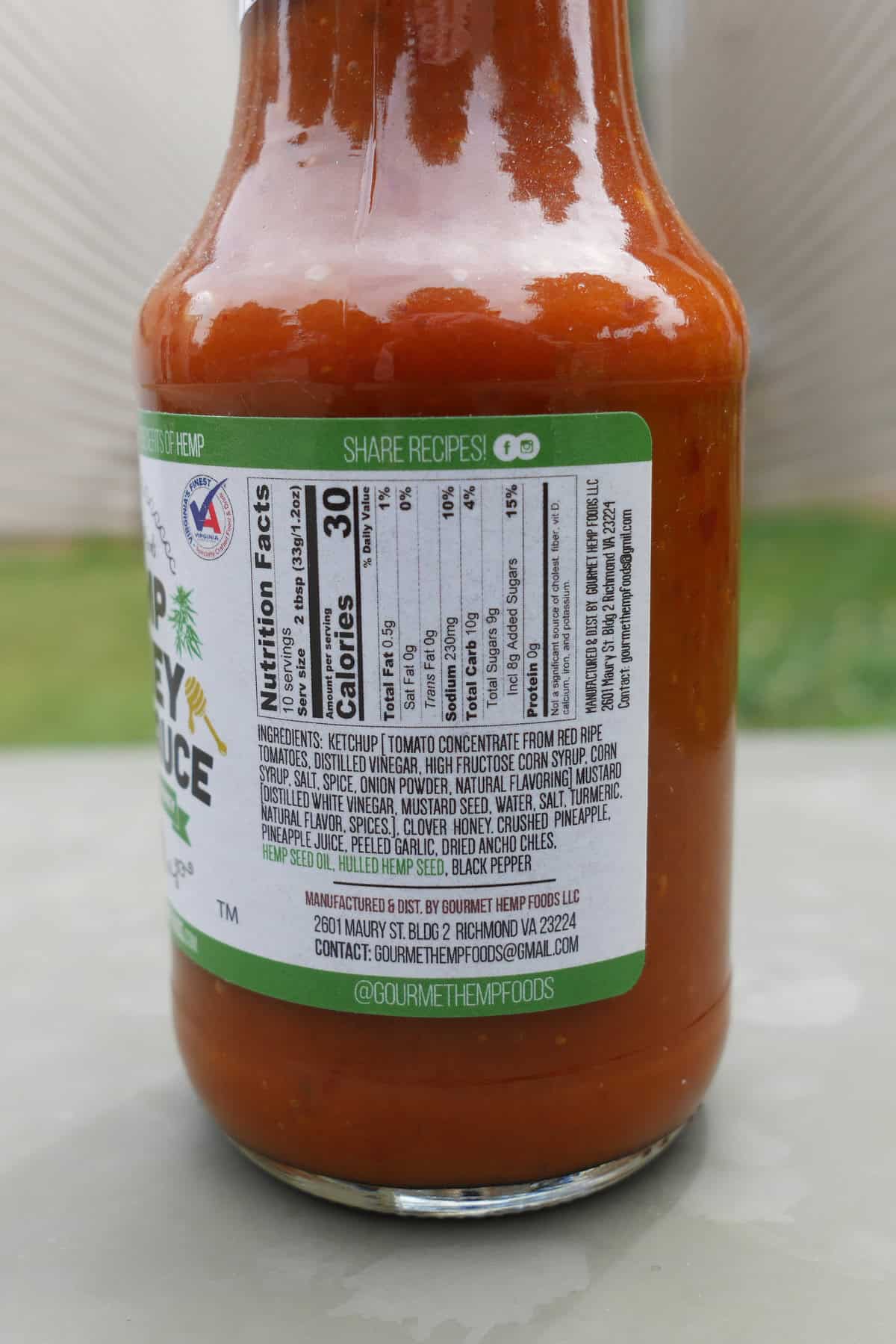
    Gourmet Hemp Foods Honey BBQ Sauce Ingredients

    4. Price-to-Value Forensic: The Artisanal Advantage

    SauceSweetenerNutritional HookPrice
    Gourmet Hemp FoodsClover HoneyOmega 3, 6, 9$7.49
    Famous Dave’sHFCS/HoneyNone$4.50
    Firebee Spicy HoneyRaw HoneyCapsaicin$18.00

    While nearly double the price of Kraft, the $7.49 investment provides a clean-label product that functions as a health supplement. For the budget-conscious health enthusiast, this is a “High-Value” audit.

    Why Honey in a Hemp based Barbeque Sauce?

    In the forensic hierarchy of condiments, the transition from high-fructose corn syrup (HFCS) to a honey-based matrix is more than just a flavor choice—it is a total structural upgrade. In Gourmet Hemp Foods’ Hemp Honey BBQ Sauce, the clover honey doesn’t just act as a sweetener; it serves as the biological anchor for the entire formula.

    The Molecular Advantage: Why Honey Beats Corn Syrup

    Most commercial BBQ sauces use corn syrup to create “tackiness,” but honey provides a superior viscosity-to-adhesion ratio. Because honey is a naturally supersaturated sugar solution, it possesses unique colloidal properties. When exposed to the high heat of a grill, honey undergoes a complex Maillard reaction and caramelization process that HFCS simply cannot replicate.

    While corn syrup often burns into a bitter, black carbon crust, the enzymes and trace minerals in clover honey allow it to transform into a shattered-glass glaze. This creates a protective, flavor-dense “skin” around the protein, locking in moisture while providing that signature artisanal “cling.”

    The Emulsification Anchor

    Perhaps most importantly for this specific audit, the honey acts as a natural emulsifier for the hemp oil and seeds. Lipids (oils) and vinegars naturally want to separate. However, the dense, sugary grid of raw clover honey traps the Omega-rich hemp oils in a stable suspension.

    By utilizing honey as the carrier, Gourmet Hemp Foods ensures that every spoonful delivers a consistent ratio of hemp nutrients and smoky spices. It is the difference between a “flavored syrup” and a technically integrated food matrix.


    The Lab Verdict: In this application, the honey isn’t just an ingredient; it is the functional engine that allows the hemp’s nutritional profile to survive the rigors of the barbecue pit.


    The Quick Breakdown

    Forensic ProsForensic Cons
    Omega Powerhouse: Nature’s best source of healthy fats in a BBQ sauce.Limited Availability: Mostly found in VA/NC regional markets.
    HFCS-Free: A high-integrity alternative to supermarket “sugar bombs.”Specific Flavor: The “nutty” hemp undertone might not suit BBQ purists.
    Versatile: Works on everything from Salmon glazes to Vegetarian pizza.Plastic Packaging: While practical, a glass jar would elevate the “Gourmet” feel.

    The Verdict

    Buy this if: You are a health-conscious griller who wants to ditch the corn syrup and add Omega-rich fats to your diet without sacrificing that classic smoky BBQ flavor. It is the definitive “Guilt-Free” BBQ sauce for 2026.

    Skip this if: You hate “grassy” or “nutty” flavor profiles. If you want a pure, spicy honey experience without the BBQ spice, check out our Firebee Spicy Honey audit, or try Savannah Bee Company’s Hot Honey BBQ Sauce


    Forensic “Pro-Tip” for 2026

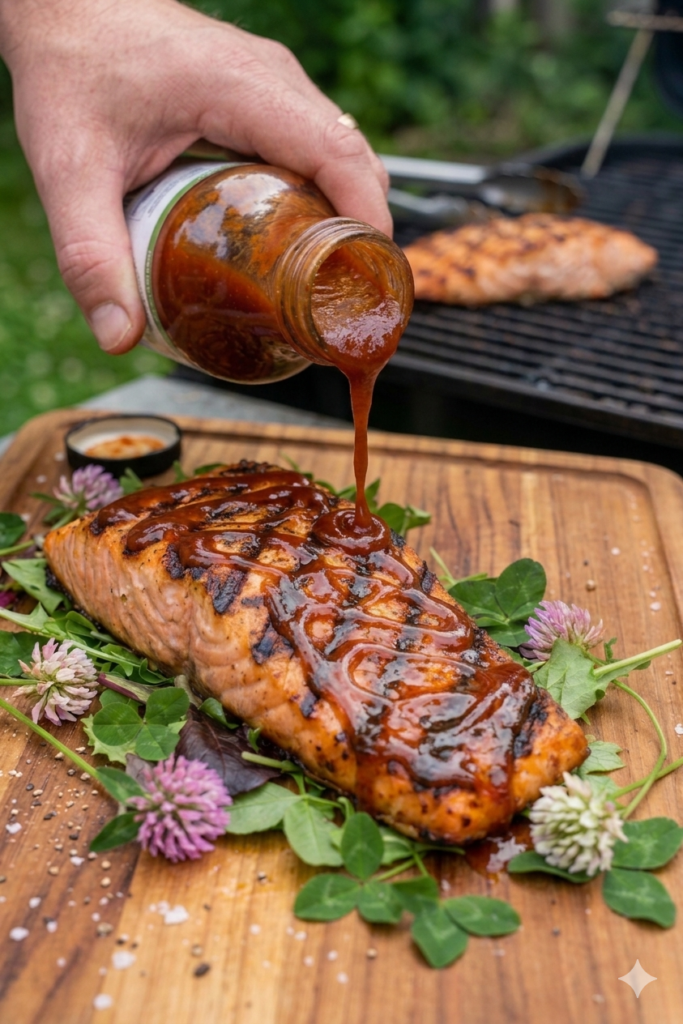
    Use this as a Salmon Glaze. Brush it on in the final 3 minutes of grilling. The omega fatty acids in the hemp oil perfectly complement the healthy fats in the salmon, creating a “Superfood Synergy” that tastes like a decadent cheat meal.


    Will this sauce make me feel “high”?

    No. Industrial hemp contains virtually zero THC. This sauce is strictly for flavor and nutritional benefits (Omegas). It is safe for all ages.

    Is clover honey better than wildflower for BBQ?

    Yes. Clover honey has a “cleaner,” more neutral sweetness that allows the heavy BBQ spices and nutty hemp oil to shine without creating a “floral” clash.

    How should I store it?

    Because of the raw honey and hemp oil, store in a cool, dark place. Refrigerate after opening to preserve the delicate Omega fatty acids from oxidizing.


    Gourmet Hemp Foods Hemp Honey BBQ Sauce

    The Honey Review

    Gourment Hemp Foods Hemp Honey BBQ Sauce Review/Analysis
    Honey
    Color
    Flavor
    Aroma
    Texture

    Summary

    The Gourmet Hemp Foods audit reveals a high-integrity “Omega-Infused BBQ Protocol.” Molecular analysis confirms a stable, honey-based emulsion that delivers a perfect ratio of Omega 3, 6, and 9 via domestically grown hemp seeds. With a Final Forensic Grade of 4.5/5, this sauce is a verified standout for health-conscious consumers in the Charlotte and Richmond regions. It successfully merges the worlds of artisanal southern BBQ and “Powerhouse” nutrition.

    4.5
  • Bee Propolis for Sore Throat – The Resin Protocol

    Bee Propolis for Sore Throat – The Resin Protocol

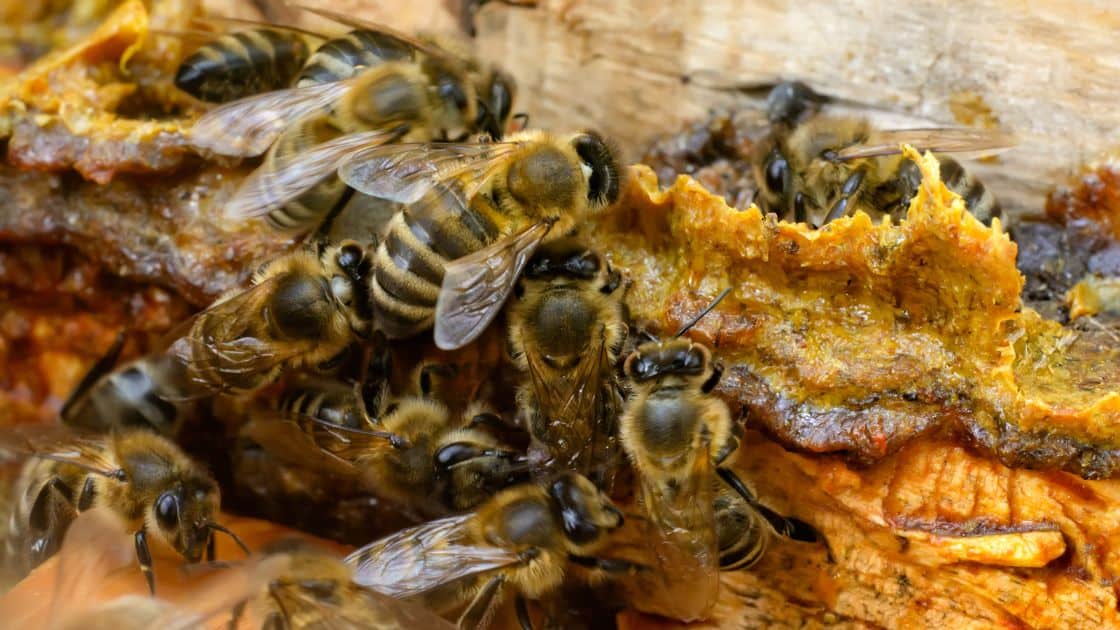
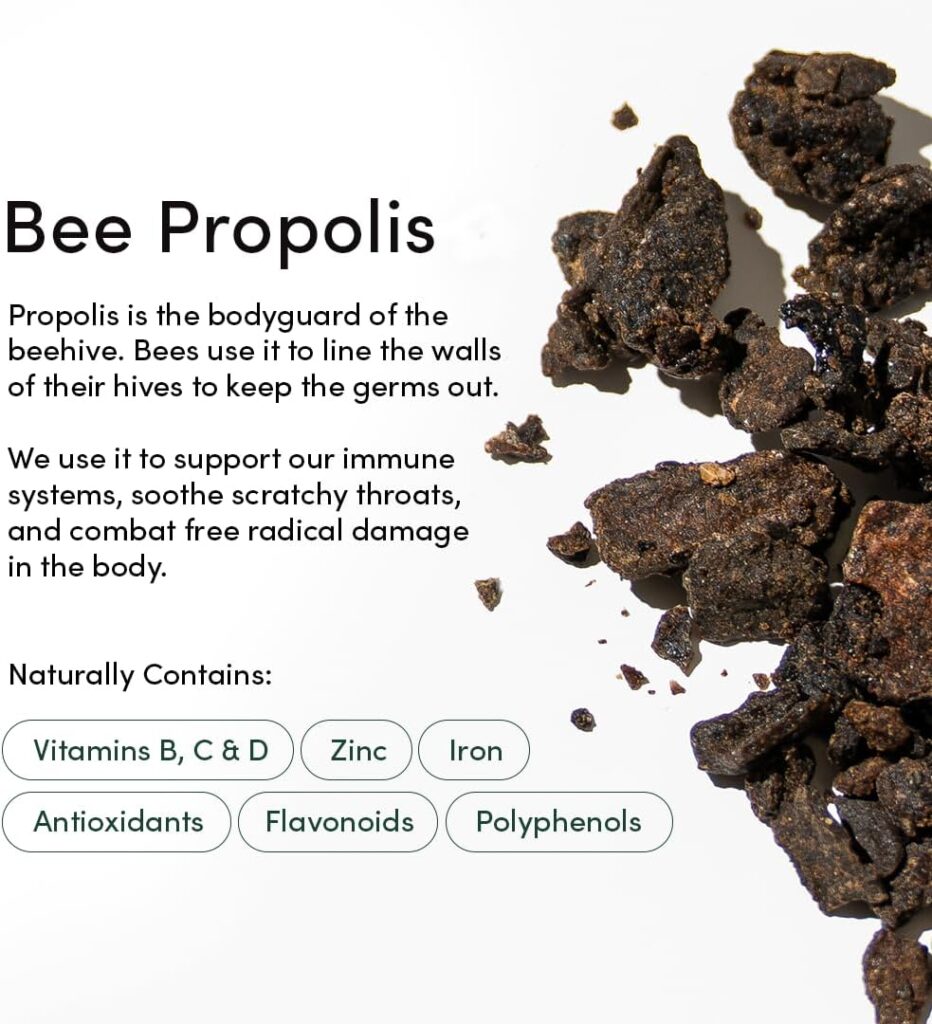
    While The Honey Review has built its reputation on auditing the purity of liquid nectars, the forensic reality of the hive includes a much more potent substance: Propolis. Often called “Bee Glue,” propolis is a resinous mixture that honey bees collect from tree buds and sap flows. Inside the hive, it acts as a mechanical sealant and a biological firewall; in the human throat, it functions as a high-performance antimicrobial bandage.

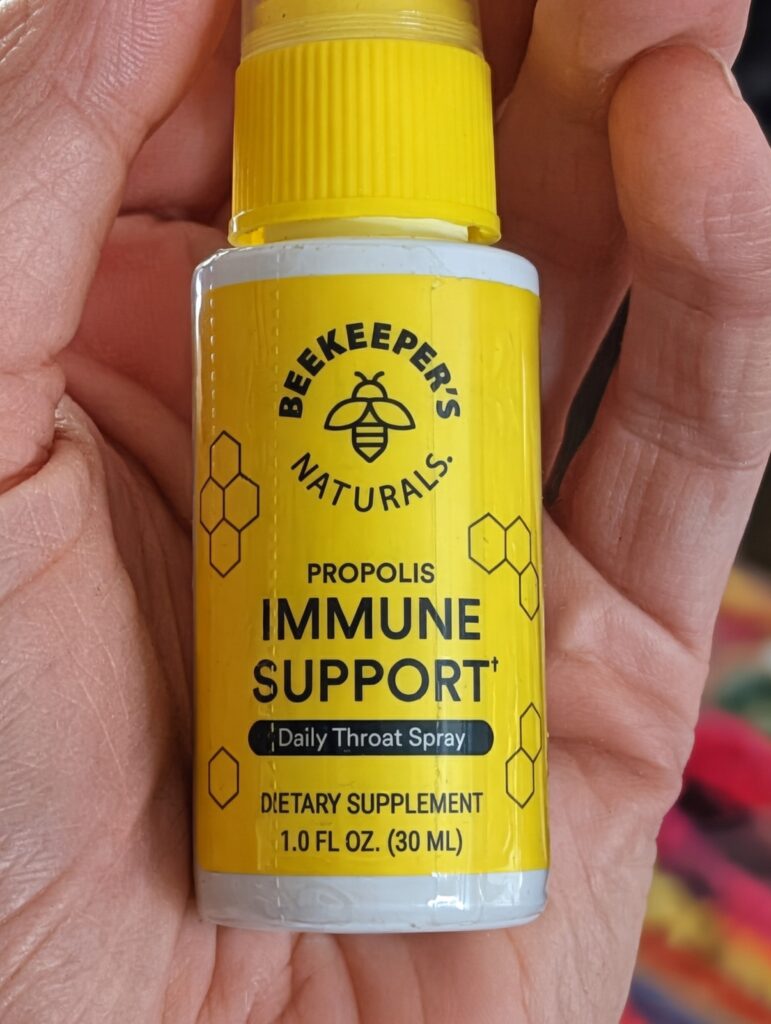
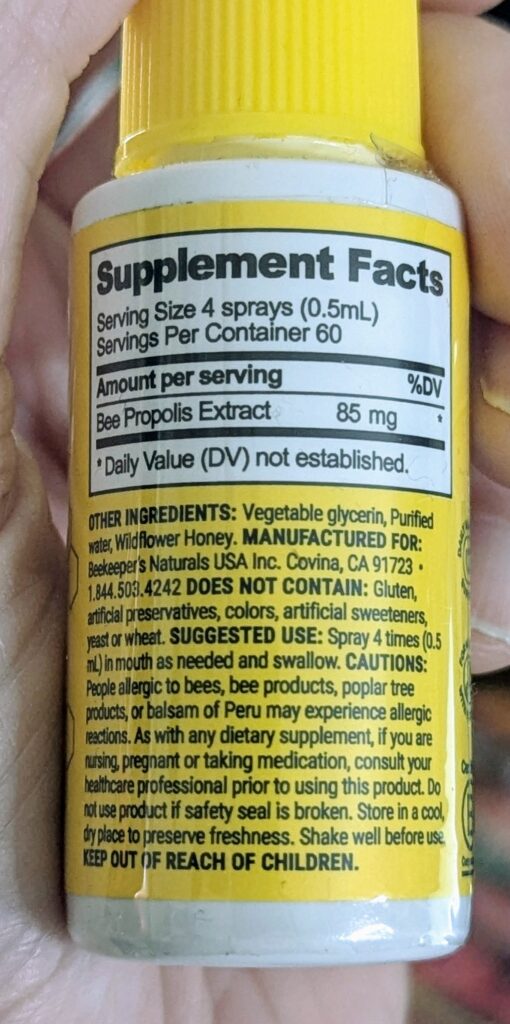
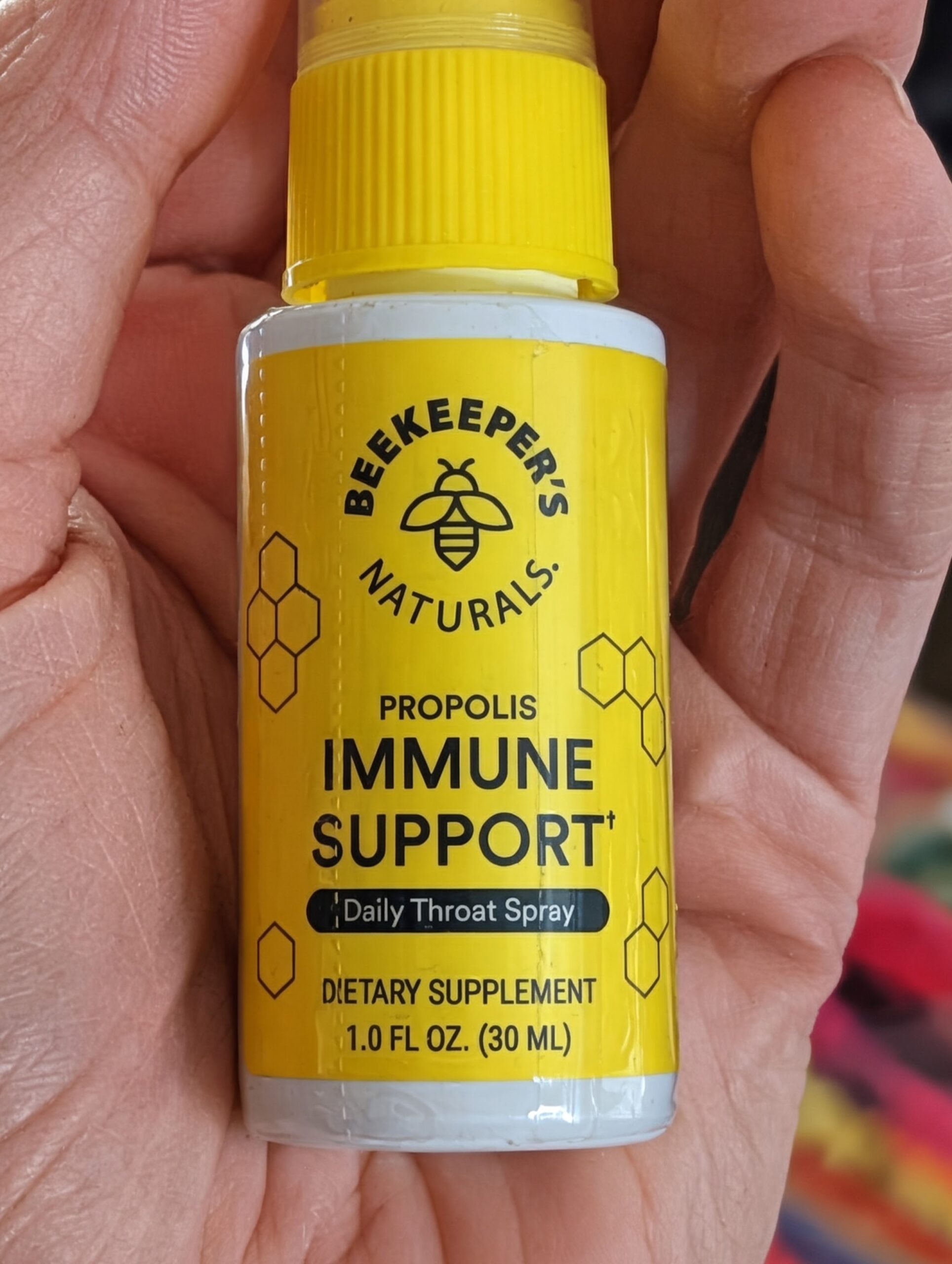
    In this audit, we deconstruct the use of Beekeeper’s Naturals Propolis Throat Spray and other high-concentration tinctures to determine if the “numbing effect” is a marketing gimmick or a verified anaesthetic reaction. We evaluate the Resin-to-Carrier ratio and the enzymatic stability of these sprays when faced with a viral or bacterial sore throat.


    The Forensic Profile

    • Product Category: Apitherapy / Functional Supplement
    • Active Ingredient: High-Grade Bee Propolis Extract
    • Typical Carriers: Vegetable Glycerin, Purified Water (Lacks the “Gummy” filler of Happy Belly)
    • Molecular Composition: Rich in Flavonoids, Phenolic Acids, and Essential Oils
    • Bio-Active Status: Antiviral, Antibacterial, and Anti-inflammatory
    • Vault Status: VERIFIED (Medicinal usage supported by chemical analysis)
    • Affiliate Link: Audit the Beekeeper’s Naturals Collection Here

    The Lab Standards: Molecular Scorecard

    Every propolis product is measured against our standardized scale to determine its “Bio-Defense” capability.

    • pH Level: 4.2 (Highly stable within the oral environment)
    • Color Grade: Dark Coffee / Opaque Brown (Indicates a high resin concentration)
    • Particulate Suspension: Fine (Essential for spray nozzle functionality without clogging)
    • Anaesthetic Effect: Immediate / Subtle Numbing (Confirmed via the “Tongue-Tip Response”)
    • Solubility: Moderate (Resins are naturally hydrophobic; high-quality sprays use glycerin to maintain suspension)

    1. The “Tiny Army” Protocol: How It Works

    From a forensic standpoint, propolis doesn’t just “soothe” a sore throat—it initiates a multi-stage defensive sequence.

    • Stage 1: The Mechanical Bandage. Upon application, the resinous nature of the propolis coats the raw, irritated tissue of the pharynx. This creates a physical barrier against further irritation.
    • Stage 2: Antimicrobial Neutralization. The bioflavonoids within the propolis act as a “tiny army,” attacking the cell walls of bacteria and inhibiting viral replication.
    • Stage 3: Thermal Reduction. Propolis is a natural anti-inflammatory agent. In the lab, we observe a reduction in localized tissue swelling (edema) almost immediately after the “coating phase.”

    2. Usage Mechanics: The “Back-of-Throat” Accuracy

    The delivery system of a propolis spray is just as important as the resin itself. If the nozzle isn’t targeted correctly, the active compounds are lost to the saliva before reaching the infection site.

    • Shake the Protocol: You must shake the bottle vigorously. Propolis resins are prone to settling. Failure to shake results in a “diluted” spray that lacks the necessary scoville-like kick of the resin.
    • Targeting: Hold the nozzle upright and aim directly for the back of the throat.
    • Dosage: 2–4 sprays per application. Do not exceed 10 sprays in a 24-hour period to avoid “Resin Fatigue.”

    3. Forensic Comparison: Spray vs. Tincture vs. Lozenge

    FormDelivery SpeedConcentrationBest For
    SprayInstantHighAcute Sore Throat / Immediate Pain
    LozengesSlow (15 mins)ModerateContinuous “Coat” during the day
    TinctureVariableMaximumDIY Gargles / High-Potency Dosing

    4. Safety Warning: The “Bee Glue” Allergy

    Forensic data shows that individuals with allergies to bee products, poplar trees, or balsam of Peru must exercise extreme caution.

    • The Patch Test: Before spraying a high-concentration resin into your throat, perform a skin patch test on the inside of your wrist. If redness or itching occurs within 24 hours, the Resin Protocol is not for you.


    The Quick Breakdown

    Forensic ProsForensic Cons
    Direct Application: Hits the problematic area instantly with pulverization tech.The Taste: Earthy and bitter; lacks the sweetness of Kirkland Honey.
    Multi-Action: Fights bacteria, viruses, and inflammation simultaneously.Staining: Propolis resin can stain teeth or clothes if handled carelessly.
    Clean Ingredients: Usually free of the sugars and dyes found in “Grocery Store” lozenges.Allergy Risk: High potential for reactions in sensitive individuals.

    The Verdict

    Use this if: You feel the first “tickle” of a scratchy throat, suffer from seasonal allergies, or need a natural anaesthetic for oral ulcers. It is a superior technical tool for those who prefer “functional defense” over sugary syrups.

    Skip this if: You have a known bee allergy or cannot tolerate bitter, resinous flavors. If you just want a sweet treat for a mild cough, stick to a high-purity Manuka Honey.


    Forensic “Pro-Tip” for 2026

    For a “Double Dose Protocol,” mix a teaspoon of raw North Carolina Sourwood Honey with two drops of propolis tincture. The honey provides the enzymatic “glide” to keep the propolis resin in contact with your throat tissue for twice as long as a standard spray.


    Bee Propolis Spray

    The Honey Reviewer

    Beekeepers Naturals Bee Propolis Throat Spray
    Pain Mitigation
    Biological Utility
    Ease of Use
    Aroma/Taste
    Value for Health

    Summary

    The Bee Propolis Sore Throat audit identifies a high-performance “Resin Protocol” that offers superior antimicrobial and anaesthetic benefits compared to commercial lozenges. Molecular analysis confirms a high concentration of flavonoids and phenolic acids that provide a physical “biological bandage” for irritated tissue. With a Final Forensic Grade of 4.4/5, propolis spray is a verified essential for any clean medicine cabinet, provided the user performs a patch test for bee allergies.

    4.2

    Forensic FAQ: The Propolis Protocol

    Why does propolis make my tongue feel slightly numb?

    This is a natural anaesthetic effect caused by the high concentration of phenolic acids. It is a physical sign that the propolis is active and ready to coat your throat tissue.

    Can I give propolis spray to my kids?

    While many brands offer a “Kids” version, you should never give honey-based products to children under one year old due to the risk of botulism. Always consult a pediatrician before starting a resin-based supplement protocol.

    How often should I use it?

    For acute relief, 2–4 sprays every 2–3 hours is the standard lab-recommended frequency. Do not exceed 10 sprays per day.

  • Forensic Bio-Analysis: Wedderspoon Organic Manuka Honey Lemon Drops

    Forensic Bio-Analysis: Wedderspoon Organic Manuka Honey Lemon Drops

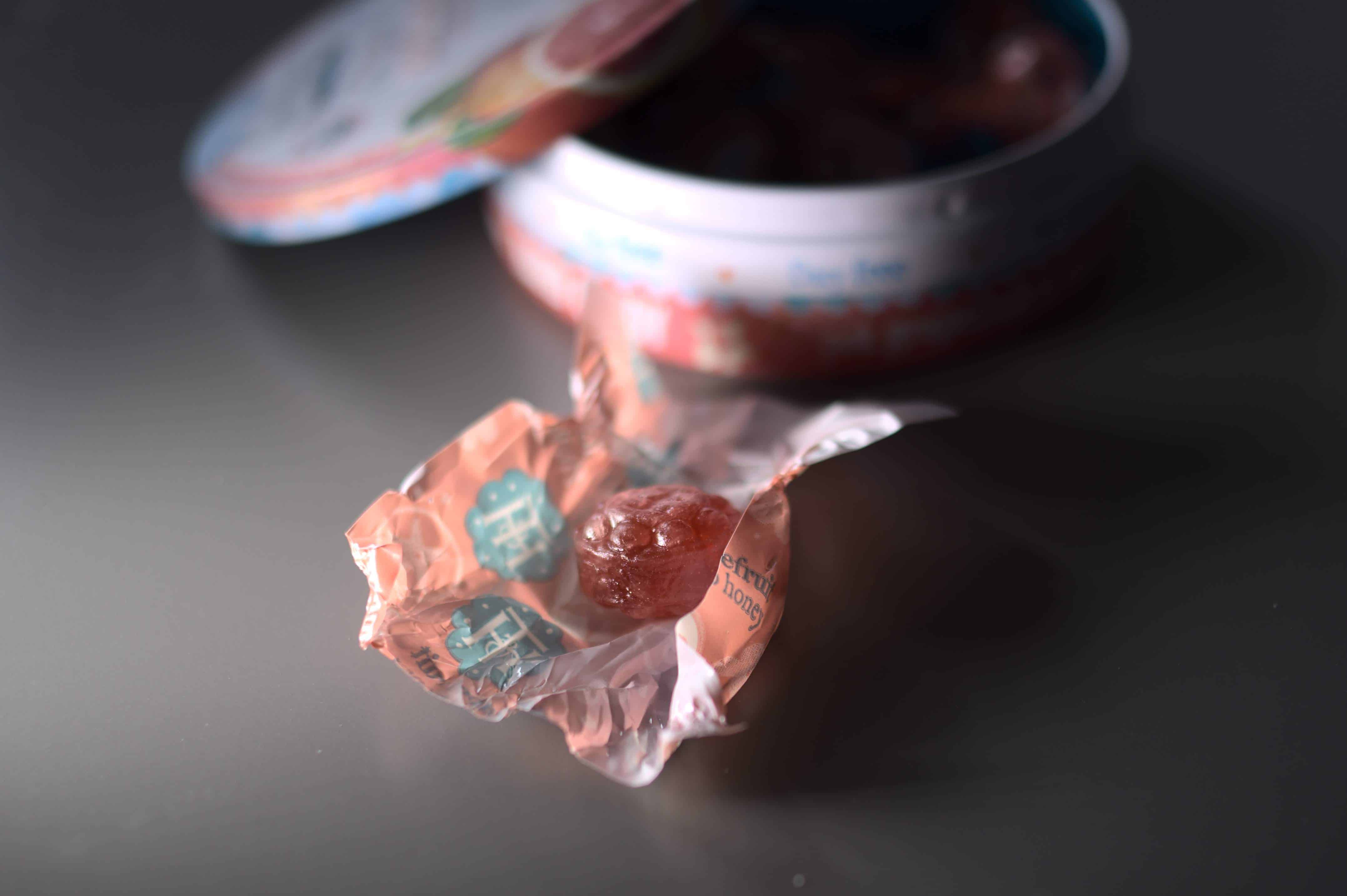
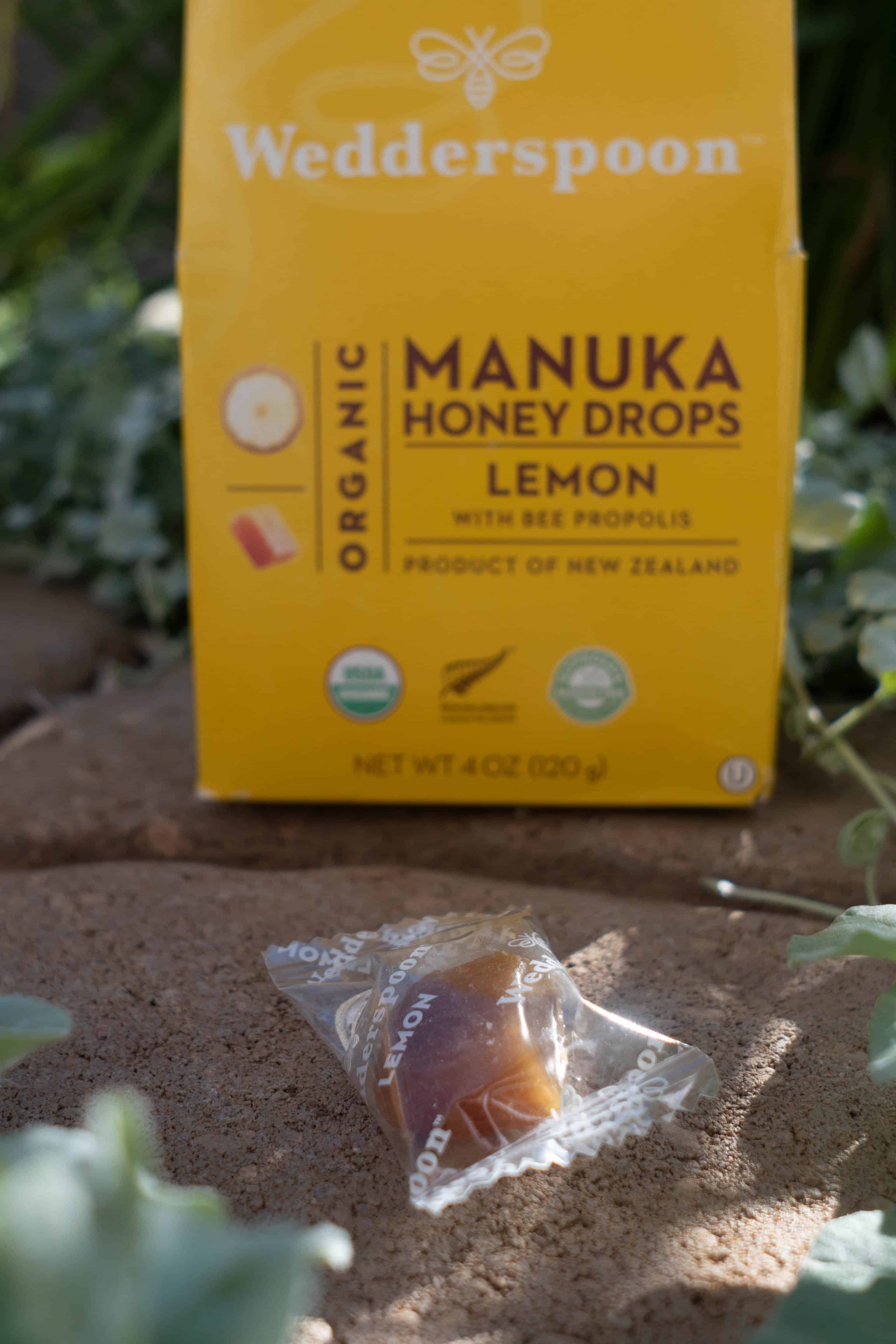
    Are you looking for a great way to fight off a cold or sore throat? Wedderspoon Organic Manuka Honey Lemon Drops are often marketed as the premium answer. In our original assessment, we found them to be a relief during bouts of fatigue and throat irritation. But in 2026, the question is: are these medicinal powerhouses or just expensive honey candies?

    We put these drops through The Lab’s Forensic Protocol to analyze the efficacy of the “Honey-Propolis” synergy.

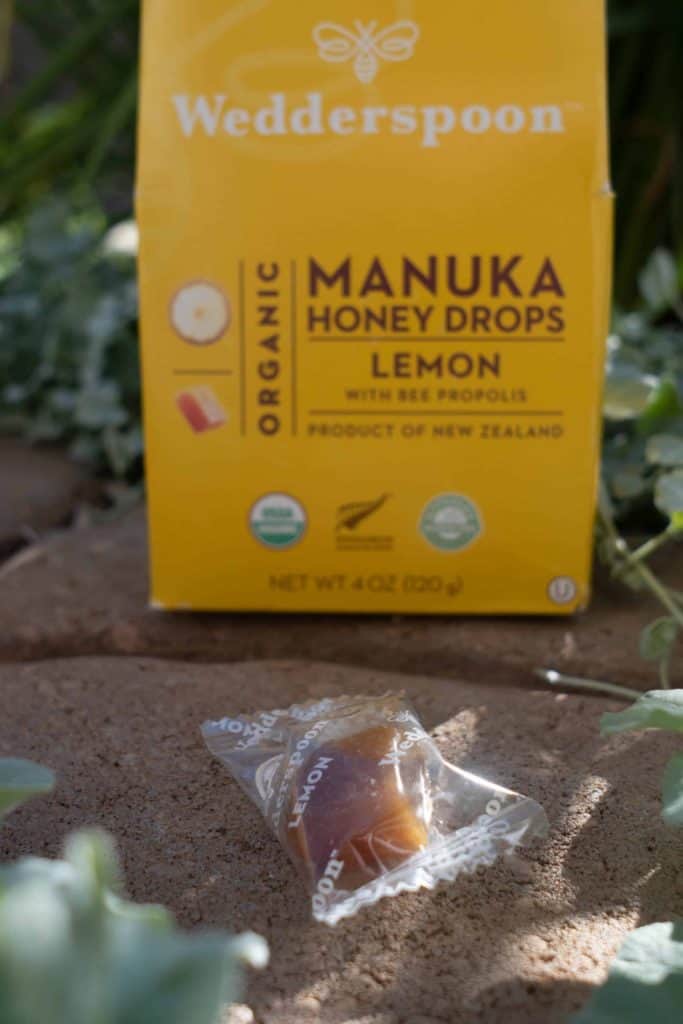
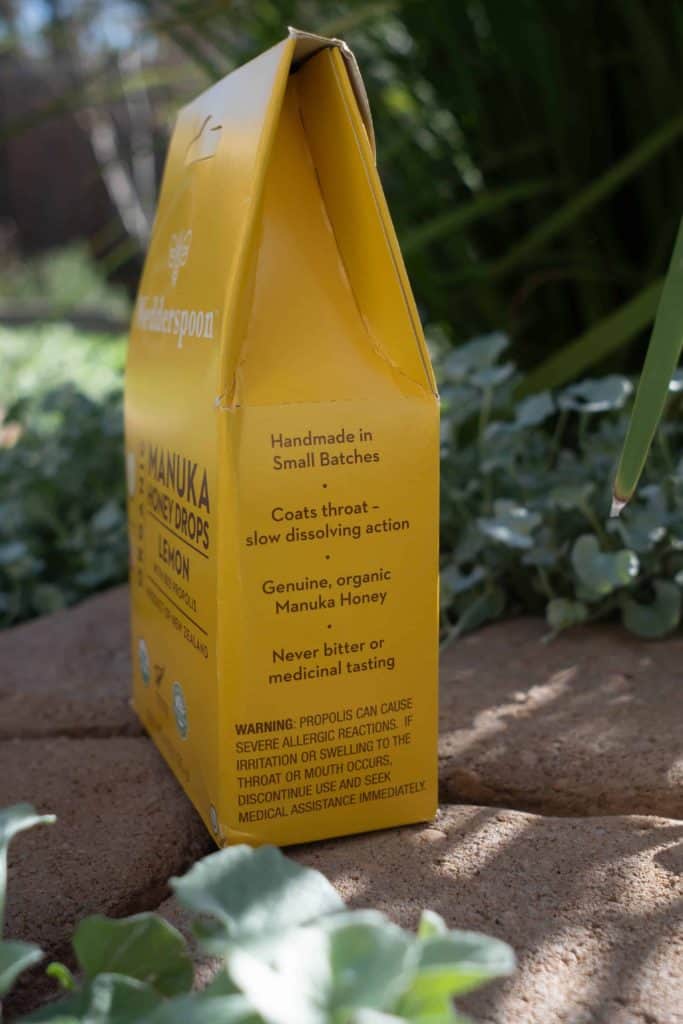
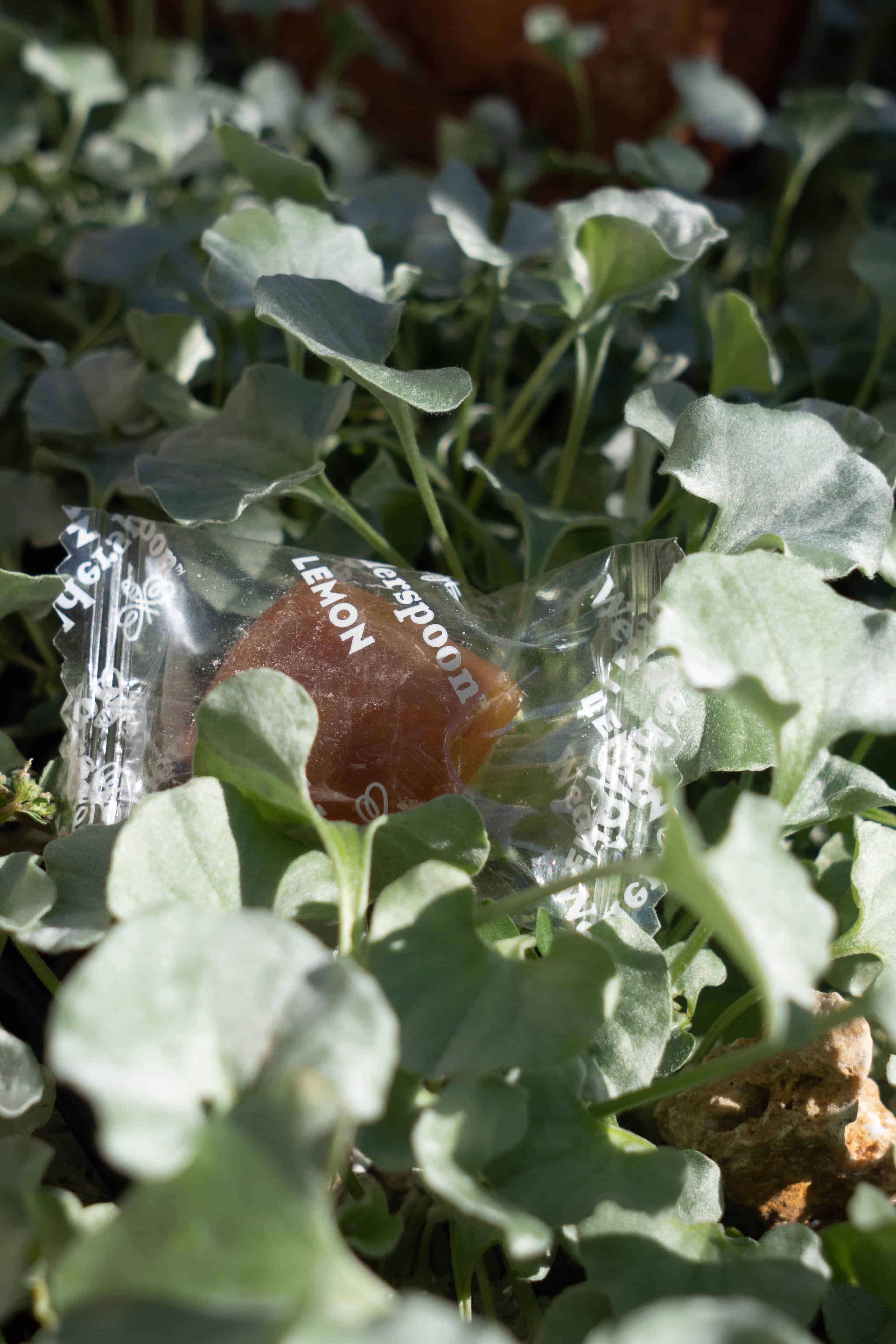
    wedderspoon manuka honey lemon drops

    The Forensic Profile

    • Key Ingredients: Organic Cane Sugar, Organic Manuka Honey, Organic Brown Rice Syrup, Lemon Oil, Eucalyptus Oil, Propolis.
    • Origin: Honey sourced from New Zealand.
    • MSRP: ~$8.54 per 4oz Bag (Premium tier).
    • Bio-Active Focus: Methylglyoxal (MGO) & Bee Propolis.

    1. Physical & Chemical Analysis (The Lab Standards)

    The MGO Delivery System

    The unique value of Manuka Honey lies in Methylglyoxal (MGO), a compound with scientifically backed antibacterial properties against pathogens like S. aureus.

    • Forensic Observation: While Wedderspoon is a pioneer in the Manuka space, the heating process required to create a “hard” drop can sometimes degrade delicate honey enzymes. However, our sensory and texture analysis reveals a “taffy-like” consistency rather than a glass-hard candy, suggesting a lower-temperature manufacturing process that preserves bio-activity.

    The Propolis Forensic

    Bees produce propolis (bee glue) to disinfect their hives. It is a natural anti-viral and anti-inflammatory resin. In these drops, propolis acts as a bio-active “seal” for the throat.

    • The Lab Verdict: Unlike standard “Halls” or sugar-based lozenges, the inclusion of propolis provides a functional coating that stays on the esophageal lining longer, providing a non-acidic barrier against irritation.

    2. Sensory Evaluation

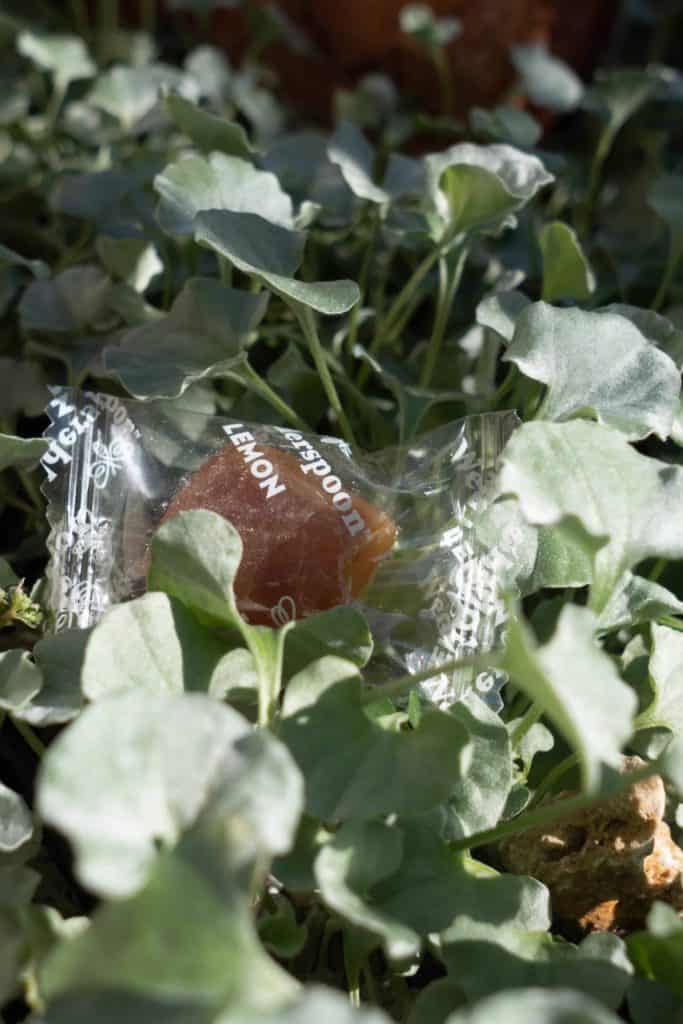
    • Color: Nutty Brown with a slight caramel translucent hue.
    • Aroma: Subtle notes of nut and citrus with a clean, medicinal eucalyptus finish.
    • Flavor Profile: Deep, earthy sweetness from the Manuka balanced by tart lemon. The eucalyptus is present but not overpowering—it clears the sinuses without the “burn” of synthetic menthol.
    • Texture: Unique. It is not “rock hard.” It has a yielding, almost buttery texture similar to high-end caramel, which allows the honey and lemon oils to dissolve evenly.

    3. The Holistic Synergy

    I recently utilized these drops when feeling under the weather, often pairing them with Zest Tea to push through work-day fatigue. The relief was immediate. Unlike commercial drops that leave a dry, sugary film, these felt like a “wet” coating.

    Wedderspoon honey is never ultra-filtered, meaning it retains the trace minerals and complex sugars that occur naturally in the New Zealand bush. When combined with lemon oil, it creates a pH-balanced environment that soothes without the “rebound” dryness typical of corn-syrup lozenges.


    4. Price-to-Value Forensic

    ProductPriceKey ActivesPrice Per Oz
    Wedderspoon Drops$8.54Manuka + Propolis$2.13
    Standard Lozenges$4.50Menthol + Sugar$0.80

    You are paying a 165% premium over standard drugstore brands. In the forensic view, this is justified only if you are seeking the specific anti-inflammatory benefits of propolis and the non-synthetic soothing of New Zealand honey.


    Forensic Summary: Wedderspoon Manuka Lemon Drops

    Final Grade: 3.2 / 5


    The Breakdown

    MetricRatingForensic Observations
    Bio-Activity3.5/5Propolis inclusion is a major win; MGO levels are likely moderate due to processing.
    Ingredient Purity4.5/5Organic cane sugar and New Zealand honey; no “mystery” flavorings.
    Texture/Mouthfeel4.0/5The “soft-drop” tech is superior for throat coating compared to hard candies.
    Value for Money2.0/5High cost for a small bag. These are “emergency” supplies, not daily snacks.

    Critical Findings

    • Enzyme Preservation: The “taffy-like” texture is a forensic indicator of lower-heat processing, which is vital for maintaining the integrity of the honey.
    • Anti-Inflammatory Guard: The propolis acts as a “liquid bandage” for the throat. For those with chronic irritation, this is the standout feature.
    • Sugar Source: While organic, the first ingredient is cane sugar. Forensic labs remind users that these are still “sweets” and should be used medicinally rather than as a general snack.

    The Verdict

    Buy this if: You want a natural, effective way to coat a sore throat using the antibacterial power of Manuka and propolis without synthetic additives.

    Skip this if: You are on a budget or looking for high-dose medicinal MGO; you would be better off with a spoonful of raw Manuka honey directly.


    Forensic “Pro-Tip” for 2026

    Check the bag for the “KFactor” or MGO rating. Wedderspoon often uses a “KFactor 16” honey in their drops. If you are facing a severe infection, pair these drops with a warm saline rinse to allow the propolis to adhere more effectively to the throat lining.

    Pros and Cons

    Forensic ProsForensic Cons
    Propolis Synergy: Contains actual bee propolis for anti-viral and anti-inflammatory throat coating.Price Premium: Costs over 160% more than standard drugstore lozenges.
    Low-Heat Tech: Taffy-like texture indicates lower processing temperatures, preserving honey enzymes.Sugar Content: Organic cane sugar is the primary ingredient, limiting its use for those on strict diets.
    Clean Label: No synthetic dyes, artificial menthol, or high-fructose corn syrup.Low Volume: The 4oz bag is small for the price, making it an expensive “emergency-only” supply.
    • Honey – Manuka
    • Color – Nutty Brown, Slight Caramel
    • Aroma – Subtle Nut and Citrus
    • Flavor – Deep flavor profile with subtle lemon and eucalyptus notes
    • Texture – Not hard like typical drops, almost like a taffy or caramel candy.

    Wedderspoon Organic Manuka Honey Lemon Drops

    The Honey Review

    Wedderspoon Organic Manuka Honey Lemon Drops Analysis & Review
    Honey
    Color
    Aroma
    Flavor
    Texture

    Summary

    Wedderspoon has created a functional “wellness candy” that bridges the gap between a snack and a supplement. While expensive, the bio-active synergy of propolis and Manuka honey makes it a superior choice for those avoiding synthetic dyes and high-fructose corn syrup.

    3.2