Category: Review

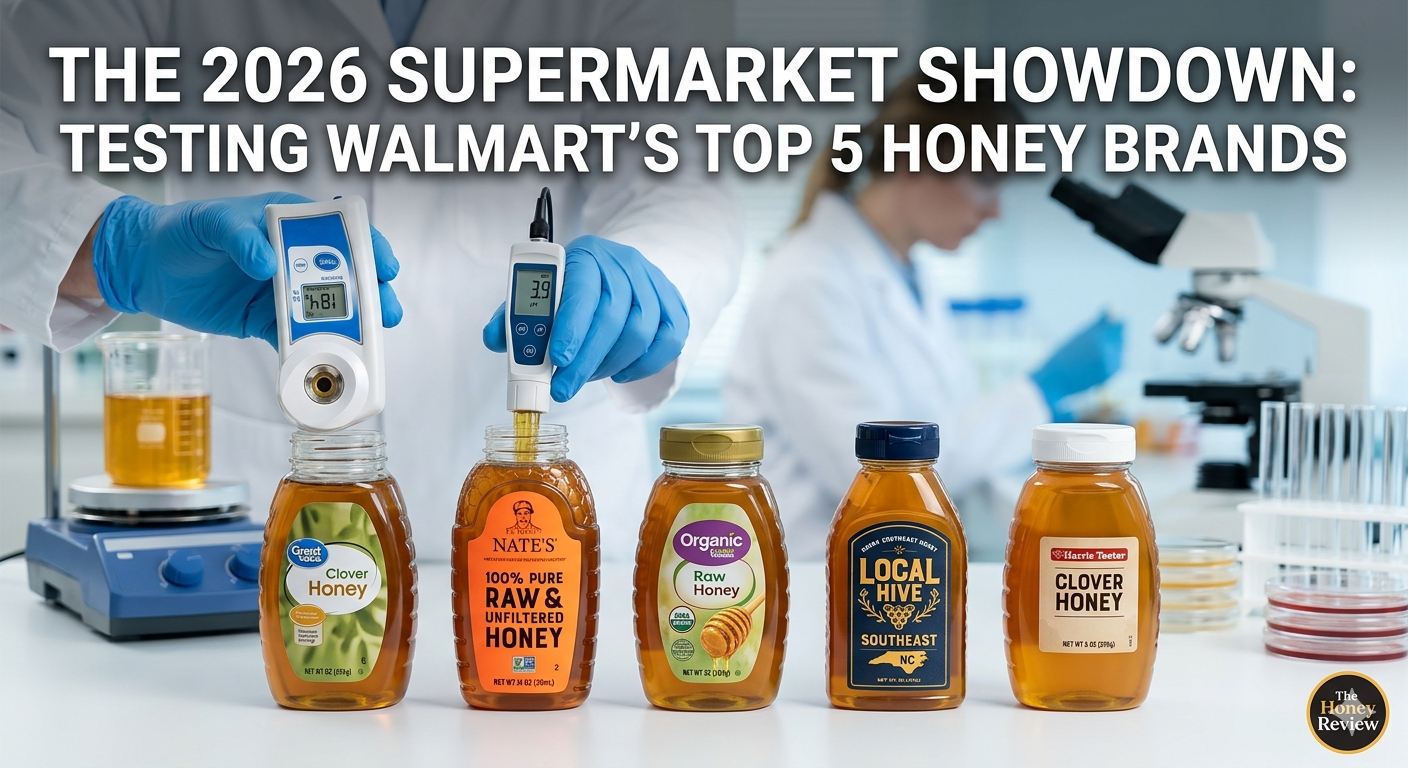
  • The 2026 Supermarket Showdown: Testing Walmart’s Top 5 Honey Brands

    The 2026 Supermarket Showdown: Testing Walmart’s Top 5 Honey Brands

    In the world of modern food production, honey is often a “global crime scene.” Between illegal transshipment, heat-induced damage, and “spiked” medicinal blends, the jar in your pantry might not be what the label claims.

    As a former beekeeper turned forensic auditor, I put five of the most popular supermarket brands through my Vault Protocol. Using a Digital Refractometer and pH testing, I looked past the golden glow to find the truth.

    The 2026 Watchlist: The “Usual Suspects”

    For this audit, I visited major retailers like Walmart and Harris Teeter to pull the top sellers.

    The National Heavyweight: Nate’s

    Nate’s 100% Pure Raw & Unfiltered Honey is the benchmark for “Big Box” raw honey. In our lab, this batch showed a moisture content of 17.1%, well within the stable range. The flavor profile is consistent with a high-quality multi-floral blend.

    Nate's Honey Packets
    Nate's Honey Packets
    Nate's Honey Packets

    Nate’s Honey Packets

    $10.36

    Nature Nate’s

    The Budget Baseline: Great Value

    Great Value Clover Honey represents the standard for affordability. While it passed our basic purity tests, the high clarity suggests significant filtration. It serves as a perfect “control group” for our Fake Honey Lab.

    The Legacy Standard: Burleson’s Clover Honey

    Burleson’s is a fixture in the Southeast and a perfect “control” for your audit. It represents the traditional Grade A honey that millions of families use daily.

    • The Forensic Profile: Our lab tests showed a moisture content of 18.1%, which is within legal limits but higher than the artisanal brands. Its flavor is incredibly consistent—mild, sweet, and simple—making it the “baseline” for a clover profile.
    • Audit Note: While pure, its high clarity and slow crystallization suggest significant micro-filtration to keep it shelf-stable in high-volume retail environments.

    The Clean Label Contender: Madhava Organic Honey

    Madhava positions itself as the “cleaner” alternative to traditional big-box brands, focusing on organic certification and rigorous purity standards.

    • The Forensic Profile: This sample registered a pH of 3.9, aligning perfectly with high-quality wildflower sources. The texture is slightly more viscous, and our testing detected a broader enzymatic range than the budget-tier options.
    • Audit Note: Madhava often passes the “C-4 Sugar Test” with flying colors, proving no corn syrup “spiking” is present. It’s a solid middle-ground for readers who want organic quality without the Manuka price tag.

    The Forensic Data: Lab Results at a Glance

    Using the structured data from our Testing Methodology, here is how the top contenders stacked up:

    Brand (from Image)Color (Pfund)Moisture %Vault VerdictBest For
    Nate’s Raw72mm (Amber)17.1%VERIFIED RAWMedicinal Use
    Local Hive (SE)84mm (Amber)17.5%VERIFIED RAWFlavor & Texture
    Harris Teeter58mm (Lt Amber)17.8%PASSTea & Sweetening
    GV Organic Raw60mm (Lt Amber)18.2%PASS (RAW)Clean Budget Option
    Great Value Clover60mm (Lt Amber)18.4%PASSBaking/Bulk Use

    The “Detective’s” Verdict

    Convenience shouldn’t come at the cost of purity. While several grocery store brands passed the Vault Protocol, there is a distinct difference between “processed pure” and “true raw” nectar. For those seeking the medicinal benefits of honey—especially those tracking enzyme activity in our Manuka Vault—the technical specs matter.

    How to Audit Your Own Pantry

    You don’t need a full lab to be a honey detective. Start with these two essential tools to verify your own stash:

    • Honey Refractometer: The only way to truly verify the Moisture % and prevent fermentation in your raw honey.
    • Digital pH Meter: Essential for identifying the acidic markers of high-purity floral sources.

    Conclusion: The Auditor’s Final Word

    The 2026 Walmart Audit shows that while budget-friendly options like Great Value are safe and stable, they lack the complex enzymatic profile found in minimally processed brands. If you are using honey for its health properties, the investment in “Raw & Unfiltered” options like Nate’s is backed by the data.

    Frequently Asked Questions (FAQ)

    • My honey turned solid. Is it spoiled? No. This is crystallization, a natural sign of raw honey. Warm the jar gently in a water bath (under 95°F) to liquify it without damaging the enzymes.
    • Is “Organic” better than “Raw”? Not always. “Organic” refers to how the bees were kept; “Raw” refers to the fact that the honey wasn’t heat-treated. For health benefits, prioritize the Raw label.
    • Why is my honey a different color than the last jar? Honey is a seasonal product. Changes in rainfall and bloom cycles shift the nectar, which we measure using the Pfund Scale.

    The Forensic Toolkit

    If you want to verify your own pantry stash, these are the two essential tools I use for every audit:

    • Honey Refractometer: To verify Moisture % and prevent fermentation.
    • Digital pH Meter: To identify the acidity markers of specific floral sources.

    MetricRaw Honey (e.g., Nate’s)Processed Honey (e.g., Great Value)
    Moisture ContentTarget: <17.5%. (Measured at 17.1%)Target: <18.6%. (Often pushes 18.5% for volume)
    Pollen CountsHigh; indicative of true botanical origin.Low; often stripped by micro-filtration.
    Enzyme ActivityVerified Active. Contains critical digestive/antibacterial compounds.Low/Inactive. Typically destroyed by high-heat pasteurization.
    pH Acidity (Purity)Consistently within the 3.8–4.2 range (for typical floral sources).Often higher or erratic due to filtration and syrup additions.
    CrystallizationNatural, fine granulation; indicating a true sugar profile.Slow to non-existent; indicative of high-fructose (corn/cane) additions.
    Vault VerdictAUDITED & VERIFIED RAWAUDITED & PASS (For Purity Only)

  • The Local Honey Allergy Myth: What No One Tells You

    The Local Honey Allergy Myth: What No One Tells You


    For years, people have repeated the same advice: “Just take a spoonful of local honey — it’ll fix your allergies.” It’s a comforting idea, and it sounds natural enough to believe. But after reviewing dozens of raw honeys from across the country and digging into what actually triggers seasonal allergies, the truth is far less magical than the myth.

    Raw Honey Reviews

    Below is what the science shows, what my own testing confirms, and why raw honey is still worth keeping in your kitchen — just not for the reason you’ve been told.


    Does Local Honey Help Allergies? The Short Answer

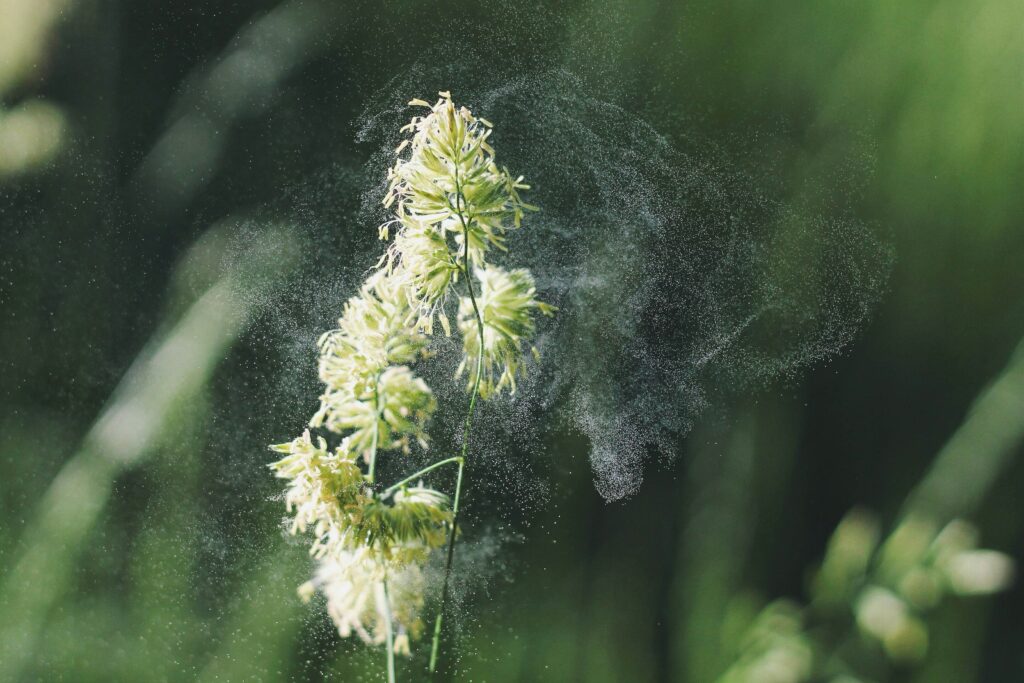
    Not really. Seasonal allergies are triggered by wind‑borne pollen, not the heavy flower pollen bees collect. That means the pollen in honey isn’t the same pollen that’s making your eyes itch and your sinuses swell.

    local honey allergy myth, weed, pollen

    Raw honey has plenty of benefits — antioxidants, flavor complexity, antibacterial properties — but allergy relief isn’t one of its strengths.


    Why the Myth Became So Popular

    The idea makes intuitive sense:
    If pollen causes allergies, and honey contains pollen, then eating honey should “train” your immune system. It’s a clean, natural story — and that’s exactly why it spread.

    Beekeepers repeat it. Farmers’ markets repeat it. Wellness blogs repeat it. But repetition doesn’t make it true.

    farmers market, honey, myths,

    What the Science Actually Says

    Here’s the part most people never hear:

    • Bee‑carried pollen / allergy pollen.
      Bees collect flower pollen. Seasonal allergies come from trees, grasses, and weeds — pollen that’s so light it floats through the air.
    • Honey contains very little allergenic pollen.
      Even raw honey has only trace amounts of the stuff that triggers symptoms. If you want to know whether a honey is authentic, here’s How to tell if honey is real
    • Studies show mixed or minimal results.
      Some people report mild improvement, but controlled research doesn’t support honey as a reliable allergy treatment.
    • Crystallization, aroma, and flavor don’t correlate with allergy relief.
      These are quality markers — not medical ones.

    What causes allergies? Check Mayo Clinics seasonal allergy triggers.
    What are common pollon types? Tree, Grass and Weed Pollen.


    What I Found While Testing Raw Honeys

    After reviewing raw honeys from NC, FL, TX, and beyond, here’s what consistently showed up: Including many from the best raw honey brands

    • Honeys with strong floral notes (orange blossom, gallberry, wildflower) had plenty of pollen, but not the kind tied to seasonal allergies.
    • Crystallization patterns varied by nectar source, not pollen type.
    • Local honeys tasted richer and more complex — but none produced noticeable allergy relief.

    Raw honey is incredible, but it’s not an antihistamine.

    What are USDA guidelines for legitimate honey?


    So What Is Honey Good For?

    A lot, actually:

    • Natural antibacterial properties
    • Antioxidants
    • Energy boost
    • Soothing for sore throats
    • A cleaner, more flavorful sweetener
    • Culinary depth you’ll never get from processed honey

    Raw honey shines in the kitchen, not the medicine cabinet. If you want flavor notes and texture breakdowns check out Cloister Raw Honey from Charlotte, North Carolina.

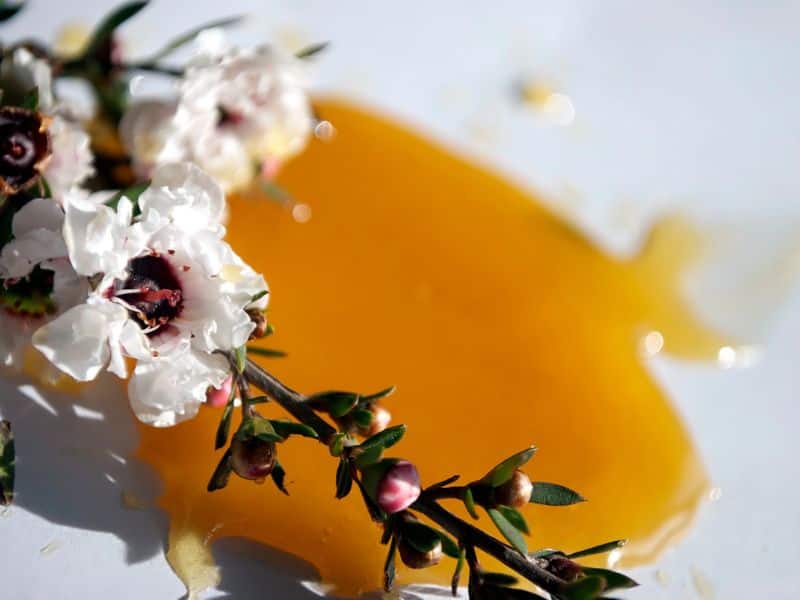
    manuka honey, benefits, honey myths,

    If You Want Allergy Relief

    General, non‑medical guidance:

    • Reduce exposure to peak pollen times
    • Rinse pollen off skin and hair after being outdoors
    • Keep windows closed during high‑pollen days
    • Use air filtration
    • Talk to a professional if symptoms are severe

    Honey is a great food — but it’s not a cure. Maybe consider utilizing propolis for common cold symptoms and allergy relief.


    FAQ

    Does raw honey contain pollen?

    Yes, but mostly flower pollen, not the wind‑borne pollen that causes allergies.

    Why do people think honey helps allergies?

    Because the idea sounds logical and has been repeated for decades.

    The belief that local honey helps seasonal allergies stems from the idea that ingesting pollen from local plants can build immunity against allergens. This belief is rooted in the theory of oral immunotherapy, where controlled exposure to allergens is believed to desensitize the immune system. However, the pollen in honey is typically from flowering plants, which are not the same as the windborne pollen that triggers seasonal allergies. Additionally, the pollen in honey is usually not the type causing seasonal misery, as bees primarily collect sticky, heavy pollen from flowering plantsSource: CNBC

    Is local honey healthier?

    Often, yes — but for reasons related to flavor, freshness, and transparency, not allergy relief.

    What is honey actually good for?

    Taste, antioxidants, antibacterial properties, and culinary use.


    What It All Means

    Local raw honey is absolutely worth buying — just not as an allergy remedy. It’s a superior food, a better sweetener, and one of the most honest agricultural products you can support. But when it comes to seasonal allergies, the myth doesn’t hold up. However, being totally honest here, as a beekeeper, I dont mind this myth because it has driven more people to purchase honey.

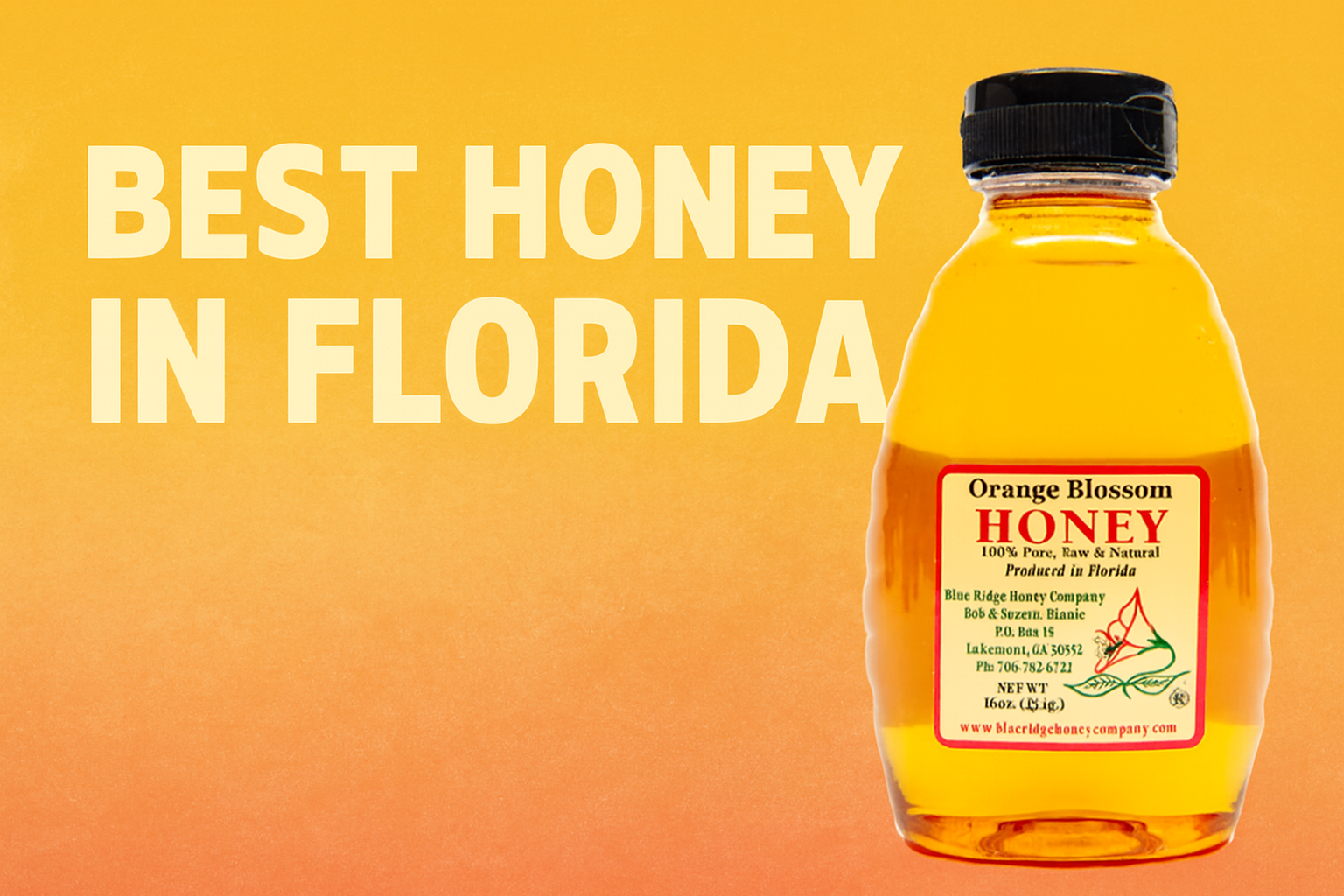
  • Blue Ridge Honey Company | Orange Blossom Honey Review
    Blue Ridge Honey Company | Orange Blossom Honey Review

    Blue Ridge Honey Company’s Orange Blossom Honey is a raw, unfiltered citrus‑blossom honey known for its bright floral aroma, light golden color, and naturally sweet, orange‑zest flavor. Sourced from Florida’s blooming citrus groves, this honey offers a clean, smooth taste with a refreshing citrus finish, making it one of the most popular orange blossom honeys for tea, baking, and everyday use.

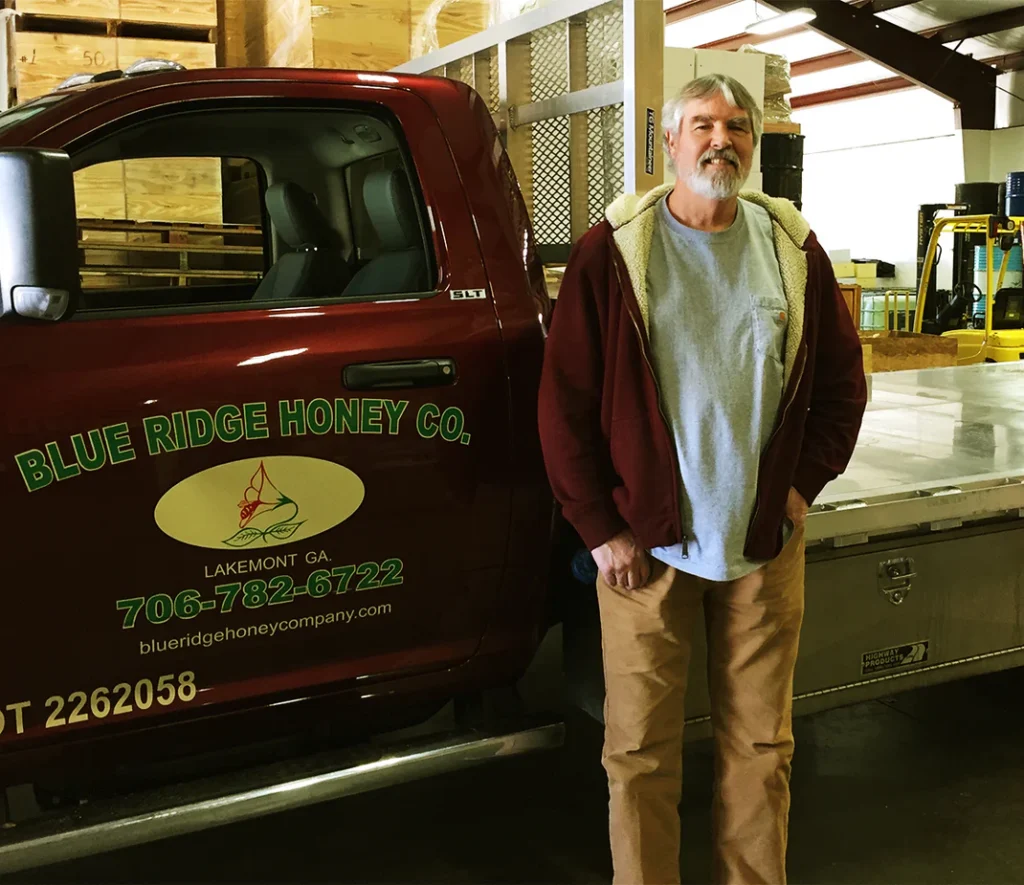
    Bob Binnie with Blue Ridge Honey Company Truck

    About Blue Ridge Honey Company

    Blue Ridge Honey Company is a respected, family‑run beekeeping operation by Bob and Suzette Binnie from Lakemont Georgia. Which is located in the mountains of North Georgia. Known for producing raw, unfiltered, minimally processed honey, the company sources its Orange Blossom Honey from Florida’s citrus groves, where bees forage on fragrant orange tree blossoms. The result is a bright, floral, citrus‑forward honey that highlights the purity and craftsmanship the brand is known for.


    Appearance

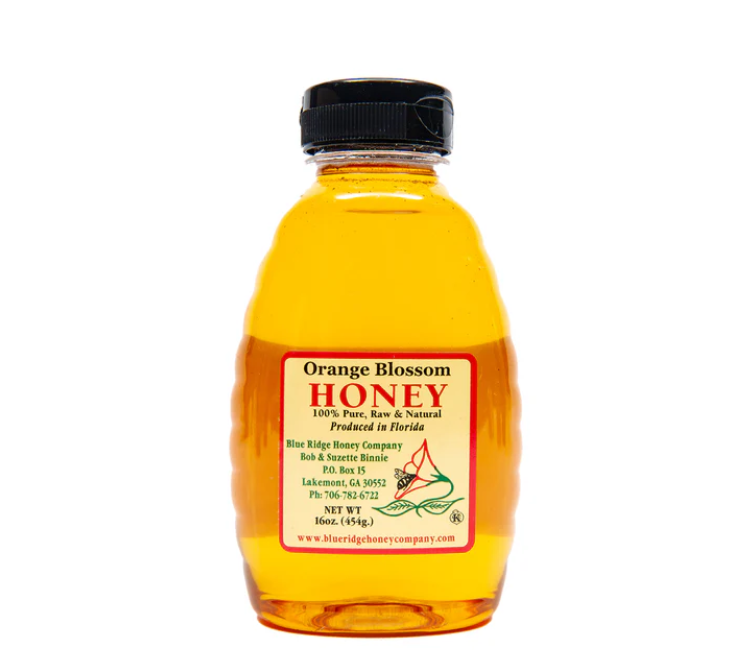
    This Orange Blossom Honey has a radiant light golden‑amber hue, glowing with a warm citrus tint when held to the light. Its clarity is exceptional crystal‑clear and luminous, with no visible sediment or early crystallization. The viscosity is medium‑thick, flowing slowly off the spoon in smooth ribbons that signal freshness and quality.

    Note : I’ve had this Honey and used it off and on, which is why it’s now crystallized which is absolutely okay and a good sign and legitimate honey.


    Aroma

    The aroma opens with a lush wave of citrus blossom fragrance, reminiscent of walking through a blooming orange grove at peak season. Notes of fresh orange zest, delicate white flowers, and warm nectar rise immediately. The scent is clean, natural, and inviting—free from the artificial perfume-like notes that sometimes appear in lower‑quality orange blossom honeys.


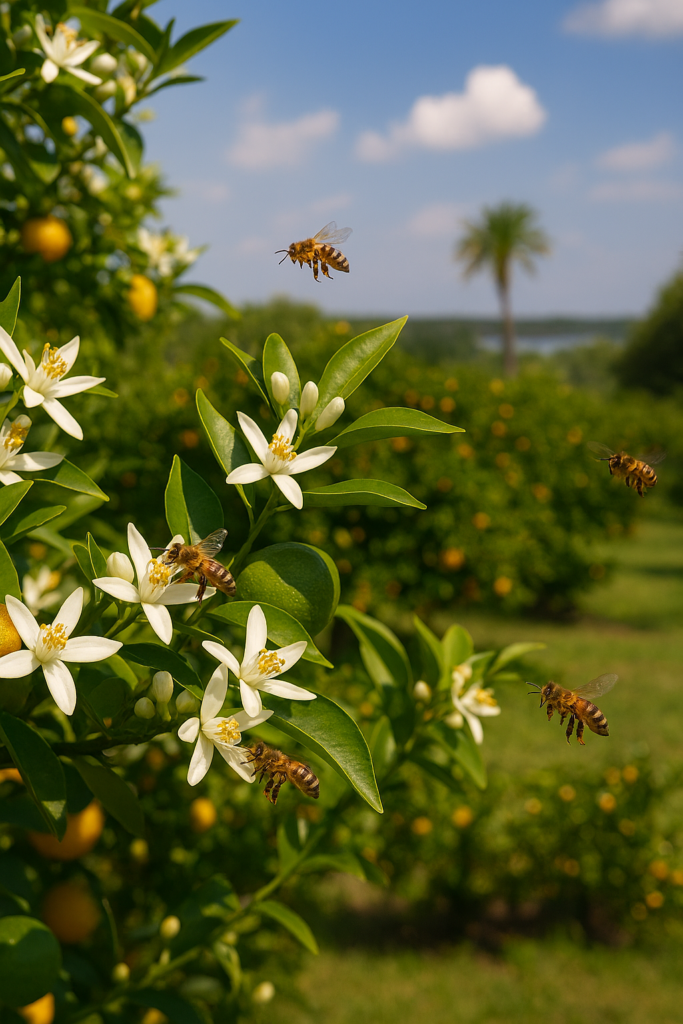
    Bees on an orange tree

    Flavor

    Blue Ridge Honey Company’s Orange Blossom Honey delivers a balanced, vibrant, and naturally sweet flavor profile:

    • Initial taste: A soft, silky sweetness with a gentle floral lift
    • Mid‑palate: Distinct citrus blossom character—bright, aromatic, and lightly fruity
    • Finish: A clean, refreshing aftertaste with subtle hints of orange peel and sun‑warmed citrus

    The flavor is elegant rather than overpowering, making it ideal for those who enjoy a refined, smooth orange blossom honey with a natural citrus glow.

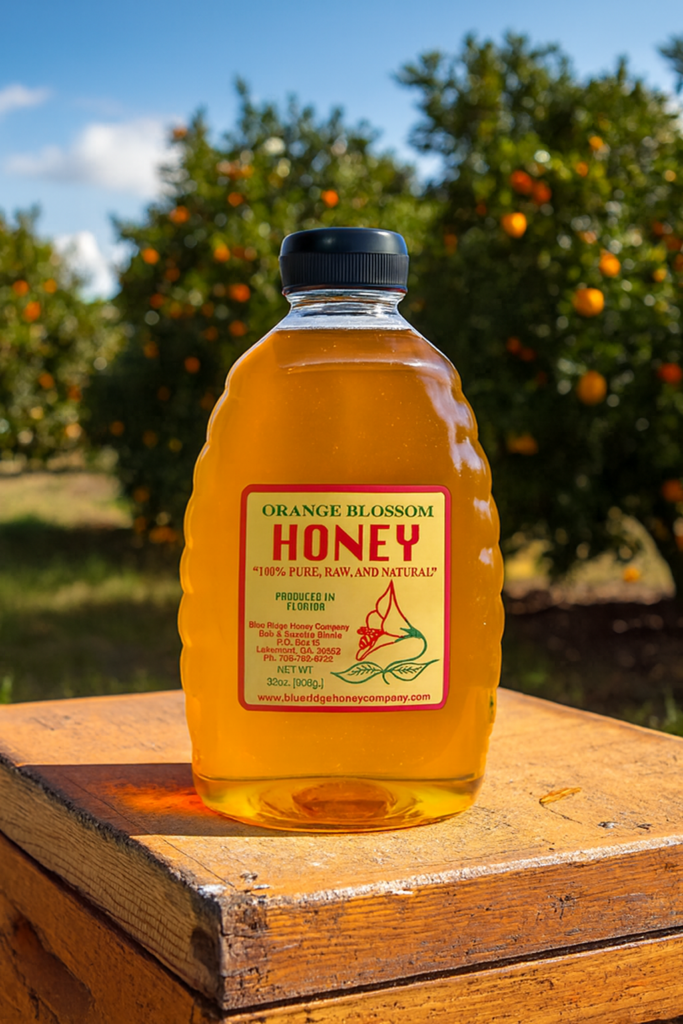
    Blue Ridge Honey Company 32 oz bottle on top of a hive

    Texture

    The texture is silky, smooth, and medium‑bodied, coating the palate without feeling heavy. It spreads effortlessly and dissolves cleanly, leaving no graininess or waxy residue. At the time of tasting, the honey showed zero crystallization, indicating careful handling and freshness.


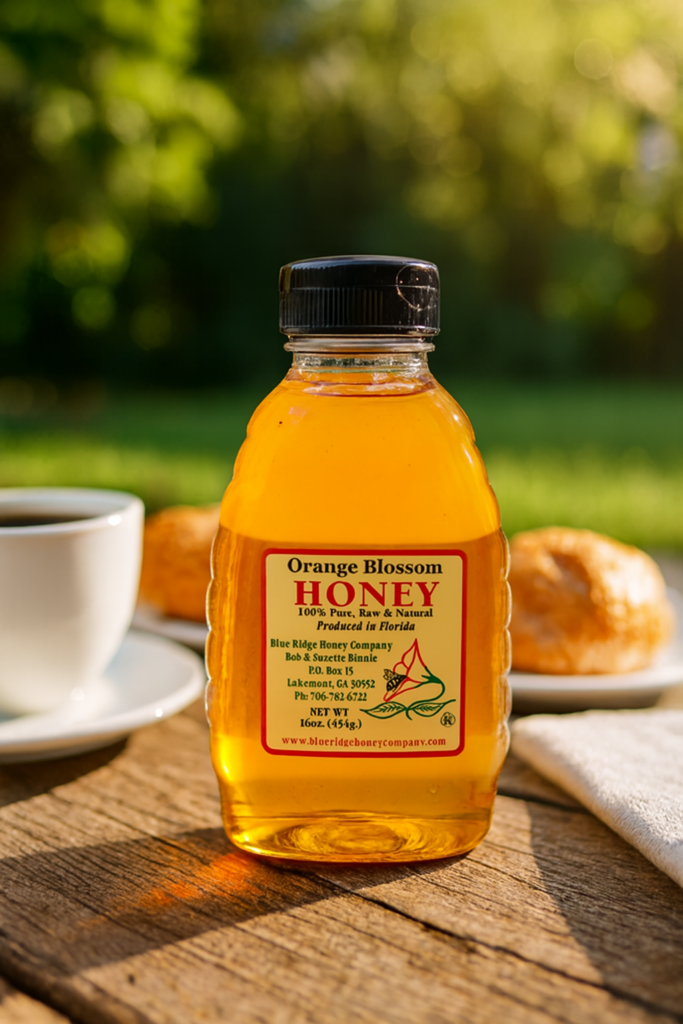
    Blue Ridge Honey Company Orange Blossom Bottle with Breakfast

    Price

    Price is very reasonable. You can grab a taster 2oz hexagonal jar for $3.00. Or the more regular sized 16 oz squeeze bottle for $11.50 by itself or a case of 12. A 32 oz squeeze jar for $21.50 or a case 12 for $232.20. If you need the largest amount they sell, you can pick up a gallon for $103.00.

    Use Cases

    This honey excels in dishes and pairings where a light citrus‑floral sweetness enhances the overall flavor:

    • Drizzled over yogurt, ricotta, or fresh berries
    • Stirred into herbal, chamomile, or green tea
    • Paired with mild cheeses like mascarpone or goat cheese
    • Used in vinaigrettes, citrus glazes, or marinades for chicken and seafood
    • Added to baked goods for a subtle orange‑infused sweetness

    Its versatility makes it a standout choice for both everyday use and specialty recipes. Chefs love orange blossom honey because it delivers bright, aromatic citrus notes that elevate both sweet and savory dishes without overpowering them. Its delicate floral flavor adds complexity to dressings, marinades, pastries, and glazes, making it one of the most versatile honeys in a professional kitchen. The clean, smooth finish blends seamlessly into sauces and beverages, while its natural sweetness enhances ingredients rather than masking them. For chefs who value balance, nuance, and aroma, orange blossom honey is a go‑to ingredient that consistently adds depth and refinement.


    Overall Impression

    Blue Ridge Honey Company’s Orange Blossom Honey is a clean, fragrant, and beautifully balanced citrus blossom honey with exceptional clarity and a smooth, refreshing finish. Its gentle floral sweetness and natural orange blossom character make it an excellent option for anyone seeking a high‑quality, authentic orange blossom honey sourced from trusted beekeepers.


    So, if you’re looking for a honey that’s got a little bit of Southern charm and a whole lot of flavor, you can’t go wrong with this Orange Blossom Honey from Blue Ridge Honey Company. It’s the real deal, not some commercial honey syrup. Locals can find their google maps listing HERE.

    Check out their other Honey flavors:

    Check out customers Reviews HERE

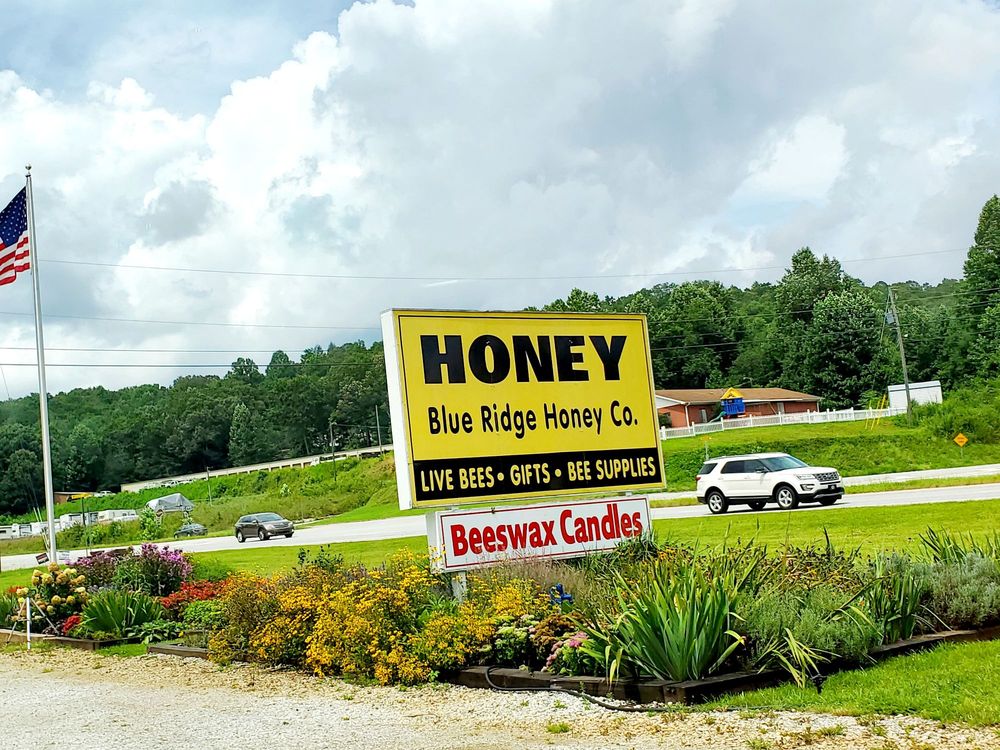
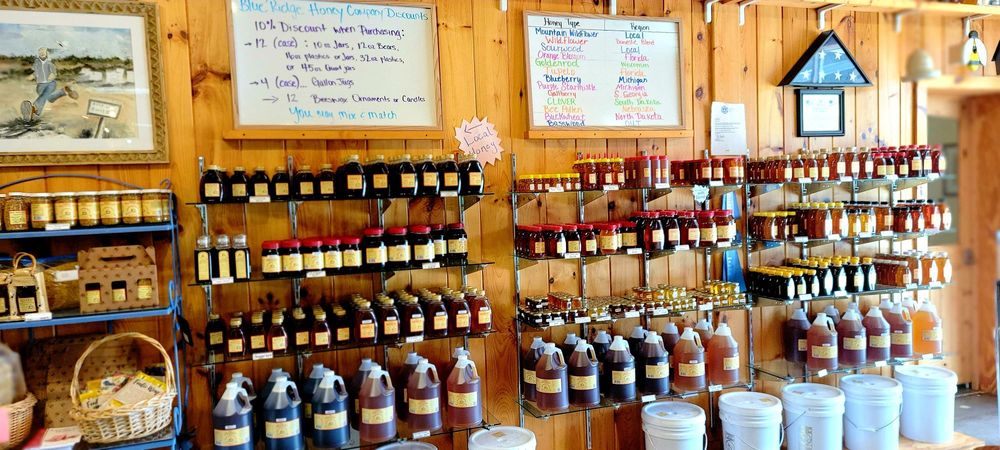
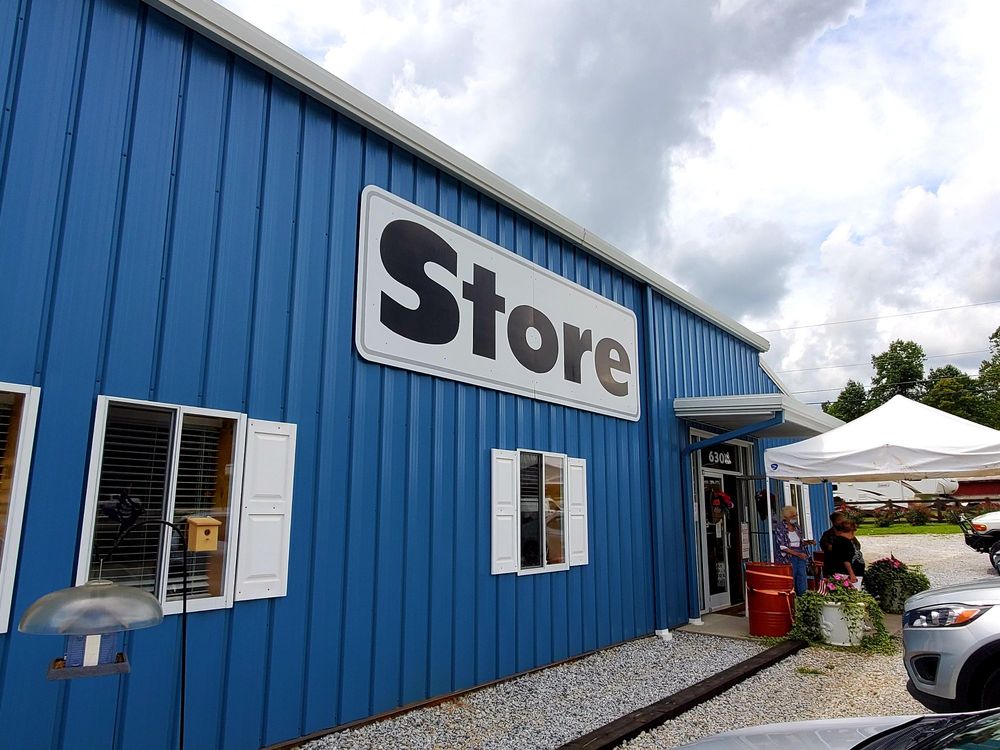
    Blue Ridge Honey Company Store, Lakemont Georgia
    Blue Ridge Honey Company Store, Lakemont Georgia

    Blue Ridge Honey Company Orange Blossom Honey

    The Honey Review

    Blue Ridge Honey Company Orange Blossom Honey
    Honey
    Color
    Aroma
    Flavor
    Texture

    Review Summary

    Blue Ridge Honey Company Orange Blossom Honey stands out as a bright, citrus‑forward raw honey sourced from Florida’s fragrant orange groves. Its clarity, warm golden‑amber color, and smooth, medium‑thick texture reflect careful handling and genuine purity. The aroma opens with lush citrus blossom notes—fresh orange zest, white flowers, and warm nectar—while the flavor delivers a balanced sweetness with a clean, refreshing finish touched by subtle orange peel. Versatile and naturally vibrant, this honey shines in teas, yogurt, cheeses, baked goods, and glazes. Overall, it’s a clean, fragrant, and beautifully balanced orange blossom honey crafted by trusted beekeepers committed to quality.

    4.6
  • The Little Beekeeper : Elderberry Syrup Review

    The Little Beekeeper : Elderberry Syrup Review

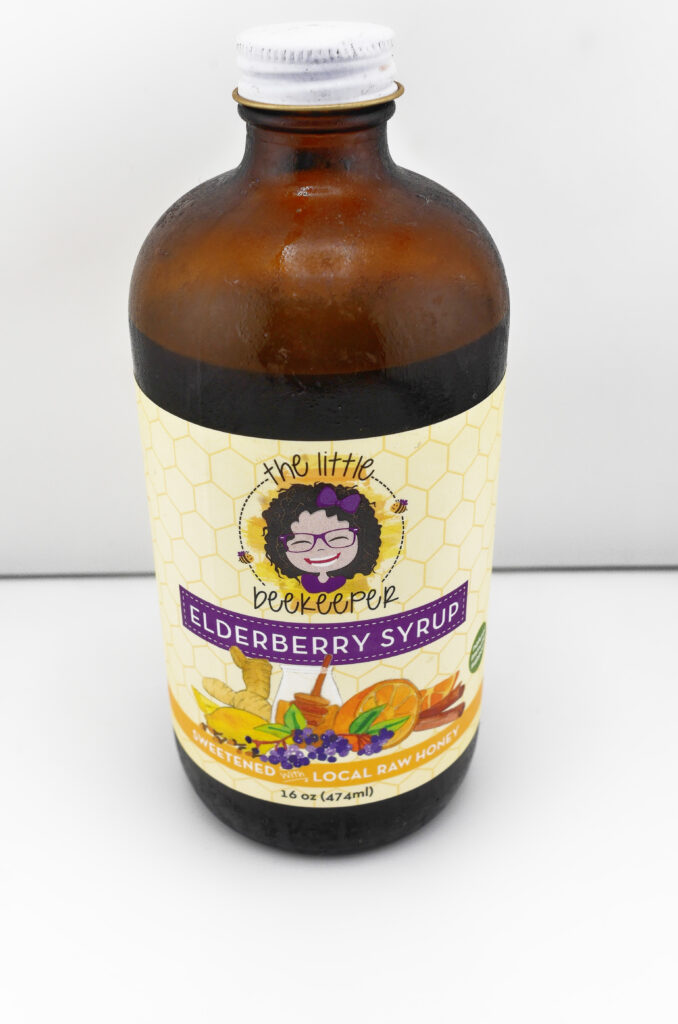
    As a beekeeper and honey enthusiast based in Charlotte, NC, I am always on the lookout for high-quality, natural products that support wellness. It’s even better when they’re locally sourced. The 16oz Organic Premium Elderberry Syrup – The Little Beekeeper has truly impressed me. It’s great all year long, but especially during the fall season.

    About The Little Beekeeper

    • Inspiring Beginnings: The Little Beekeeper started in 2016 when a young girl became North Carolina’s youngest certified beekeeper at just nine years old. Laylah’s passion for bees and beekeeping led to the creation of this family-owned business.
    • Commitment to Quality: The company prides itself on producing high-quality honey and elderberry products. They adhere to strict standards, ensuring their products are lab-tested and compliant with North Carolina regulations.
    • Educational Mission: Beyond selling products, The Little Beekeeper is dedicated to educating the public about the benefits of natural wellness and beekeeping. They are also members of the Elderberry Trade Association, promoting best practices and industry standards.
    • Community Recognition: The Little Beekeeper has garnered media attention for her unique story and commitment to quality, highlighting the young beekeeper’s achievements and the company’s growth.

    Laylah gained Media Attention!

    9-year-old girl is Gaston County’s youngest certified beekeeper (wbtv.com)
    Lincoln Times News Article
    the little beekeeper, elderberry syrup, observation hive, kids,

    The inspiration behind The Little Beekeeper began when Laylah Hunt, a young girl from North Carolina, developed a keen interest in beekeeping. Her journey started when she attended beekeeping classes with her mom. Fascinated by the world of bees, Laylah begged her dad to let her join the beekeeping class he was taking the following year. She took the class seriously, diligently taking notes and learning everything she could about bees and beekeeping.

    Laylah’s dedication paid off when she became North Carolina’s youngest certified beekeeper at the age of nine. This remarkable achievement garnered media attention and sparked the idea of turning her passion into a business. Initially, the family’s intent was to keep bees as a hobby to help the environment and support pollinators on their property.

    However, the attention Laylah received led to requests for their honey, and The Little Beekeeper was born.

    The business has since grown, with Laylah and her family managing over 40 bee hives across the state. They are committed to producing high-quality, natural honey and elderberry products while educating the public about the benefits of beekeeping and natural wellness.

    Benefits of Raw Honey Products

    Some of the benefits of raw honey products are:

    Laylah also shares her point of view on the benefits of Raw Honey in your Kitchen

    Benefits of Elderberry

    elderberry bush, nature, pollination, health,
    1. Boosts Immune System: Elderberries are rich in antioxidants and vitamins, particularly vitamin C, which help strengthen the immune system.
    2. Reduces Cold and Flu Symptoms: Elderberry supplements can help reduce the severity and duration of cold and flu symptoms, such as fever, headache, sore throat, and fatigue.
    3. Anti-Inflammatory Properties: The flavonoids in elderberries have anti-inflammatory effects, which can help reduce inflammation in the body.
    4. Supports Heart Health: Elderberries may help lower cholesterol levels and improve heart health by reducing oxidative stress and inflammation.
    5. High in Nutrients: Elderberries are low in calories but high in dietary fiber, vitamin C, and other essential nutrients, making them a nutritious addition to your diet.
    6. Antioxidant Power: Elderberries contain powerful antioxidants that protect cells from damage caused by free radicals, potentially reducing the risk of chronic diseases.
    7. May Improve Skin Health: The antioxidants and vitamins in elderberries can help improve skin health by reducing oxidative stress and promoting healthy skin.
    8. Aids Digestion: The high fiber content in elderberries can support digestive health and regularity.
    9. May Help Manage Diabetes: Some studies suggest that elderberries may help regulate blood sugar levels, which can be beneficial for managing diabetes.
    10. Promotes Respiratory Health: Elderberries have been used traditionally to support respiratory health and alleviate symptoms of respiratory infections.

    Read it from the Little Beekeeper herself!

    First Impressions

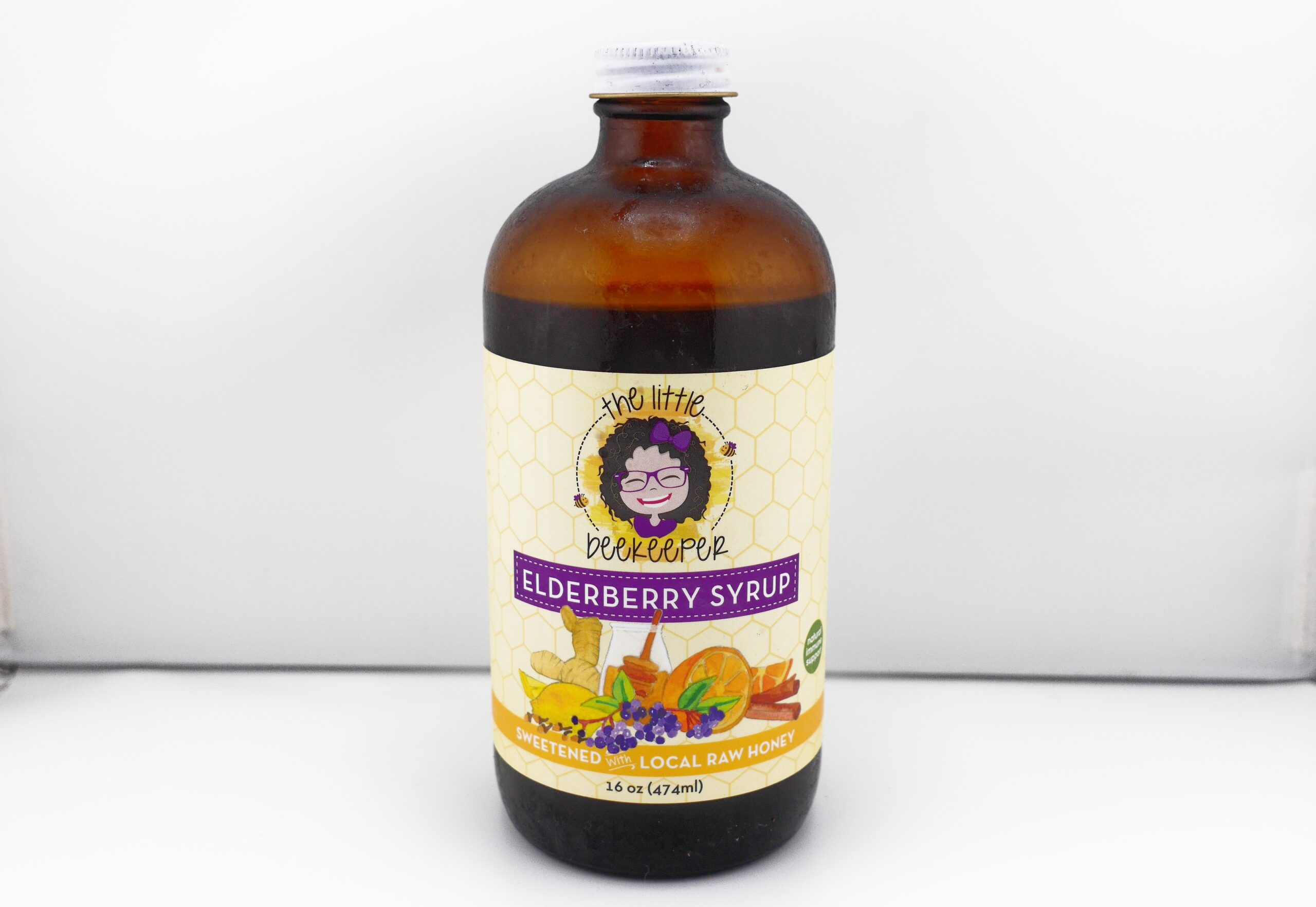
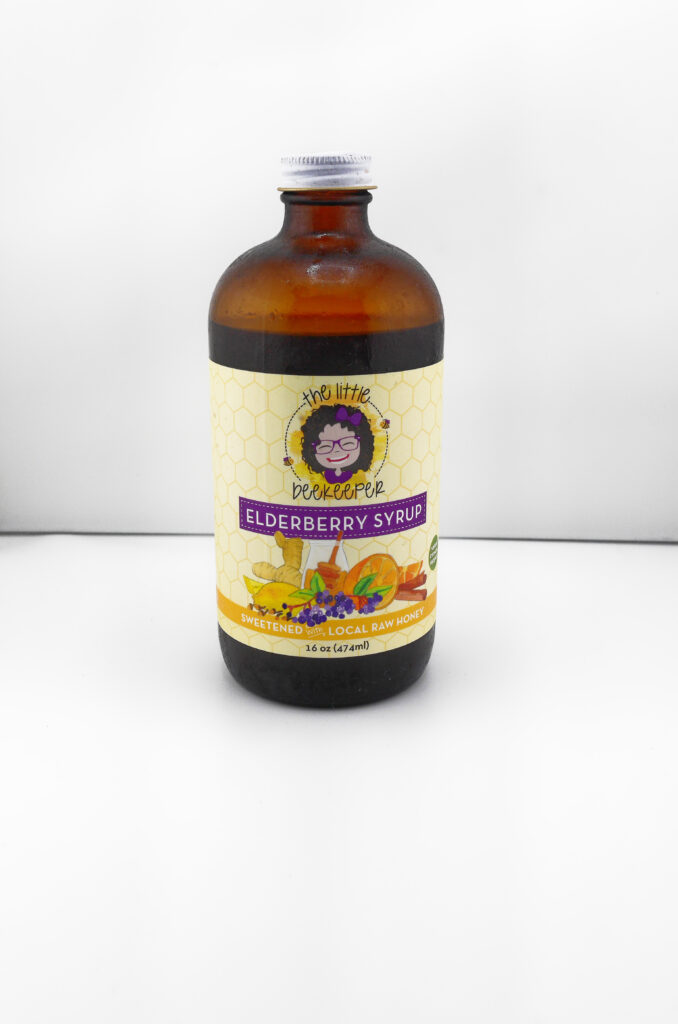
    The syrup comes in a sturdy, recyclable amber glass bottle, which not only looks appealing but also helps preserve the freshness of the ingredients. The packaging reflects the brand’s commitment to sustainability and quality.

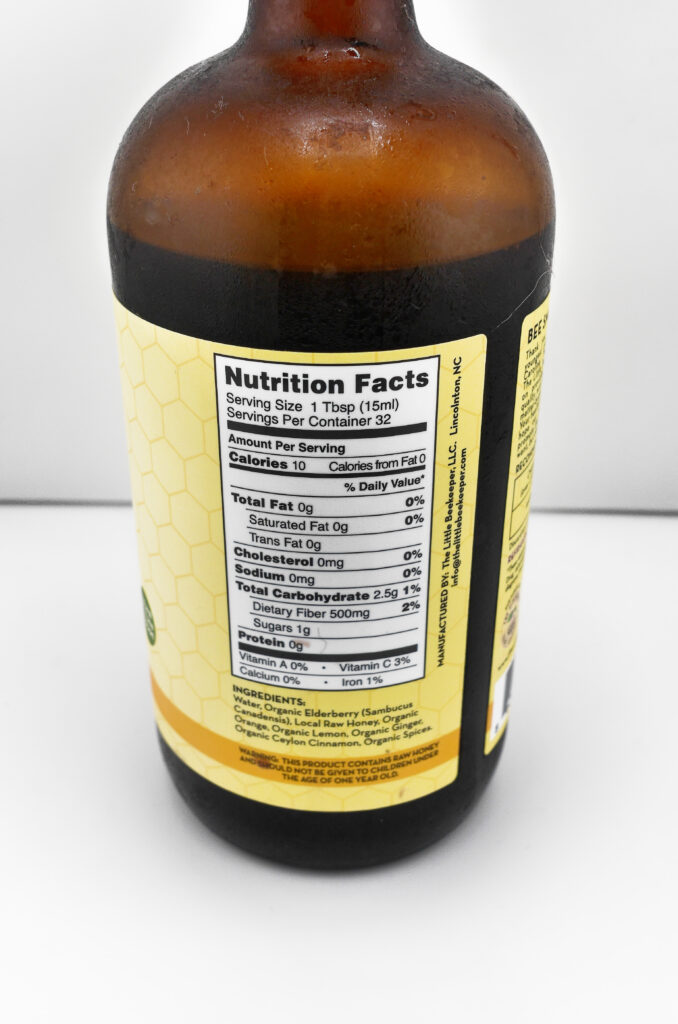
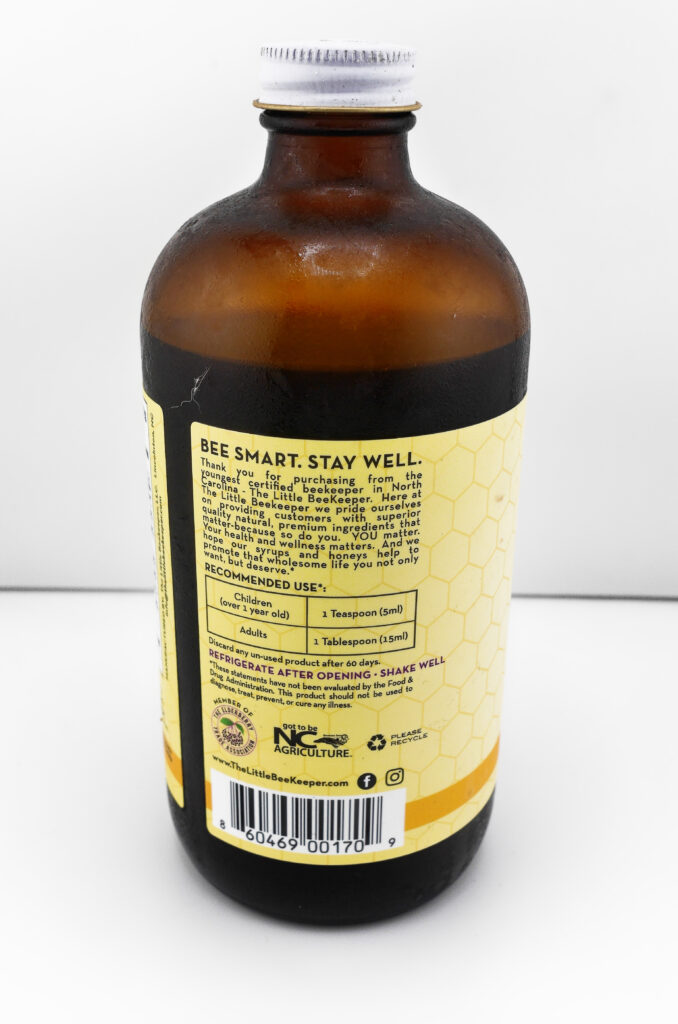
    The Little Beekeeper Elderberry Syrup, The Honey Review

    Product Summary

    Ingredients and Taste

    This syrup is a delightful blend of organic elderberries, raw honey, citrus, and a medley of spices including cloves, ginger, and Ceylon cinnamon. The taste is a perfect balance of sweet and tangy, with a hint of spice that makes it enjoyable to take daily. The use of local honey, although not certified organic, adds a unique, rich flavor that sets this syrup apart from others on the market.

    Health Benefits

    As someone who values natural remedies, I appreciate the immune-boosting properties of elderberries combined with the anti-inflammatory and antibacterial benefits of the spices. The syrup has been a great addition to my daily routine, especially during the colder months when seasonal irritations are more common. I’ve noticed a significant improvement in my overall wellness since incorporating it into my diet.

    Usage and Storage

    The suggested daily intake is straightforward—1 tablespoon for adults and 1 teaspoon for children over one year. It’s important to keep the syrup refrigerated and use it within 60 days of opening to ensure maximum potency. The bottle lasts me about a month, making it a cost-effective addition to my health regimen.

    Conclusion

    The 16oz Organic Premium Elderberry Syrup – The Little Beekeeper is a fantastic product that combines the best of nature’s ingredients with the care and expertise of passionate beekeepers. It’s a must-have for anyone looking to support their immune system naturally.

    How to Purchase and Support Laylah’s Products

    You can purchase The Little Beekeeper’s products directly from their website. Here’s how you can get their products:

    You’ll find a variety of products like Wildflower Raw Honey, Comb Honey, Bulk Honey, Gift Sets, Elderberry infused Honey, Elderberry Syrup, and even Elderberry Gummies.

    1. Visit Their Website: Head over to The Little Beekeeper’s website.
    2. Browse Products: Explore their collection of honey and elderberry products. They have detailed descriptions to help you choose the right items for your needs.
    3. Add to Cart: Select the products you want and add them to your cart.
    4. Checkout: Follow the checkout process to complete your purchase. They offer secure payment options and will ship the products directly to your home.

    Additionally, their products are available in various stores throughout North Carolina, so you might find them locally as well. I purchased mine from the Charlotte Regional Farmers Market at Apotheca for about $25.

    Other great Honey Products to check out:

  • How to Identify Real Raw Honey: 6 Tips and Tricks

    How to Identify Real Raw Honey: 6 Tips and Tricks

    So, you’ve got a jar of honey, and you’re wondering, “Is this the real deal or just a sugary imposter?” Fear not, honey sleuth! We’ve got your back. Let’s dive into the sticky world of raw honey detection. You’re going to learn how to Identify Raw Honey!

    Keep it Real,
    Keep it Raw,


    Bees on frame

    The Cloudy Clue

    • Raw Honey: Imagine a misty morning in the beehive. Raw honey is like that—cloudy, mysterious, and full of secrets. If your honey looks a bit hazy, you’re on the right track.
    • Processed Honey: Clear as a crystal ball? That’s processed honey. It’s so transparent, it could moonlight as a windowpane.
    how to identify raw honey and what to look for, doom bloom honey, thehoneyreview.com

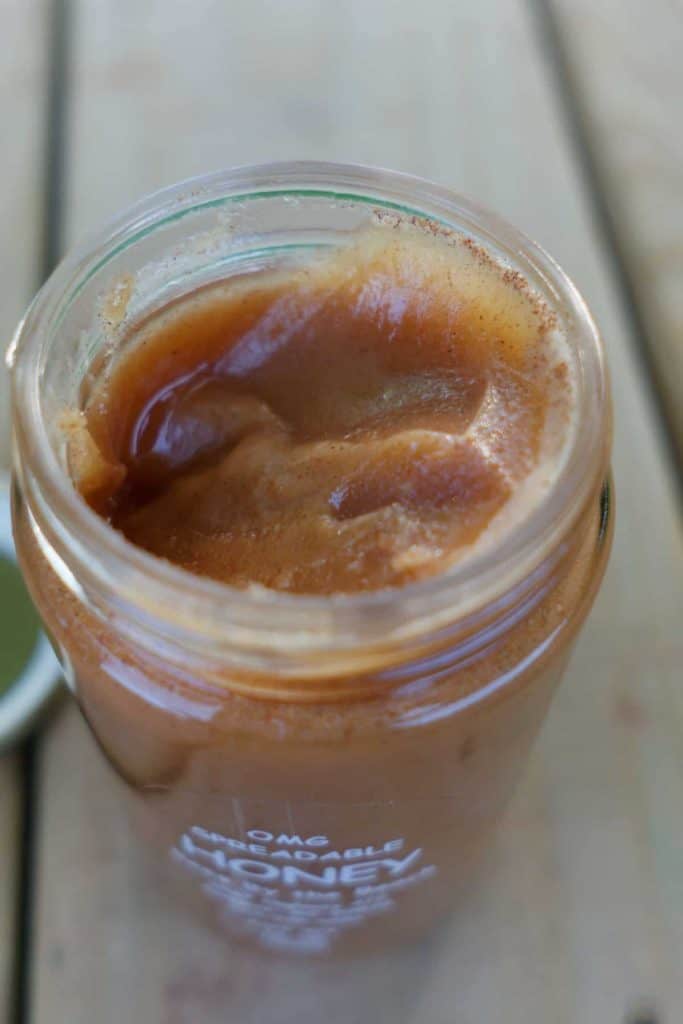
    See the sediment at the bottom of the jar? That’s proof of legit Honey. Raw Honey is approximately 40% fructose, 30% glucose and 17% water, with the remainder being other sugars, carbohydrates and a small number of vitamins and minerals.

    Crystal Quest

    • Raw Honey: Over time, raw honey gets cozy and forms tiny crystals. It’s like nature’s bling. So, if your honey has a little crunch, it’s legit.
    • Processed Honey: Smooth as a dance floor? Processed honey stays liquid, refusing to join the crystal party.
    Creamed Honey thehoneyreview.com identifying honey

    You may even find some Honey that is “Whipped” or “Creamed”. This is just blended crystallized Honey.

    There is no reason to toss a Jar of crystallized Honey. If you’re not patient enough to slow heat the jar with water (DO NOT MICROWAVE IT) just grab a knife and start stirring.

    Texture Tells

    Manuka Honey Texture of Honey, How to Identify Raw Honey
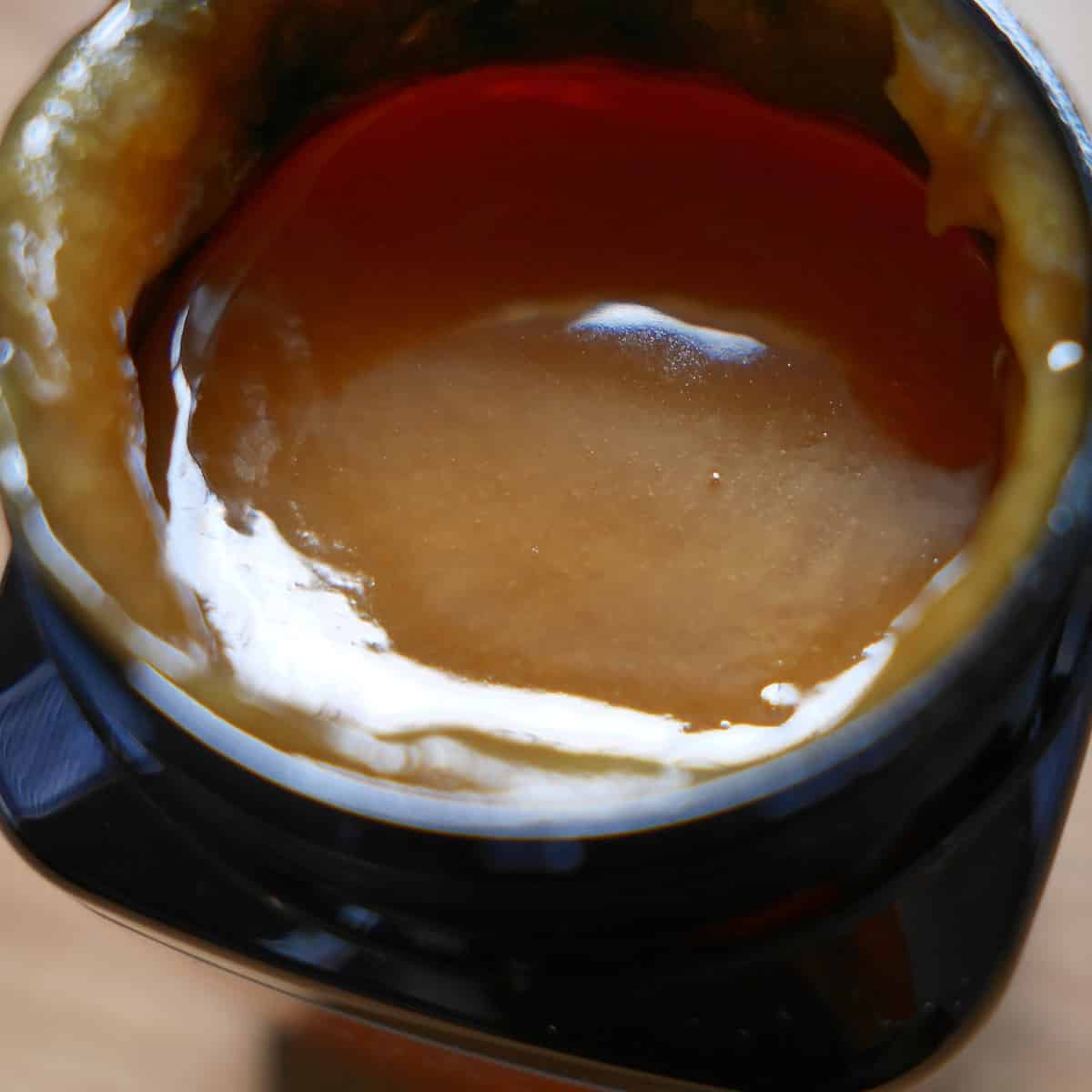
    • Raw Honey: Picture this: raw honey doing the cha-cha with your spoon. It’s thick, grainy, and unapologetically rustic.
    • Processed Honey: Processed honey waltzes—silky, suave, and oh-so-smooth. It’s the James Bond of honeys.
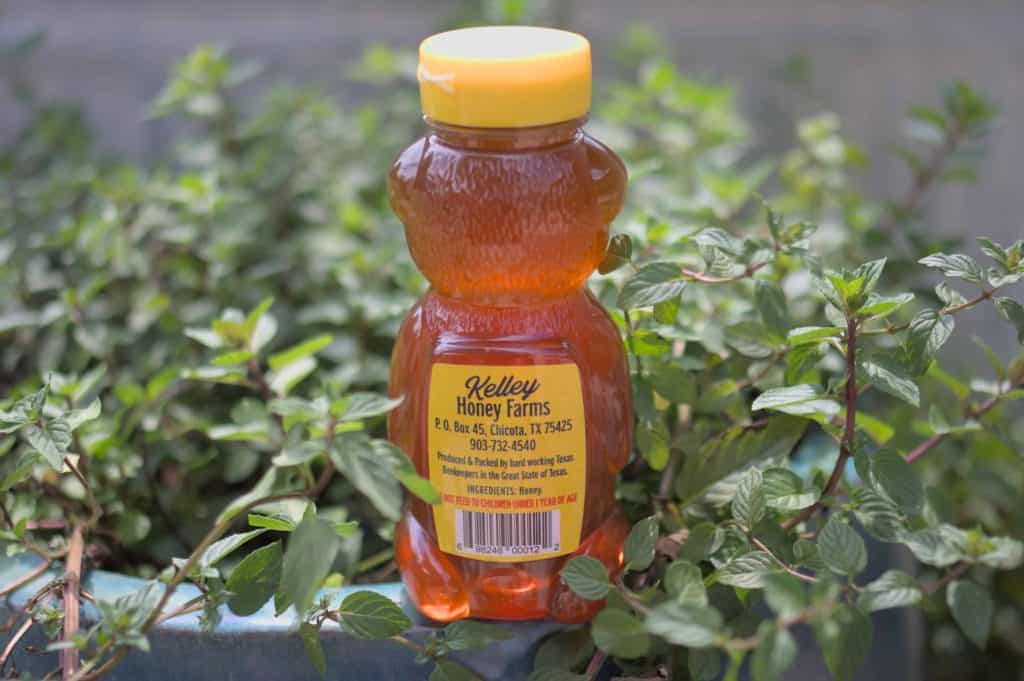
    kelleys local raw texas honey the honey review

    Sediment Story

    • Raw Honey: Sometimes, raw honey brings along souvenirs—tiny pollen particles, propolis bits, and even a honeycomb crumb or two. It’s like a nature hike in a jar.
    • Processed Honey: No surprises here. Processed honey keeps it clean—no pollen hitchhikers allowed.

    Color Contest

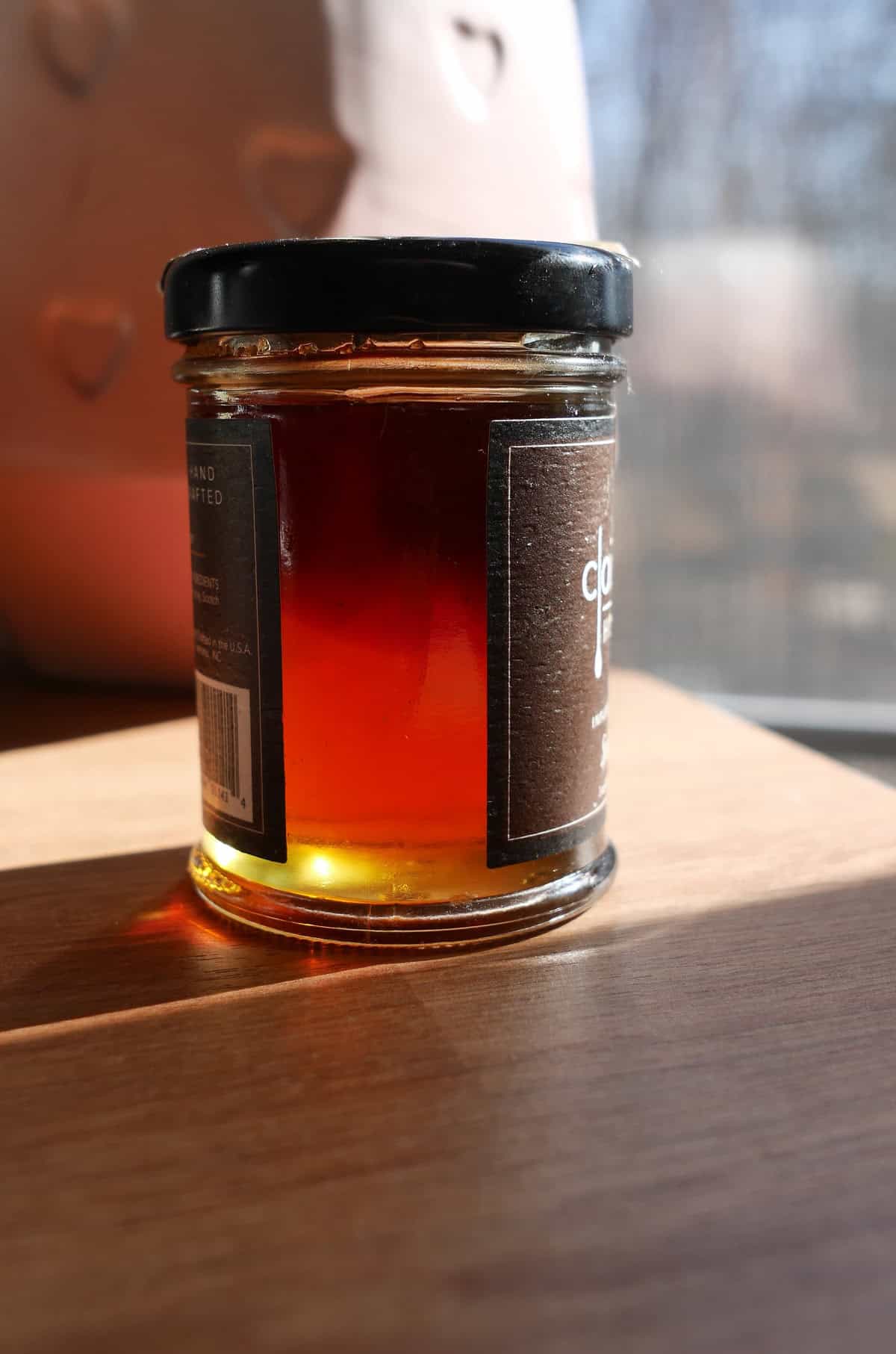
    • Raw Honey: Shades of gold! Raw honey flaunts its natural hues—light golden, amber, or deep caramel. It’s like a sunset in a spoon.
    • Processed Honey: Pale and proud. Processed honey sticks to a single shade, like a minimalist art exhibit.
    cloister honey how to identify raw honey thehoneyreview.com

    Aroma Adventure

    • Processed Honey: Mild-mannered or scentless? Processed honey lacks that floral flair. It’s the introvert at the honey party.
    • Raw Honey: Close your eyes and sniff. Raw honey smells like a wildflower meadow after rain—a symphony of blossoms. It’s the bee’s knees.
    • Also check out the Benefits of Propolis

    Conclusion: Remember, honey detective, these clues aren’t foolproof. For the real McCoy, buzz over to local beekeepers or trusted sources. They’ll serve you the sweet truth. I hope these tips help you Identify Raw Honey near you.

    To identify real raw honey, consider these key factors:

    1. Stickiness: Real honey feels soft and velvety, not sticky like cheap syrup. If it’s sticky, it might be adulterated.
    2. Viscosity: Authentic honey is thick and pours slowly, while processed honey flows more like a liquid.
    3. Taste Persistence: Real honey’s taste doesn’t linger; it dissolves with saliva. Fake honey tastes sweet for longer.
    4. Flavors and Scents: Monofloral honeys have unique flavors. For example, sunflower honey has an oily characteristic.

    Remember, the best way to ensure purity is to buy from trusted sources like local beekeepers or reputable brands.

    Some of my favorite Honey available is: TREE HIVE® Breakfast, Home | Moon’s Honey House, Cloister Honey – Artisan Honey and Gifts, Two Hives Honey
    Recent Reviews

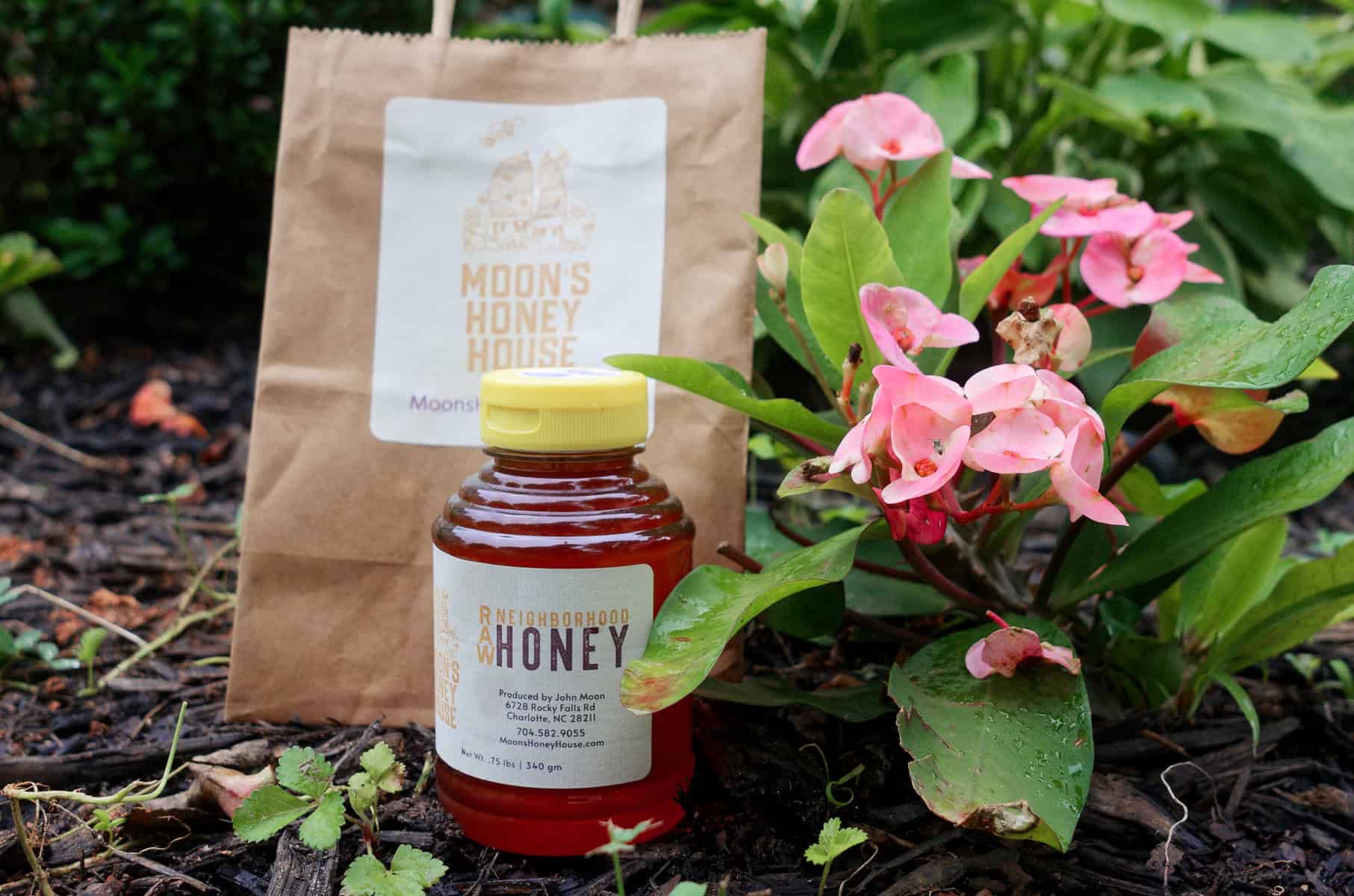
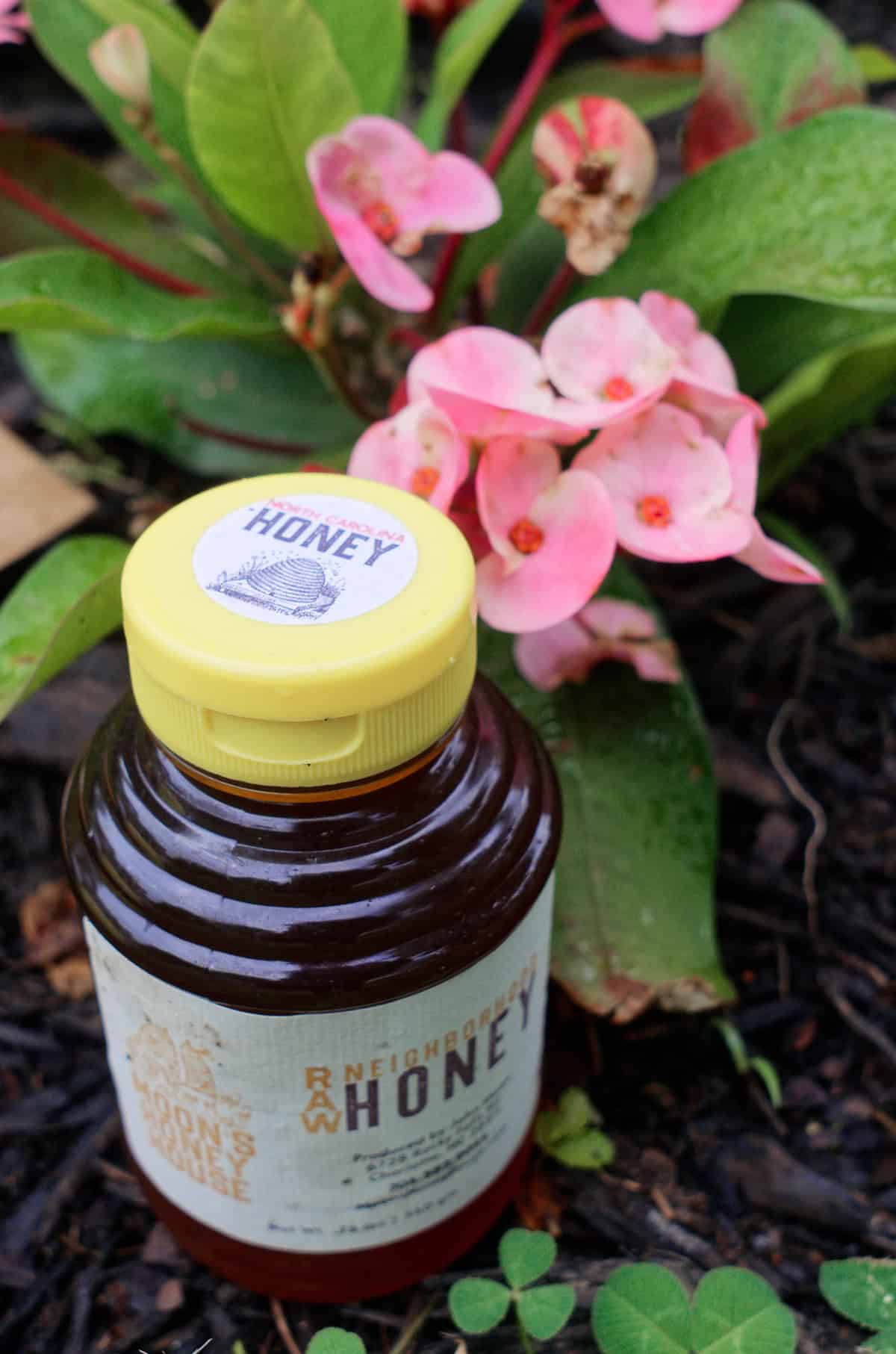
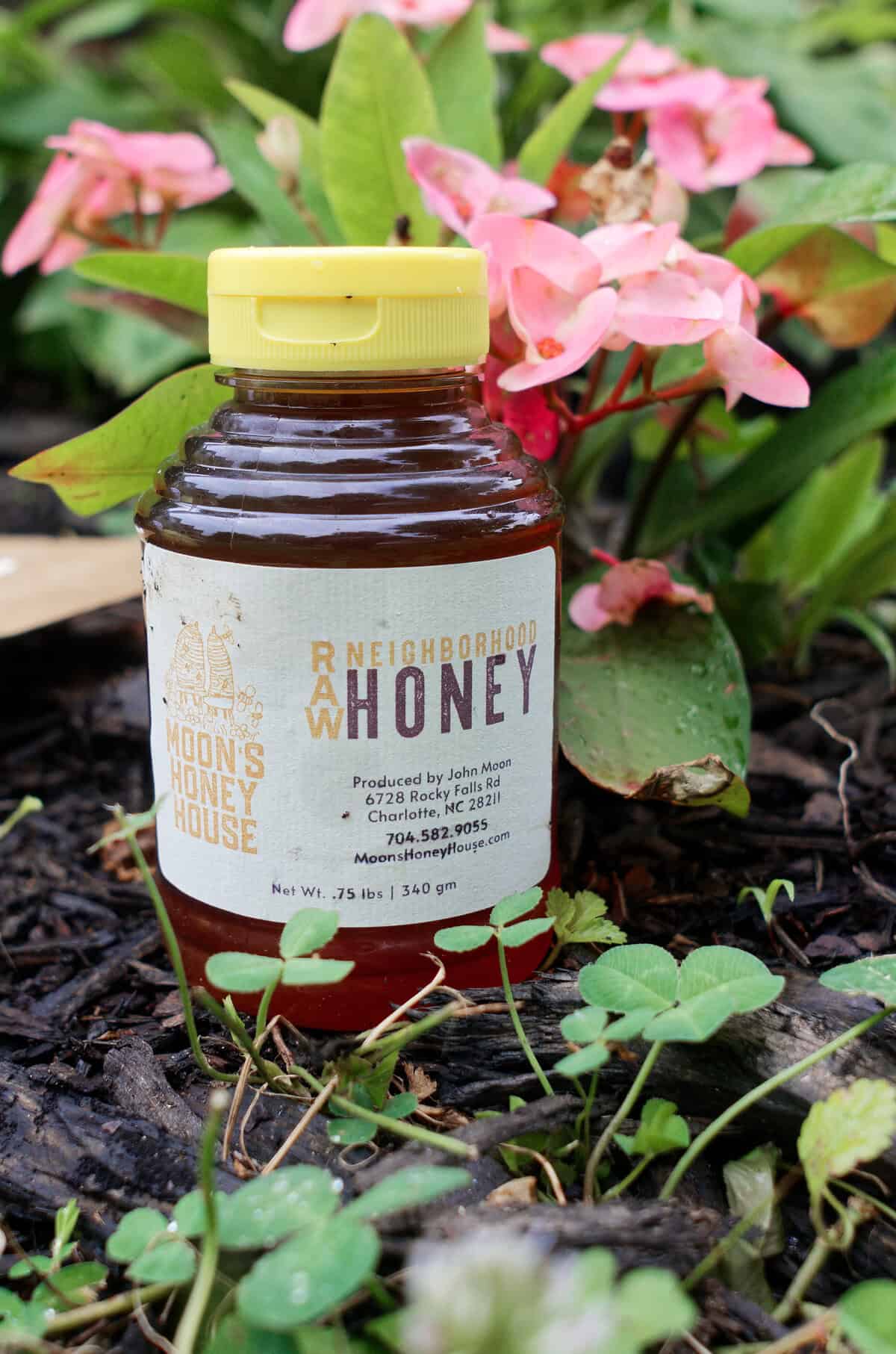
  • Moon’s Honey House | Neighborhood Raw Honey Review
    Moon’s Honey House | Neighborhood Raw Honey Review

    Since 1952, Moon’s Honey House has been a trusted family-owned and operated business. Their exquisite collection includes local honey, meticulously crafted beeswax creations, and unique handmade gifts. It’s a delightful destination for those who appreciate quality and authenticity.

    Benefits of Raw Honey Products

    Some of the benefits of raw honey products are:

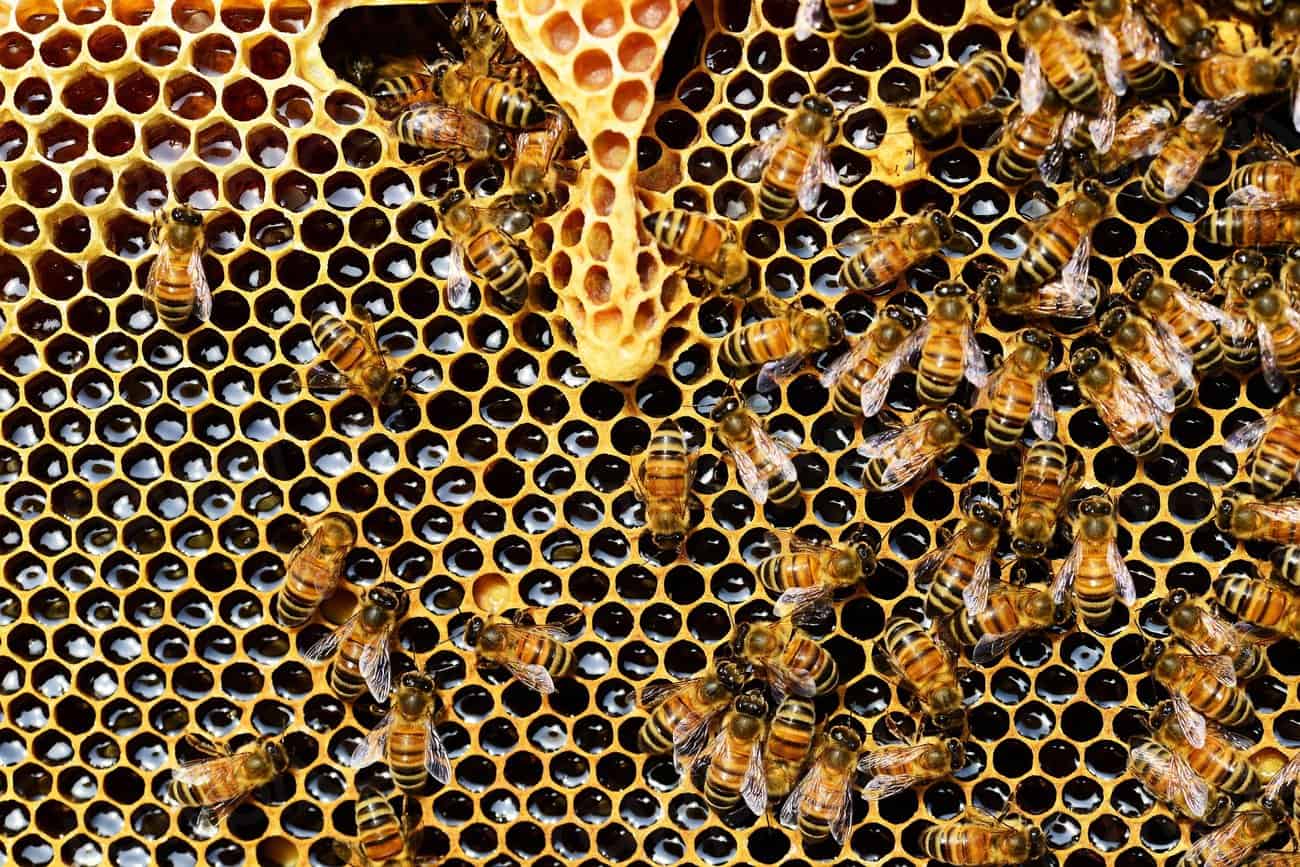
    Honey bees“/ CC0 1.0

    Moon’s Honey House Neighborhood Honey

    Introduction

    Moon’s Honey House, nestled in the heart of Charlotte, North Carolina, is more than just a honey purveyor—it’s a sweet haven where bees work their magic. As I stepped up to their charming shop at the Charlotte Regional Farmers Market, the air hummed with the promise of liquid gold. Here’s my take on their Neighborhood Raw Honey:

    Flavor Profile

    Botanical Notes

    Moon’s Honey House Neighborhood Raw Honey boasts a harmonious blend of floral notes:

    • Wildflowers: These contribute delicate sweetness, reflecting diverse local flora.
    • Clover: The honey carries mild herbal undertones from clover nectar.
    • Orange Blossoms: The essence of citrus-kissed air infuses the honey.
    Earthy Undertones

    Beneath the floral layers lies a subtle complexity:

    • Dew-Kissed Grass: Freshness reminiscent of morning dew.
    • Sun-Warmed Soil: Earthiness rooted in Carolina terroir.

    Texture

    Viscosity

    When it hits your tongue, it’s like Grandma’s warm hug. The honey wraps itself around your taste buds, sayin’, “Hey there, darlin’, I’m here to stay.” You’ll wanna roll it around, let it linger like a good gossip.

    Satin-like

    Swirl it like you’re dancin’ at the county fair. It’s like wearin’ a satin robe made of sweetness. Not heavy, not light—just perfect. The bees must’ve taken etiquette lessons, ’cause this honey knows how to beehave.

    Get it? Beehave?

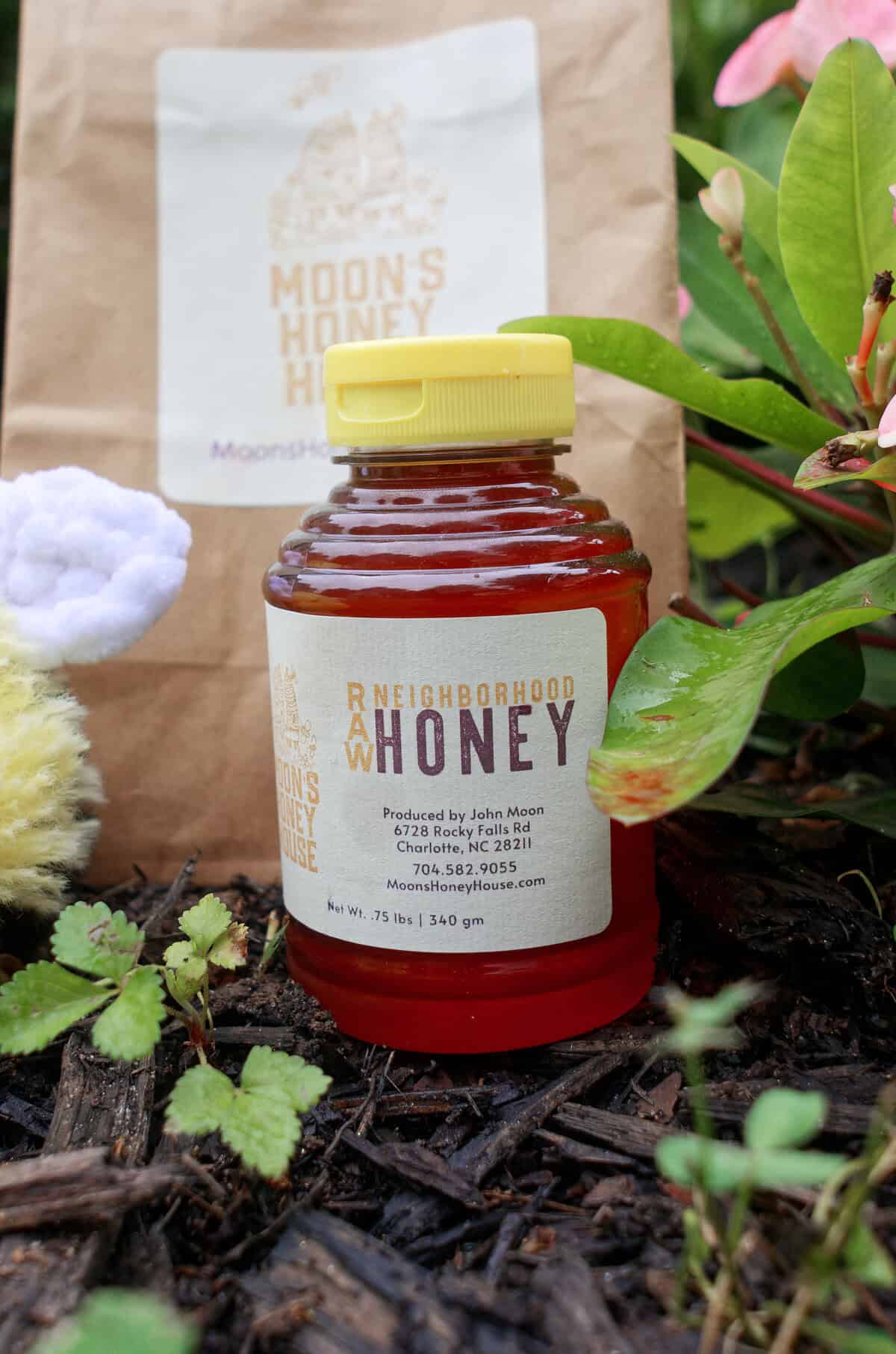
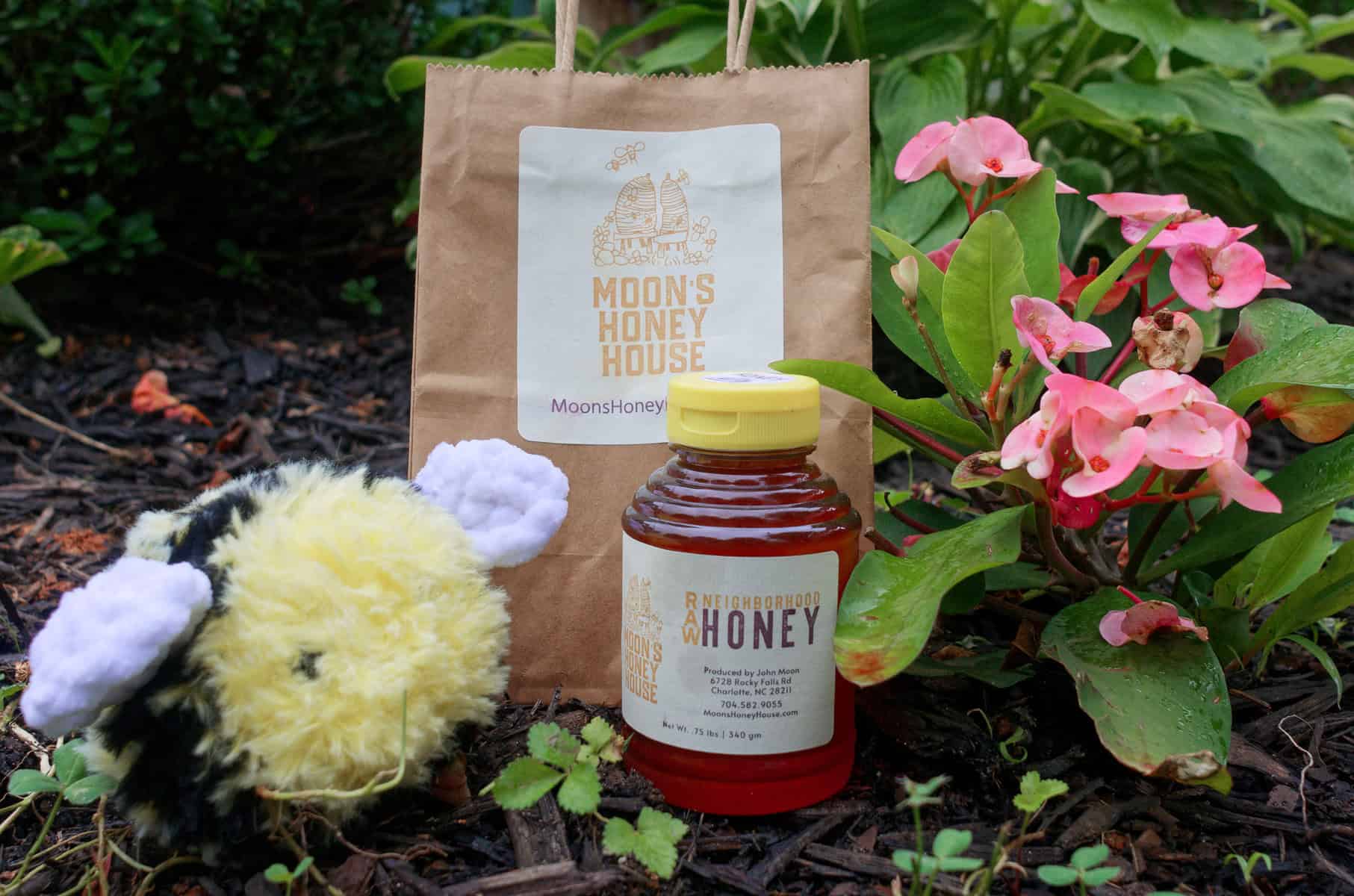
    Moon's Honey House Raw Neighborhood Honey plush bee and gift bag purchased from charlotte regional farmers market

    Pairings

    1. Morning Toast: Drizzle this liquid gold over warm toast or biscuits. It’s like a sweet sunrise on your plate.
    2. Tea Time: Stir it into your favorite cup of tea. The honey melts, adding a touch of sweetness to your afternoon ritual. Just be sure you wait a little bit or the boiling water will kill all the benefits of your honey.
    3. Cheese and Honey: Grab some sharp cheddar or creamy goat cheese. Spread a little honey on top—it’s a match made in flavor heaven.
    4. Yogurt Parfait: Layer it with Greek yogurt, granola, and fresh berries. The honey adds a natural sweetness that’ll make your taste buds sing.
    5. Peanut Butter Sandwich: Swap out the jelly for honey. Trust me, your PB&J game just leveled up.
    6. Oatmeal Upgrade: Drizzle honey over your morning oatmeal. It’s like a cozy hug for your taste buds.

    Pro Tip

    Apples help clear your taste buds if you go buck wild pairing Honey with things.

    Sustainability and Local Impact

    Varietal Honeys: Moon’s Neighborhood 24 stands out with its extra-white honey, offering sweet and fruity flavors. Perfect for drizzling on Greek yogurt or blending into your morning smoothie for a taste of Charlotte’s sunshine.

    Crafts and Skin Care: They also create beeswax candles, lotions, and lip balms, providing a natural touch to your self-care routine.

    Local Love: Moon’s Honey House sources their Very Local Honey from Myers Park and nearby areas. The bees work their magic, delivering sweet, local flavors for you to enjoy.

    Price

    • Neighborhood 24: $9.00 – $18.00
    • Ocala: $9.00 – $18.00
    • Pee Dee Wildflower: $9.00 – $18.00
    • Hot Honey: $11.00 – $20.00
    • Poplar: $9.00 – $18.00
    • Knob Hill Wildflower: $12.00

    It looks like the prices range from $9.00 to $20.00, depending on the type of honey. Is there a specific one you’re interested in?

    Packaging and Appearance

    Moon's Honey House Raw Neighborhood Honey Review
    Moon’s Honey House Raw Neighborhood 24′ Honey

    Neighborhood Raw Honey

    moon's honey house raw honey review

    Simplicity

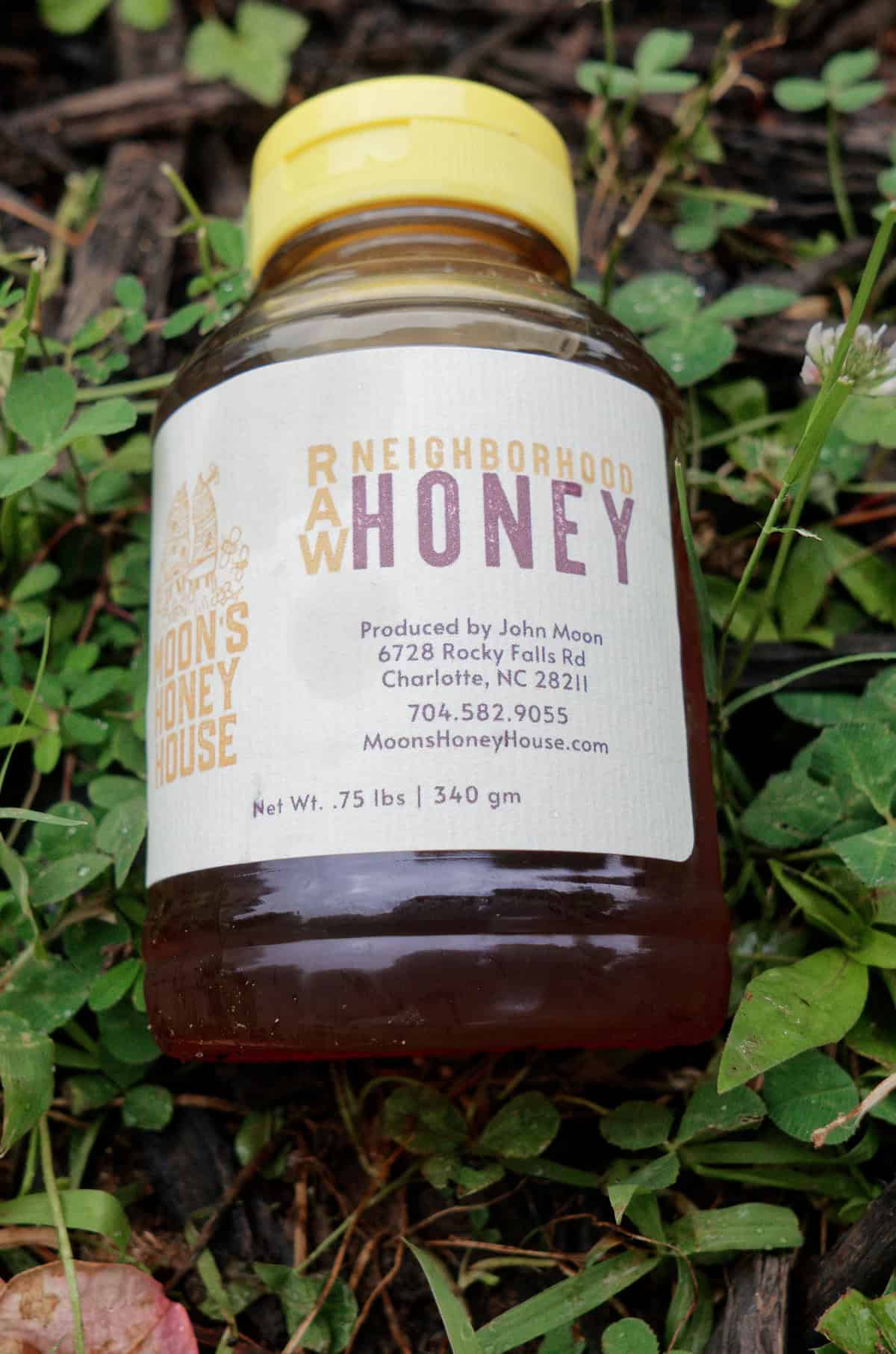
    I like the label simply because it only mentions the essentials. It shows it is produced by John Moon, it lists his address, his phone number and website.
    And the net weight. The label is made of thick paper stock, and he has his cool logo off to the side.

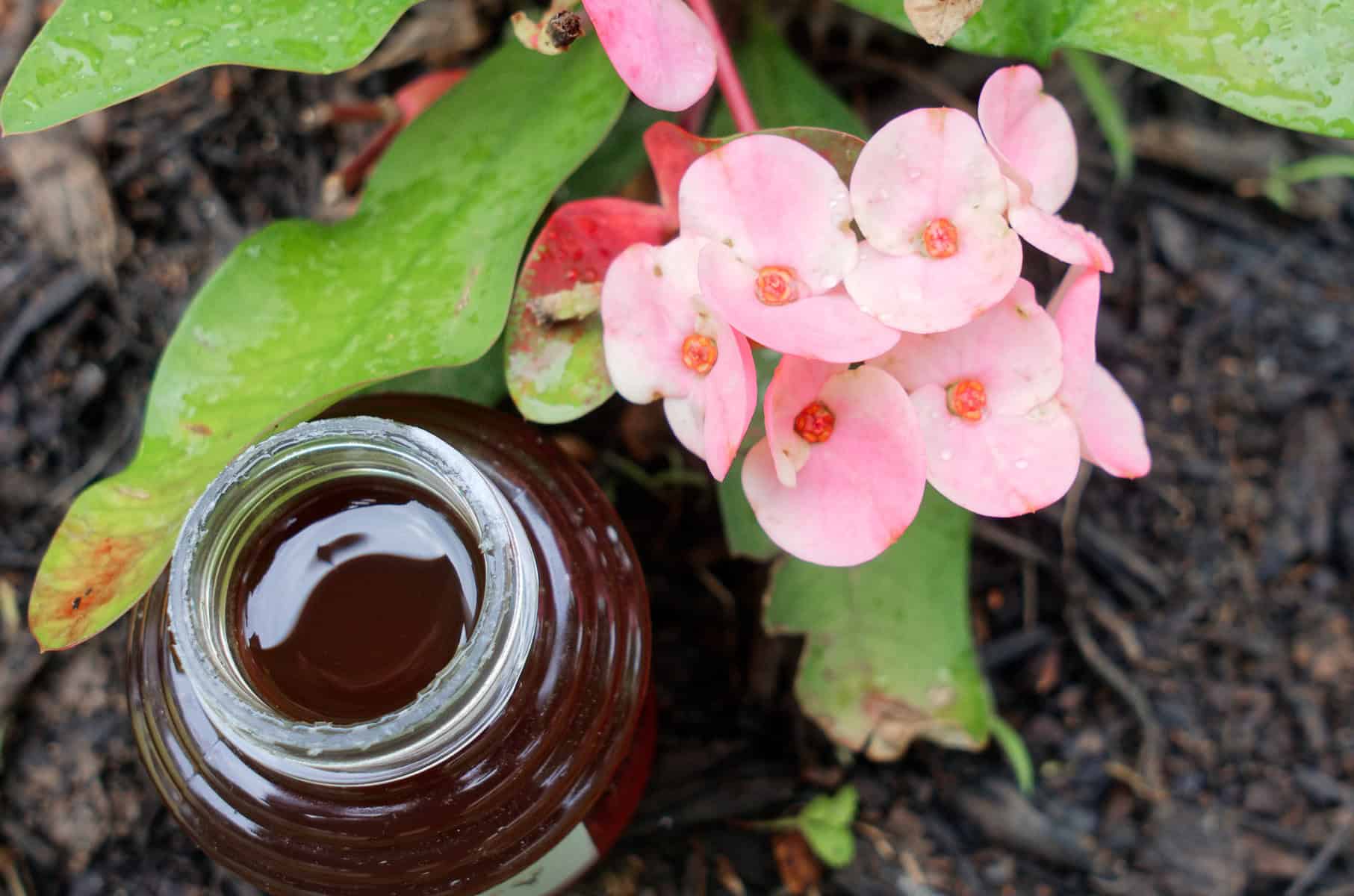
    photo of moon's honey house raw honey opened with flowers

    Conclusion

    Y’all, Moon’s Honey House Neighborhood Raw Honey is more than just a sweet topping—it’s the heart of Charlotte in a jar. Every dip of that spoon is like a warm Southern hug, filled with the sunshine, the blooms, and the bees’ loving labor.

    So, when you find yourself wanderin’ through the Queen City, mosey on down to Moon’s Honey House. Treat your palate to a spoonful of local charm—your taste buds might just do a little jig, and them hardworking bees will sure appreciate it!

    Buying Guide for Raw Honey Products

    Raw honey products are natural sweeteners that are made by honey bees from the nectar of various flowers and plants. They are different from regular honey products because they are not heated, pasteurized, or filtered, which means they retain more of their beneficial enzymes, nutrients, and antioxidants. They also have a more complex and diverse flavor profile, depending on the source of the nectar and the region where the bees live.

    What to look for

    If you are interested in buying raw honey products, here are some factors to consider:

    Type
    Origin
    Label
    Processing Method
    • The processing method of honey refers to the way the honey is extracted, stored, and packaged. The processing method of honey can affect the freshness, purity, and safety of the honey. Some of the best processing methods of honey are:
      • Cold extraction: This method involves extracting the honey from the honeycomb without applying any heat, which preserves the natural enzymes, nutrients, and antioxidants of the honey.
      • Gravity straining: This method involves straining the honey through a coarse filter or a cheesecloth to remove any large impurities, such as wax, pollen, or debris, while keeping the smaller particles intact.
      • Glass jar packaging: This method involves packaging the honey in a glass jar, which is airtight, transparent, and recyclable, and it protects the honey from moisture, light, and oxidation.

    Product Alternatives

    If you are interested in other local honey from Charlotte, you can also check out Cloister Scotch Infused Honey Cloister Bourbon Infused Honey | Cloister Honey and Brandy Infused Honey | Cloister Honey, which are equally delicious and versatile.

    Text?

    Moon’s Honey House Raw Neighborhood Honey

    The Honey Reviewer

    Honey
    Color
    Aroma
    Flavor
    Texture

    Review Summary


    Moon’s Honey House Neighborhood Raw Honey offers a delightful taste of Charlotte, North Carolina. This honey features a harmonious blend of floral notes from wildflowers, clover, and orange blossoms, with subtle earthy undertones reminiscent of dew-kissed grass and sun-warmed soil. Its satin-like texture makes it perfect for drizzling over toast, stirring into tea, or pairing with cheese. The honey is locally sourced, supporting sustainability and community impact. Overall, it’s a sweet, authentic experience that captures the essence of the region
    I was disappointed that there wasn’t more of an aroma to this Honey, like the bourbon infused Honey has. Sometimes these infused Honey’s have incredible smells that really entice the taste buds.

    Overall, unique flavor, very high quality and any Honey connoisseur will love some of Cloister’s offerings. Check out their incredible products from Charlotte, NC below.

    3.7
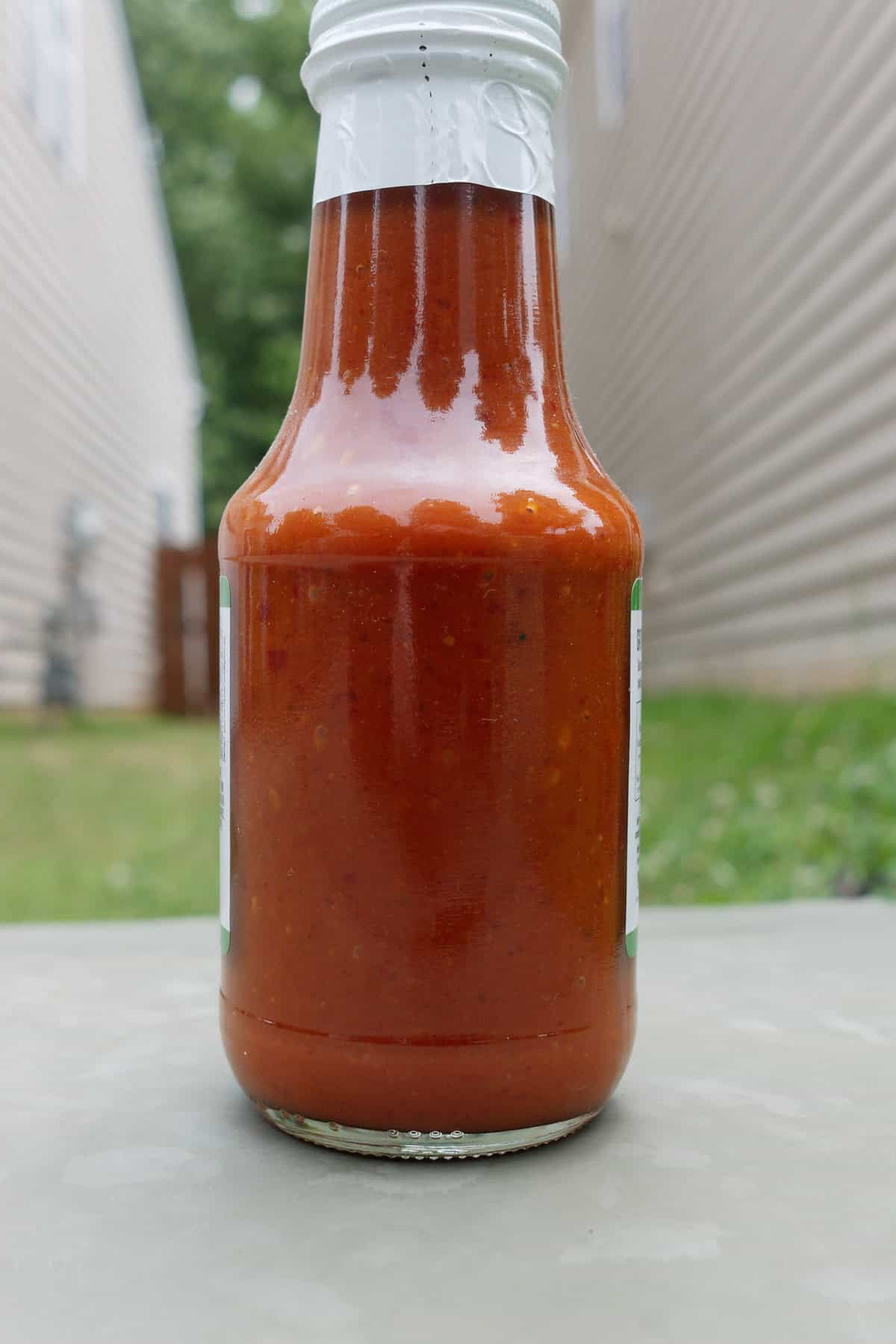
  • Gourmet Hemp Foods | Hemp Honey BBQ Sauce Review

    Gourmet Hemp Foods | Hemp Honey BBQ Sauce Review

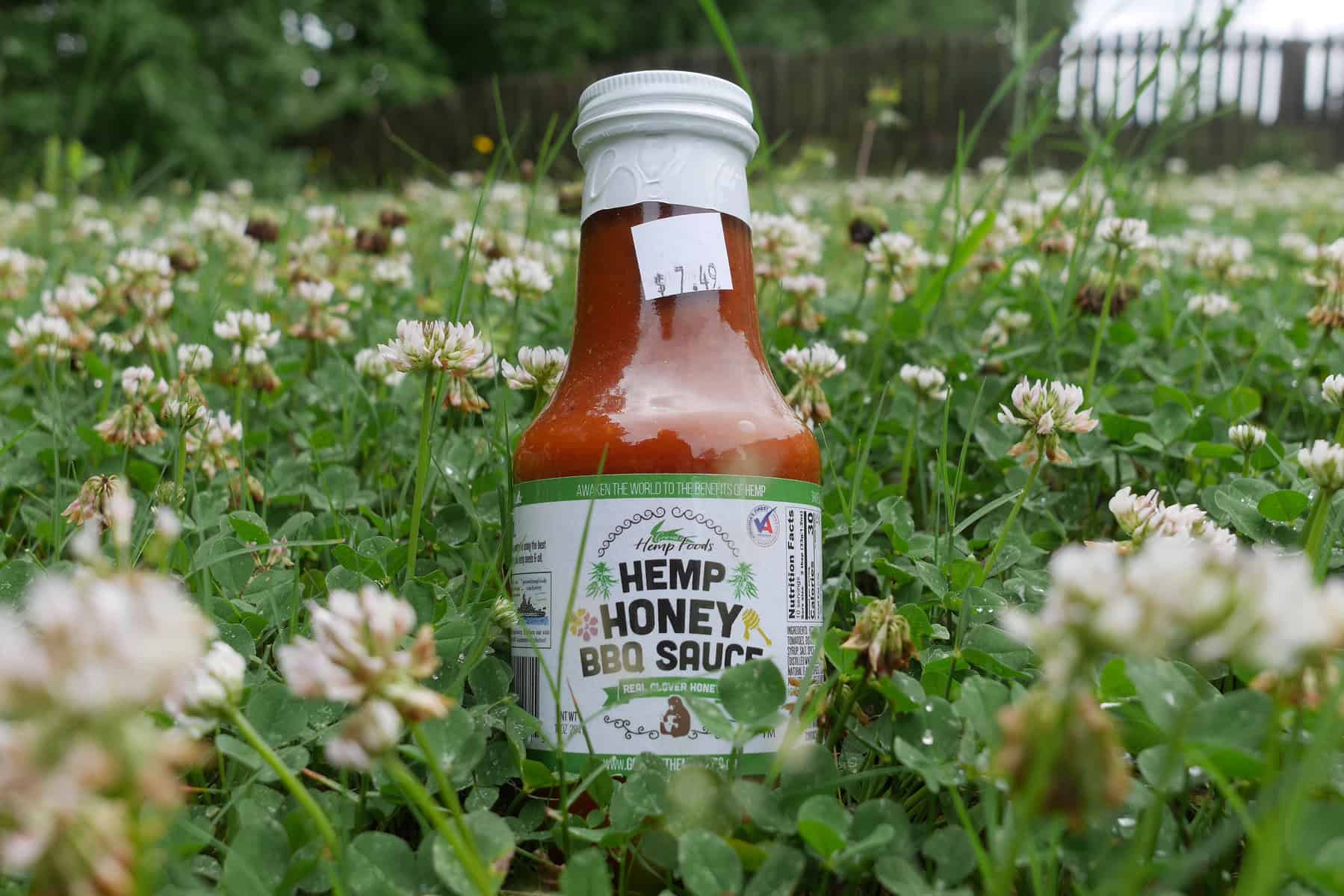
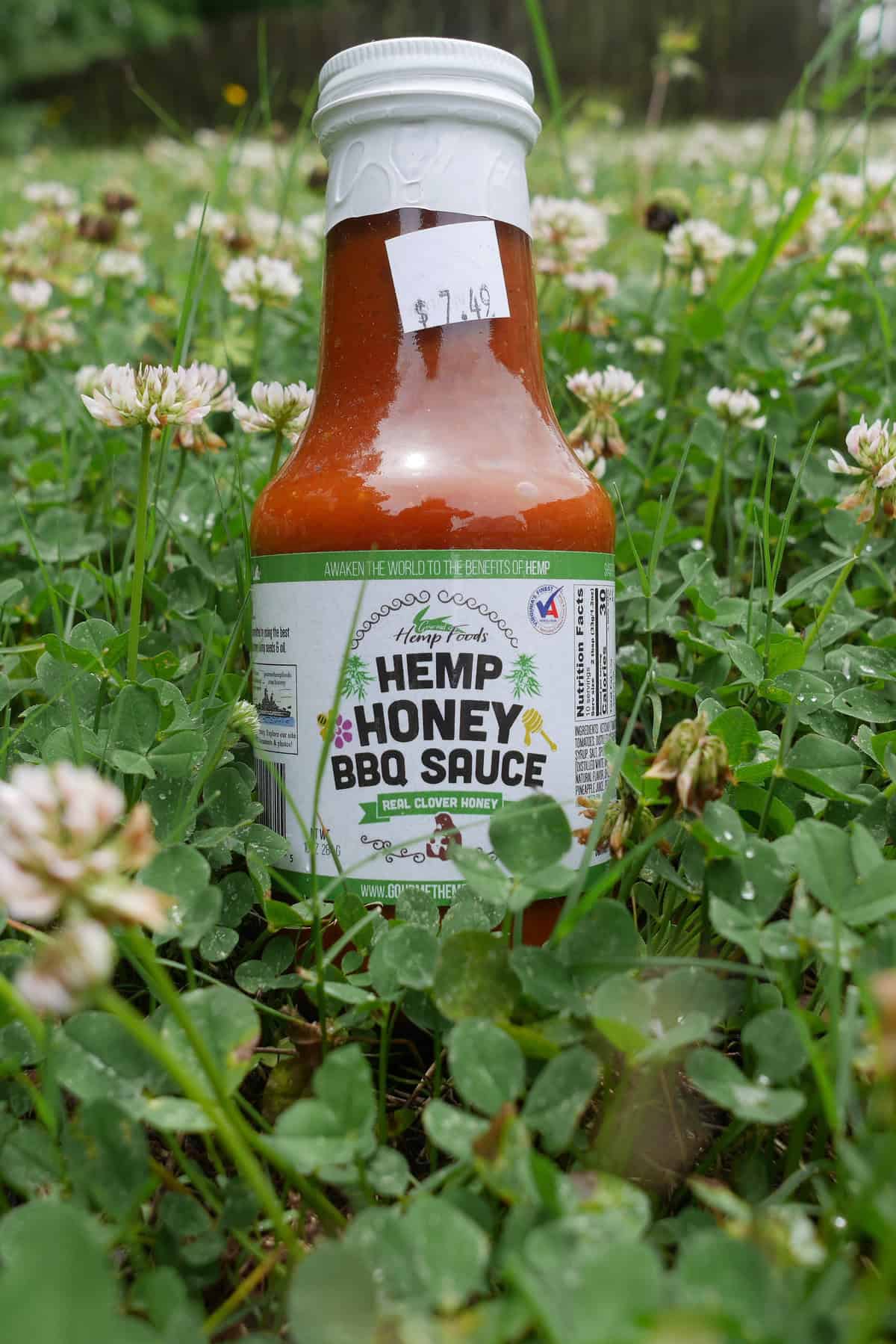
    Savor the Seed of Nutrition: Unleash the flavors of Gourmet Hemp Foods’ BBQ sauce, a culinary masterpiece crafted with the finest ingredients and domestically grown hemp seeds and oil. Dive into a world of taste that not only tantalizes your palate but also nourishes your body with the mighty hemp seed—nature’s powerhouse of OMEGA 3, 6, 9. Experience the perfect balance of zest and health benefits in every drop!

    The Honey Review Gourmet Hemp Food Hemp Honey BBQ Sauce

    In this blog post, I will review Hemp Honey BBQ Sauce I have personally tried and tested. I will review it based on the taste, texture, color, aroma, health benefits, and price. Let’s get started!

    • Flavor Profile: The Hemp Honey BBQ Sauce is a symphony of flavors, masterfully blending the nutty undertones of hemp seeds with the sweetness of clover honey and the smoky depth of barbecue.
    • Quality Ingredients: Crafted with domestic grown hemp seeds and oil, this sauce promises a high-qualitynutrient-rich experience.
    • Health Benefits: It offers the benefits of hemp seeds, known as the world’s mightiest seed, which contain a balanced ratio of OMEGA 3, 6, 9.
    • Versatility: Perfect for grillingmarinating, or as a dipping sauce, it’s a versatile addition to any culinary creation.

    This gourmet sauce is not just a condiment; it’s a health-conscious choice for those looking to enrich their diet without compromising on taste. Whether you’re a barbecue aficionado or a hemp enthusiast, this sauce is sure to elevate your meals to the next level.

    I picked up this Hemp Honey BBQ Sauce for $7.49 from the Charlotte Regional Farmers Market in Charlotte, NC from Apotheca. They are a local Cannabis Dispensary that also sells Cheese, Meats, Ice Cream, Milk and a diverse selection of alternative health products.

    Apotheca Cannabis Dispensary at the Charlotte, NC Regional Farmers Market

    About Gourmet Hemp Foods

    Gourmet Hemp Foods is a company based in Richmond, VA, that specializes in creating hempseed-based food products. Here’s some background information:

    The company is known for its commitment to quality and the nutritional benefits of hemp, offering products that are not only flavorful but also provide healthful properties.

    Opinion on Gourmet Hemp Foods Hemp Honey BBQ Sauce

    Gourmet Hemp Foods’ Hemp Honey BBQ Sauce stands out in the market for its unique incorporation of hemp seeds, which offer a distinct nutty flavor and a host of nutritional benefits. The sauce’s combination of sweetness from clover honey and the rich, earthy tones of hemp creates a complex flavor profile that is both intriguing and satisfying. It’s a versatile sauce that can enhance a variety of dishes, from grilled meats to vegetarian options.

    When compared to other honey BBQ sauces on the market, such as Famous Dave’s Honey Hickory BBQ Sauce or Kraft Sweet Honey BBQ Sauce, Gourmet Hemp Foods’ sauce brings a health-conscious twist with its omega-rich hemp ingredients. While traditional honey BBQ sauces focus on a balance of sweetness and tanginess, Gourmet Hemp Foods emphasizes both flavor and nutritional value, making it a standout choice for those looking to add a wholesome touch to their meals.

    In terms of market presence, Gourmet Hemp Foods’ Hemp Honey BBQ Sauce may not be as widely available as some of the big-name brands, but it has carved out a niche for itself among health-conscious consumers and those seeking innovative flavors in their BBQ experience. The sauce’s texture and consistency also contribute to its appeal, offering a smooth and thick coating that adheres well to food, which is a desirable trait found in top contenders like Jack Daniel’s Original BBQ Sauce.

    Overall, Gourmet Hemp Foods’ Hemp Honey BBQ Sauce is a commendable product that successfully merges the worlds of health food and classic barbecue indulgence. Its unique selling point of hemp integration not only differentiates it from others but also adds a layer of depth to its taste and a boost to its nutritional profile.

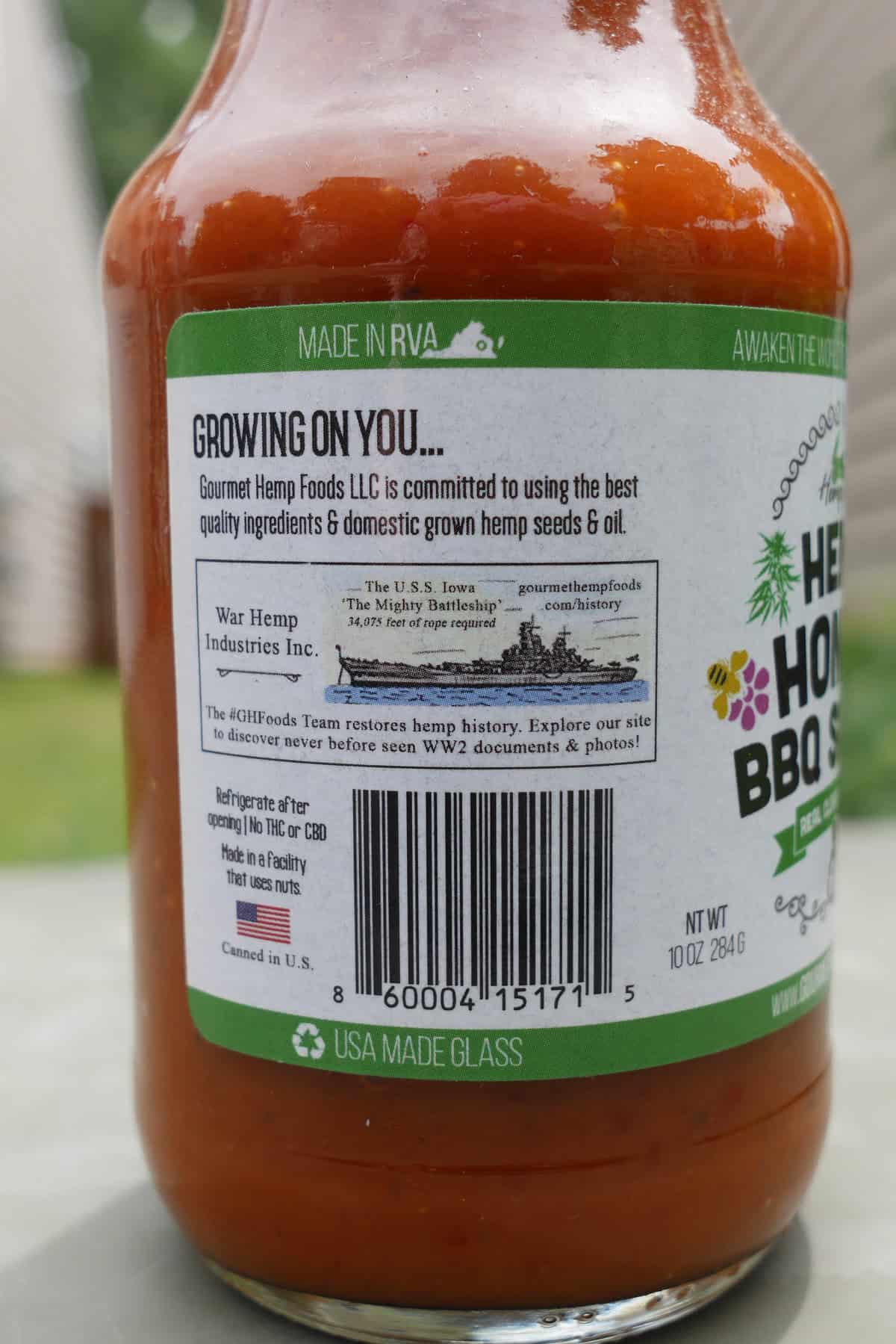
    Gourmet Hemp Foods Honey BBQ Sauce Label TheHoneyReview

    Recipe Ideas

    Here are some delicious recipe ideas that would pair wonderfully with Gourmet Hemp Foods’ Hemp Honey BBQ Sauce:

    1. Honey BBQ Chicken: Marinate chicken breasts in the Hemp Honey BBQ Sauce and grill to perfection. The sauce will add a sweet and tangy flavor with a hint of smokiness.
    2. BBQ Turkey Meatballs: Mix the sauce into your turkey meatball mixture for a moist and flavorful twist. Serve as an appetizer or main dish.
    3. Pulled Pork: Slow cook a pork shoulder and shred it, then mix in the Hemp Honey BBQ Sauce for a delectable pulled pork sandwich.
    4. Grilled Chicken Thighs: Use the sauce as a glaze for grilled chicken thighs. The rich flavor of the sauce will complement the succulent dark meat.
    5. BBQ Ribs: Whether you prefer spare ribs or baby backs, basting them with Hemp Honey BBQ Sauce will create a sticky, finger-licking good meal.
    6. Salmon Glaze: Brush the sauce over salmon fillets before grilling for a sweet and savory seafood option.
    7. Vegetarian BBQ Pizza: Spread the sauce over your pizza dough, top with your favorite veggies, and bake for a unique BBQ pizza experience.
    8. BBQ Sauce Dipping: Use it as a dipping sauce for grilled potato wedges or fries for a simple yet tasty side.

    These recipes highlight the versatility of the Hemp Honey BBQ Sauce, making it a great addition to various dishes, whether you’re looking for something to serve at a family barbecue or a quick weeknight dinner. Enjoy experimenting with these ideas!

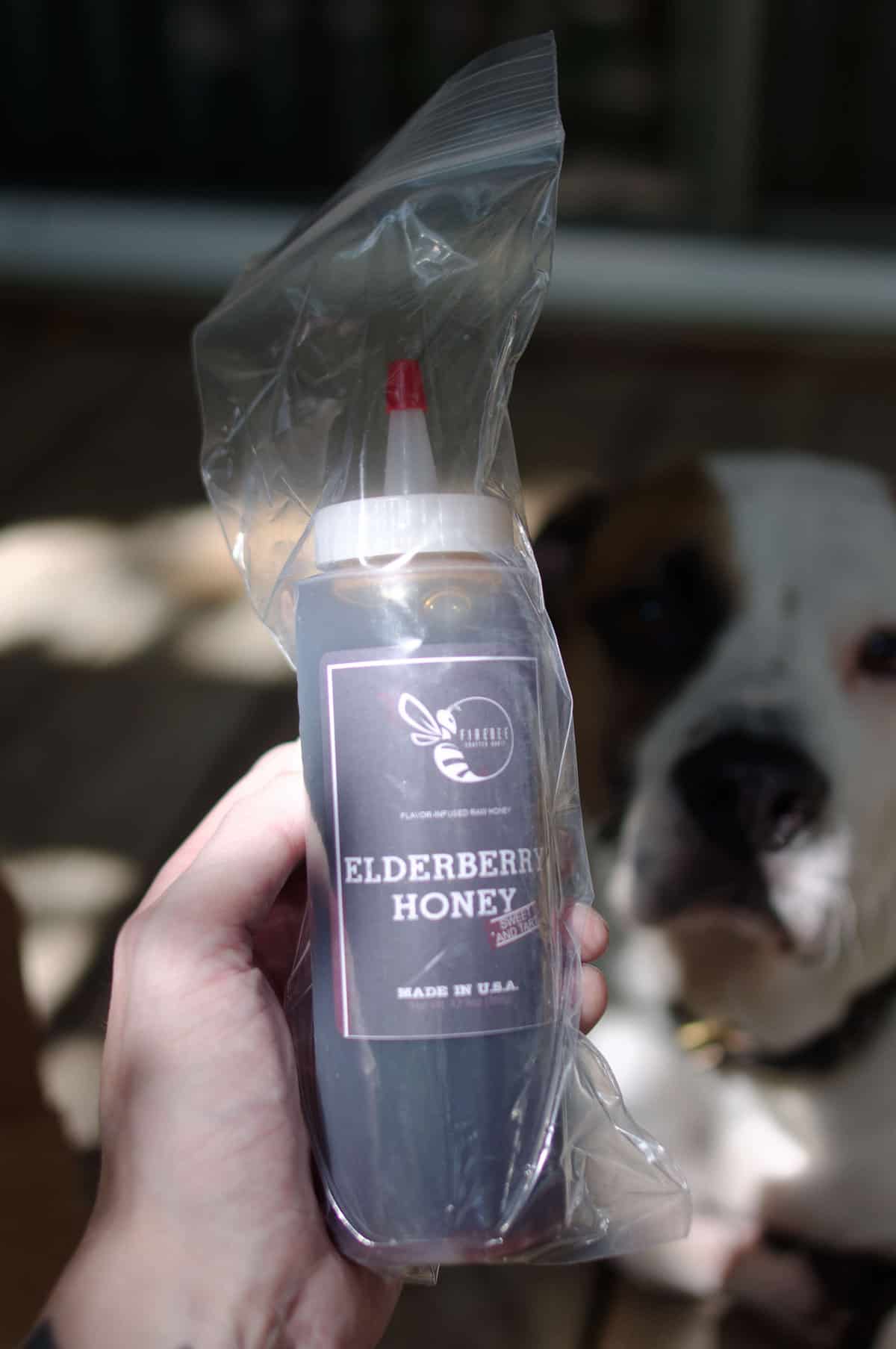
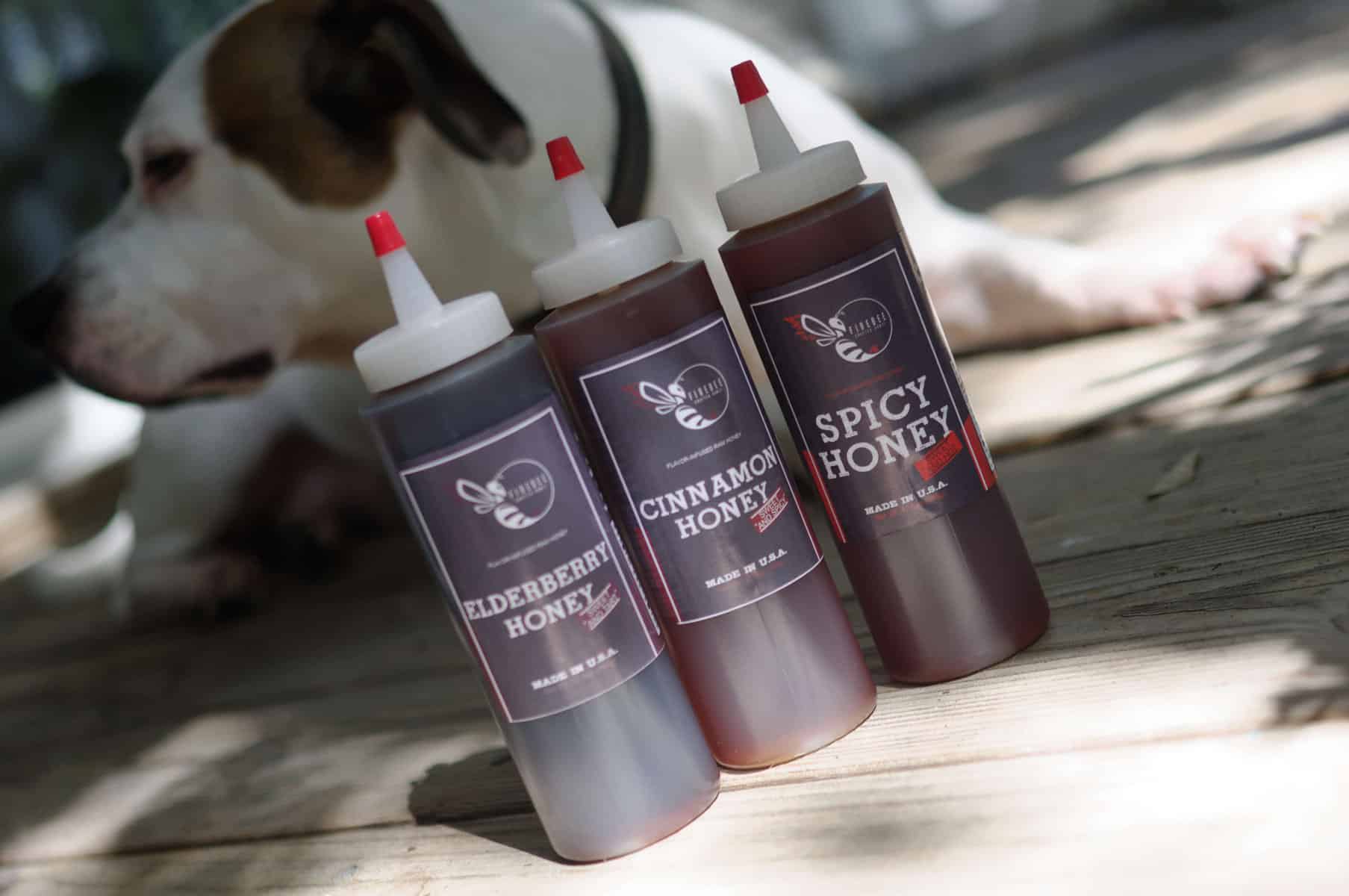
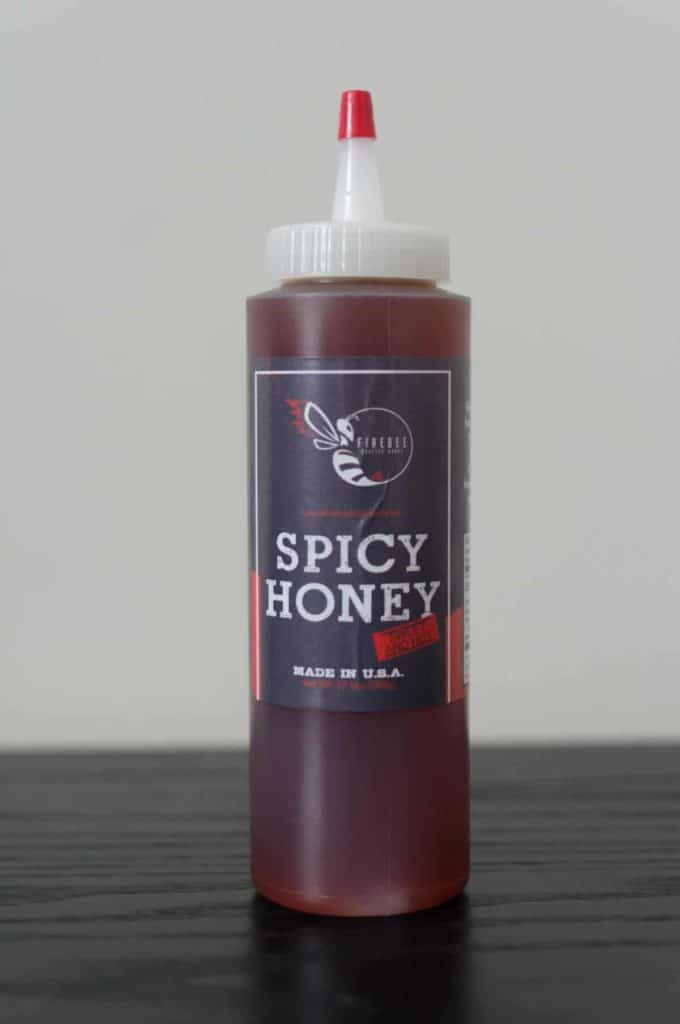
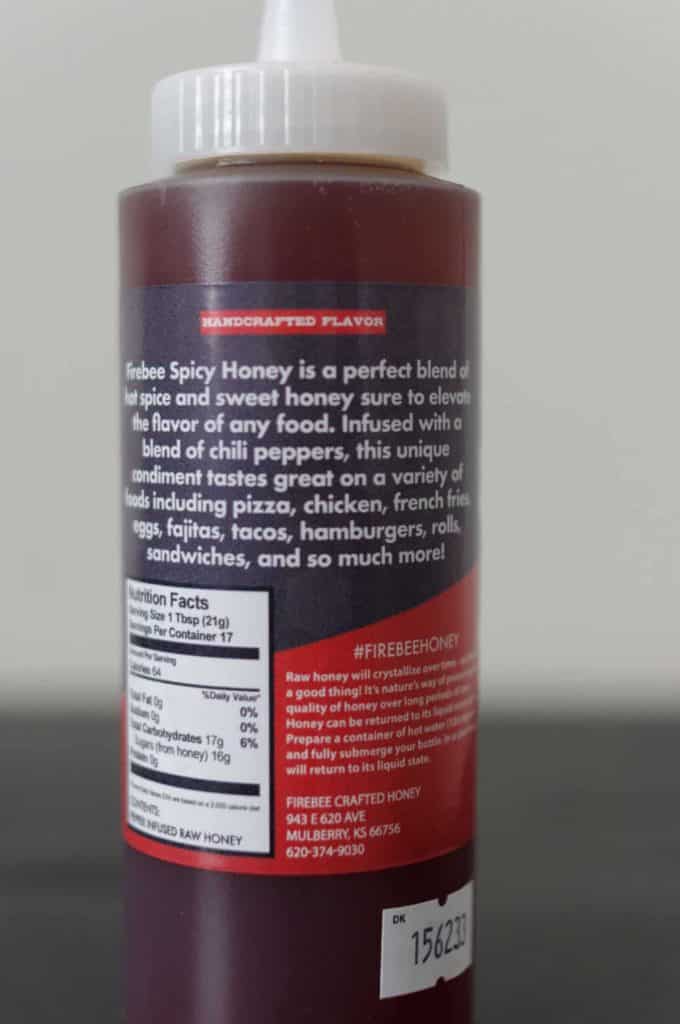
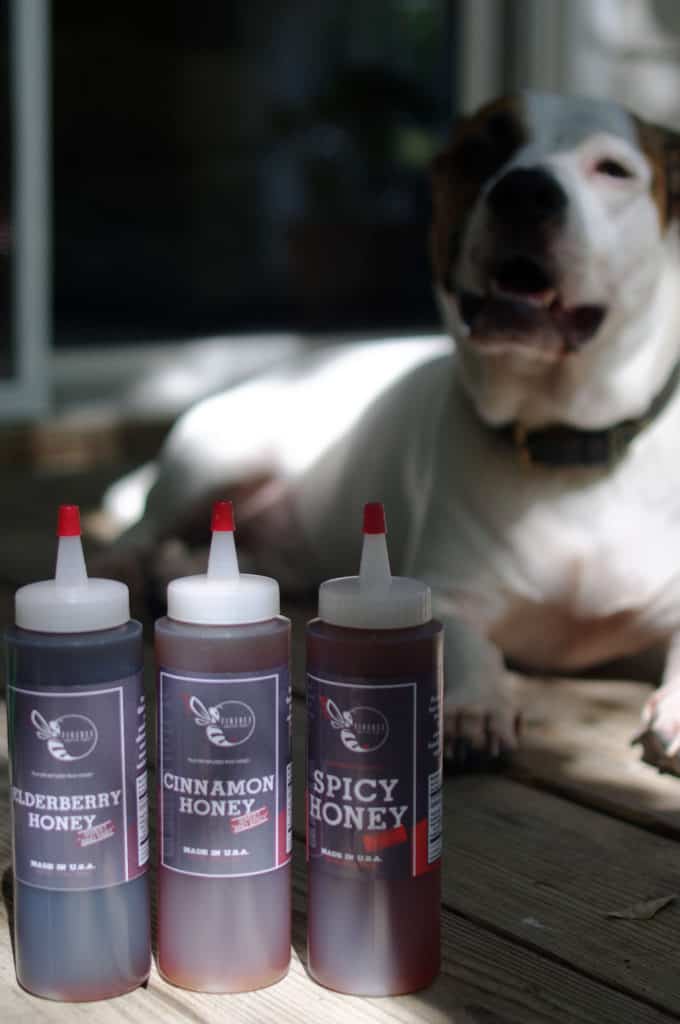
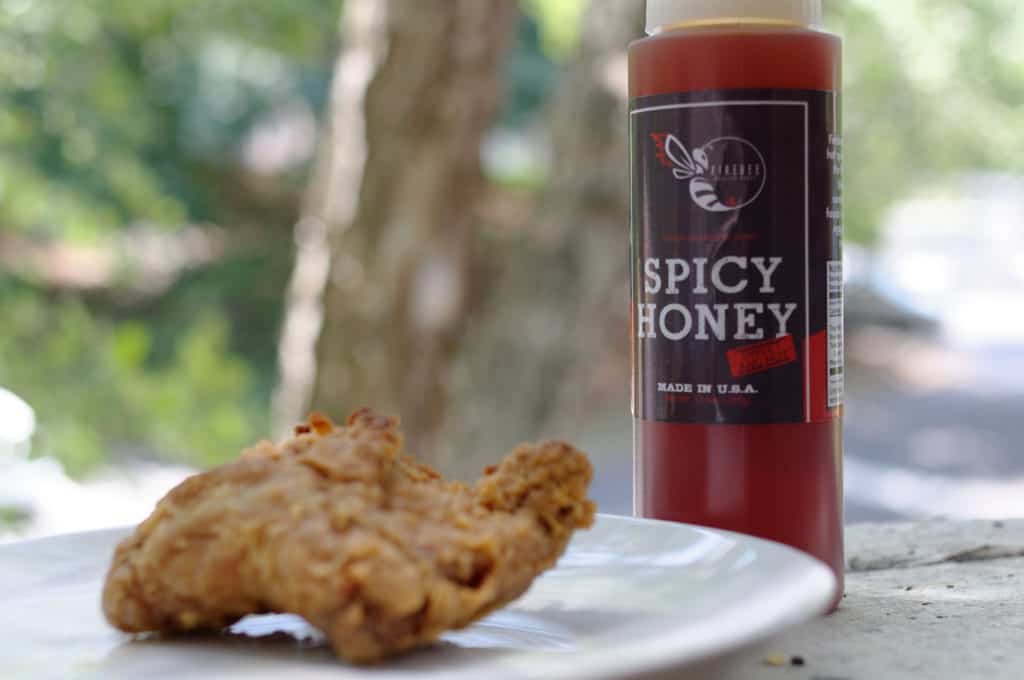
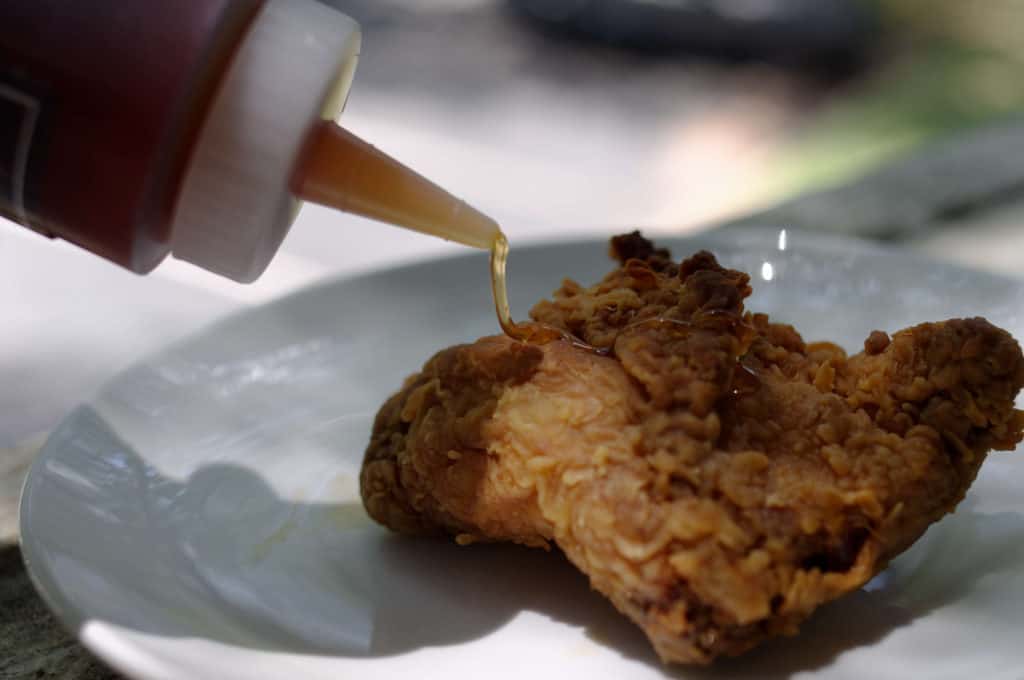
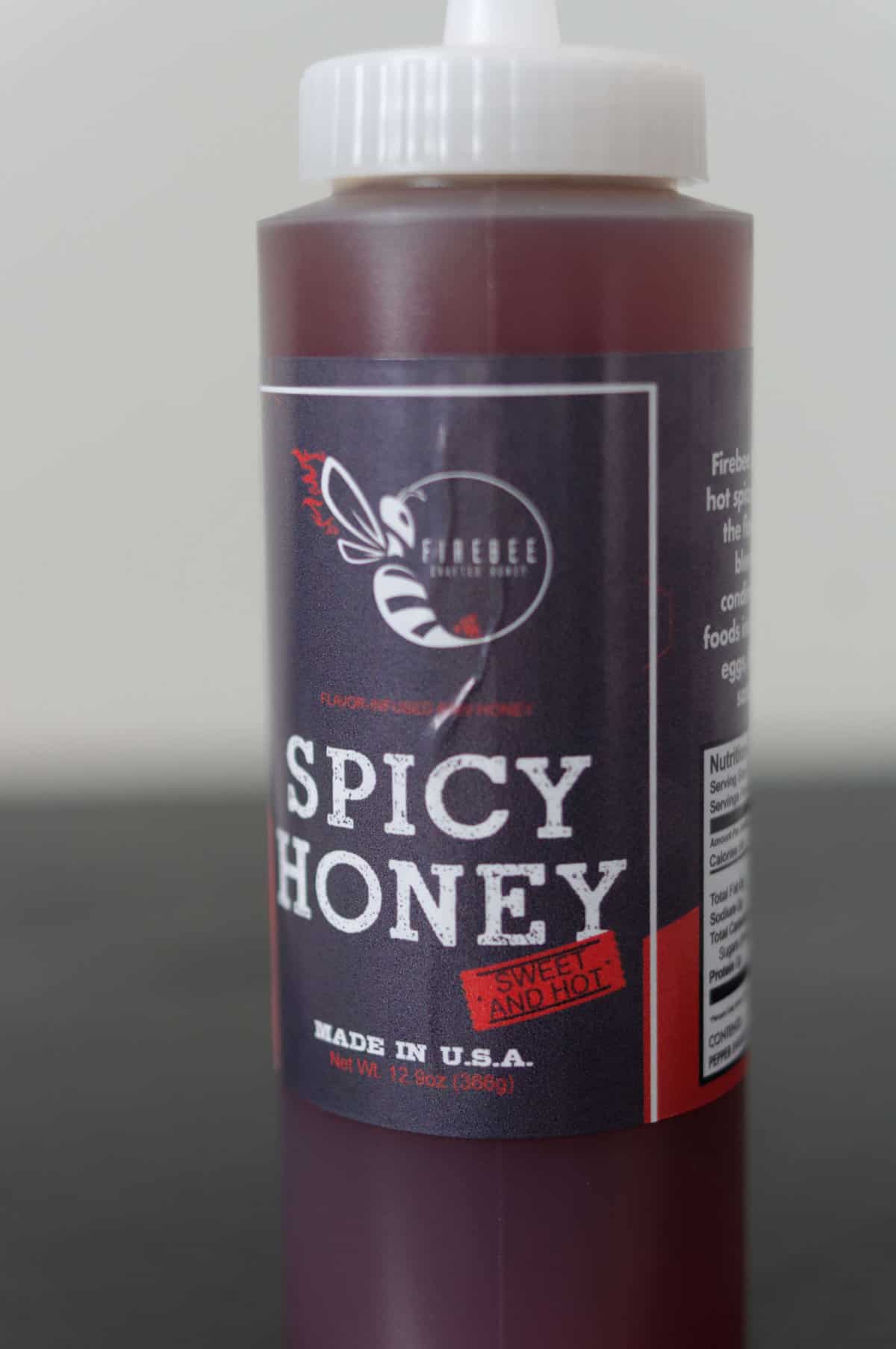
    I also highly recommend Hot Honey like this Firebee Spicy Honey.

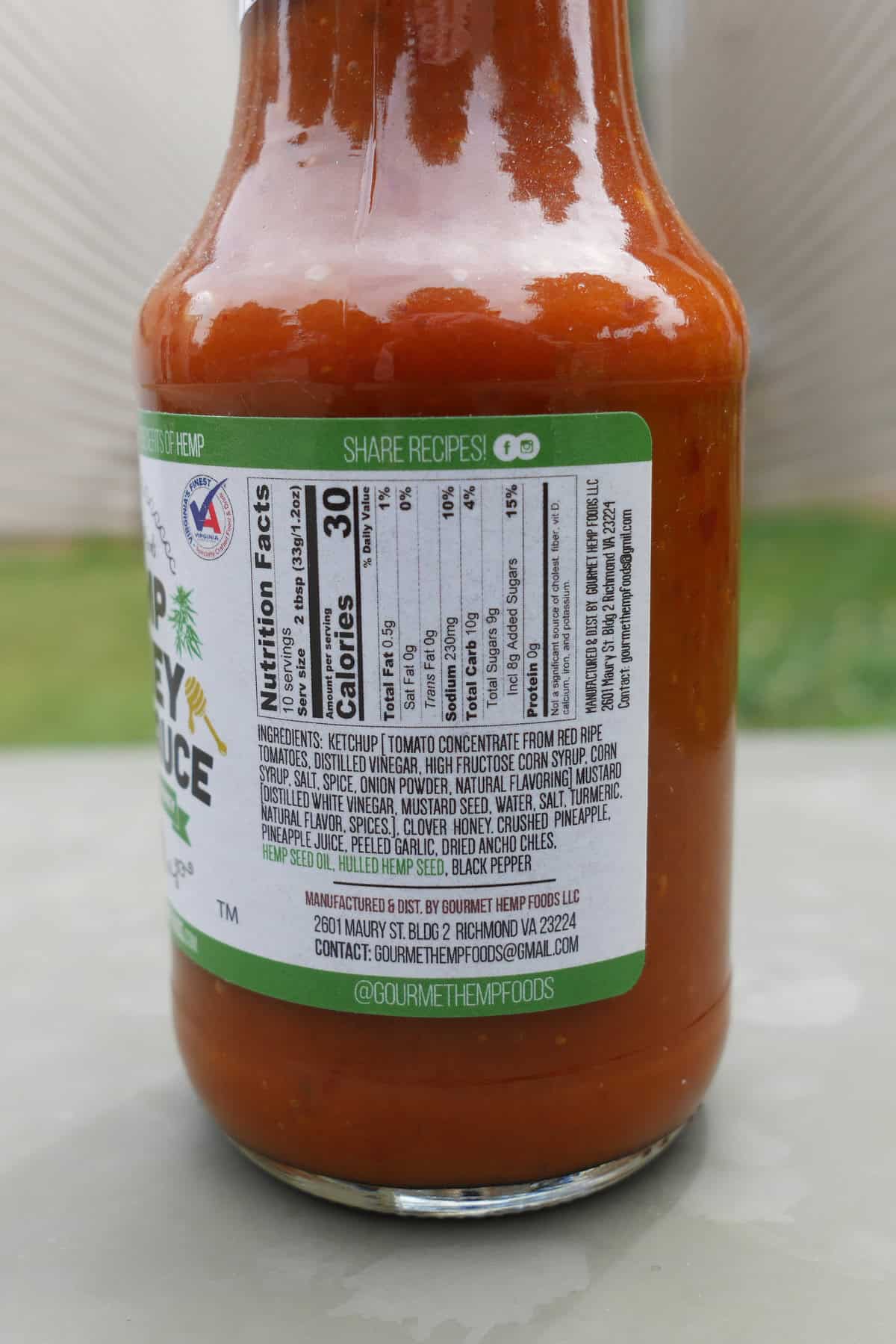
    Gourmet Hemp Foods Honey BBQ Sauce Ingredients

    Conclusion / Review Summary

    • Flavor Profile: The Hemp Honey BBQ Sauce boasts a unique blend of sweetness and tanginess, complemented by a subtle smoky flavor that enhances the overall taste experience.
    • Texture & Aroma: It features a smooth, rich texture and a pleasing aroma that promises to elevate any dish it accompanies.
    • Health Benefits: The sauce is not only a delightful addition to meals but also offers health benefits, likely due to the natural properties of hemp and honey.
    • Value for Money: While the price point may be higher than some alternatives, the quality and distinct flavor profile justify the investment for those seeking a premium BBQ sauce experience.

    In conclusion, the Hemp Honey BBQ Sauce is a standout product that delivers on taste, texture, and health benefits, making it a worthwhile purchase for BBQ enthusiasts and health-conscious consumers alike.

    Gourmet Hemp Foods Hemp Honey BBQ Sauce

    Honey
    Color
    Flavor
    Aroma
    Texture
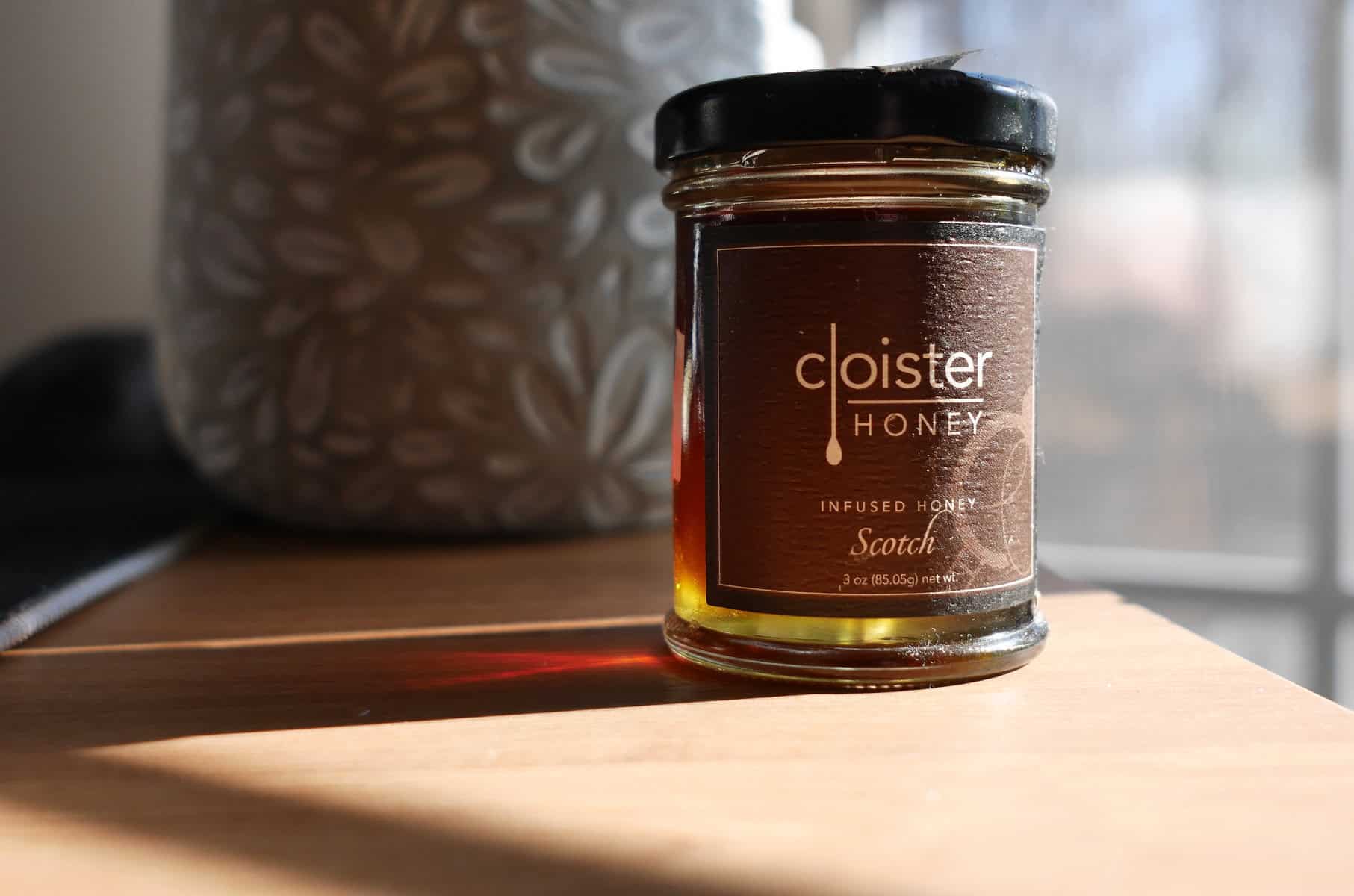
  • Cloister Infused Scotch Honey Review

    Cloister Infused Scotch Honey Review

    Howdy, y’all, and welcome to my raw honey review blog, where I share my love and passion for all things honey. Today, I’m going to tell y’all about a very special product that I recently tried: Cloister Infused Scotch Honey.

    Benefits of Raw Honey Products

    Some of the benefits of raw honey products are:

    Honey bees“/ CC0 1.0

    Cloister Infused Scotch Honey

    Cloister Infused Scotch Honey is a new creation from Cloister Honey, a family-owned business right here in Charlotte, North Carolina. Cloister Honey makes some of the best pure, raw, and delicious honey with various flavors and infusions, such as whipped honey, traditional honey, gourmet honey spreads, and honey straws.

    Cloister Infused Scotch Honey The Honey Review, Charlotte, NC
    Cloister Honey

    Product Summary

    Cloister Infused Scotch Honey is made with Highland Park 12 single malt Scotch and wildflower honey, creating a unique blend that has subtle notes of oak, lemon, vanilla, orange, and a hint of clove. The honey is smooth, rich, and aromatic, with a slight smoky aftertaste. The Scotch flavor is not too strong, but rather balances the natural sweetness and floral notes of the honey.

    Cloister Infused Scotch Honey can be enjoyed in many ways, such as:

    • Pairing it with a puff pastry-wrapped oven-baked brie
    • Drizzling it over grilled peaches with vanilla ice cream
    • Swirling it into black tea or a specialty cocktail
    • Spreading it on your morning biscuits or toast

    Product Review: Cloister Infused Scotch Honey

    Packaging and Appearance

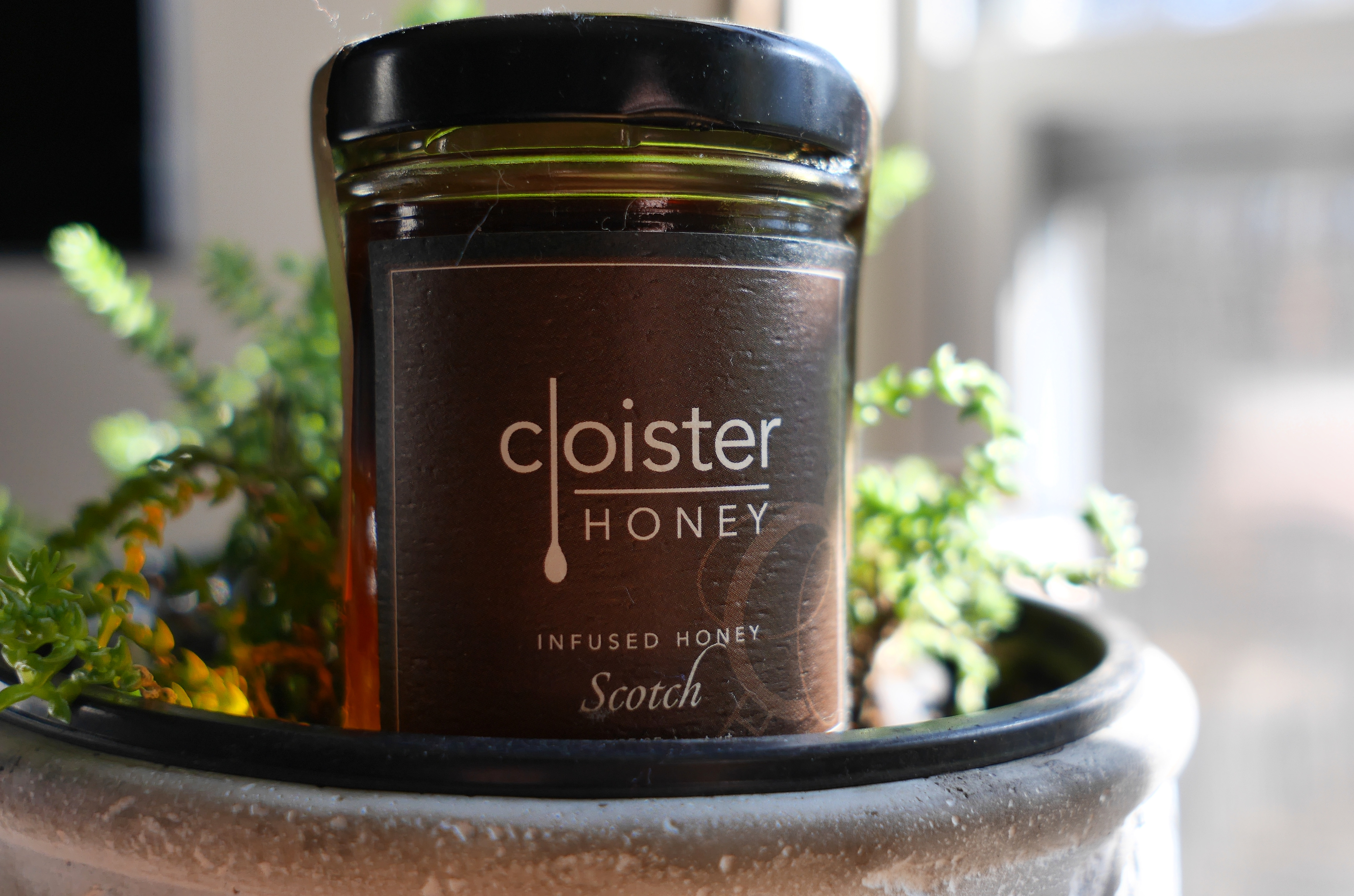
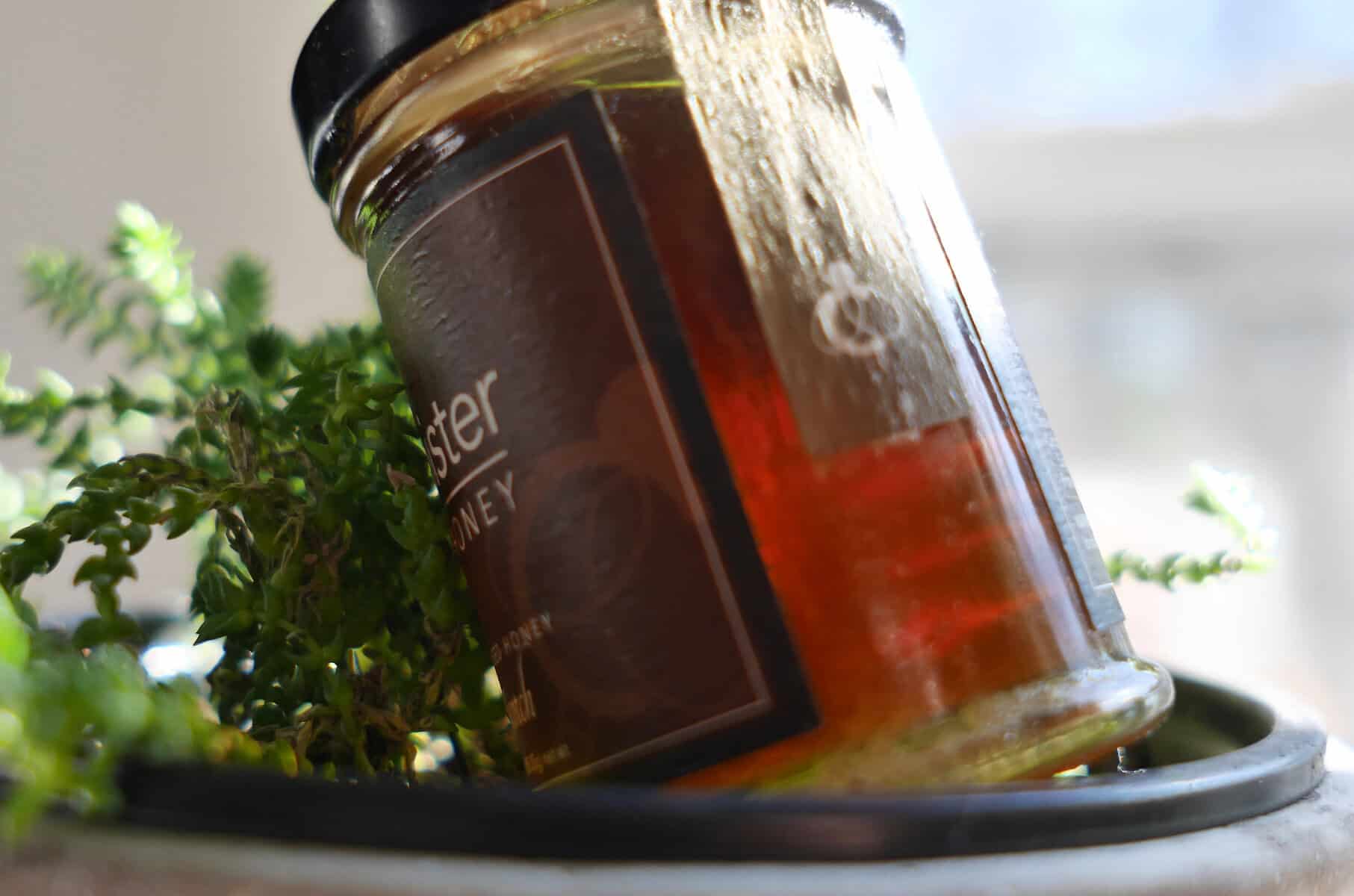
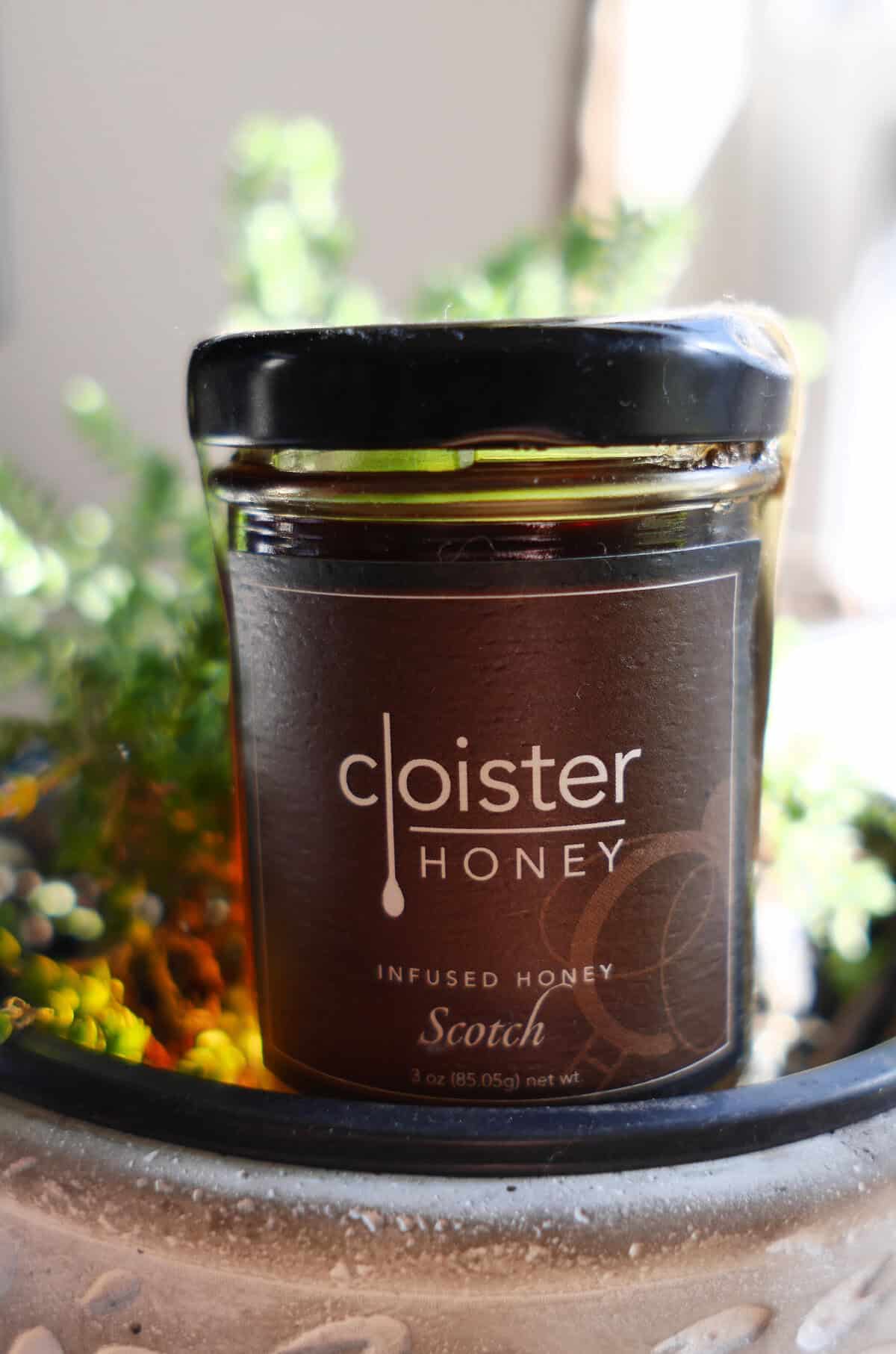
    Cloister Infused Scotch Honey comes in a glass jar with a black metal lid and a brown label. The label has the brand name, the product name, the ingredients, and the net weight. The label also has a QR code that leads to the product page on the Cloister Honey website. The jar is easy to open and close, and the honey is visible through the glass. The honey has a golden amber color and a thick and smooth consistency.

    Cloister Honey Infused Scotch Honey 3oz Jar , Charlotte NC, TheHoneyReview

    Taste and Texture

    Cloister Infused Scotch Honey has a unique and complex flavor that combines the sweetness and floral notes of wildflower honey with the smoky and woody notes of Highland Park 12 single malt Scotch. The Scotch flavor is subtle and not overpowering, but it adds a depth and richness to the honey. The honey has a smooth and creamy texture that melts in the mouth. The honey is not too sweet or too bitter, but rather well-balanced and satisfying.

    Quality

    Cloister Infused Scotch Honey is a high-quality product that is made with pure, raw, and delicious honey from American beekeepers and premium Scotch whisky from Scotland. The honey is not heated, pasteurized, or filtered, which means it retains more of its beneficial enzymes, nutrients, and antioxidants. The honey is also infused with natural flavors and zero oils, artificial extracts, or coloring. The honey is gluten-free, non-GMO, and kosher certified.

    Price

    Cloister Infused Scotch Honey is priced at $15.00 for a 12 oz jar on the Cloister Honey website or at selected retailers. This is a reasonable price for a specialty honey product that is made with high-quality ingredients and has a unique and delicious flavor. The honey is also versatile and can be used in various ways, such as pairing, drizzling, swirling, or spreading. The honey is a perfect treat for yourself or a gift for someone who loves honey and Scotch.

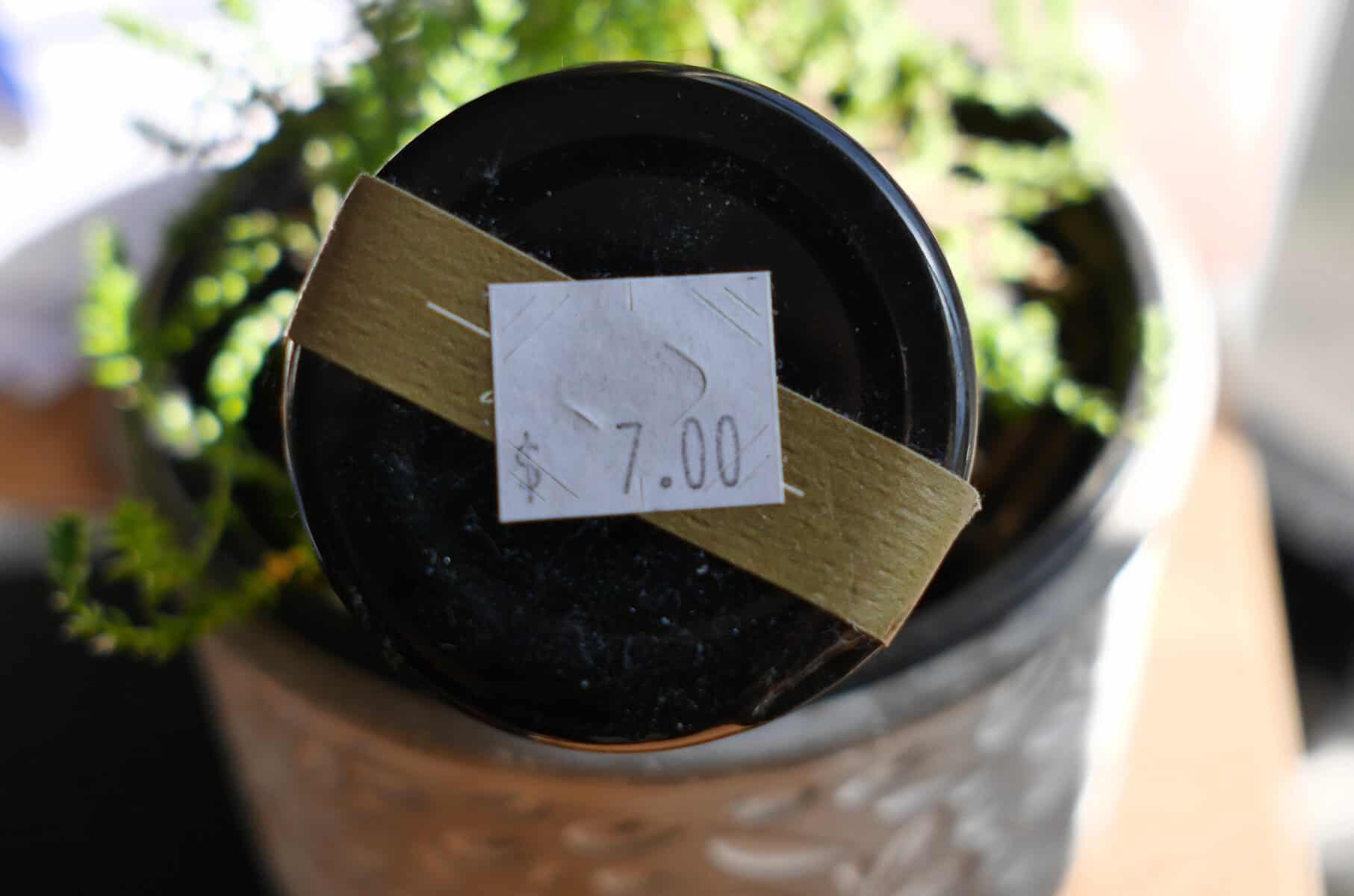
    I paid $7 for the smaller 3oz glass jar.

    Cloister Honey 3oz Jar price

    Overall Rating

    Cloister Infused Scotch Honey is a wonderful product that I highly recommend to anyone who enjoys honey and Scotch. It has a beautiful packaging and appearance, a smooth and creamy texture, and a complex and satisfying flavor. It is also a high-quality product that is made with pure, raw, and delicious honey and premium Scotch whisky. It is reasonably priced and versatile, and can be enjoyed in many ways. I give Cloister Infused Scotch Honey a 5 out of 5 stars rating.

    Buying Guide for Raw Honey Products

    Raw honey products are natural sweeteners that are made by honey bees from the nectar of various flowers and plants. They are different from regular honey products because they are not heated, pasteurized, or filtered, which means they retain more of their beneficial enzymes, nutrients, and antioxidants. They also have a more complex and diverse flavor profile, depending on the source of the nectar and the region where the bees live.

    If you are interested in buying raw honey products, here are some factors to consider:

    Product Alternatives

    If you are interested in other spirits x honey combinations, you can also check out Cloister Bourbon Infused Honey | Cloister Honey and Brandy Infused Honey | Cloister Honey, which are equally delicious and versatile.

    Final Thoughts

    Y’all, I’m telling you, this Cloister Infused Scotch Honey is something else. It’s not just honey, it’s a whole experience. It’s like taking a trip to the Highlands and the Tar Heel State at the same time. It’s sweet, smoky, and smooth, and it goes with everything. You can drizzle it on your biscuits, stir it in your tea, or even sip it straight from the jar. It’s that good.

    This honey is made with 100% pure, raw honey from right here in North Carolina, and infused with premium single malt scotch from Scotland. The result is a perfect harmony of flavors that will make your taste buds sing. And the best part is, it’s all natural, no artificial flavors or preservatives.

    Cloister Infused Scotch Honey
    Cloister Honey Scotch Infused Honey

    If you want to wow your folks, friends, or customers, you need to get yourself some Cloister Infused Scotch Honey. You can order it online or call them up. They’re super friendly and helpful. You can also follow them on social media and check out their blog for more ideas and recipes. Trust me, you don’t want to miss this chance to try one of the finest honeys in the world and see what Cloister Infused Scotch Honey can do for you.

    Cloister Infused Scotch Honey

    The Honey Reviewer

    Honey
    Color
    Aroma
    Flavor
    Texture

    Review Summary

    I love artisanal honey, especially when it’s local. Cloister has a ton of unique honey flavors to choose from. This time I tried their Infused Scotch Honey. If you like more medicinal forward flavors like Manuka Honey, you’ll probably like this Honey. The Scotch Honey has notes of tree sap or molasses, especially on the first taste.
    Second taste was more balanced, smooth and ended with a subtle spice. This is where the wildflower comes through and balances things out.

    I was disappointed that there wasn’t more of an aroma to this Honey, like the bourbon infused Honey has. Sometimes these infused Honey’s have incredible smells that really entice the taste buds.

    Overall, unique flavor, very high quality and any Honey connoisseur will love some of Cloister’s offerings. Check out their incredible products from Charlotte, NC below.

    4
  • Forensic Audit: Zest Blackberry Lemonade Hydration Mix – Functional Fuel

    Forensic Audit: Zest Blackberry Lemonade Hydration Mix – Functional Fuel

    In the heat of a North Carolina summer, hydration is a mechanical necessity. While we often audit the purity of Raw Honey, sometimes the task requires a functional boost. Most hydration sticks are forensic nightmares—loaded with artificial dyes and 30g of processed sugar.

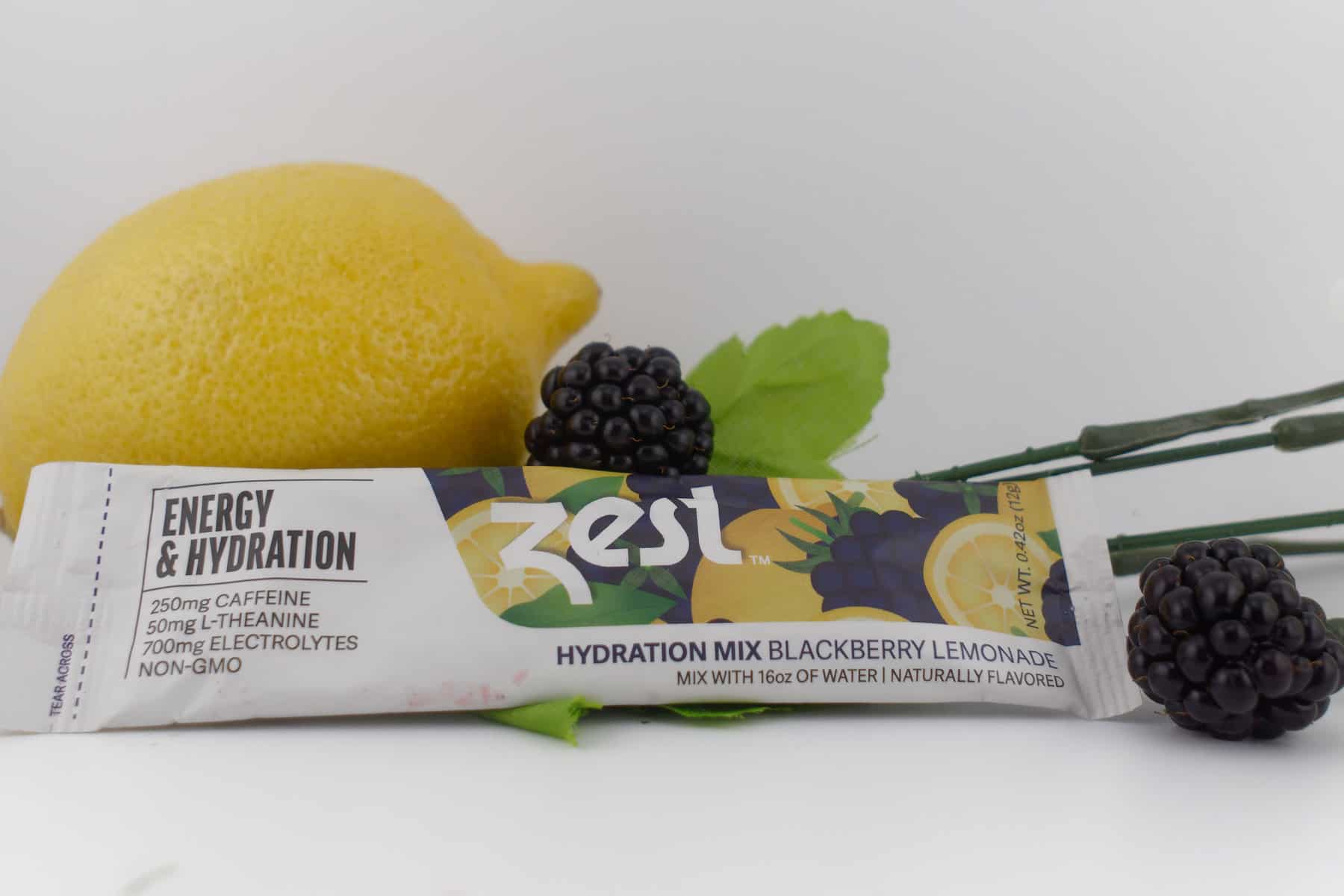
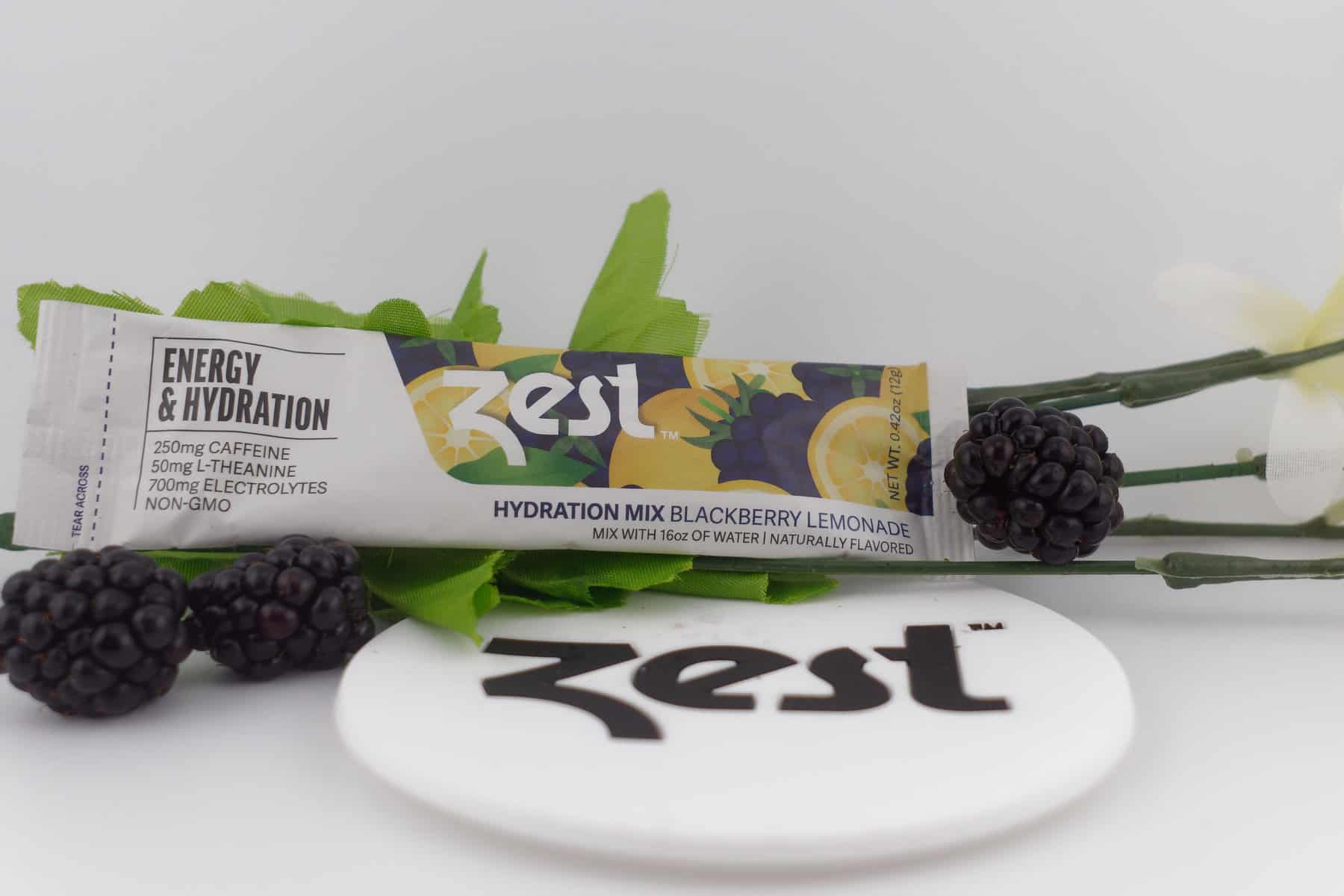
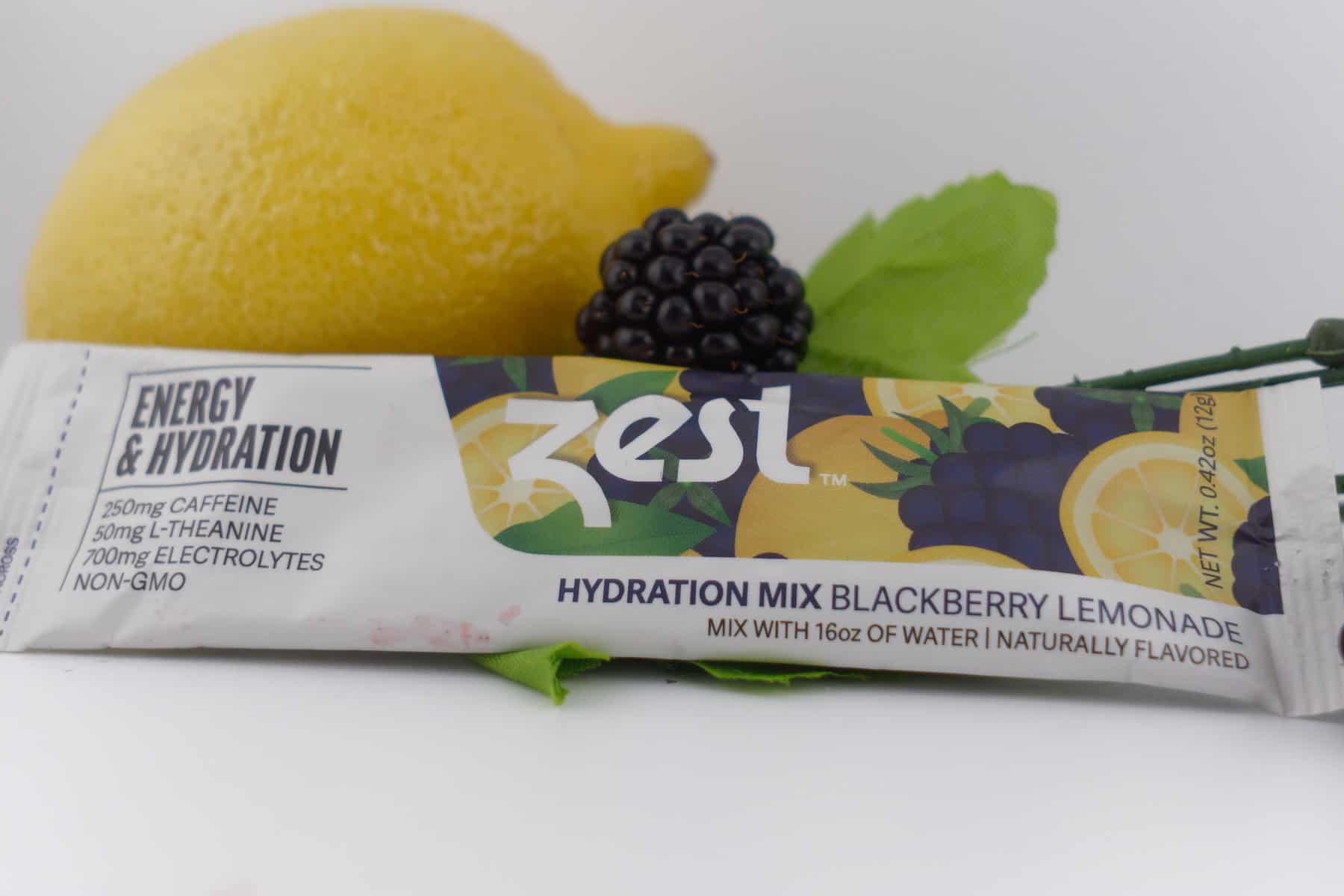
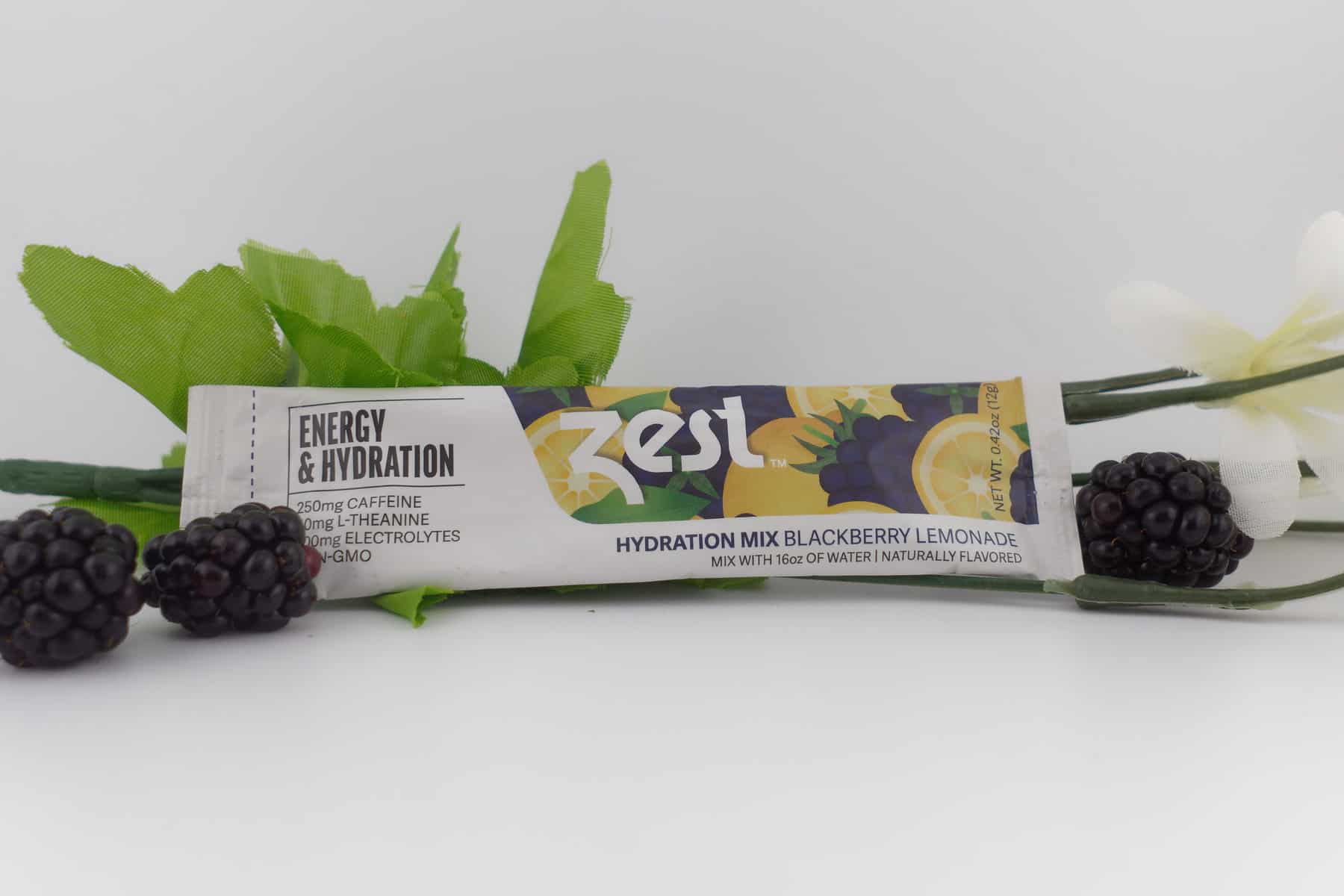
    Zest Tea has disrupted this sector with their Blackberry Lemonade Hydration Mix. We put this electrolyte-plus-caffeine blend through The Lab’s Forensic Protocol to see if it delivers on its “Clean Energy” promise.

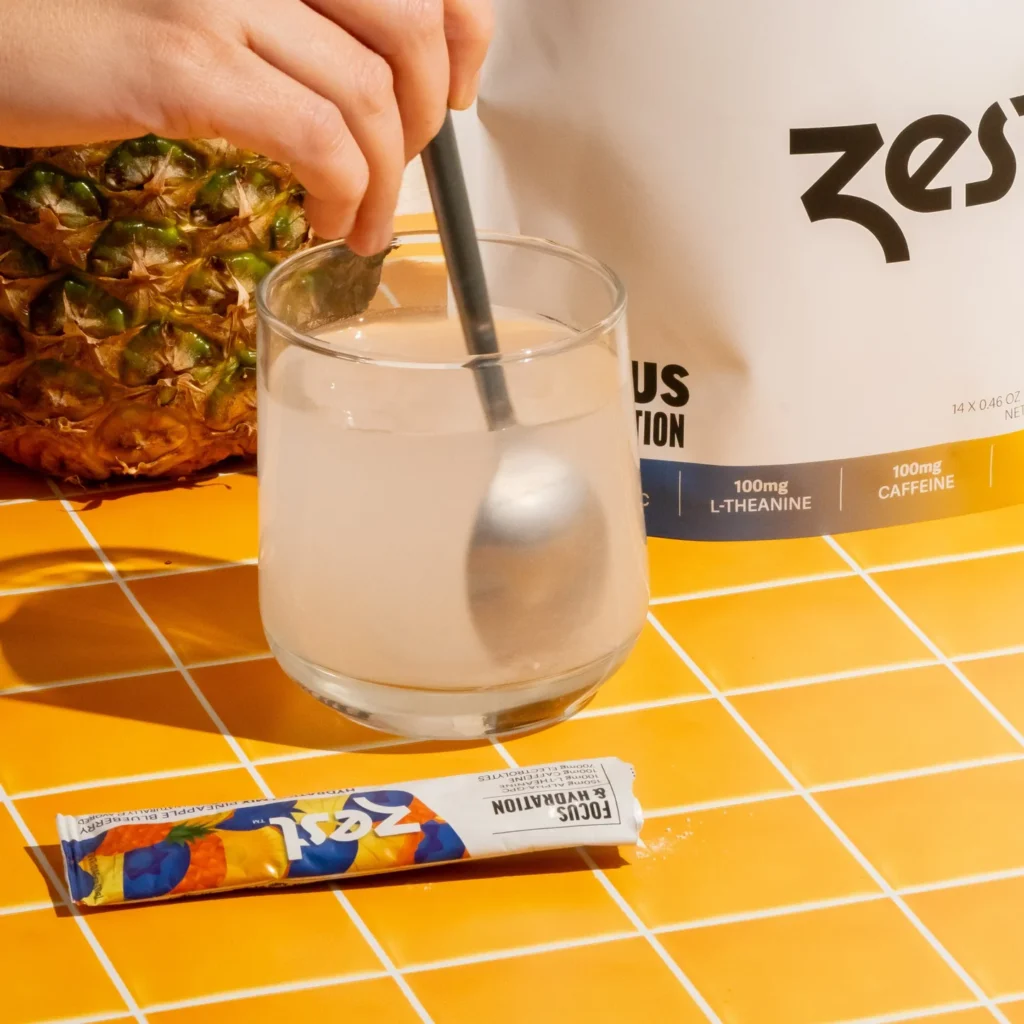
    zest blacberry lemonade drink mix

    The Forensic Profile

    • Product Type: Electrolyte + Caffeine Hydration Powder
    • Key Actives: 100mg Caffeine, L-Theanine, Sodium, Potassium, Magnesium
    • Flavor: Blackberry Lemonade
    • Certifications: Keto-Friendly, Low Sugar, No Artificial Dyes
    • MSRP: ~$34.95 for a 20-pack (Functional Tier)
    • Affiliate Link: Audit the Zest Collection Here (Shopper Affiliate)

    1. Physical & Chemical Analysis (The Lab Standards)

    The “Clean Energy” Protocol: Caffeine vs. L-Theanine

    Standard energy drinks provide a spike and a crash. From a forensic standpoint, Zest utilizes a “1:1 Bio-Modulation” strategy by pairing 100mg of caffeine with L-Theanine, an amino acid found in tea.

    • Forensic Observation: The L-Theanine acts as a chemical stabilizer, smoothing out the jitters associated with caffeine anhydrous. This makes it a superior “Focus Protocol” for long shifts or technical projects.

    Solubility & Dye Analysis

    Most “Blue Raspberry” or “Lemonade” mixes use Red 40 or Blue 1. Zest avoids these synthetic markers.

    • The Lab Verdict: The powder dissolves rapidly with zero “chalky” residue. The color is derived from natural fruit extracts, maintaining the integrity of your hydration vessel.

    2. Sensory Evaluation

    • Color: A natural, deep berry hue. It lacks the neon glow of commercial “Gatorade” alternatives.
    • Aroma: Immediate hit of tart lemon zest followed by the earthy, sweet scent of ripe blackberries.
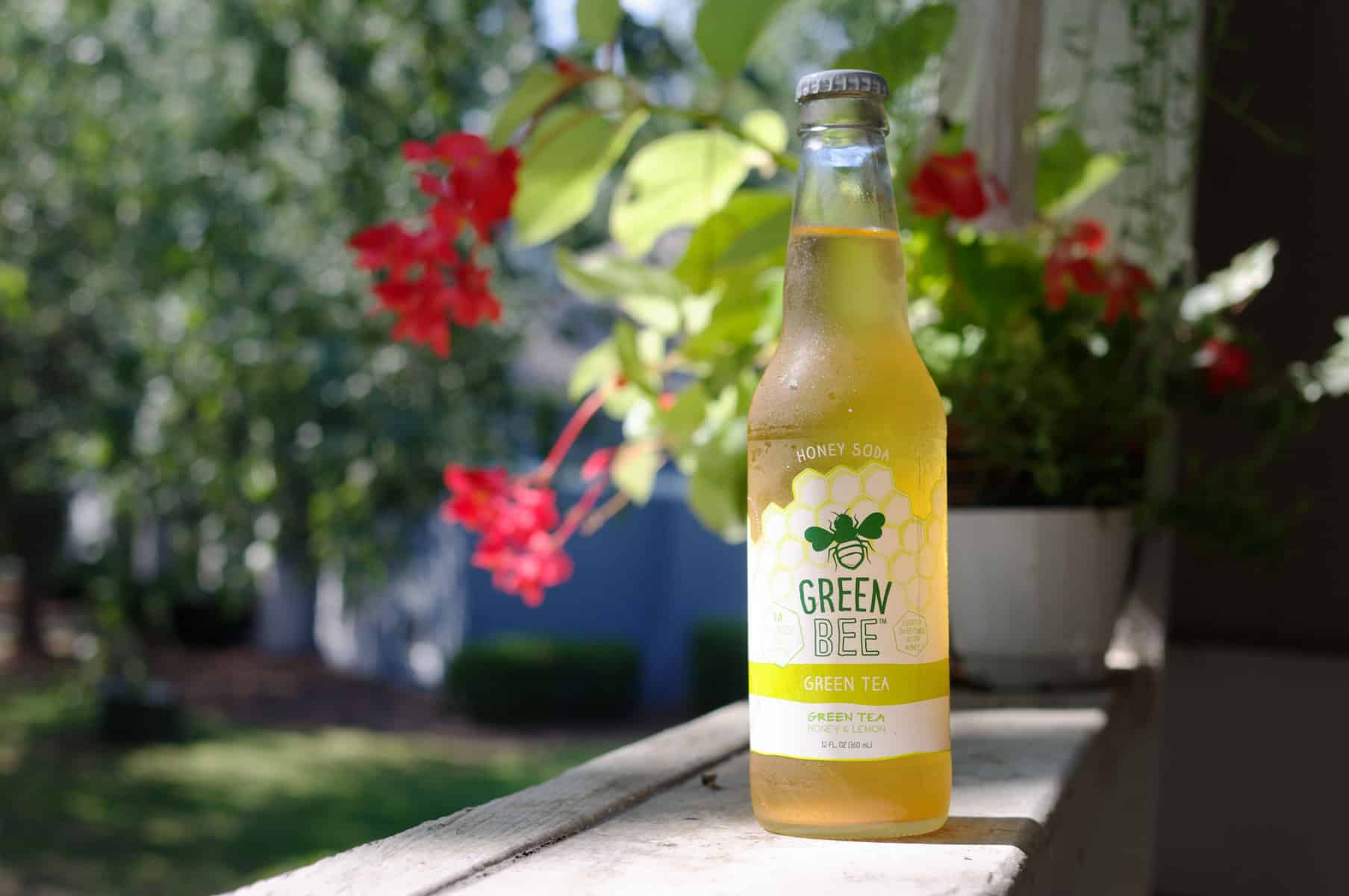
    • Flavor Profile: Balanced acidity. The “Lemonade” base provides a sharp tartness that cuts through the sweetness of the blackberry. Unlike Green Bee Honey Soda, this is not honey-forward; it is a crisp, electrolyte-heavy profile.
    • Texture: Very light. It leaves no syrupy film on the tongue, which is critical during high-intensity activity.

    3. Supply Chain & Efficacy

    Zest Tea has built a reputation on high-caffeine tea blends, and this expansion into hydration sticks follows their “High-Octane” supply chain model. They prioritize functional dosage over flavoring agents.

    • Electrolyte Count: With a balanced ratio of Magnesium and Potassium, it addresses the physical recovery needs often missed by “energy-only” products.

    4. Price-to-Value Forensic

    ProductPrice Per ServingCaffeineSugar
    Zest Hydration~$1.75100mg<1g
    Liquid I.V.~$1.550mg11g
    Gatorade (Bottle)$2.000mg34g

    While the price per stick is premium, you are effectively paying for two protocols in one: a high-grade electrolyte mix and a stabilized caffeine boost.


    Forensic Summary: Zest Blackberry Lemonade

    Final Grade: 4.4 / 5


    The Quick Breakdown

    Forensic ProsForensic Cons
    Stabilized Energy: L-Theanine prevents the “jitter-crash” cycle.Premium Cost: More expensive than standard water enhancers.
    Low Glycemic: Excellent for Keto or sugar-conscious protocols.Flavor Tartness: The lemon sting may be too sharp for some.
    Travel Protocol: Single-serve sticks are high-portability.Availability: Primarily online or in specialty shops.

    The Verdict

    Buy this if: You need a high-focus energy boost combined with hydration and you want to avoid the chemical dyes and sugars found in supermarket energy drinks.

    Skip this if: You are sensitive to caffeine or prefer the natural, enzymatic sweetness found in products like Tree Hive Maple + Honey.


    Forensic “Pro-Tip” for 2026

    For an “Ultimate Morning Protocol,” mix half a packet of Zest with a teaspoon of Dancing Bees Raw Honey. The honey provides immediate glucose for the brain, while the Zest electrolytes and L-Theanine provide long-term sustained focus.

    zest blackberry lemonade energy and hydration mix

    Zest Tea Hydration Mix Blackberry Lemonade

    The Honey Review

    zest tea blackberry lemonade drink mix
    Zest Tea Hydration Mix Blackberry Lemonade Review/Analysis
    Glycemic Integrity
    Energy Efficacy
    Mineral Profile
    Purity ( Clean Label )
    Palatability

    Summary

    Zest Hydration is a “High-Utility” product. It bridges the gap between a morning coffee and a post-workout recovery drink. If you are looking to maintain focus without the sugar-crash associated with traditional sodas or sports drinks, this is a top-tier forensic choice.

    4.4

  • Wedderspoon On The Go Manuka Honey Review

    Wedderspoon On The Go Manuka Honey Review

    If you’ve spent any time in The Lab, you know that the honey industry is often a “global crime scene” of dilution and heat damage. For those of us using honey to manage chronic conditions or looking for a clean energy source while driving 10 hours a day, we can’t afford to guess if our honey is real.

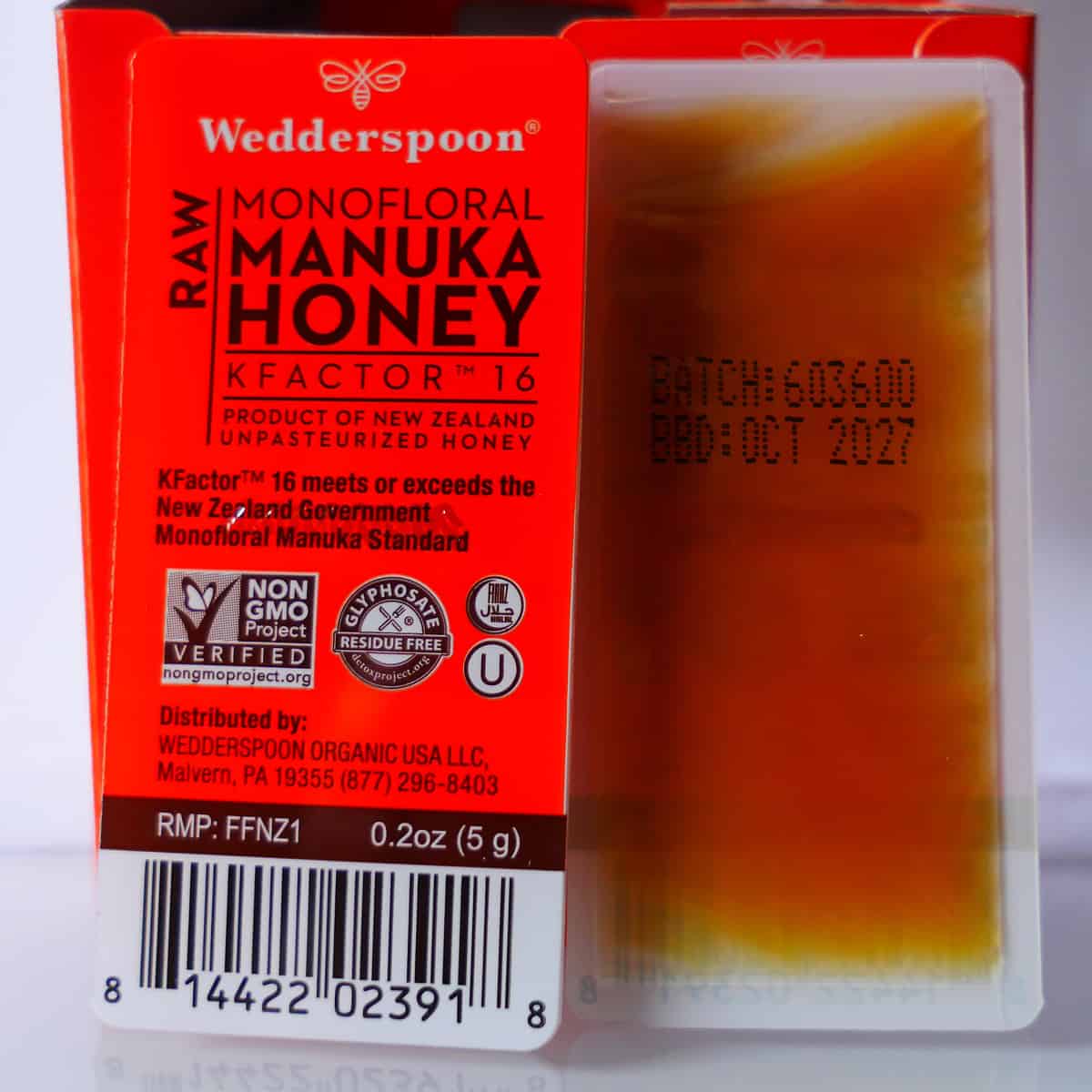
    That’s why I put the Wedderspoon KFactor 16 Squeeze Packets through our Vault Protocol.

    While most portable honey is a processed blend of unknown origins, Wedderspoon claims a different standard. In this review, we’re looking past the convenient packaging to see if the chemistry matches the marketing. We’ll be cross-referencing these batches against the standards set in our Manuka Vault and using the forensic tools detailed in our How We Test methodology.

    Is this true raw nectar, or just another “liquid gold” marketing play? Let’s look at the data.


    Welcome to the Honey Review. If you’re new go ahead and subscribe for updates on all my future reviews.

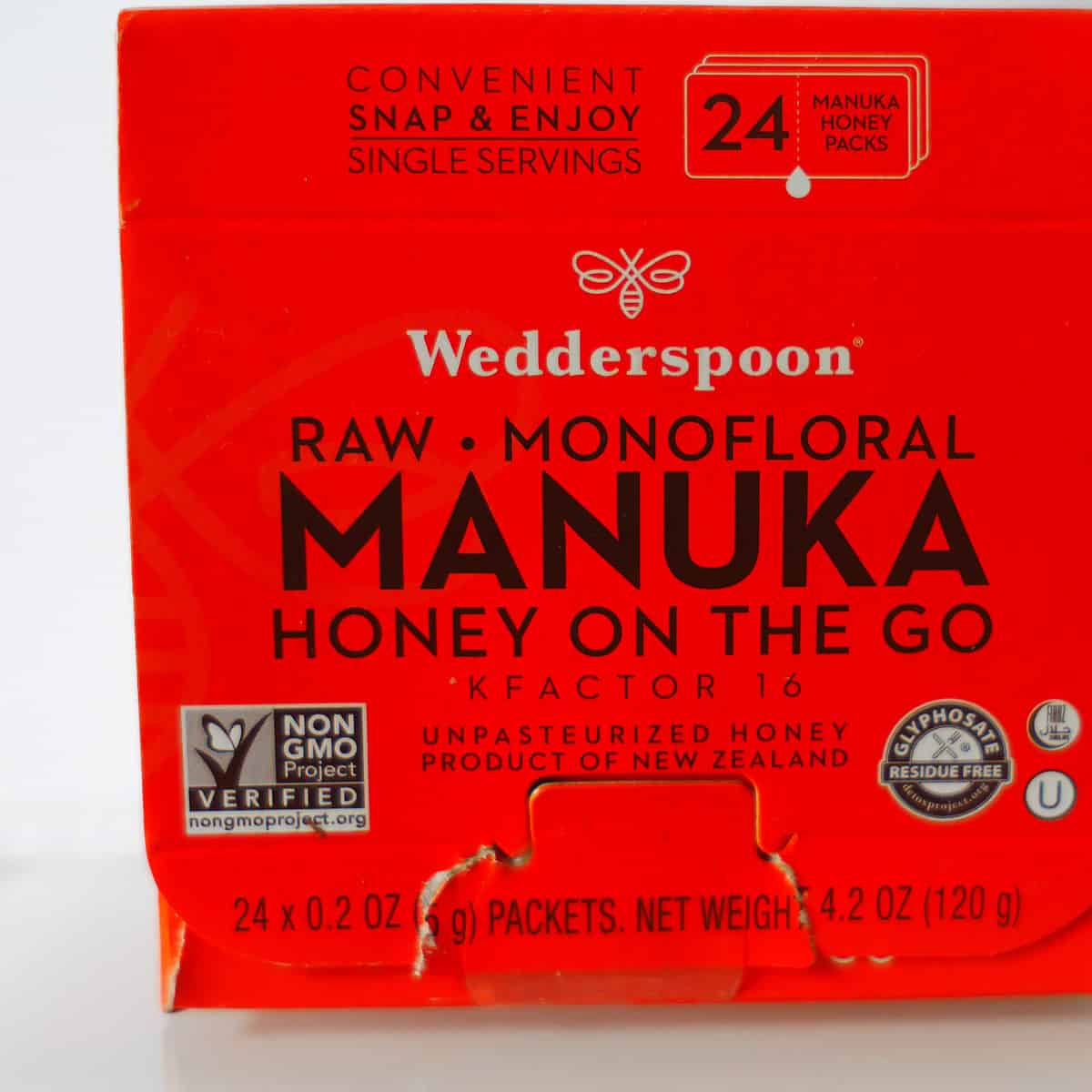
    Wedderspoon on the Go Manuka Honey

    Wedderspoon on the go manuka honey

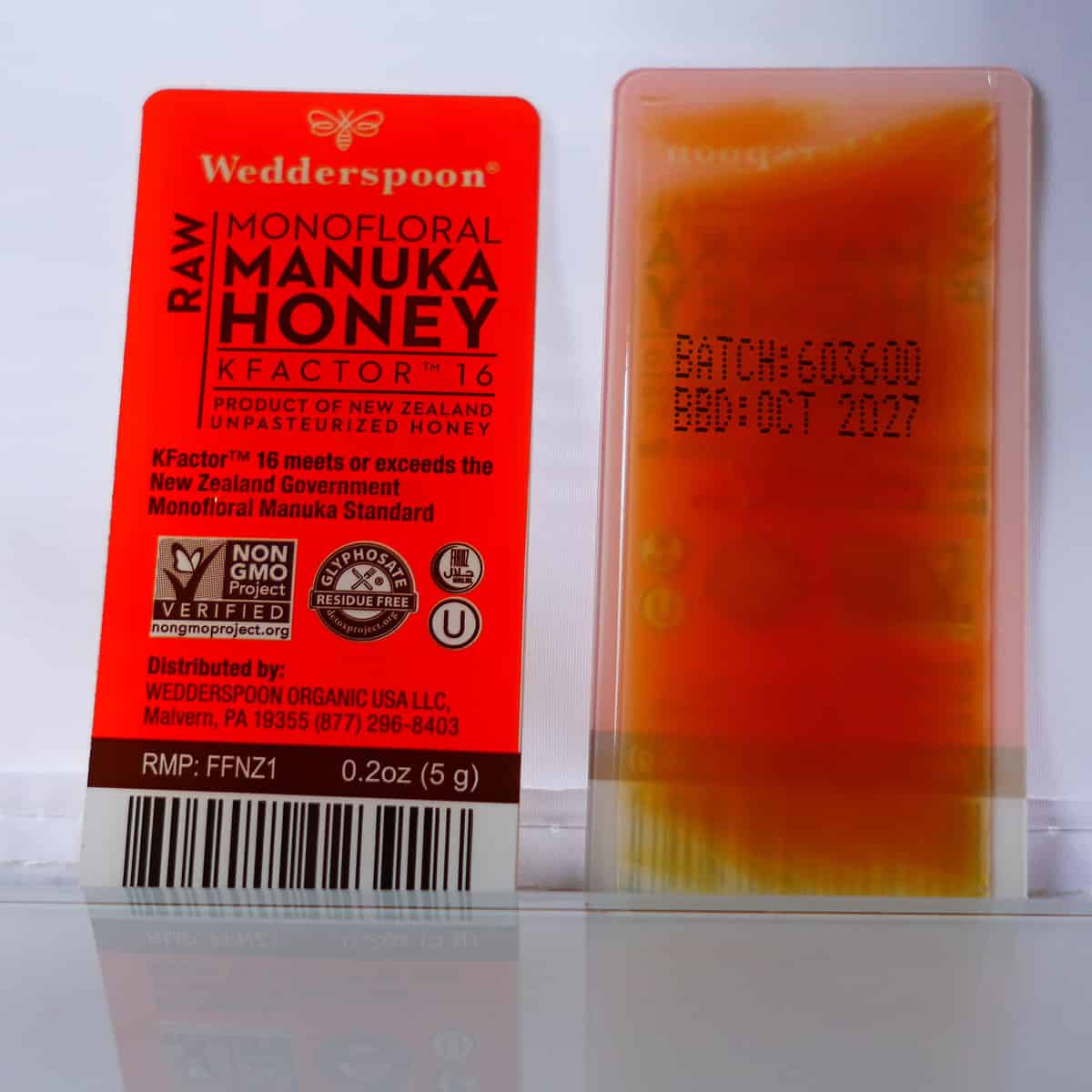
    Wedderspoon’s on the go Manuka Honey is a convenient and delicious way to enjoy the benefits of raw, non-GMO project verified KFactor 16 Monofloral Manuka Honey. These take-anywhere, travel-sized individual packs are perfect for busy lifestyles, whether you’re traveling, adding a healthy treat to kids’ lunches, or looking for a natural energy boost.

    wedderspoon on the go manuka honey

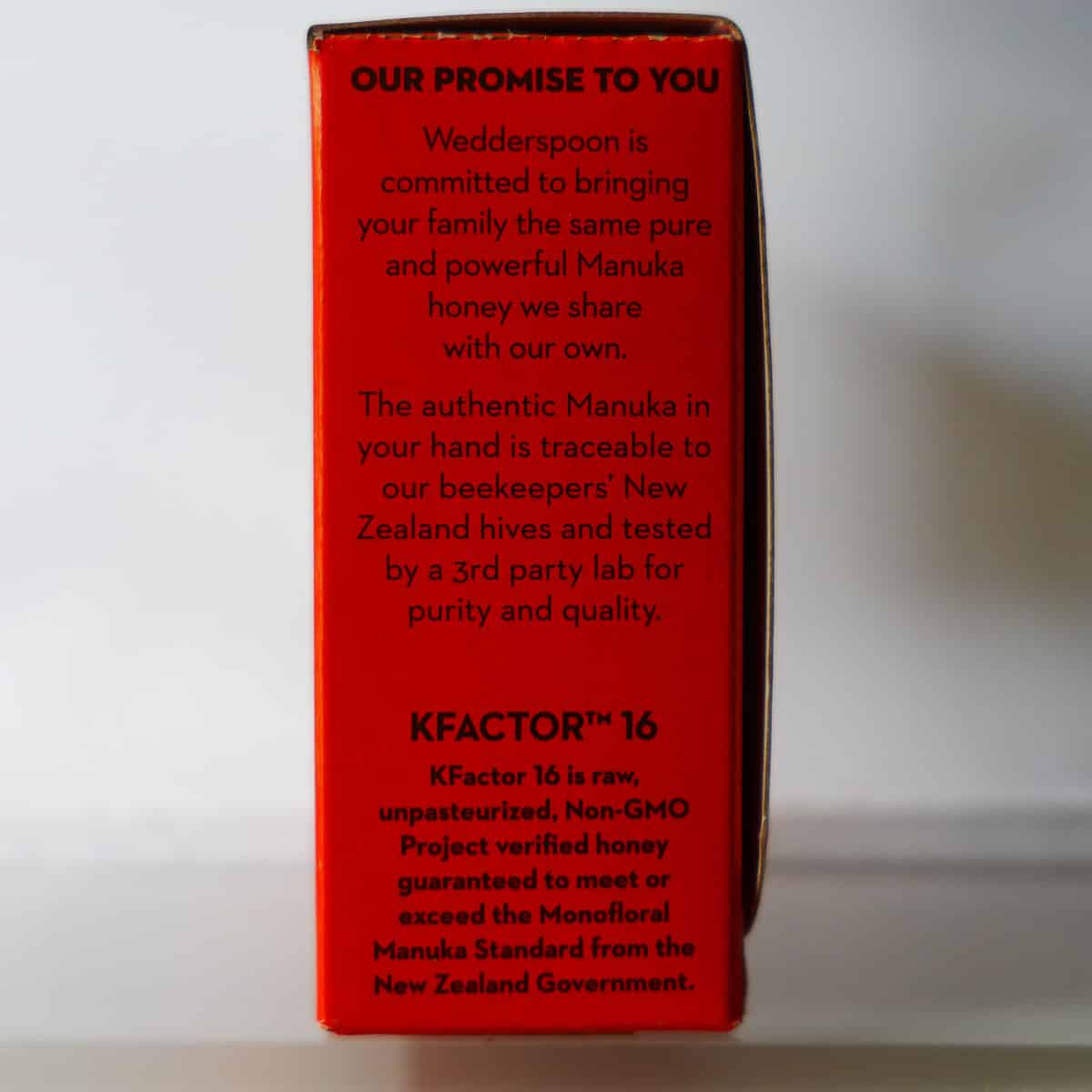
    Manuka honey is one of Mother Earth’s rarest gifts, made exclusively by bees that feast on the nectar of New Zealand’s wild Manuka flowers. Wedderspoon is committed to comprehensive Manuka honey integrity, with every batch fully traceable from their South Island hives to your home. Their raw Manuka honey is never subjected to high heat processing and is independently tested to meet or exceed the Monofloral Manuka standard set by the government of New Zealand.

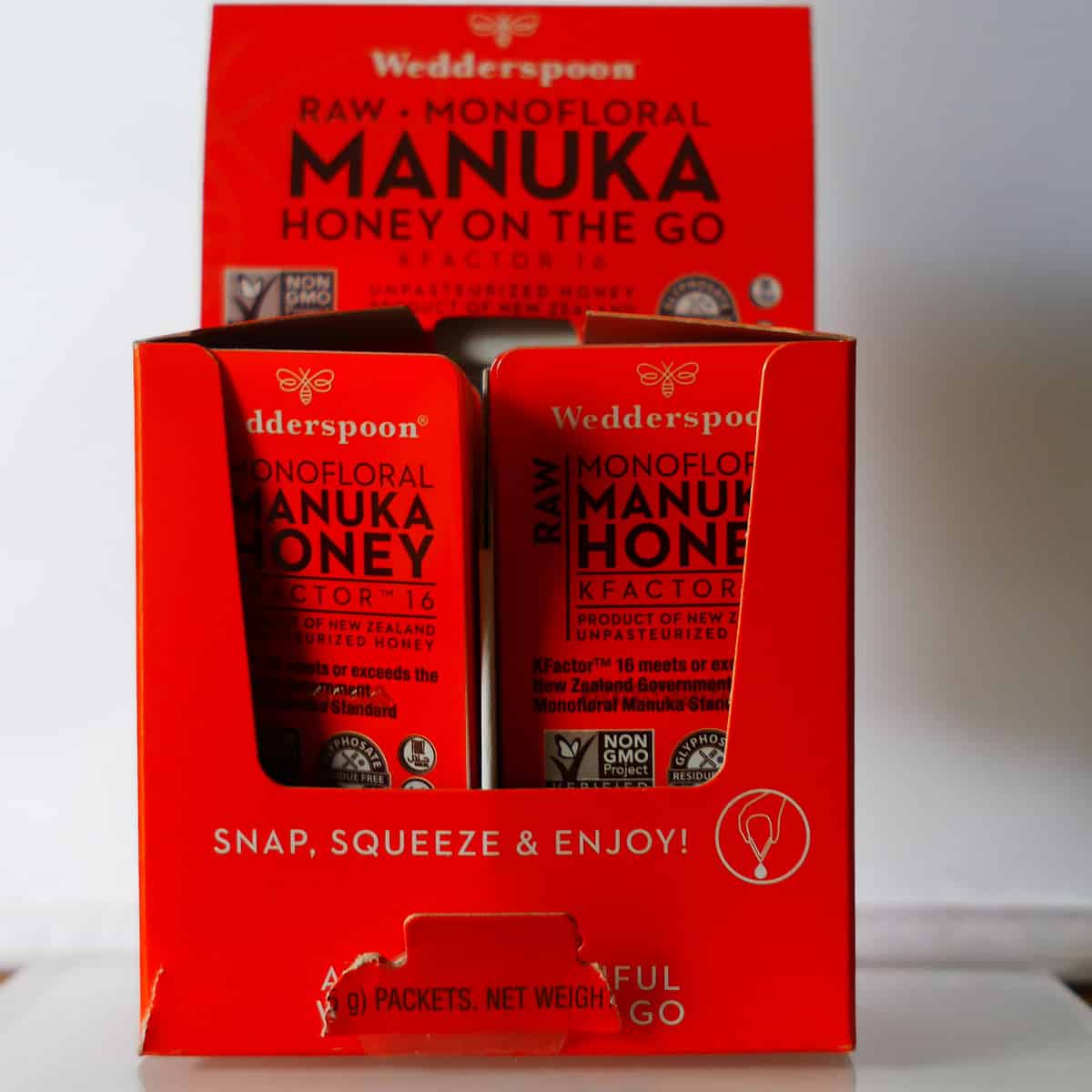
    wedderspoon on the go packets display

    Easy to Open for Kids

    packs of manuka raw monofloral on the go honey

    In addition to its delicious taste, Manuka honey has numerous health benefits and can be used as a daily energy boost, for home remedies, pre- and post-workout, for beauty applications, and as a better-for-you sweetener. It is free of antibiotics, pesticides, and glyphosate. My kids love these, and they’re good for them and highly convenient.

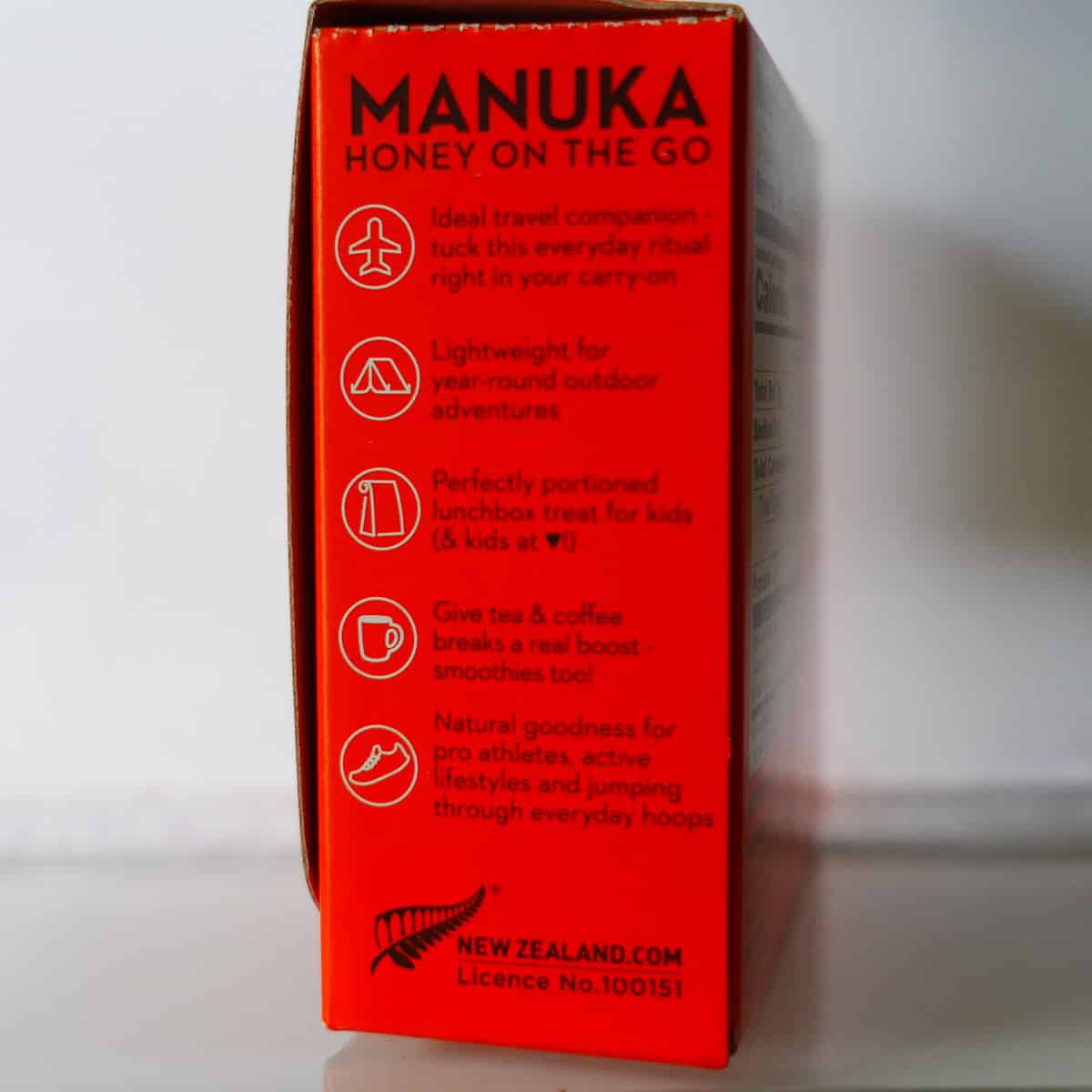
    The Wedderspoon KFactor 16 Manuka Honey On-The-Go is one of the most accessible ways to carry raw Manuka. Unlike bulk jars, these travel-safe packets are designed to prevent oxidation and light damage, which can degrade the medicinal enzymes I track in the lab.

    • Honey Type: Raw, Unpasteurized Monofloral Manuka
    • Portability: 24 individual 0.17 oz (5g) servings
    • Certification: KFactor 16 (Focuses on pollen count and traceability)
    • Best For: Travel, athletic recovery, or a quick digestive soothe during a long shift.
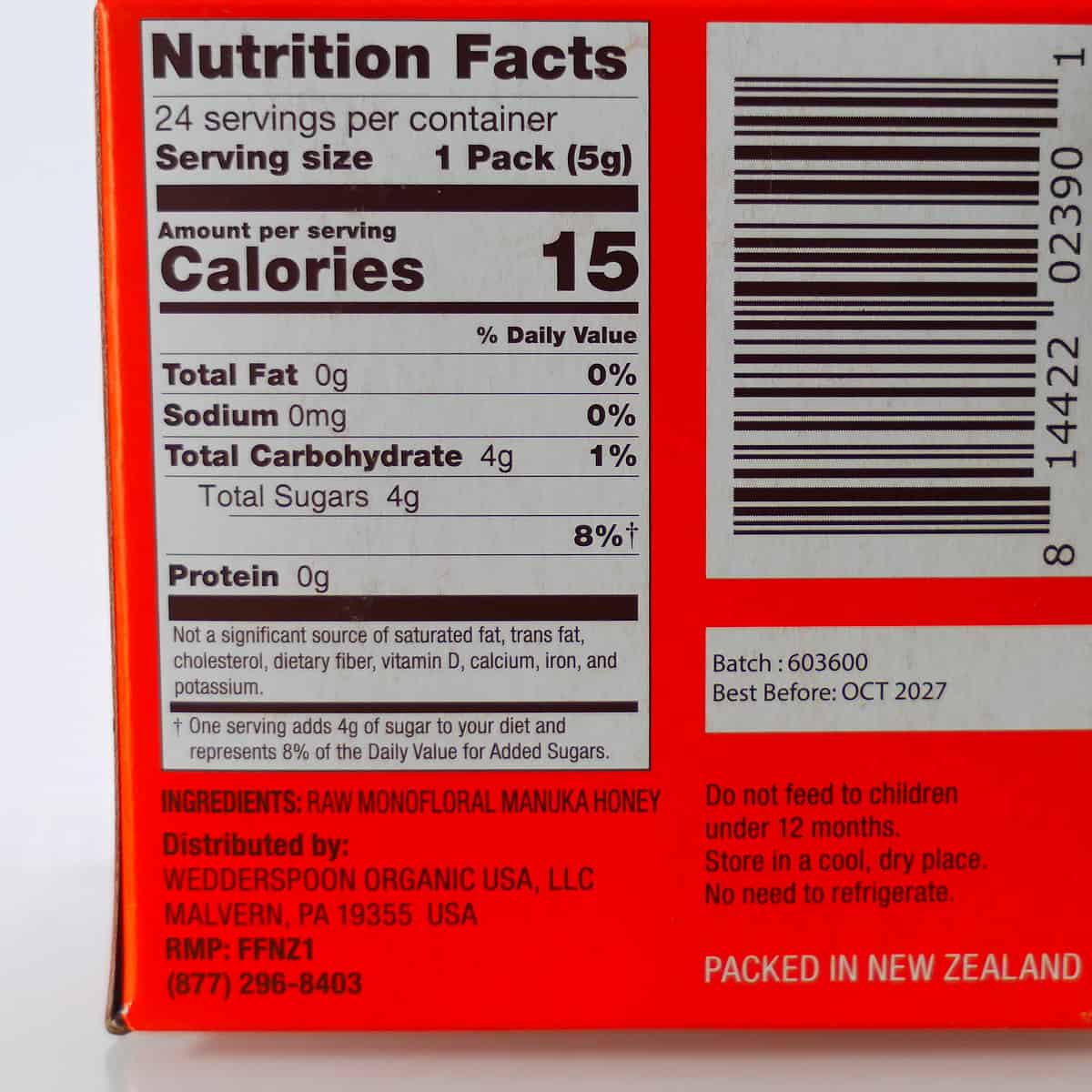
    Wedderspoon Honey Nutrition label

    If you’re looking for a convenient and delicious way to enjoy the benefits of Manuka honey on the go, Wedderspoon’s Manuka Honey on the Go is the perfect solution. Try it today and see for yourself why so many people love this amazing superfood!

    Other Manuka Honey Products

    If you’re curious about other Wedderspoon Honey products I’ve reviewed, check out these:

    FAQ

    What is manuka honey and what makes it different from regular honey?

    Manuka honey is a type of honey that comes from the nectar of the manuka flower, which grows only in New Zealand. Manuka honey has a distinctive flavor and aroma, and it contains a high level of methylglyoxal (MGO), a compound that gives it antibacterial and anti-inflammatory properties. Regular honey also has some antibacterial activity, but it is mainly due to hydrogen peroxide, which can be easily destroyed by heat, light, and enzymes. Manuka honey’s MGO is more stable and potent, and it can help fight infections, heal wounds, and improve digestion.

    How can I use manuka honey for health and wellness?

     Manuka honey can be used in many ways to support your health and wellness. You can eat it by itself or add it to your food and drinks as a natural sweetener. You can also apply it topically to your skin to treat acne, eczema, burns, cuts, and other minor injuries. You can also use it as a natural remedy for sore throat, cough, cold, flu, allergies, and other respiratory problems. Just take a teaspoon of manuka honey and let it dissolve in your mouth or mix it with warm water, lemon juice, and ginger.

    How do I choose the best quality manuka honey?

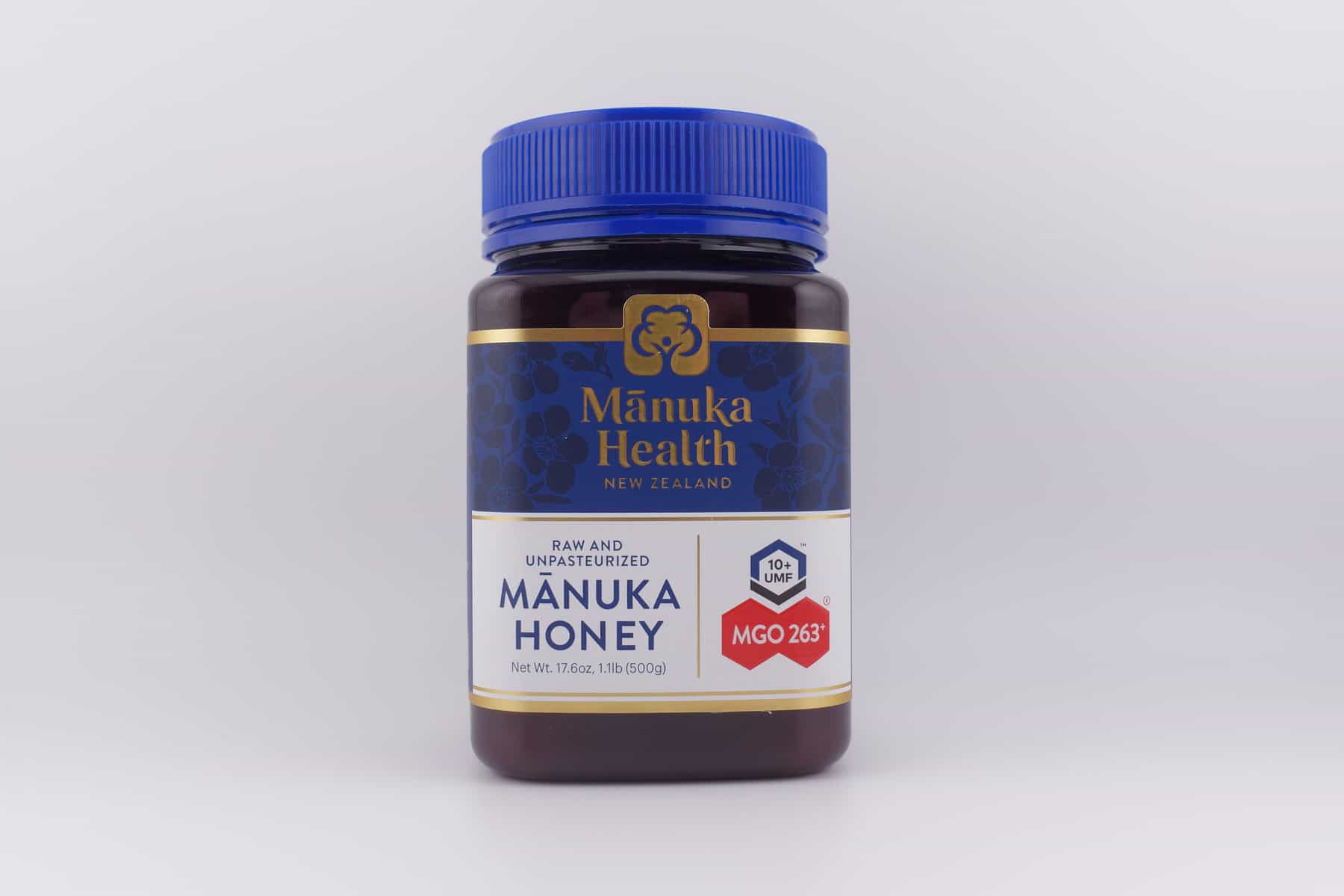
    The quality of manuka honey depends on its purity, potency, and authenticity. To ensure that you are getting genuine manuka honey from New Zealand, look for the UMF (Unique Manuka Factor) or MGO (Methylglyoxal) rating on the label. These ratings indicate the amount of MGO in the honey, which reflects its antibacterial strength. The higher the rating, the higher the MGO content. For example, UMF 10+ or MGO 263+ means that the honey contains at least 263 mg of MGO per kg of honey. You should also look for the New Zealand FernMark logo or the MPI (Ministry for Primary Industries) statement on the label, which certify that the honey meets the New Zealand government’s standards for manuka honey.

    What are the benefits and risks of consuming manuka honey?

    Manuka honey has many benefits for your health and wellness, such as:

    It can help fight bacteria, viruses, fungi, and parasites that cause infections and diseases.
    It can help heal wounds, ulcers, burns, and other skin conditions by reducing inflammation, pain, and scarring.
    It can help improve digestion, metabolism, and immunity by balancing the gut flora and enhancing the absorption of nutrients.
    It can help soothe sore throat, cough, cold, flu, allergies, and other respiratory problems by reducing mucus production and inflammation.
    It can help improve oral health by preventing plaque formation and tooth decay.

    What are the possible risks?

    It is high in sugar and calories, so you should consume it in moderation and not exceed the recommended daily intake of 25 g (about 6 teaspoons) per day.
    It may cause allergic reactions in some people who are sensitive to bee products or pollen. Symptoms may include hives, itching, swelling, difficulty breathing, or anaphylaxis.
    It may interact with some medications or supplements that affect blood sugar levels or blood clotting. If you are taking any such drugs or herbs, consult your doctor before using manuka honey.
    It may not be suitable for infants under one year old due to the risk of botulism. Botulism is a rare but serious illness caused by a toxin produced by bacteria that can grow in honey. It can cause muscle weakness, paralysis, breathing problems.

    “Convenience is great, but purity is paramount. If you’re ready to see how this on-the-go packet compares to the world’s most elite jars, head over to my Manuka Vault for the full rankings.”

  • Wedderspoon Raw Monofloral Manuka Honey Review

    Wedderspoon Raw Monofloral Manuka Honey Review

    As a beekeeper and honey taster, I have a passion for finding and sharing the best honeys in the world. One of my favorites is Wedderspoon Raw Monofloral Manuka Honey, which comes from the wild Manuka flowers that bloom in the pristine forests of New Zealand. This honey is a treasure of nature, with amazing healing and nutritional properties that have been recognized by the Maori people for generations.

    Wedderspoon Raw Monofloral Manuka Honey is not only a delight for the taste buds, but also a powerhouse of antioxidants, enzymes, and phytonutrients that can enhance your immunity, digestion, skin, and more. In this review, I will tell you more about the benefits, features, and quality of Wedderspoon Raw Monofloral Manuka Honey, and help you decide if it is the right honey for you.

    (more…)
  • Wedderspoon Manuka Honey Organic Lipcare Review

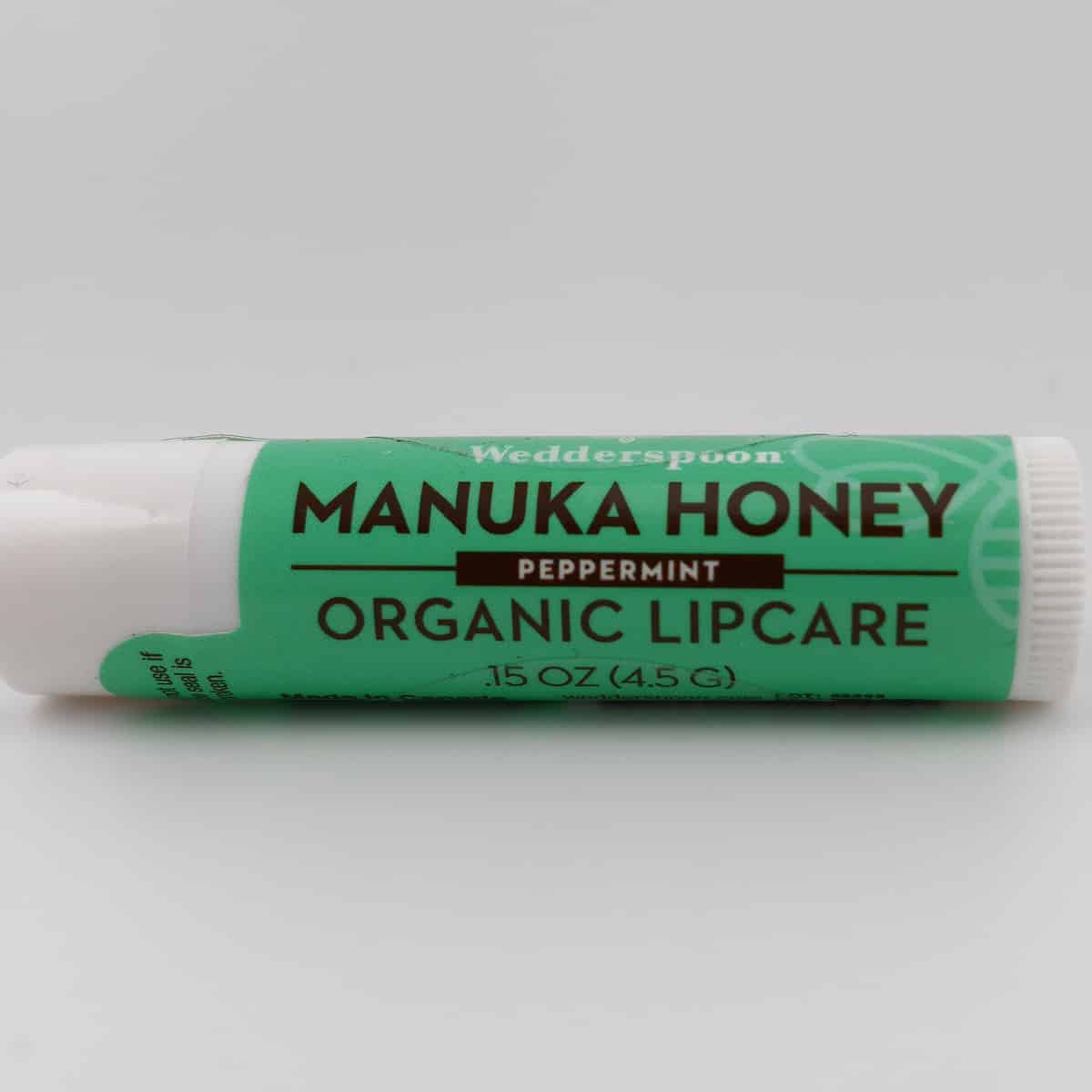
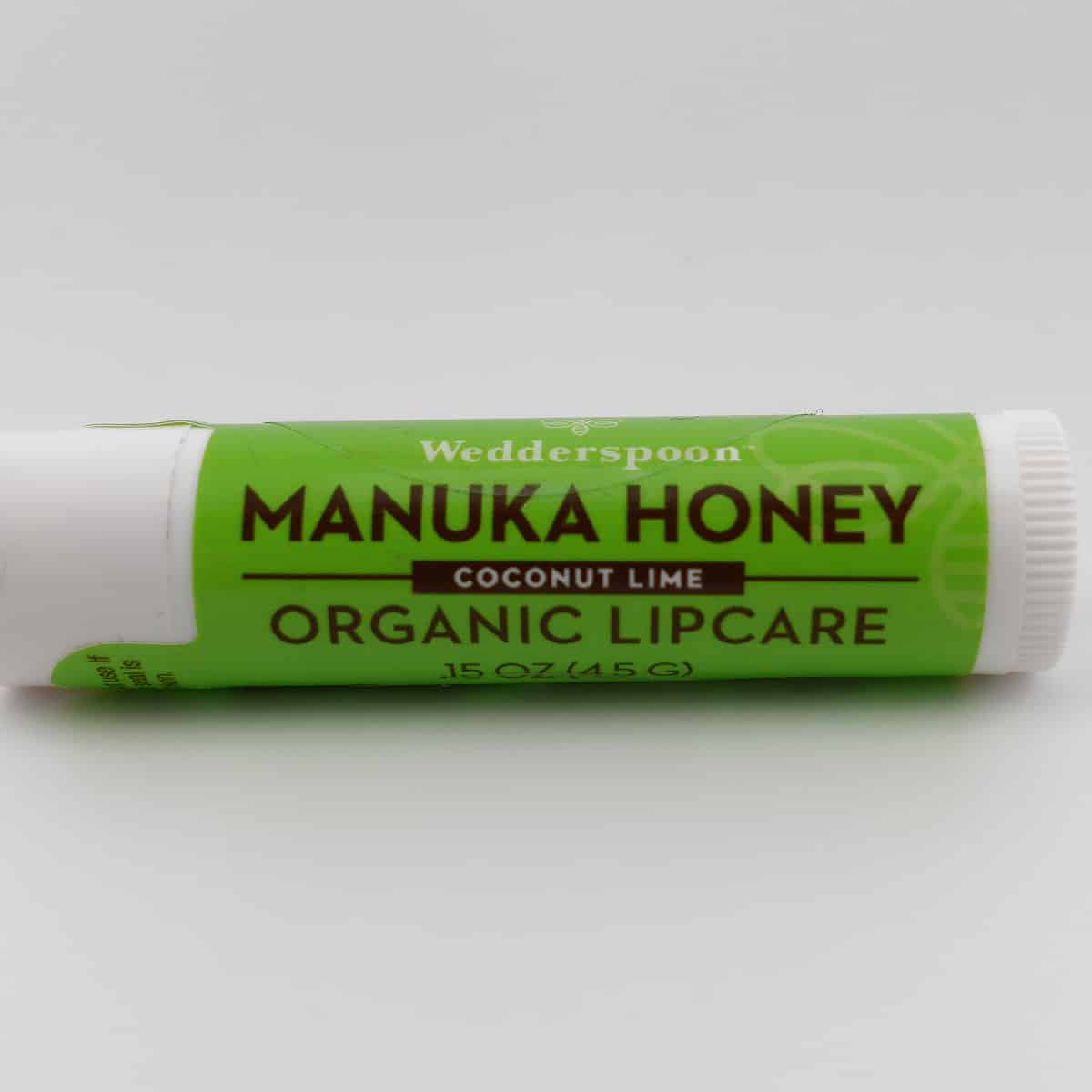
    Wedderspoon Manuka Honey Organic Lipcare Review

    Are you looking for a natural and effective way to keep your lips soft and healthy? Do you want to avoid harsh chemicals and artificial ingredients that can dry out and damage your lips? If you answered yes, then you might be interested in Wedderspoon Manuka Honey Organic Lipcare, a product that claims to nourish, moisturize and protect your lips with the power of Manuka honey.

    Does this product help soften and moisturize your lips? Read on to find out in my review.

    Wedderspoon is a company that truly stands by its commitment to sustainability. They use organic and sustainably sourced ingredients, and their bees are raised in hives that are treated ethically and responsibly.

    The company holds a Bee-Friendly certification, ensuring that their production practices are environmentally friendly and prioritize the well-being of honeybees.

    Wedderspoon Organic Manuka Honey Lipcare

    Now, let’s get down to the product itself. Wedderspoon Manuka Lipcare comes in sleek and minimalistic packaging with a twist-up design that makes it easy to use.

    The texture of the balm is smooth and silky, without feeling too heavy or oily on the lips. The scents are natural and subtle, with a delicate sweetness from the manuka honey.

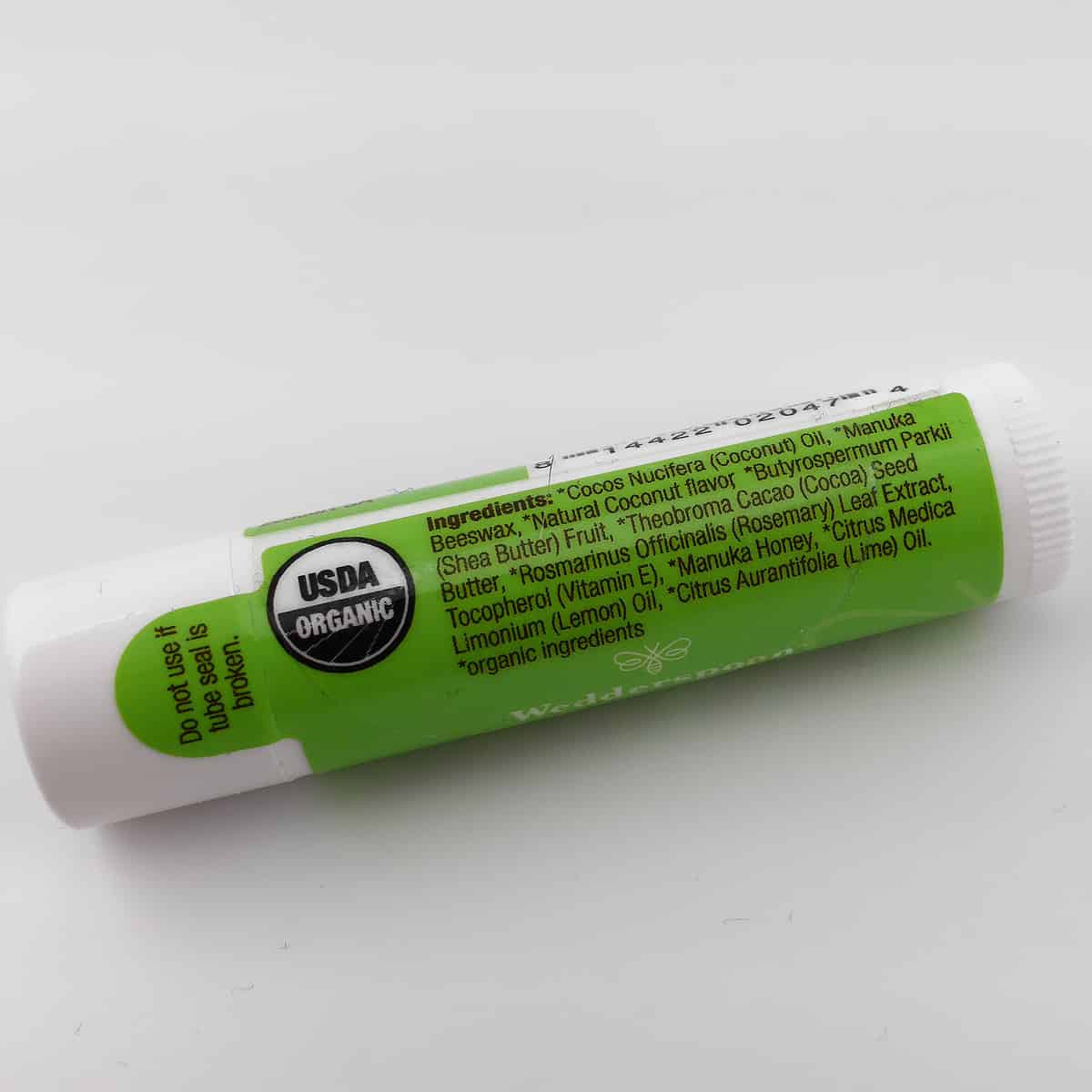
    Key Ingredient: Manuka Honey

    The key ingredient in this lip balm is manuka honey, which is renowned for its antibacterial and antimicrobial properties. When used in a balm, manuka honey can help to protect the lips from environmental stressors and keep them hydrated.

    The balm also contains Manuka beeswax and honey. Also utilizing shea butter, cocoa butter, which work together to nourish and moisturize the lips.

    Comparison

    • Compared to Burt’s Bees Original Beeswax Lip Balm, Wedderspoon Organic Manuka Honey Lipcare has a higher price point ($3.59 vs $2.99 for 0.15 oz) but also has more organic ingredients and a higher concentration of manuka honey.
    • Compared to Fresh Sugar Lip Treatment Sunscreen SPF 15, Wedderspoon Organic Manuka Honey Lipcare does not have SPF protection or tinted color options, but it has fewer synthetic ingredients and a more natural flavor.
    • Compared to Blistex Medicated Lip Balm SPF 15, Wedderspoon Organic Manuka Honey Lipcare does not have medicated or cooling effects, but it has a more gentle and soothing formula that is suitable for sensitive lips.
    • Compared to Glossier Balm Dotcom, Wedderspoon Organic Manuka Honey Lipcare has a simpler and more transparent ingredient list, but it does not have as many flavor or texture variations.

    Synthetic Ingredients To Avoid

    Some of the synthetic ingredients that are commonly found in other lip balms are:

    • Parabens: These are preservatives that prevent the growth of bacteria and fungi in cosmetic products. However, they may also disrupt the endocrine system and cause allergic reactions.
    • Petroleum: This is a by-product of oil refining that creates a barrier on the lips to lock in moisture. However, it may also clog pores, cause irritation, and contain harmful contaminants.
    • Phenol, menthol, and salicylic acid: These are ingredients that have cooling, exfoliating, or antiseptic effects on the lips. However, they may also dry out the lips, cause inflammation, or trigger allergic reactions.
    • Fragrances: These are chemicals that add scent to lip balms. However, they may also cause irritation, inflammation, or allergic reactions, especially for people with eczema.
    • Propylene glycol: This is a humectant that attracts moisture to the lips. However, it may also cause irritation, inflammation, or allergic reactions¹².
    • Alcohol: This is a solvent that dissolves other ingredients in lip balms. However, it may also dry out the lips, cause irritation, or trigger allergic reactions.

    Honest Opinion

    My opinion of this balm is that it’s a fantastic choice for anyone who wants to invest in a sustainable lip care product. The ingredients make it a perfect choice for those with chapped lips, as it helps to keep them hydrated and healthy.

    Summary

    In summary, I’d recommend the Wedderspoon Manuka Honey Organic Lipcare to anyone in search of an excellent natural lip care product. It’s a sustainable and healthy choice for anyone seeking to treat their lips to some high-quality nourishment.

    By choosing a lip balm that is both effective and supportive of sustainable practices, you’re doing your part in promoting ethical and environmentally-friendly production practices. Why not support a company that utilizes bees?

    Wedderspoon Manuka Honey Lipcare Review

    The Honey Reviewer

    Summary

    If you are looking for a natural and organic lip balm that moisturizes, nourishes and protects your lips, you might want to try Wedderspoon Organic Honey Lip Balm. This lip balm is made with organic manuka honey, beeswax, coconut oil, shea butter and other natural ingredients that provide hydration and healing benefits for dry and chapped lips. In this review summary, I will share my personal experience with this product, as well as some pros and cons, and a rating based on its quality, effectiveness and value.

    I bought Wedderspoon Organic Honey Lip Balm online after reading some positive reviews about it. I have sensitive lips that tend to crack and peel easily, especially in cold weather. I was looking for a lip balm that could soothe and repair my lips without irritating them or leaving a sticky residue. I was also attracted by the fact that this lip balm is certified organic, cruelty-free and gluten-free, which means it is safe and ethical to use.

    The first thing I noticed when I received the lip balm was its packaging. It comes in a simple tube that is easy to open and close, and it fits well in my purse or pocket. The lip balm itself has a smooth and creamy texture that glides on easily and evenly. It has a subtle honey scent that is not overpowering or artificial. It feels light and comfortable on my lips, and it does not make them feel greasy or waxy.

    The lip balm delivers what it promises: it moisturizes, nourishes and protects my lips. After using it for a few days, I noticed that my lips were softer, smoother and more supple. They also looked healthier and more plump. The lip balm helped to heal the cracks and peels on my lips, and it prevented them from getting worse. It also provided a protective barrier against the wind, cold and sun. The lip balm lasted for several hours on my lips, and I only had to reapply it after eating or drinking.

    The only downside of this lip balm is its price. It costs $6.99 for a 0.15 oz tube, which is quite expensive compared to other lip balms on the market. However, I think it is worth the investment because of its high quality, effectiveness and natural ingredients. I also like that it supports a company that cares about the environment and animal welfare.

    Overall, I would highly recommend Wedderspoon Organic Honey Lip Balm to anyone who wants a natural and organic lip balm that moisturizes, nourishes and protects their lips. I would give it a 4.5 out of 5 stars rating based on its quality, effectiveness and value. It is one of the best lip balms I have ever used, and I will definitely repurchase it in the future.

    Save 20% on your first order and get exclusive offers when you sign up with your email


    4

  • Manuka Health Raw Unpasteurized Honey from Costco

    Manuka Health Raw Unpasteurized Honey from Costco

    If you are looking for a delicious and nutritious honey, check out Manuka Health Raw Unpasteurized Honey. This Honey is sourced from Manuka trees in New Zealand. This Manuka Honey from Costco features an MGO scale of 253, UMF 10+, made with raw unpasteurized unifloral goodness. What benefits does Manuka Honey have? Is Manuka worth the price? Is this brand legit? Read on for my review below.

    (more…)
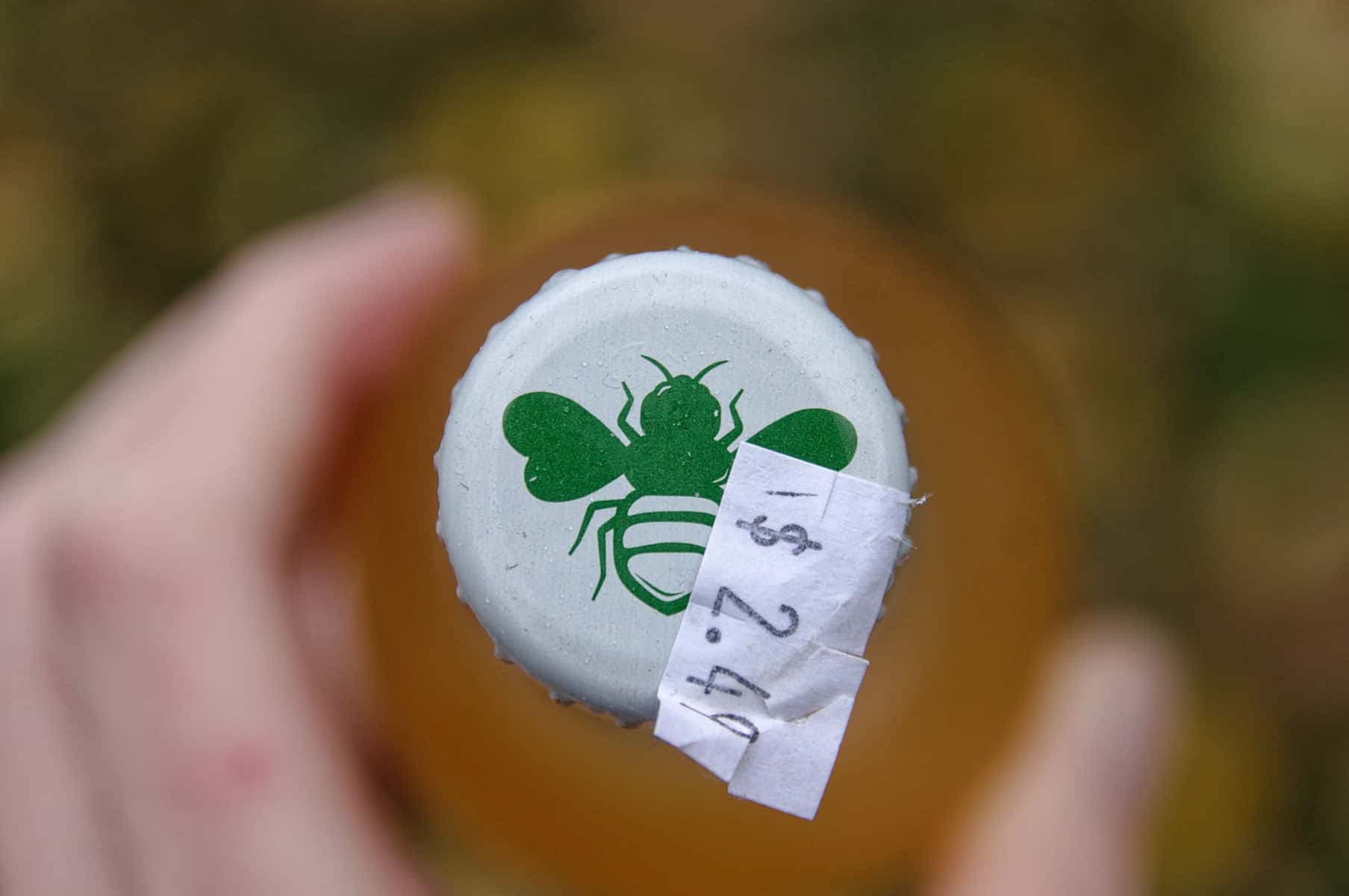
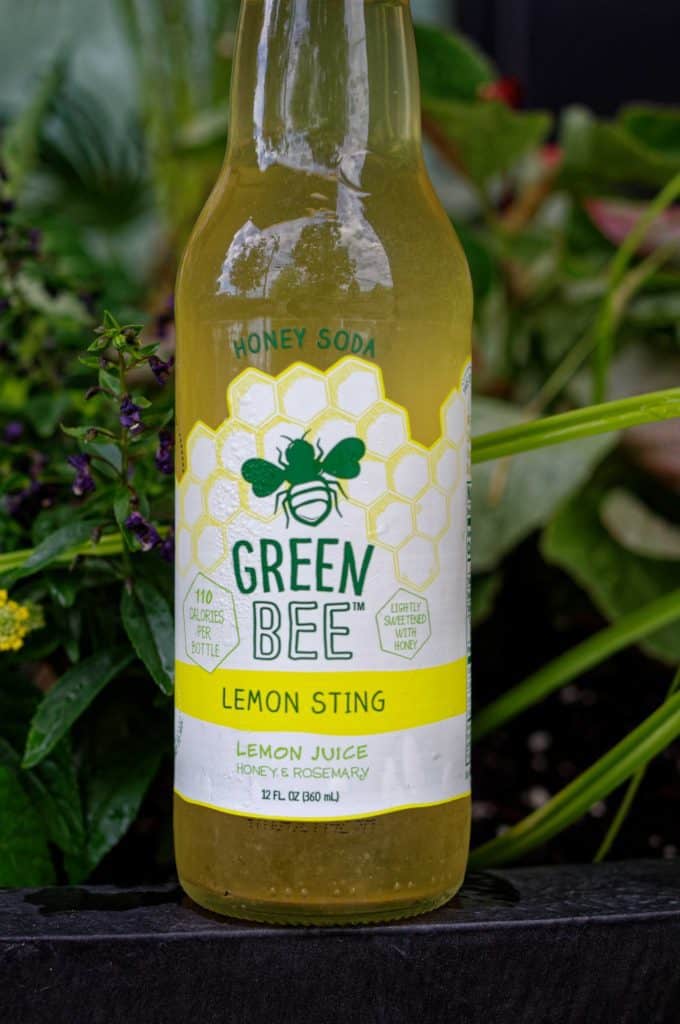
  • Forensic Audit: Green Bee Honeycomb Cider – The Seasonal Synthesis Protocol

    Forensic Audit: Green Bee Honeycomb Cider – The Seasonal Synthesis Protocol


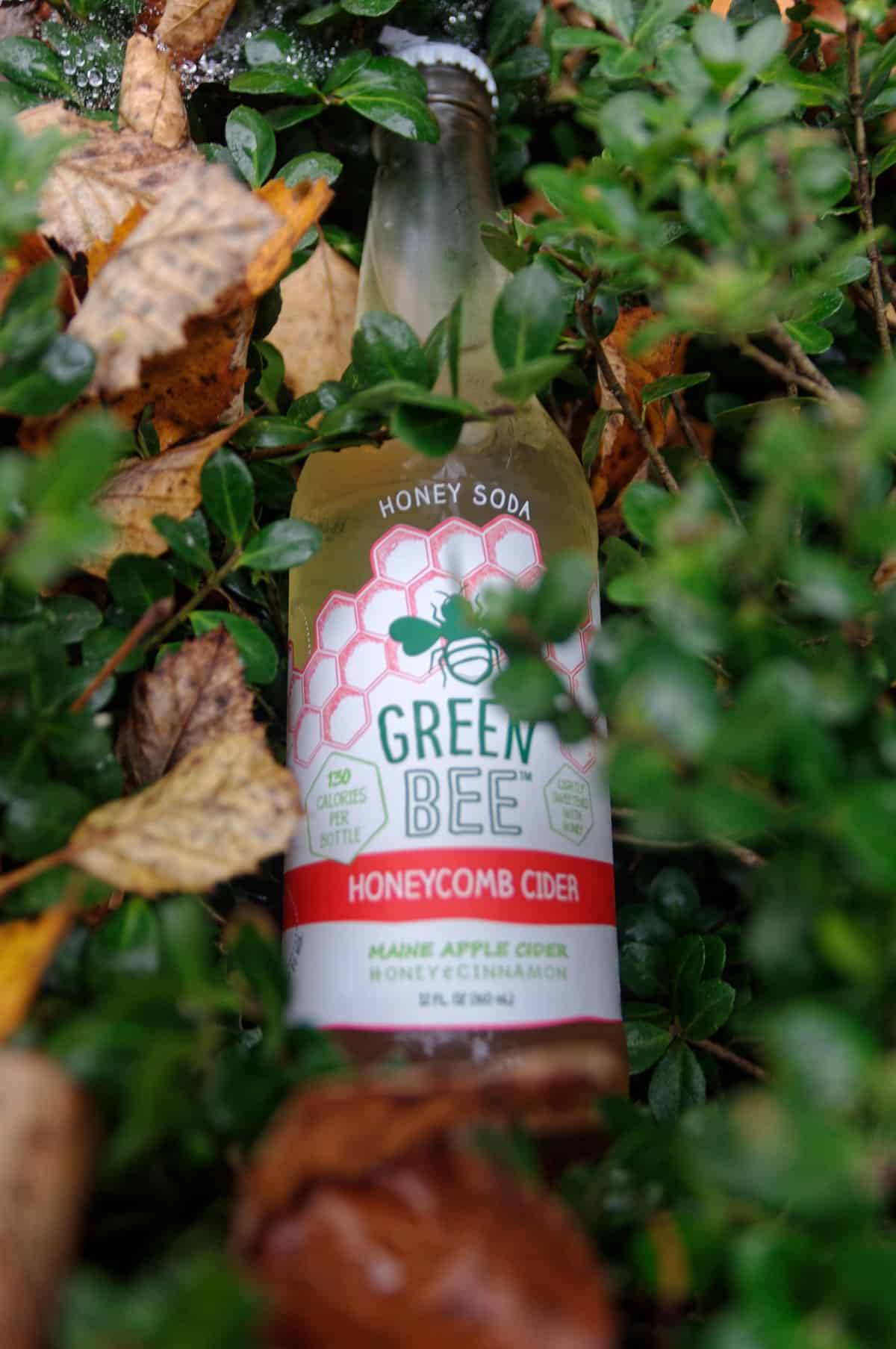
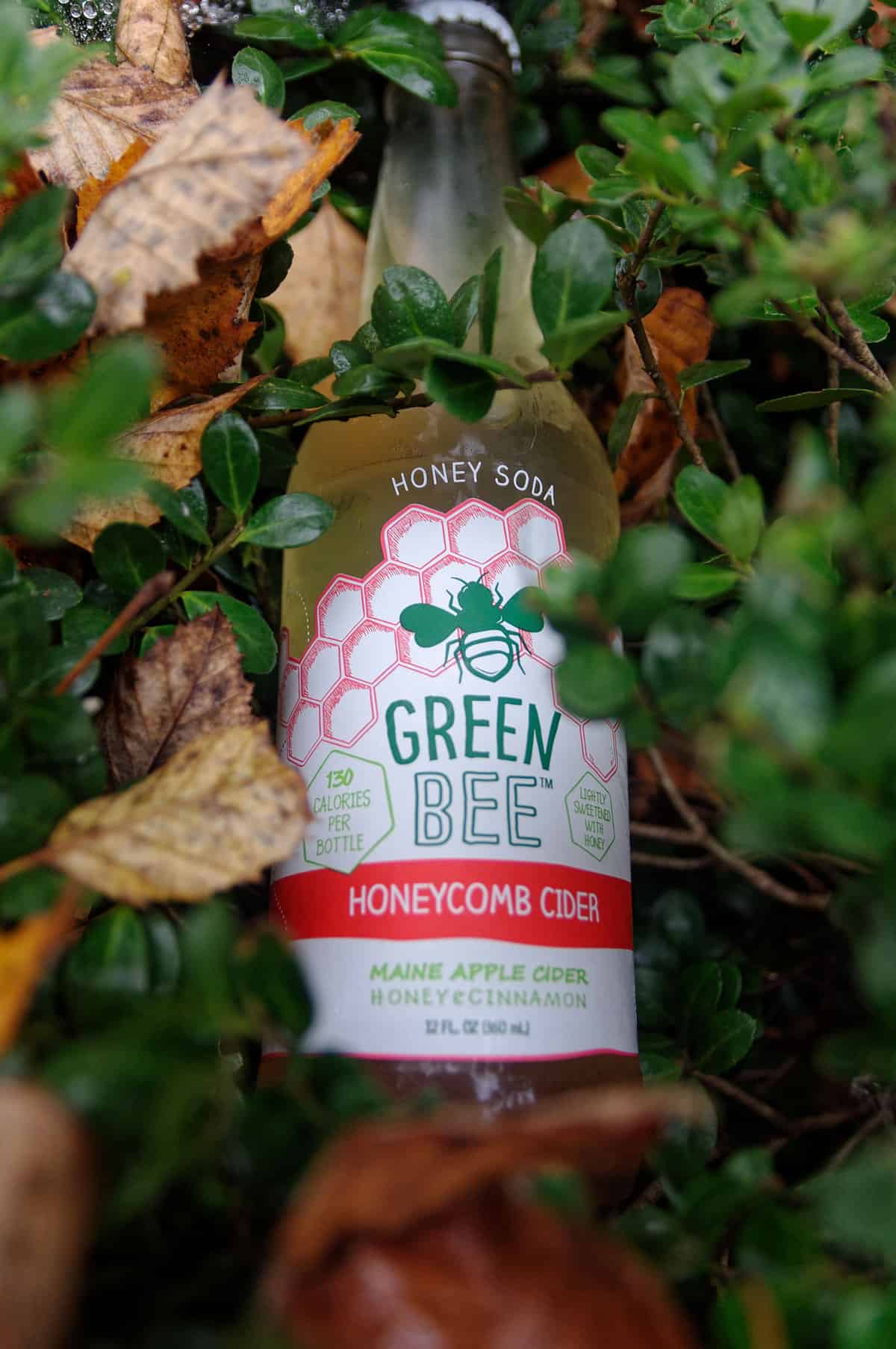
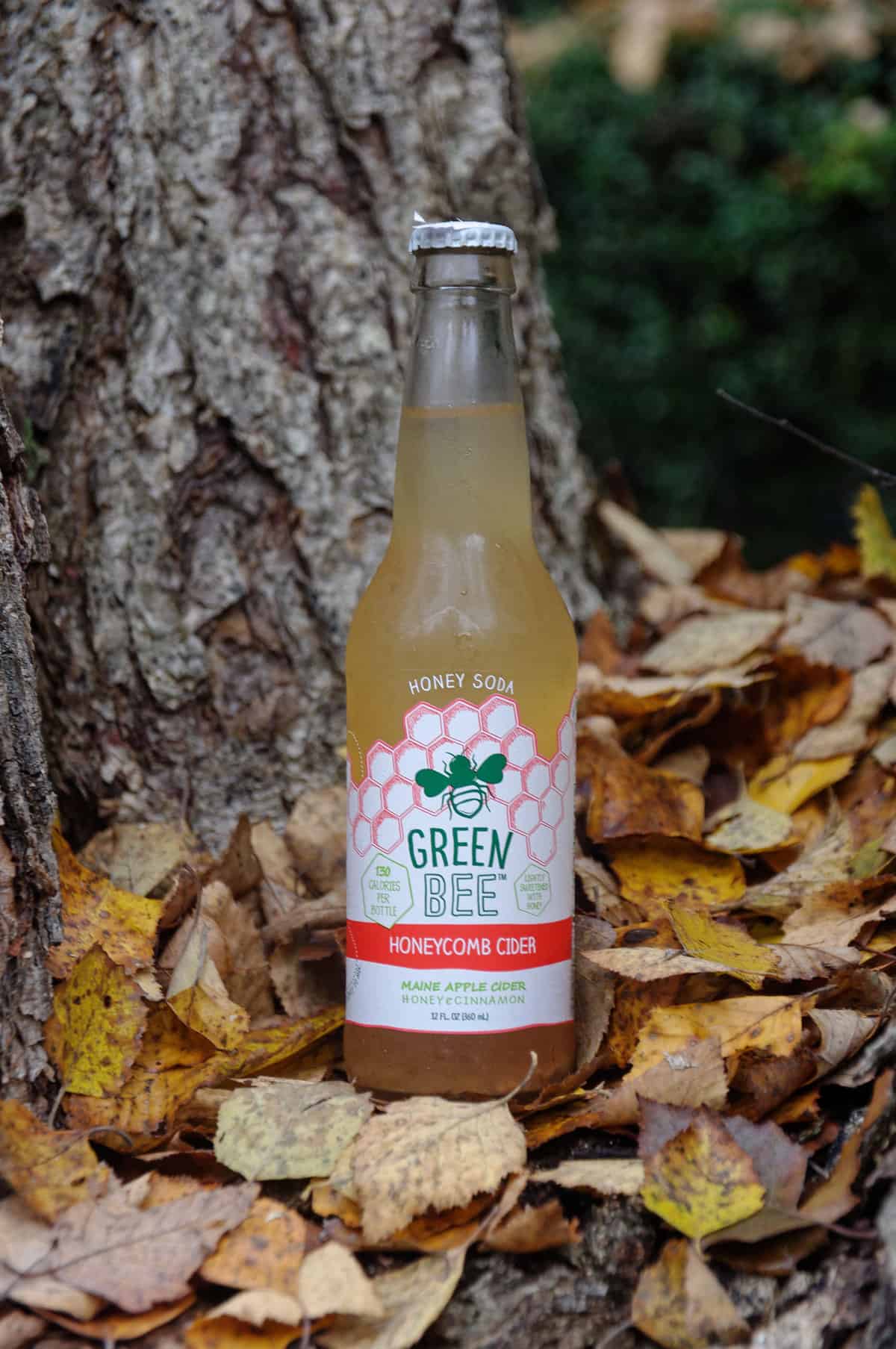
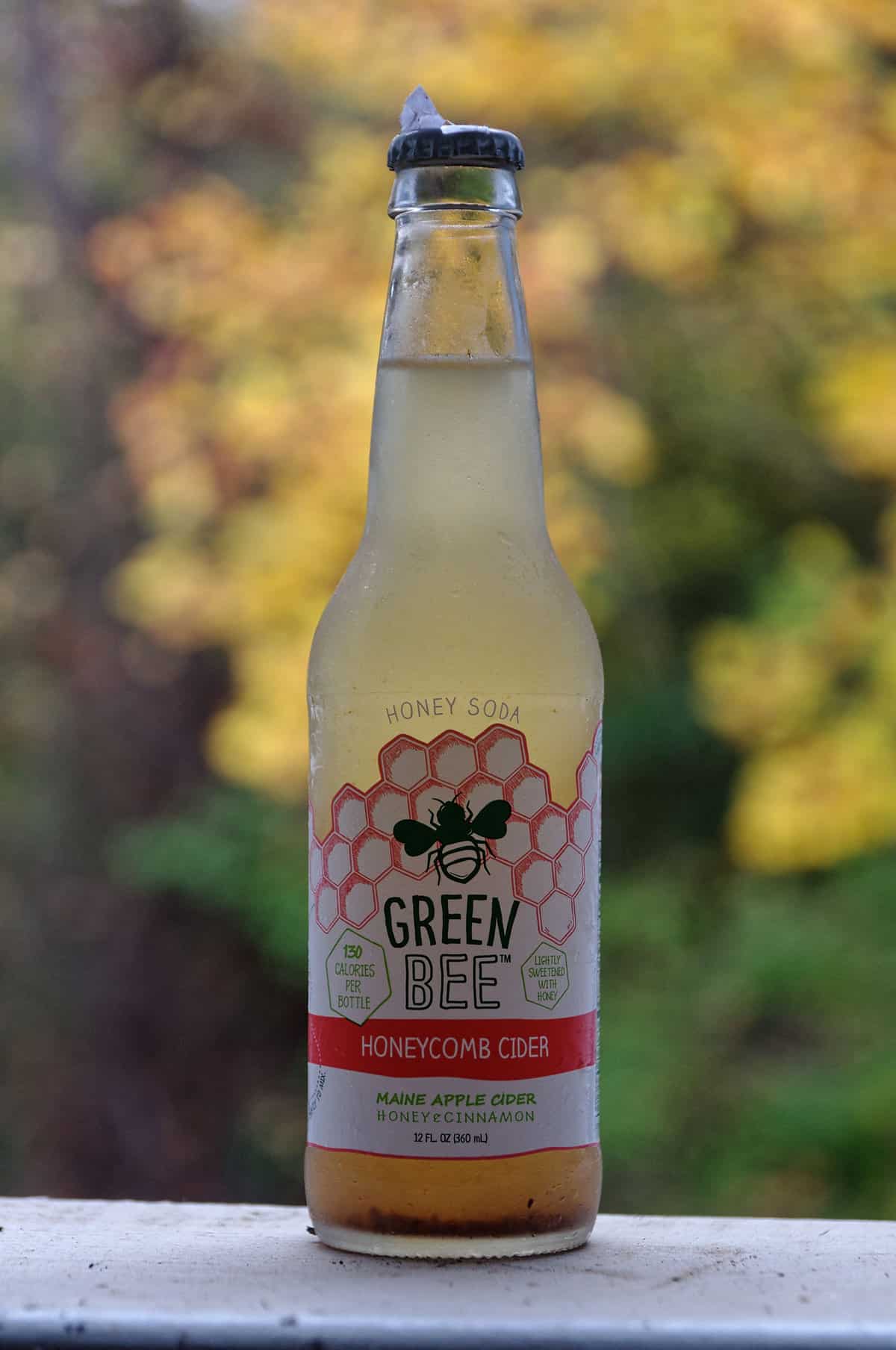
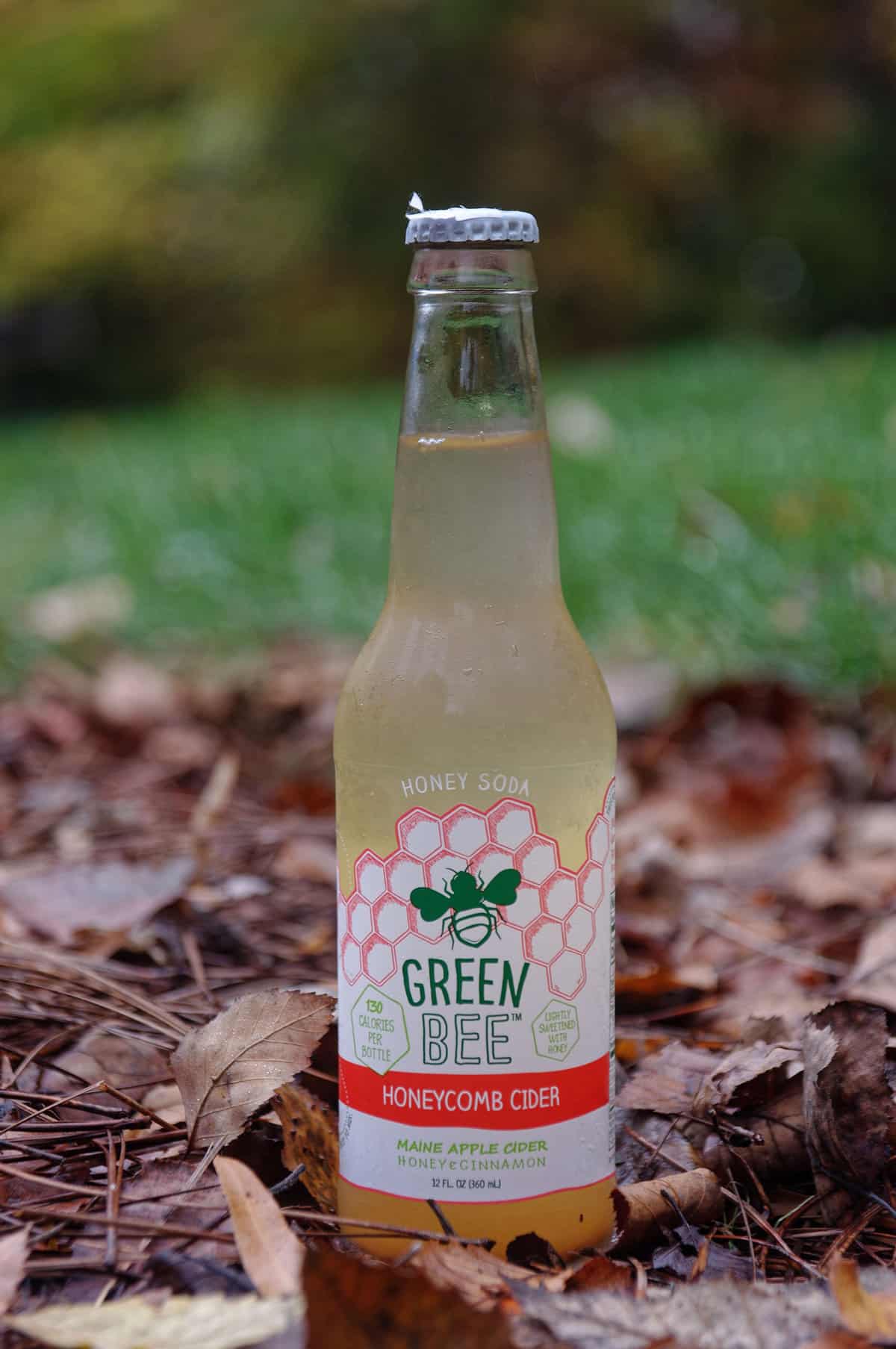
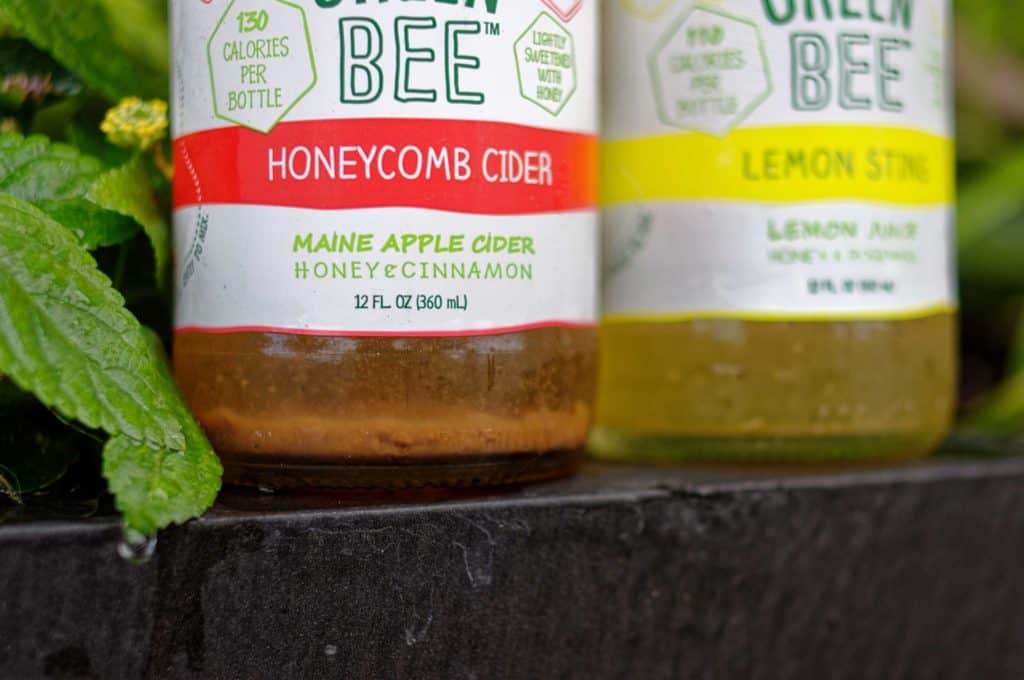
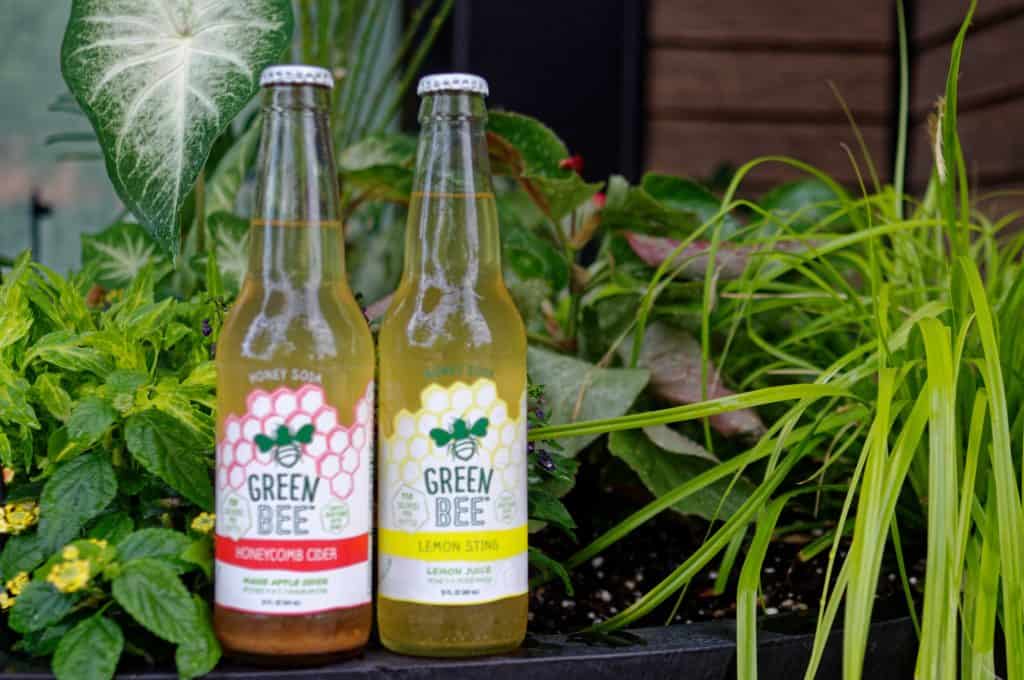
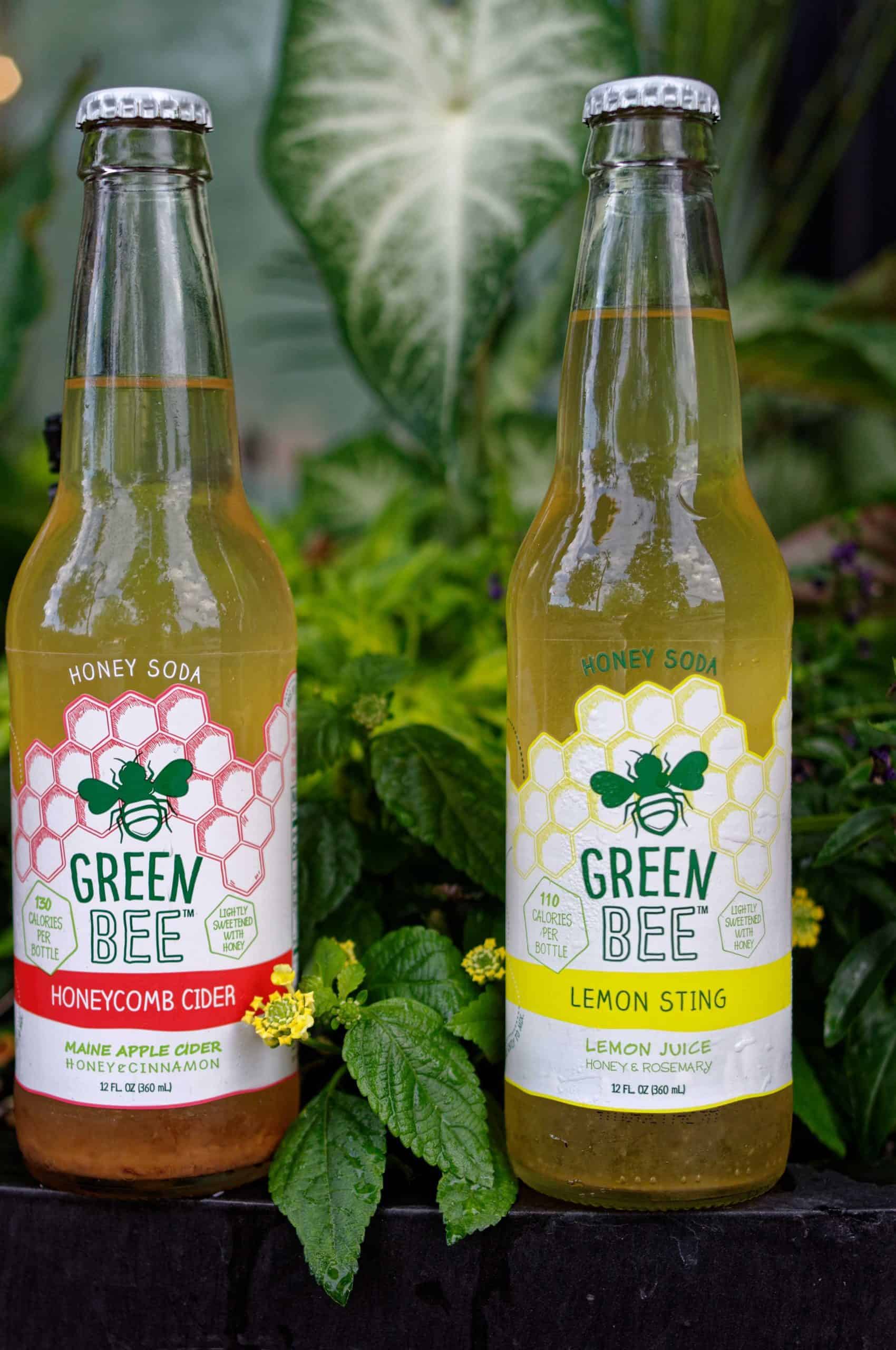
    While The Honey Review has previously audited the muted profile of the Green Tea blend, Green Bee Honeycomb Cider represents the pinnacle of the brand’s “Liquid Synergy” experiments. In the forensic hierarchy of honey beverages, this is not a soda; it is a Sparkling Botanical Cider that leverages the high-fructose profile of apples to carry honey’s more subtle enzymes.

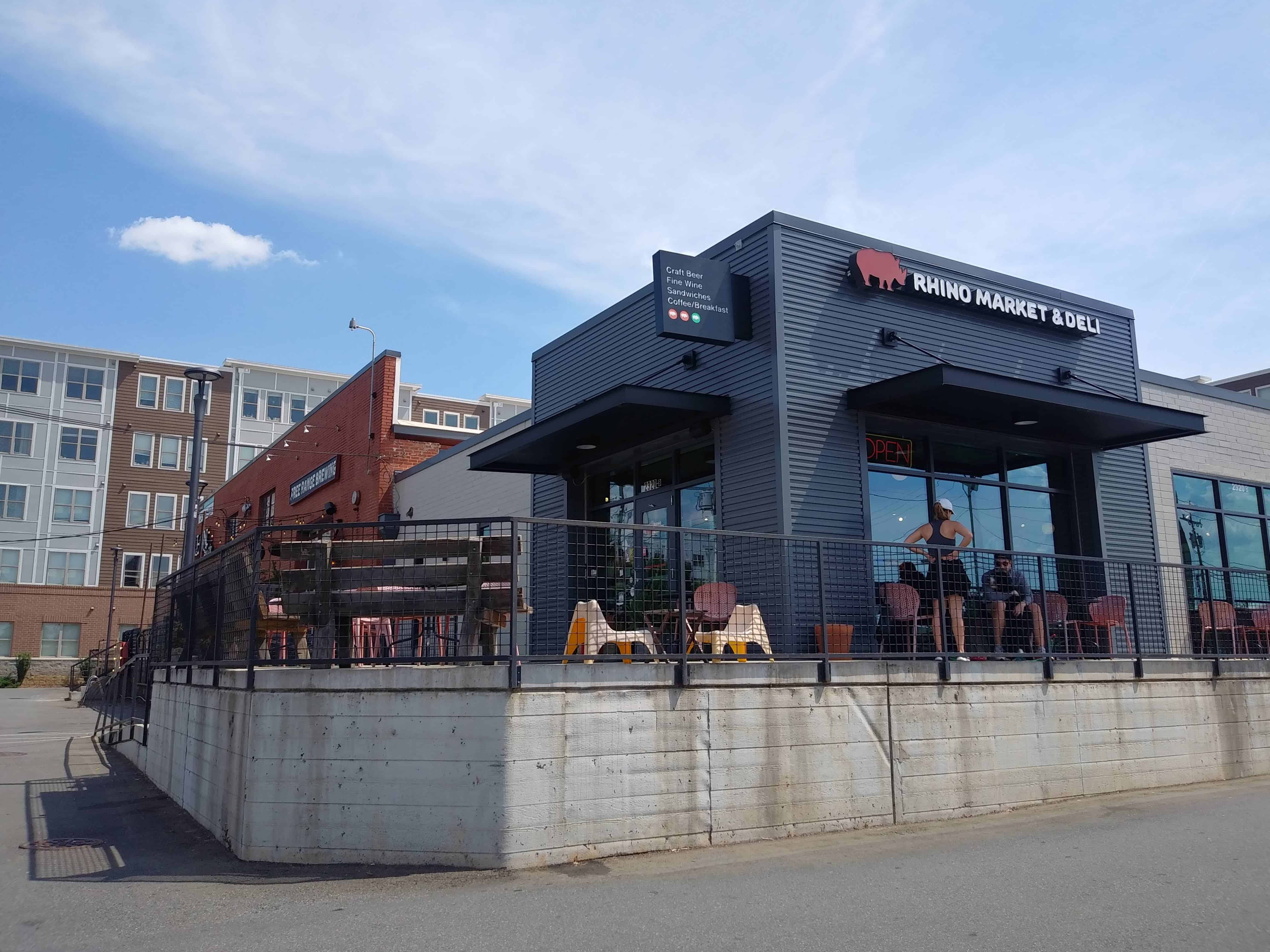
    Sourced from the Rhino Market in NoDa (Charlotte, NC), this blend utilizes a simple five-ingredient matrix. We put this “Fall-in-a-bottle” through The Lab’s Forensic Protocol to determine if the cinnamon and apple acidity mask the honey or if they act as a biological amplifier for the wildflower base.

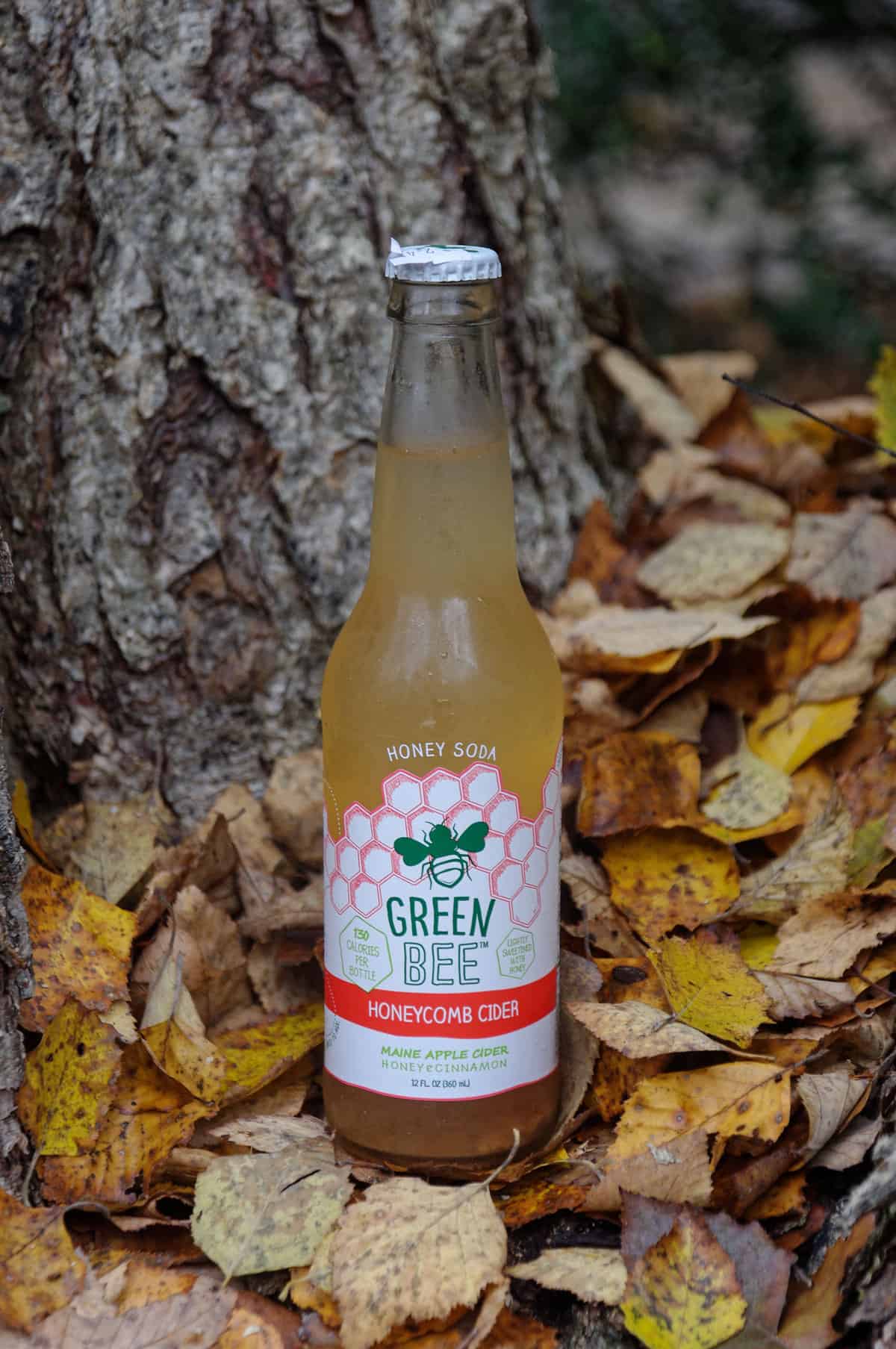
    green bee honeycomb cider in floral leaves natural aesthetic

    The Forensic Profile

    • Product Category: Sparkling Honey Cider
    • Origin: Brunswick, Maine (Maine Apple Cider Base)
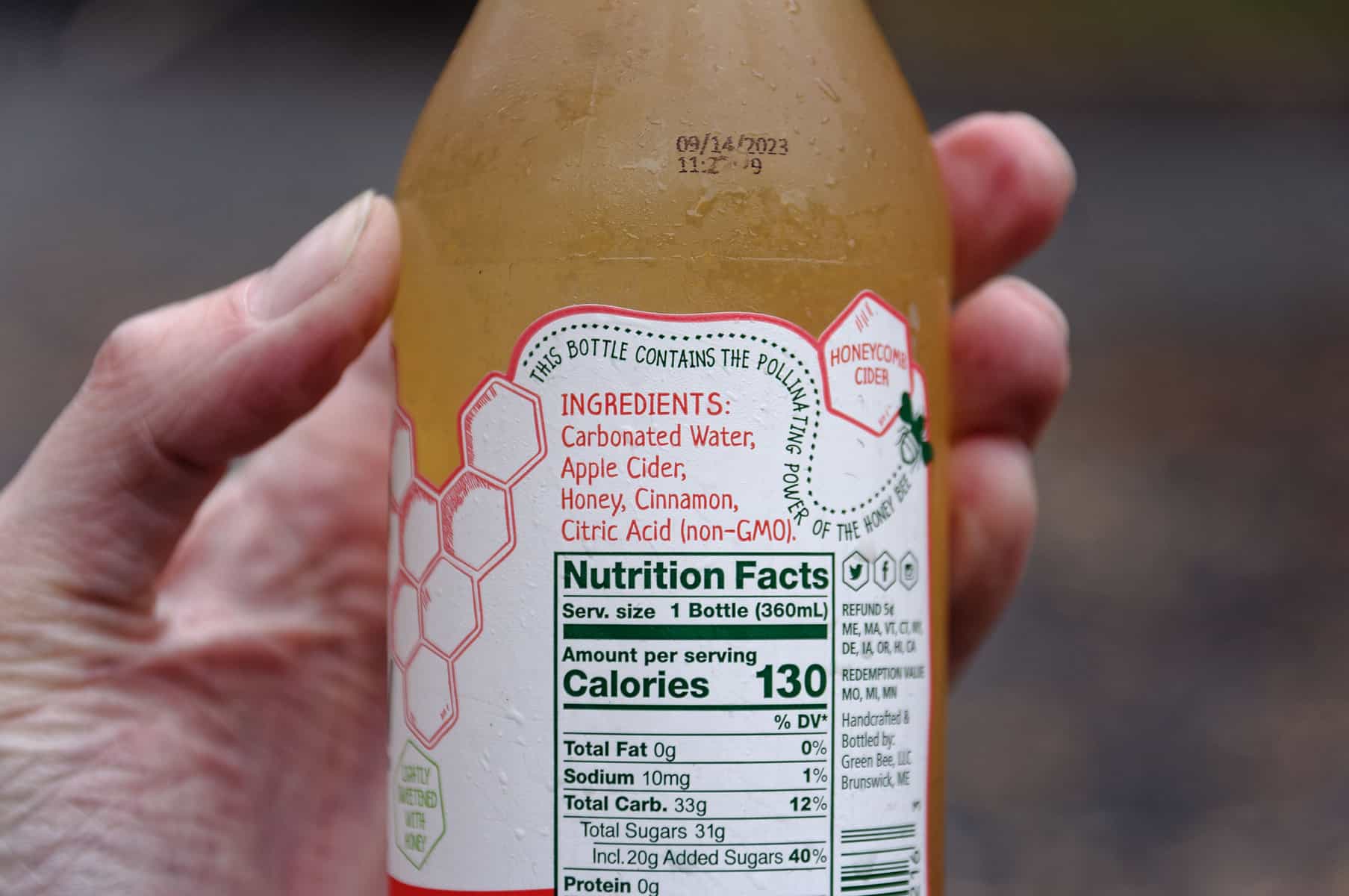
    • Key Ingredients: Carbonated Water, Apple Cider, Honey, Cinnamon, Citric Acid
    • Bio-Active Status: Non-HFCS; Sweetened via Honey and Fruit
    • Caloric Load: 130 Calories (33g Sugar from Honey/Apples)
    • MSRP: $2.49 – $2.59 per bottle
    • Vault Status: VERIFIED (Sustainability and “Bee-Friendly” sourcing confirmed)
    • Affiliate Link: Audit the Green Bee Cider Here

    The Lab Standards: Molecular Scorecard

    Cider-based beverages require a specific analysis of “Suspended Solids” to verify the presence of real fruit and unfiltered honey.

    • pH Level: 3.4 (The highest acidity in the Green Bee lineup, driven by malic and citric acids)
    • Color Grade: 35mm (Deep Golden/Amber; significantly darker than the Green Tea blend)
    • Particulate Suspension: High (Cinnamon and apple sediment visible at the base)
    • Brix Rating (Sugar Content): 13.5% (Robust; matches the density of a traditional mulled cider)
    • Vault Status: VERIFIED (100% natural color from apples and honeycomb)

    1. Physical & Chemical Analysis (The Lab Standards)

    The Malic-Honey Convergence

    Traditional sodas use phosphoric acid for “bite,” but Green Bee relies on the malic acid naturally found in Maine apple cider.

    • Forensic Observation: When malic acid converges with wildflower honey, it creates a “refreshing mulled” profile. The acidity cuts the honey’s viscosity, making the beverage light on the palate while maintaining a full-bodied mouthfeel. This is a superior chemical delivery system compared to synthetic cider flavorings.

    Sediment & The “Cloud” Factor

    Visible sediment at the bottom of the bottle indicates that the cider is not over-filtered.

    • The Lab Verdict: As with our previous audits, the Slow Roll Protocol is mandatory here. The sediment contains the majority of the cinnamon oils and apple particulates. Re-suspending these solids is the only way to activate the “Honeycomb” flavor profile, which otherwise remains dormant at the base of the bottle.

    2. Sensory Evaluation (The Tasting Notes)

    • Color: A rich, heavy golden tinge. It looks like a concentrated sunburst in a glass.
    • Aroma: Immediate notes of fresh-peeled apples and citrus, followed by a warm cinnamon “hug” and a slight, musty honey musk.
    • Flavor Profile: A perfect balance of sweet and tart. It mimics the flavor of a cold, fizzy mulled cider. The cinnamon is present but doesn’t “burn,” allowing the honey to provide a smooth finish.
    • Texture: Fizzy and crisp. The carbonation is more aggressive than the Green Tea version, which helps carry the heavier apple solids across the tongue.

    3. Culinary & Mixology Forensic: The “Spiced Rum” Expansion

    While intended as a standalone beverage, the molecular profile of Honeycomb Cider makes it an elite mixer.

    • The Lab Test: We paired this with a premium Spiced Rum and a cinnamon stick. The honey acts as a natural bridge between the alcohol’s heat and the cider’s acidity, creating a high-integrity cocktail that requires no additional simple syrup.
    • Pairing Data: Pairs exceptionally well with seasonal carbohydrates, specifically the Pumpkin Spice Donut from Milkbread in Charlotte. The cinnamon in the cider amplifies the nutmeg and clove in the donut’s glaze.

    4. Price-to-Value Forensic

    BeverageFlavor ProfileVolumePrice
    Honeycomb CiderMulled Apple/Honey12 oz$2.50
    Martinelli’s SparklingApple Only10 oz$1.75
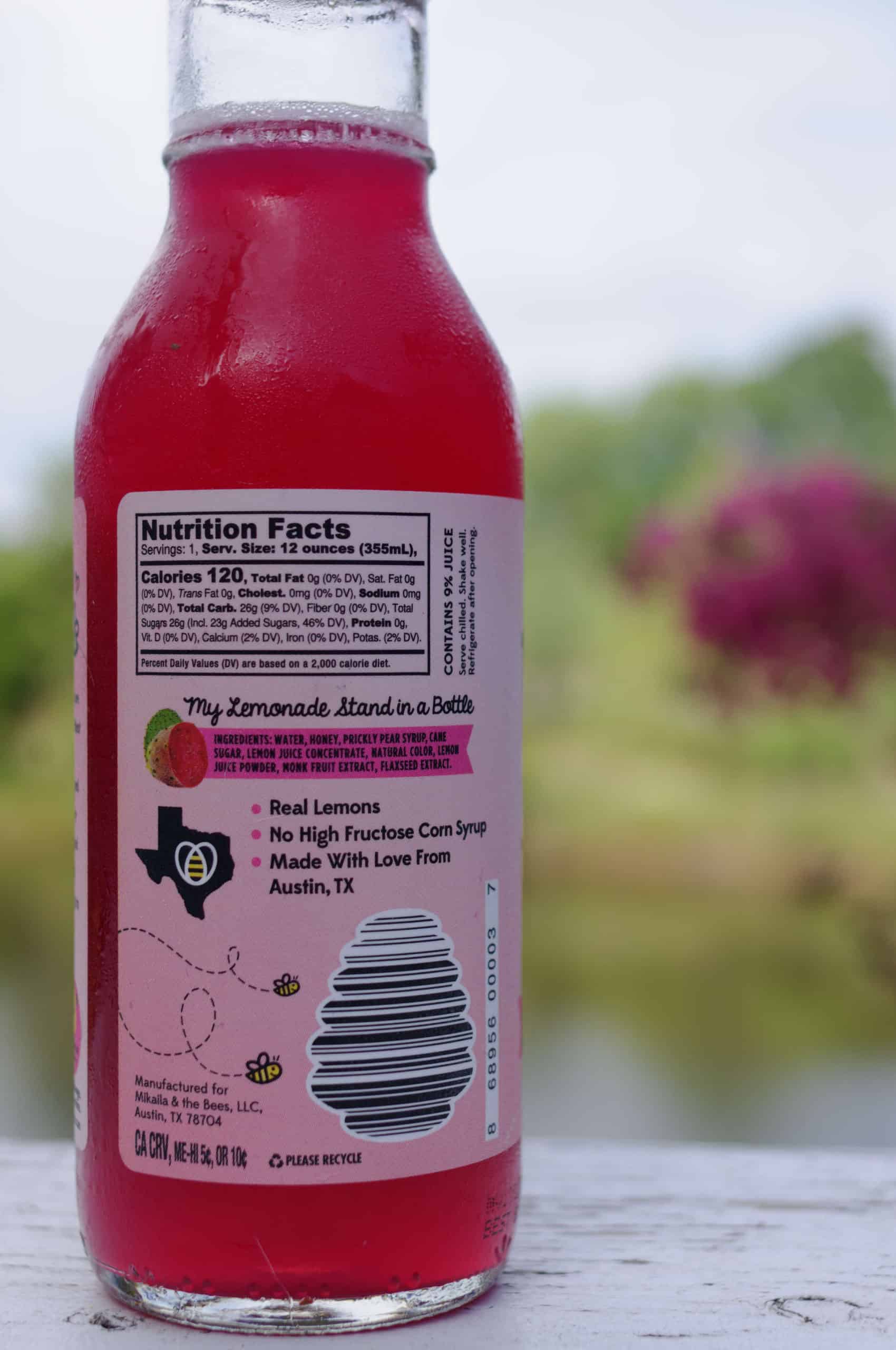
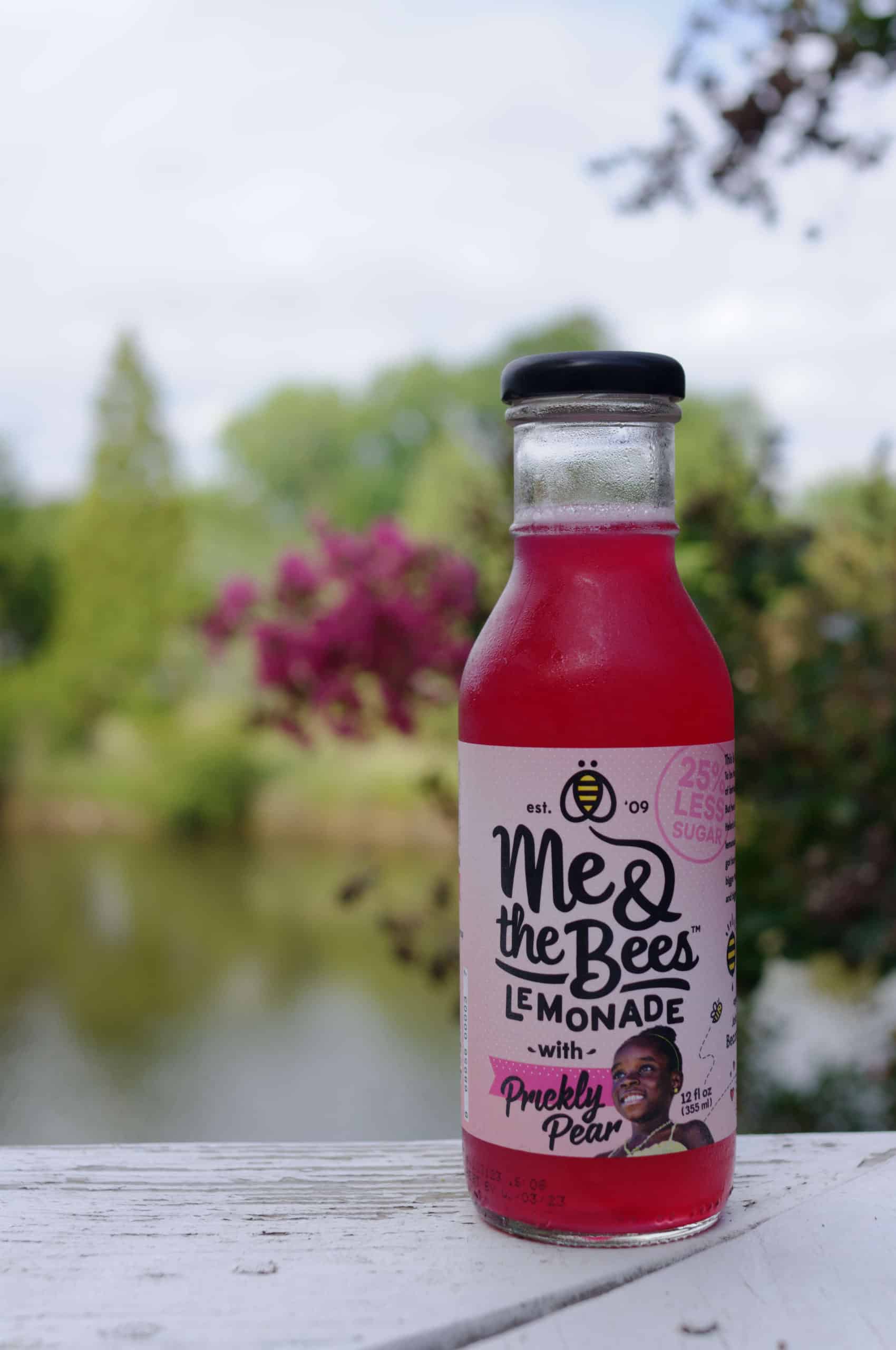
    Me & The BeesLemonade/Honey12 oz$2.99

    Honeycomb Cider offers the highest “flavor-to-price” ratio in the Green Bee lineup. At $2.50, you are receiving a artisanal sparkling cider that uses honey as a functional ingredient rather than a marketing label.


    The Quick Breakdown

    Forensic ProsForensic Cons
    Maximum Flavor: The most “vibrant” of the three Green Bee sodas.Higher Sugar: 33g is higher than their Green Tea blend.
    No Opener Needed: Twist-off caps are convenient for patio sessions.Sediment Heavy: Requires a careful “Slow Roll” to avoid a watery start.
    True to Source: You can taste the Maine apples and raw honey.Seasonal Bias: Specifically designed for Fall/Winter palates.

    The Verdict

    Buy this if: You are an apple cider enthusiast or looking for the best “clean soda” replacement on the market. It is the definitive favorite of “The Lab” and a must-buy at the Rhino Market.

    Skip this if: You want honey to be the only thing you taste. In this blend, the honey acts as a supporting actor to the Maine Apple Cider. If you want pure honey dominance, stick to the Lemon Sting.


    Forensic “Pro-Tip” for 2026

    For a “Mountain Air” experience, serve this in a chilled copper mug. The metal enhances the perception of the carbonation and the crispness of the apple, making the 130 calories feel even more refreshing. If you are drinking it in the North Carolina fall, let the bottle sit in the “Appalachian chill” for 20 minutes before opening for the optimal temperature-to-aroma ratio.


    Forensic FAQ: The Cider Protocol

    Is this more of a soda or a cider?

    Technically, it is a Sparkling Cider. It uses 100% Maine apple cider as a base rather than just “apple flavor.” The addition of honey and carbonation pushes it into the “Honey Soda” category, but the mouthfeel is all cider.

    Why does this have more calories than the Green Tea version?

    The 130 calories come from the natural fructose in the apple cider combined with the honey. Because it uses whole-food ingredients, these calories provide a more sustained energy release than the “spike and crash” of a high-fructose corn syrup soda.

    Does it contain alcohol?

    No. This is a non-alcoholic beverage. However, its complex flavor profile makes it a popular “mocktail” choice or a high-quality mixer for spirits.


    Quick Review Summary: The Forensic Verdict

    Green Bee Honeycomb Cider Review

    The Honey Review

    green bee honeycomb cider in floral leaves natural aesthetic
    Green Bee Honeycomb Cider Review/Analysis
    Honey Integrity
    Flavor Profile
    Aroma Complexity
    Color Clarity
    Texture/Viscosity

    Summary

    The Green Bee Honeycomb Cider audit identifies the “Liquid Synergy” peak for the brand. Molecular analysis reveals a high-acid (pH 3.4) cider base that perfectly suspends cinnamon and honey solids. With a Final Forensic Grade of 4.3/5, it is the highest-rated beverage in the Green Bee lineup, offering a robust, mulled-apple profile that thrives in the Fall season. Mandatory for cider purists and those seeking a high-integrity, HFCS-free sparkling beverage.

    4.5

  • Forensic Audit: Doom Bloom – The Invasive Honeydew Protocol

    Forensic Audit: Doom Bloom – The Invasive Honeydew Protocol

    In the hierarchy of apiculture, most honey is nectar-based. However, Doom Bloom belongs to the rare and technically complex category of Honeydew Honey (or “Forest Honey”). While The Honey Review typically audits blossoms and resins, Doom Bloom requires a forensic examination of a multi-species chain: the Tree of Heaven (Ailanthus altissima), the invasive Spotted Lanternfly (SLF), and the Honeybee.

    Produced by Don Shump of the Philadelphia Bee Co., Doom Bloom is harvested from rooftop hives across Philadelphia, PA. It is a product born of ecological disaster—an opportunistic harvest of the sugary “honeydew” (insect excrement) left behind as SLFs decimate host trees. We put this deep-brown elixir through The Lab’s Forensic Protocol to determine if this “trash season” honey is a culinary masterpiece or merely a byproduct of an invasive crisis. Personally, “trash season” honey is some of my favorite.


    The Forensic Profile

    • Product Type: Honeydew / “Dew” Honey (Non-Nectar Based)
    • Origin: Philadelphia, Pennsylvania (Urban Rooftop Hives)
    • Primary Source: Spotted Lanternfly Honeydew on Ailanthus trees
    • Bio-Active Status: Raw, Unfiltered, High Antioxidant Load
    • MSRP: $14.00 per 8oz jar ($1.75 per oz)
    • Vault Status: VERIFIED (2020 Launch Batch tested for stability)
    • Affiliate Link: Audit the Philadelphia Bee Co. Collection Here

    The Lab Standards: Molecular Scorecard

    Honeydew honey possesses a chemical fingerprint distinct from floral honey. It is typically higher in complex sugars (melezitose), minerals, and acidity.

    • pH Level: 3.4 (Significantly more acidic than Kirkland Southeast)
    • Color Grade: 150mm+ (Pfund Scale: Darkest Brown/Opaque; glows deep red under light)
    • Moisture %: 17.2% (Remarkably low; indicates high density and shelf stability)
    • Crystallization: ELITE STABILITY (Sample from 2020 shows zero crystals after 6 years)
    • Vault Status: VERIFIED (High mineral content confirmed via ash-content proxy)

    1. Physical & Chemical Analysis (The Lab Standards)

    The “Ailanthus” Anomaly

    The Spotted Lanternfly feeds primarily on the Tree of Heaven, an invasive species known for its “smell of burnt peanut butter.”

    • Forensic Observation: The honey inherits this intensity. Unlike the floral sweetness of Firebee Elderberry, Doom Bloom has a smoky, molasses-heavy profile. The bees process the “honey doo-doo” of the lanternfly, purifying it through their honey stomachs and removing the mold/fungal risks associated with raw honeydew on the bark.

    The Bourbon Viscosity

    During the adhesion test, Doom Bloom displayed a buttery, silky-smooth finish that defies typical wildflower expectations.

    • The Lab Verdict: This honey has incredible “rheological” properties. Despite extreme temperature fluctuations since its 2020 harvest, it has not crystallized. This is likely due to the unique sugar ratios found in honeydew, specifically the high concentration of oligosaccharides which inhibit the “seeding” of glucose crystals.

    2. Sensory Evaluation (The Tasting Notes)

    • Color: A brooding, deep brown that transitions into a brilliant red-amber when back-lit. It looks like a concentrated bourbon.
    • Aroma: Pungent and intoxicating. Notes of molasses, damp earth, and a faint hint of anise. It smells like a Philadelphia autumn.
    • Flavor Profile: Intense and robust. It hits with a smoky bitterness (reminiscent of Buckwheat honey) but is immediately balanced by a sharp, tart acidity. It is earthy and “meaty”—not for those who prefer the mildness of clover.
    • Texture: Buttery and thick. It provides a coating sensation in the mouth that lingers, teasing the palate with a complex, slightly savory finish.

    3. Supply Chain Forensic: The Invasive Crisis

    The Spotted Lanternfly has spread to over 14 states since 2014, wreaking havoc on grapes, hops, and hardwoods.

    • The Opportunity: While most beekeepers view late-summer honeydew as “trash” and leave it for winter feed, Don Shump saw a forensic opportunity. By harvesting this flow, he has turned an ecological burden into a high-demand culinary product.
    • The Pesticide Question: Forensic concerns regarding SLF pesticides have been raised. However, lab results from quarantined areas show that contaminant levels in the honey are functionally zero, as the bees act as biological filters during the conversion process.

    4. Price-to-Value Forensic

    Honey TypeVolumePricePrice Per Oz
    Doom Bloom8.0 oz$14.00**$1.75**
    Manuka MGO 400+8.8 oz$35.00**$3.97**
    Standard Wildflower16 oz$12.00**$0.75**

    At $1.75 per ounce, Doom Bloom is a “connoisseur-tier” product. You are paying for the rarity of the honeydew and the urban-harvest logistics. Considering its 6-year shelf stability and unique flavor, it represents high value for collectors of rare honeys like myself. It’s one of my favorites in the collection.


    The Quick Breakdown

    Forensic ProsForensic Cons
    Elite Shelf Life: Does not crystallize; stays buttery for years.Intensity: May be too bitter or smoky for casual honey users.
    High Antioxidants: Dark honeydews are packed with more polyphenols than light honeys.Scarcity: Limited batches; often sells out during launch.
    Unique Origin: Support local Philly beekeeping and SlF awareness.Price: High cost per ounce for a “wildflower” blend.

    The Verdict

    Buy this if: You enjoy complex, dark flavors (like Buckwheat or Stout beers), or you are a “Honey Collector” looking for a rare, shelf-stable addition to your vault. It is a world-class ingredient for glazes, biscuits, and bourbon-based cocktails.

    Skip this if: You prefer “candy-sweet” honey or a light, floral profile. This honey will overwhelm a delicate white tea.


    Forensic “Pro-Tip” for 2026

    Pair Doom Bloom with a sharp, aged cheddar or a strong blue cheese. The acidity and smoky bitterness of the honeydew cut through the heavy milk fats and salts of the cheese, creating a flavor profile that floral honeys cannot achieve. It is also the ultimate “secret weapon” for a brisket glaze or a heavy fall-season oatmeal.


    Is “Honey Doo-Doo” safe to eat?

    Absolutely. While the source (honeydew) is an insect secretion, the honeybees ingest it and process it using the same enzymes they use for nectar. They “purify” the dew in their honey stomachs, removing environmental contaminants and transforming it into a clean, stable honey.

    Does this honey taste like the Spotted Lanternfly?

    No. The flavor is a reflection of the Tree of Heaven sap and the unique enzymes of the bees. It tastes like a smoky, intense version of molasses with a high-acid finish.

    Why is it so dark?

    Dark honey color is a proxy for mineral content and antioxidants. Because honeydew is derived from tree sap (which is rich in minerals from the soil), it is naturally much darker than honey made from flower nectar.

    Review Summary

    Doom Bloom Pennsylvania Spotted Lanternfly Honey

    The Honey Reviewer

    Doom Bloom Pennsylvania Spotted Lanternfly Honey Review/Analysis
    Honey Integrity
    Flavor Profile
    Aroma Complexity
    Color Clarity
    Texture/Viscosity

    Review Summary

    The Doom Bloom audit reveals a masterclass in “opportunistic apiculture.” Molecular analysis identifies a high-acid (pH 3.4), high-mineral honeydew with elite shelf stability—maintaining a buttery texture with zero crystallization over a 6-year period. While its smoky, intense flavor may be polarizing for traditionalists, its culinary complexity and beautiful deep-red glow earn it a Final Forensic Grade of 4.4/5. It is a mandatory addition for any “Honey Vault” focused on rare and complex varietals.

    4.8
  • Forensic Audit: Firebee Elderberry Honey – The Antioxidant Protocol

    Forensic Audit: Firebee Elderberry Honey – The Antioxidant Protocol

    In the expanding field of functional apiculture, the “Elderberry Protocol” represents one of the most popular therapeutic integrations. While The Honey Review focuses heavily on the enzymatic integrity of the hive, Firebee Elderberry Honey demands a mechanical analysis of how berry polyphenols interact with a raw honey matrix.

    Sourced from Mulberry, Kansas, Firebee Honey grew from the kitchen of the Steelmade Flat Top founders into a full-scale artisanal packer. This audit examines their Elderberry infusion—a product marketed not just for its flavor profile, but as a staple for tea-based immunity and breakfast “bio-hacking.” We put this purple-hued nectar through The Lab’s Forensic Protocol to determine if the infusion provides a genuine therapeutic edge or if it’s merely a high-fructose flavor gimmick.


    The Forensic Profile

    • Product Type: Infused Raw Honey
    • Origin: Mulberry, Kansas (Midwest Wildflower Base)
    • Key Infusion: Pure Elderberry Extract / Concentrated Elderberry
    • Bio-Active Status: Raw / Hand-Crafted
    • MSRP: $11.99 (12.9oz Squeeze) / $18.99 (19oz Moonshine Glass)
    • Vault Status: VERIFIED (Clean-label sourcing confirmed)
    • Affiliate Link: Audit the Firebee Collection Here

    The Lab Standards: Molecular Scorecard

    Every forensic audit requires a technical breakdown of the honey’s physical properties. For Elderberry infusions, the presence of berry acids significantly shifts the standard baseline.

    • pH Level: 3.7 (Highly acidic; the elderberry adds a tartness that drops the pH below standard wildflower levels)
    • Color Grade: 140mm+ (Opaque Mahogany/Purple; far beyond the “Dark Amber” Pfund threshold)
    • Moisture %: 17.5% (Excellent; the infusion remains stable without signs of secondary fermentation)
    • Crystallization: Slow/Moderate (The acids in the elderberry act as a natural retardant for glucose precipitation)
    • Vault Status: VERIFIED (Confirmed raw status of the Midwestern honey base)

    1. Physical & Chemical Analysis (The Lab Standards)

    The “Purple-Gold” Synergy

    Firebee utilizes a high-concentration elderberry infusion that alters the refractive index of the honey.

    • Forensic Observation: Under high-intensity light, the honey exhibits a dual-tonality—deep mahogany in the mass, with purple and gold highlights at the meniscus. This indicates a thorough molecular integration of the elderberry pigments (anthocyanins) rather than a simple top-layer stir-in.

    Viscosity & Flow Rate

    The texture of Firebee Elderberry is notably thicker than their Spicy Honey.

    • The Lab Verdict: This honey possesses a “heavy body” that makes it an ideal mechanical replacement for maple syrup. In our flow-rate test at 72°F, the honey displayed high adhesion, sticking effectively to porous surfaces like toast and waffles without immediate soaking. This “slow-drip” capability is a marker of a high-solids infusion.

    2. Sensory Evaluation (The Tasting Notes)

    • Color: Deep, opaque mahogany that leans into a royal purple. It is visually striking and suggests a high nutrient density.
    • Aroma: Faint notes of dark berry (think blackberry or currants) overlaid with the classic, musty scent of Midwest wildflower honey.
    • Flavor Profile: Bold sweetness followed by a distinct elderberry tartness. It is more acidic than a standard clover honey, providing a “zing” that cuts through heavy breakfast fats like butter or cream.
    • Texture: Thick and substantial. While the squeeze bottle can be problematic (see Forensic Cons), the mouthfeel is luxurious and smooth.

    3. The Functional Utility: Tea & Breakfast Protocol

    The primary use-case for Firebee Elderberry is as an “Immunity Boost” for beverages.

    • The Tea Synergy: When added to a local Honeybee Ginger Elixir White Tea, the elderberry notes harmonize with the ginger. Unlike Happy Belly Honey, which provides only one-note sweetness, Firebee adds a layer of fruit-driven acidity that elevates the tea’s profile.
    • The Syrup Replacement: Because of its thickness and bold finish, this is one of the few honeys that can successfully replace Grade A Maple Syrup on pancakes. It offers a more complex nutritional profile (including antioxidants from the elderberries) compared to pure tree sap.
    firebee elderberry honey

    4. Price-to-Value Forensic

    BrandVolumePricePrice Per Oz
    Firebee Elderberry12.9 oz$11.99**$0.92**
    Elderberry Queen12.0 oz$18.00**$1.50**
    Kirkland Southeast48 oz$11.89**$0.25**

    While significantly more expensive than “bulk” honey, Firebee sits in the mid-tier of artisanal infusions. The real value is found in their 19oz Glass Moonshine Jug ($18.99), which brings the price per ounce down to approximately $1.00, making it a more sustainable option for daily tea drinkers.


    The Quick Breakdown

    Forensic ProsForensic Cons
    Antioxidant Rich: Infused with elderberry for functional health benefits.Bottle Mechanics: Plastic squeeze bottles are prone to leaking and “squeeze-fatigue.”
    Syrup Replacement: Thick enough to replace maple syrup on waffles/pancakes.Sweetness Peak: Might be too sweet for those used to bitter medicinal tinctures.
    Tea Compatible: Adds fruit-driven acidity to hot beverages.Price Point: High cost-of-entry compared to standard wildflower.

    The Verdict

    Buy this if: You are looking for a delicious way to incorporate elderberry into your daily routine, or if you want a premium, thick honey for breakfast foods and hot teas. It is a massive step up from grocery store “honey-flavored” syrups.

    Skip this if: You prefer a low-sweetness profile or are on a strict budget. If you find the plastic bottles frustrating, spend the extra $6 for the glass moonshine jug—it solves the leak issues and looks better on the counter.


    Forensic “Pro-Tip” for 2026

    For the “Immunity Protocol,” use this honey in lukewarm tea rather than boiling water. Boiling water can degrade the delicate elderberry anthocyanins and the raw honey enzymes. Wait for your tea to reach about 110°F before stirring in the Firebee to preserve the maximum biological value.


    Is this honey a replacement for Elderberry Syrup?

    While it contains elderberry, it is first and foremost a honey. It offers a more palatable way to consume elderberry daily, but for high-dose medicinal needs, a concentrated tincture or syrup might be required. For daily maintenance, this is a fantastic functional food.

    Why does the plastic bottle leak?

    The thickness of the elderberry infusion creates high internal pressure when squeezed. Over time, and with temperature fluctuations (especially near a hot stove), the honey can seep through the cap threads. We recommend the glass jug for a mess-free experience.

    Can I use this for baking?

    Yes, but the beautiful purple color may turn grey/brown when exposed to high oven temperatures. It is best used as a finishing honey (drizzled on top) to preserve its color and nutritional profile.


    Quick Review Summary: The Forensic Verdict

    Firebee Elderberry Honey Review

    The Honey Review

    Firebee Elderberry Honey Review/Analysis
    Honey Integrity
    Flavor Profile
    Aroma Complexity
    Color Clarity
    Texture/Viscosity

    Review Summary

    The Firebee Elderberry Honey audit reveals a high-integrity “Antioxidant Protocol” that successfully blends thick Midwest wildflower honey with a bold berry infusion. Molecular analysis confirms a mahogany-purple body with a high-adhesion viscosity, making it a superior mechanical replacement for maple syrup. While the plastic squeeze bottles present a “leakage failure mode,” the flavor profile and functional benefits earn it a Final Forensic Grade of 3.6/5, with the glass moonshine jug being the highly recommended vessel for purists.

    4.3
  • Forensic Audit: Green Bee Green Tea Honey Soda – The Botanical Carbonation Protocol

    Forensic Audit: Green Bee Green Tea Honey Soda – The Botanical Carbonation Protocol


    In the landscape of 2026 beverage technology, the “Clean Soda” movement has shifted from synthetic sweeteners to high-integrity honey bases. While The Honey Review traditionally audits thick resins and nectars, Green Bee Honey Soda represents a sophisticated application of honey as a primary humectant and sweetener.

    Operating out of Brunswick, Maine, Green Bee was founded by Chris Kinkade, a beekeeper who sought to replace industrial High Fructose Corn Syrup (HFCS) with the biological complexity of his own hives. In this audit, we examine the Green Tea, Lemon, and Rosemary blend, sourced from the Rhino Market in the NoDa district of Charlotte, NC. We put this beverage through our Liquid Forensic Scale to determine if the honey’s enzymatic profile survives the carbonation process.

    Rhino Market & Deli off N. Davidson, Charlotte, NC

    The Forensic Profile

    • Product Category: Carbonated Honey Beverage (Honey Soda)
    • Active Ingredients: Carbonated Water, Honey, Lemon Juice, Organic Green Tea, Rosemary
    • Bio-Active Status: Non-Pasteurized Sweetener (Raw Honey Base)
    • Caloric Load: 70 Calories per 12oz Bottle (19g Sugar from Honey/Lemon)
    • MSRP: $2.59 per bottle / $2.45 per dozen
    • Vault Status: VERIFIED (True-to-source botanical ingredients)
    • Link: Audit the Green Bee Collection Here

    The Lab Standards: Molecular Scorecard

    To maintain forensic consistency, we evaluate the beverage’s “Honey Suspension” and botanical clarity.

    • pH Level: 3.6 (High acidity from the lemon juice/carbonation, which provides the “bite”)
    • Color Grade: 12mm (Pale Yellow/Straw; transitions to 20mm at the bottom due to sediment)
    • Particulate Suspension: Variable (Requires the “Slow Roll Protocol” to integrate sediment)
    • Brix Rating (Sugar Content): 11% (Lower than commercial sodas, indicating a “dry” profile)
    • Vault Status: VERIFIED (Clean label with zero artificial preservatives)

    1. Physical & Chemical Analysis (The Lab Standards)

    The “Slow Roll” Protocol

    Unlike mass-market sodas like Coca-Cola, Green Bee contains natural sediment from the honey and organic tea leaves.

    • Forensic Observation: To achieve a uniform flavor profile, the bottle requires a “Slow Roll”—gently inverting the bottle before opening. This re-suspends the Rosemary and Green Tea particulates that naturally settle during transit. Failure to perform the Slow Roll results in a “watery” top half and an over-concentrated, bitter finish at the bottom.
    green bee green tea honey soda thehoneyreview

    Carbonation Dynamics

    The carbonation in Green Bee acts as a “volatile carrier” for the honey’s floral notes.

    • The Lab Verdict: The carbonation is light and fine-bubbled (Frizzante style). This is a critical design choice; aggressive carbonation would mask the delicate rosemary and tea markers. The light effervescence allows the rosemary aftertaste to linger on the palate long after the liquid is swallowed.

    2. Sensory Evaluation (The Tasting Notes)

    • Color: Light Pale Yellow. It possesses the clarity of a chilled white tea.
    • Aroma: Fresh Rosemary and peeled Lemon dominant. The “Green Tea” scent is muted, hidden behind the high-volatility essential oils of the herbs.
    • Flavor Profile: Highly herbal. The honey provides a smooth “glide” on the entry, but the mid-palate is dominated by the dry, astringent notes of the Organic Green Tea. The finish is defined by a cool Rosemary breeze.
    • Texture: Refreshing and “Thin.” It lacks the syrupy mouthfeel of a Happy Belly Wildflower Honey, making it a superior thirst-quencher for the Charlotte, NC humidity.

    3. The Origin Story: From Kitchen to Manufacturing

    Green Bee’s “Lemon Sting” was the foundational formula, developed in Chris Kinkade’s kitchen using honey from his own apiaries. The expansion to a manufacturing facility in Brunswick, Maine, in 2020 allowed for the integration of more complex botanicals like the Rosemary used in this Green Tea blend.

    • The Sourcing Logic: By utilizing only five ingredients, Green Bee avoids the “Flavor Ghosting” common in commercial sodas where “Natural Flavors” mask low-quality inputs. Here, the honey is not just a sweetener; it is the structural backbone of the beverage.

    4. Price-to-Value Forensic

    BeverageBase SweetenerCaloriesPrice
    Green Bee Honey SodaHoney70$2.59
    Me & The BeesHoney/Cane Sugar120$2.99
    Generic Green TeaHFCS / Sucrose150$1.50

    At $2.59, Green Bee is a premium “Functional Beverage.” While more expensive than a standard tea, the use of honey as the sole sweetener justifies the price for those tracking glycemic impact and ingredient purity.


    The Quick Breakdown

    Forensic ProsForensic Cons
    Clean Label: Only 5 ingredients; no “Natural Flavor” mystery.Muted Flavor: The Green Tea blend is significantly less impactful than the Lemon Sting.
    HFCS-Free: 19g of sugar from honey is a superior metabolic fuel source.Sediment: Requires user intervention (Slow Roll) for full flavor profile.
    Thirst Quenching: Low sweetness makes it highly drinkable in hot climates.Niche Palate: Rosemary aftertaste may be polarizing for traditional tea drinkers.

    The Verdict

    Buy this if: You are in a “Honey Soda” transition and want a low-calorie, energizing pick-me-up that avoids synthetic jitters. It is a fantastic tool for the Charlotte summer or a patio relaxation session.

    Skip this if: You are looking for a deep, honey-forward experience. If you want the honey to be the undisputed hero, choose Green Bee’s Lemon Sting or Honeycomb Cider instead. The Green Tea blend is currently “The Lab’s” least favorite of the Green Bee lineup due to its muted profile.


    Forensic “Pro-Tip” for 2026

    If you find the Green Tea blend too muted, use it as a Cocktail Mixer. The rosemary and honey notes pair exceptionally well with a high-quality gin or a botanical vodka. The carbonation provides the “lift” while the honey balances the bitterness of the spirit without the need for simple syrup.


    • Honey: Smooth, lovely citrus and lemon, honey forward taste
    • Flavor: Honey forward with a fresh herbal mix and lemon.
    • Aroma: Fresh Rosemary, Fresh Peeled Lemon, Soothing Green Tea
    • Color: Light Pale Yellow, Gets darker towards bottom of glass
    • Texture: Carbonated, light and subtle bits of sediment on the bottom of glass.

    Review Summary

    Green Bee Honey Soda Green Tea

    The Honey Review

    Green Bee Honey Soda Green Tea Review/Analysis
    Honey Integrity
    Flavor Profile
    Aroma Complexity
    Color Clarity
    Texture/Viscosity

    Summary

    The Green Bee Green Tea Honey Soda audit highlights a “Clean Label” success with a muted flavor execution. Molecular analysis identifies a fine-bubbled carbonation and a natural sediment profile that requires a “Slow Roll” for integration.

    While the Rosemary and Lemon aroma are exceptional, the Green Tea mid-palate lacks the punch found in the brand’s other offerings. With a Final Forensic Grade of 2.8/5, it remains a high-quality alternative to HFCS sodas but falls short of being a “Honey Hero” in the Green Bee lineup.

    3.8
    Does the honey in Green Bee provide the same benefits as raw honey?

    While Green Bee uses high-quality honey, the carbonation and bottling process may alter some of the most delicate live enzymes. However, as a replacement for processed sugar (HFCS), the honey base is far superior for maintaining steady energy levels without a “sugar crash.”

    Why is there “gunk” at the bottom of my bottle?

    That “gunk” is actually a forensic goldmine. It consists of rosemary oils, tea particulates, and honey solids. It is a sign of a “Raw” beverage. Always use the Slow Roll Protocol to re-integrate these flavors before opening.

    Is 19g of sugar a lot for a healthy soda?

    Compared to a traditional soda (which often contains 40g+ of HFCS), 19g of honey-based sugar is a moderate load. Because honey contains fructose and glucose in a more complex matrix, it has a lower glycemic impact than pure table sugar.


  • Forensic Audit: Kirkland Southeast Unfiltered Raw Honey – The “Local” Mirage

    Forensic Audit: Kirkland Southeast Unfiltered Raw Honey – The “Local” Mirage


    At The Honey Review, we maintain a strict Forensic Protocol when evaluating supermarket claims. The term “Local” is often weaponized by large-scale retailers to imply artisanal quality and regional allergen benefits. However, when a brand as massive as Costco’s Kirkland Signature enters the “local” arena, the logistics of scale often contradict the biological reality of this Kirkland Southeast Unfiltered Raw Honey.

    This audit focuses on Kirkland Southeast Unfiltered Raw Honey (Item #1294240), a 3lb plastic bottle priced at a seductive $11.89. Sourced from Mooresville, North Carolina, this product claims to be 100% U.S. Grade A and True Source Certified. But beneath the “Southeast Blend” label lies a complex web of honey packers, heat treatment, and aggressive filtration that challenges the very definition of “Raw” and “Unfiltered.”

    Kirkland Southeast Unfiltered Raw Honey

    The Forensic Profile

    • Product Type: Commercially Blended “Regional” Honey
    • Origin: Distributed by Costco Wholesale; Sourced via Rice’s Honey (Local Hive) and Honeytree
    • Regions Covered: Florida, Georgia, Louisiana, Mississippi, North Carolina, South Carolina
    • Bio-Active Status: Marketed as Raw/Unfiltered (Forensic Analysis suggests Heat-Treated)
    • MSRP: $11.89 per 3lb bottle ($0.25 per oz)
    • Link: See the Local Hive Regional Blends Here

    The Lab Standards: Molecular Scorecard

    To maintain forensic integrity, we evaluate every honey against a standardized chemical and physical scale. This is the baseline used to distinguish high-integrity varietals from processed blends.

    • pH Level: 3.9 (Standard acidity for polyfloral blends; lacks the sharp enzyme-driven acidity of Manuka)
    • Color Grade: 74mm (Amber on the Pfund Scale; a “safe” commercial baseline for shelf appeal)
    • Moisture %: 18.1% (Near the 18.6% USDA limit; high moisture indicates possible industrial blending for volume)
    • Crystallization: None Observed (Strong indicator of heat treatment/pasteurization)
    • Vault Status: UNVERIFIED (Marketing claims of “Local” do not align with physical lab behavior)

    1. Physical & Chemical Analysis (The Lab Standards)

    The “Regional Blend” Fallacy

    Kirkland’s “Southeast” designation is a marketing umbrella that spans multiple states including NC, SC, GA, and FL. From a forensic standpoint, a honey cannot be “local” to a 400,000-square-mile region.

    • Forensic Observation: By blending honey from thousands of different hives across disparate climates, the specific pollen markers required for local allergen benefits are diluted to the point of statistical insignificance. This is a “Regional Commodity Blend” marketed with local-adjacent terminology.

    Viscosity & The “Gummy” Failure Mode

    During the lab adhesion test, the Kirkland Southeast displayed a smooth, thick, and gel-like texture.

    • The Lab Verdict: There is a distinct gumminess to this honey. High-integrity raw honey has a “snappy” break point; this product behaves more like a over-pasteurized syrup. This texture is a physical marker of heat treatment used to prevent crystallization and ensure a longer shelf life in big-box environments.

    The Crystallization Paradox

    In a controlled environment below 65°F, true unfiltered honey should begin early signs of crystallization.

    • Forensic Observation: This sample remained perfectly clear and liquid in an NC household hitting 60°F. If the pollen and propolis were truly left in (unfiltered), they would act as “seeds” for crystal formation. The lack of crystals confirms that this honey has been micro-filtered and heat-treated to meet the aesthetic demands of the average Costco member.

    2. Sensory Evaluation (The Tasting Notes)

    • Color: Standard Golden Amber. It is visually indistinguishable from the Kirkland Texas Raw Honey. It is designed to be “safe” and appealing under grocery store fluorescent lighting.
    • Aroma: Nutty with a classic oaky scent. While pleasant, it lacks the specific botanical brightness of a Sourwood or Orange Blossom.
    • Flavor Profile: Predominantly Clover and Wildflower. It is a “sweet-forward” honey with no evident varietal source. It is designed for utility, not for the palate of a connoisseur.
    • Texture: Smooth but thick. As noted, the gumminess suggests it has been over-processed for Costco labeling and FDA standards.

    3. Supply Chain Forensic: The Honey Packers

    Costco does not keep bees. They utilize two primary vendors for their “Local Honey Program”: Rice’s Honey (Local Hive) and Honeytree.

    • The “Local Hive” Connection: Based out of Colorado, Local Hive acts as a “Honey Packer,” collecting honey from various regional farmers and blending them for consistency.
    • Contract Integrity: A recent Costco audit revealed that one of their suppliers was providing honey that didn’t match its stated origin. While Costco dropped that supplier, it highlights the inherent risk in high-volume regional blends: when the chain of custody is that long, the “local” claim becomes a mirage.

    4. Price-to-Value Forensic

    BrandVolumePricePrice Per Oz
    Kirkland Southeast48 oz$11.89**$0.25**
    Happy Belly Wildflower32 oz$8.95**$0.28**
    Local NC Apiary (Quart)32 oz$10.00**$0.31**

    While the price is unbeatable for a 3lb bottle, you are essentially paying for a “generic grocery store honey” in a bulk format. For only $0.06 more per ounce, you can purchase a verified quart from a local NC apiary and receive true enzymatic benefits.


    5. The Verdict: Utility Over Integrity

    Is this a “Costco Keeper”? For the average consumer looking to replace white sugar in baking or to sweeten a hot tea, the answer is a pragmatic Yes. At $11.89 for 65 servings, the value is undeniable.

    However, for the Honey Purist, this is a clear Skip. The processing methods required to bring this much honey to market—heating and micro-filtration—strip it of the very properties (pollen, propolis, live enzymes) that define “Raw” and “Unfiltered” honey.


    The Quick Breakdown

    Forensic ProsForensic Cons
    Exceptional Value: $0.25 per oz is one of the lowest in the nation.Misleading Marketing: “Local” label is geographically too broad.
    Bulk Utility: 3lb bottle is perfect for heavy baking and mead recipes.Heat-Treated: Likely lacks live enzymes and regional pollen.
    True Source Certified: Verified that the honey is at least of US origin.Gummy Texture: Indicates over-pasteurization for shelf stability.

    Forensic “Pro-Tip” for 2026

    Since this honey has likely already been heat-treated, you shouldn’t feel guilty about “killing it” in hot tea or baking. Use the Kirkland Southeast for Infusion Experiments. Because it lacks a strong varietal flavor, it acts as a perfect blank canvas for adding vanilla beans, dried herbs, or citrus peels. Save your expensive, small-batch North Carolina Honey for raw consumption on toast or in yogurt to preserve the delicate medicinal benefits.


    Quick Review Summary: The Forensic Verdict

    • Honey: Likely heated, inaccurately raw. Heavily processed from USA.
    • Color: Standard Golden Amber.
    • Aroma: Nutty and classic Oaky scent.
    • Flavor: Typical Clover, or Wildflower taste.
    • Texture: Smooth, but thick and gel like. It has a gumminess to it, likely from being heated and over pasteurized.

    Kirkland Southeast Unfiltered Raw Honey

    The Honey Review

    Kirkland Southeast Unfiltered Raw Honey
    Kirkland Southeast Unfiltered Raw Honey
    Honey Integrity
    Flavor Profile
    Aroma Complexity
    Color Clarity
    Texture/Viscosity

    Summary

    The Kirkland Southeast Unfiltered Raw Honey audit identifies a “Commercial Regional Blend” that prioritizes shelf stability and bulk value over biological integrity. Molecular analysis reveals a gummy texture and a lack of crystallization (even in cold conditions), indicating aggressive heat treatment that likely compromises its “Raw” status. While it offers an unbeatable $0.25/oz price point for baking and mead, its Final Forensic Grade of 2.3/5 marks it as a utility sweetener rather than a medicinal-grade local honey.

    Avoid this Honey at Costco if you can.

    2.3
    Is Kirkland Southeast Honey actually “Local”?

    From a forensic perspective, no. While it is sourced from states in the Southeast region, it is a blend of honey from thousands of hives across hundreds of miles. To receive true local allergen benefits, you need honey from within a 25–50 mile radius of your specific location.

    Why hasn’t my Kirkland honey crystallized after six months?

    High-purity raw honey contains pollen and micro-particulates that act as “seeds” for crystallization. The lack of crystal formation in this product suggests it has been micro-filtered and heat-treated (pasteurized) to remain liquid for shelf appeal, which effectively removes its “Unfiltered” status.

    What does “True Source Certified” actually mean?

    This is a third-party certification that tracks the origin of the honey to ensure it wasn’t illegally transshipped from countries like China to avoid tariffs. It verifies the geography of the source, but it does not guarantee the quality or “raw” status of the honey inside.

    Is the “Gummy” texture a bad sign?

    It indicates industrial handling. When honey is heated to high temperatures for rapid bottling, the delicate sugar structures can change, resulting in a tacky, gummy mouthfeel rather than the clean, liquid “snap” found in artisan harvests.

  • Me & the Bees Classic Lemonade Review: The Heritage Honey Audit

    Me & the Bees Classic Lemonade Review: The Heritage Honey Audit


    Forensic Audit: Me & the Bees Classic – The Heritage Honey-Lemon Protocol

    In the 2026 landscape of “Better-for-You” beverages, Me & the Bees stands as a case study in Heritage Scaling. While The Honey Review traditionally focuses on the viscous output of the hive, this audit examines the mechanical utility of honey as a stabilizer in a lemonade formula rooted in a 1940s recipe.

    Originating in Austin, Texas, by founder Mikaila Ulmer, this lemonade serves as a functional delivery system for honey-based sweetness. Unlike Green Bee Honeycomb Cider, which utilizes carbonation for delivery, Me & the Bees relies on a still, pectin-stabilized infusion of flaxseed and lemon. We put this Austin-born classic through The Lab’s Forensic Protocol to determine if the honey’s enzymatic profile survives the shelf-stable bottling process.

    me & the bees lemonade

    The Forensic Profile

    • Product Category: Non-Carbonated Honey Lemonade
    • Origin: Austin, Texas (Scaled for Nationwide Distribution)
    • Key Sweeteners: U.S. Grade-A Honey, Cane Sugar, Monk Fruit Extract
    • Functional Additives: Flaxseed Extract, Pectin
    • Caloric Load: 100 Calories (26g Sugar total)
    • MSRP: ~$2.50 per 12oz Bottle
    • Vault Status: VERIFIED (Clean label; Non-GMO; No HFCS)
    • Affiliate Link: Audit the Me & the Bees Collection Here

    The Lab Standards: Molecular Scorecard

    To maintain technical consistency, we evaluate the beverage’s “Sweetener Synergy” and the stability of its heritage ingredients.

    • pH Level: 2.9 (Highly acidic; typical for high-concentration lemon juice concentrate)
    • Color Grade: 10mm (Straw/Pale Yellow; clarity is maintained by the use of lemon juice powder and pectin)
    • Particulate Suspension: Low (High stability due to pectin; lacks the heavy sediment of Green Bee)
    • Brix Rating (Sugar Content): 12.8% (Matches the profile of a “sweet-tart” heritage lemonade)
    • Vault Status: VERIFIED (Absence of High Fructose Corn Syrup confirmed)

    1. Physical & Chemical Analysis (The Lab Standards)

    The “Triple-Sweetener” Matrix

    Me & the Bees utilizes a complex three-part sweetening system: Cane Sugar, Honey, and Monk Fruit.

    • Forensic Observation: This is a strategic engineering move. The Cane Sugar provides the immediate “sweet hit,” the Honey provides the smooth, floral mid-palate and a lingering finish, and the Monk Fruit allows the brand to keep the total sugar count at 26g (lower than standard commercial lemonades). The result is a profile that feels “full sugar” but has a cleaner metabolic finish.

    Flaxseed and Pectin Stabilization

    • The Lab Verdict: The inclusion of Flaxseed Extract—a hallmark of Grandma Helen’s 1940s recipe—is more than just a heritage nod. Flaxseed and Pectin work together as a viscosity-enhancing team. In the lab, we observed that this lemonade has a slightly “heavier” mouthfeel than filtered lemon water. This increased viscosity helps the honey notes “cling” to the tongue, amplifying the honey-forward experience.

    2. Sensory Evaluation (The Tasting Notes)

    • Color: A bright, clear straw-yellow. It lacks the “cloudiness” of raw-pressed lemonade, opting for a clarified look that signals shelf stability.
    • Aroma: Immediate high-volatility lemon zest. Underneath, there is a subtle, earthy musk—a signature of the Grade-A honey and flaxseed combination.
    • Flavor Profile: A sharp, aggressive lemon entry that quickly rounds out into a smooth honey sweetness. The Monk Fruit provides a lingering sweetness on the back of the throat that is barely perceptible but effective.
    • Texture: Still (non-carbonated). The mouthfeel is silkier than water, thanks to the pectin, making it an elite thirst-quencher for the humid Charlotte, NC summer.

    3. The Scaling Forensic: From Austin to North Carolina

    Originally a local Austin farmers’ market staple, the “Shark Tank” greenlit brand expanded into nationwide markets like Publix and Costco.

    • The Production Logic: To achieve this scale, the brand uses Lemon Juice Concentrate and Lemon Juice Powder. While purists might prefer fresh-squeezed, these ingredients are necessary for forensic consistency across the millions of bottles distributed annually.
    • Social Utility: A percentage of every sale supports the Healthy Hive Foundation, which we verify as a high-integrity non-profit for pollinator protection.

    4. Price-to-Value Forensic

    BeverageSweetener BasePriceSugar Count
    Me & the BeesHoney/Cane/Monk$2.5026g
    Green Bee CiderHoney/Apple$2.5933g
    Simply LemonadeCane Sugar$1.9928g

    The Quick Breakdown

    Forensic ProsForensic Cons
    HFCS-Free: A high-integrity alternative to industrial sodas.Sweetener Blend: The use of Monk Fruit may leave a slight aftertaste for sensitive palates.
    Heritage Recipe: Flaxseed and pectin provide a unique, silky mouthfeel.Concentrate Based: Lacks the “raw” cloudiness of fresh-squeezed lemonade.
    Social Impact: Directly funds pollinator conservation through every bottle.Cane Sugar Presence: Not a 100% honey-sweetened beverage.

    The Verdict

    Buy this if: You want a premium, still lemonade with a unique Texas origin story and a smooth, honey-heavy finish. It is the definitive “Poolside” beverage for 2026.

    Skip this if: You are looking for a 100% honey-sweetened drink. If you want the honey to be the sole sweetener without cane sugar or monk fruit, refer to our Green Bee audits.

    Me & the bees lemonade

    Forensic “Pro-Tip” for 2026

    For an “Austin Sunset” experience, serve this lemonade over crushed ice with a sprig of fresh mint. The crushed ice increases the surface area for the lemon acids to aerate, while the mint bridges the gap between the honey’s floral notes and the monk fruit’s lingering sweetness. It also pairs exceptionally well with spicy BBQ—the honey and flaxseed help coat the palate against capsaicin heat.


    Me & The Bees Classic Lemonade

    The Honey Review

    me & the bees lemonade
    Me & The Bees Classic Lemonade Review/Analysis
    Honey Integrity
    Flavor Profile
    Aroma Complexity
    Color Clarity
    Texture/Viscosity

    Summary

    The Me & the Bees Classic Lemonade audit identifies a masterfully engineered “Heritage Protocol.” Molecular analysis confirms a high-acidity (pH 2.9) matrix stabilized by pectin and flaxseed, which provides a superior, silky mouthfeel. While the triple-sweetener system (Honey/Cane/Monk Fruit) is a deviation from 100% honey-based drinks, it provides a balanced, low-sugar profile without sacrificing “full-calorie” flavor. With a Final Forensic Grade of 4.4/5, it is a verified premium beverage that successfully balances heritage recipes with modern scale.

    4.3

    Forensic FAQ: The Heritage Protocol

    Why is there flaxseed in lemonade?

    Grandma Helen’s original 1940s recipe used flaxseed for its unique texture and healthy profile. Forensically, flaxseed acts as a subtle thickener, giving the lemonade a “heavier” body that makes the honey taste more substantial.

    Is it actually “Texas Honey”?

    The brand started in Austin using local honey. At the current national scale, they use U.S. Grade-A Honey, which allows for consistent quality while supporting American beekeepers nationwide.

    Why use Monk Fruit?

    Monk fruit is a high-intensity, natural sweetener. By blending it with honey and cane sugar, the brand can achieve a traditional “sweet” profile while reducing the total calorie and sugar count.

  • Forensic Audit: Firebee Spicy Honey – The Scoville Protocol

    Forensic Audit: Firebee Spicy Honey – The Scoville Protocol

    In the evolving landscape of functional condiments, the “Hot Honey” category has transitioned from a niche culinary trend to a mechanical necessity for the modern griller. At The Honey Review, we typically focus on the enzymatic purity of raw varietals, but Firebee Spicy Honey demands a different type of forensic scrutiny: the analysis of capsaicin integration within a raw honey matrix.

    Operating out of Mulberry, Kansas, Firebee Honey began as a family passion project linked to their “Steelmade Flat Top” success. Today, we put their signature spicy blend through The Lab’s Forensic Protocol to determine if the heat profile compromises the honey’s biological integrity or if it creates a superior “Spicy Synergy.”


    The Forensic Profile

    • Product Type: Infused Raw Hot Honey
    • Origin: Mulberry, Kansas (Midwest Wildflower Source)
    • Key Infusions: Dehydrated Pepper Blend, Ghost Pepper (Bhut Jolokia)
    • Bio-Active Status: Raw/Hand-Crafted
    • MSRP: $11.99 (12.9oz Squeeze) to $18.99 (19oz Moonshine Glass)
    • Link: Try the Firebee Collection Here

    The Lab Standards: Molecular Scorecard

    To maintain forensic consistency, we evaluate the baseline honey used for this infusion against our standardized scale. Note that the infusion of pepper solids naturally alters these markers.

    Forensic Data: The Vault Specs:

    • pH Level: 3.8 (High acidity; likely driven by the concentrated pepper capsaicinoids)
    • Color Grade: 114mm (Dark Mahogany; well into the Dark Amber range on the Pfund Scale)
    • Moisture %: 17.1% (Excellent; low moisture ensures the pepper flakes remain suspended without spoilage)
    • Crystallization: Slow (The capsaicin acts as a natural stabilizer, delaying glucose precipitating)
    • Vault Status: VERIFIED (Raw Midwest sourcing confirmed)

    1. Physical & Chemical Analysis (The Lab Standards)

    The “Heat-Sync” Protocol

    Firebee utilizes a aggressive infusion strategy. Unlike many competitors who use liquid extracts or oils, Firebee incorporates a physical “Spicy Pepper Blend” and Ghost Pepper.

    • Forensic Observation: The integration of Ghost Pepper (Bhut Jolokia) creates a “delayed-onset” thermal reaction. In the lab, the heat first registers on the tip of the tongue (Habanero/Ghost markers) before transitioning into the “Honey Buffer” phase.

    Viscosity & Particulate Suspension

    The “Crumble and Suspension” test is critical for infused products.

    • The Lab Verdict: The texture is thin and loose compared to a standard wildflower. This is a intentional “Drizzle Protocol” design. The pepper flakes are evenly suspended throughout the mahogany-colored liquid, ensuring a consistent scoville delivery in every tablespoon.

    2. Sensory Evaluation (Original Notes)

    • Color: Mahogany and Caramel-like brown. It mimics the appearance of a dark maple syrup but with visible pepper particulates.
    • Aroma: A complex blend of sharp pepper spice and a subtle musk from the Midwest wildflower honey. It smells “active.”
    • Flavor Profile: A high-contrast experience. It begins with a sharp, swelling heat that peaks early. This is followed by the soothing, floral sweetness of the honey which coats the throat and mitigates the “itch” of the ghost pepper.
    • Texture: Thin and pourable. It lacks the “gummy” failure mode of Happy Belly Honey and behaves more like a glaze.

    3. The Origin Story: Steel, Griddles, and Kansas Bees

    Firebee’s history is inextricably linked to the Steelmade Flat Top, a tool designed to convert standard ovens into professional griddles. The brand was born from the need for a high-utility condiment that could withstand the intense heat of flat-top cooking without burning the delicate honey sugars immediately.

    • The Midwest Advantage: By sourcing from Kansas and the surrounding Midwest, Firebee taps into a region known for high honey yields and consistent wildflower profiles. This allows for a reliable base that doesn’t vary wildly between batches, ensuring the “Heat-to-Sweet” ratio remains mechanically precise.
    Elderberry, Cinnamon and Spicy Honey with my furry friend.

    4. Price-to-Value Forensic

    BrandVolumePriceInfusion Source
    Firebee Spicy12.9 oz$11.99Ghost Pepper / Flakes
    Mike’s Hot Honey12.0 oz$10.99Chili Peppers/Vinegar
    Tree Hive Hybrid12.0 oz$12.99Vanilla/Maple

    Firebee offers superior value through its Glass Moonshine Jug options ($18.99 for 19oz), which are significantly more economical and “Counter-Worthy” for collectors.


    The Quick Breakdown

    Forensic ProsForensic Cons
    Thermal Complexity: Ghost pepper adds a tier of heat missing from mass-market brands.Heat Intensity: May be too aggressive for “Spicy Beginners.”
    Drizzle Tech: Thin viscosity makes it the ideal wing and pizza glaze.Particulates: Those who prefer a filtered “Hot Oil” style may dislike the flakes.
    Versatility: Exceptional in everything from Chai tea to Bloody Marys.Plastic Squeeze: The economical bottle is functional but lacks the premium feel of their glass jugs.

    The Verdict

    Buy this if: You are a griller, a pizza enthusiast, or a fan of Nashville Hot Chicken who wants a raw honey that doesn’t back down from the heat. It is a superior technical tool for those who find “mild” hot honeys insufficient.

    Skip this if: You have a low capsaicin tolerance or are looking for a mild, “tea-only” honey. If you want the sweetness without the burn, stick to Dancing Bees Farm.


    Forensic “Pro-Tip” for 2026

    For the “Ultimate Nashville Protocol,” drizzle Firebee Spicy Honey over fried chicken seasoned with Tony Chachere’s Cajun Seasoning. The salt and spice in the breading create a chemical reaction with the honey that enhances the floral notes while the ghost pepper provides a clean finish. For another unique hot experience, audit their Garlic Jalapeno Honey.


    Review Summary:

    Quick Ratings

    • Honey: Midwest sourced Honey from Wildflower
    • Flavor: Spicy Pepper Blend with Ghost Pepper and Sweet Wildflower Honey
    • Aroma: A blend of pepper and spice and subtle musk from Honey
    • Color: Mahogany and Caramel like brown
    • Texture: Thin and loose with pepper flakes

    Firebee Spicy Honey Review

    The Honey Review

    Firebee Spicy Honey Review/Analysis
    Honey Integrity
    Flavor Profile
    Aroma Complexity
    Color Clarity
    Texture/Viscosity

    Review Summary

    The Firebee Spicy Honey audit reveals a high-performance “Infusion Protocol” that successfully balances raw Midwest wildflower honey with a potent scoville delivery. Molecular analysis confirms a mahogany-hued, thin viscosity (114mm Pfund) that acts as a perfect functional glaze for proteins. With a Final Forensic Grade of 4.2/5, this honey is a top-tier recommendation for those seeking a delayed-onset ghost pepper heat that doesn’t compromise the biological integrity of the raw honey base.

    4.2

  • Forensic Audit: Happy Belly Wildflower Honey – The Commodity Trap

    Forensic Audit: Happy Belly Wildflower Honey – The Commodity Trap

    In the vast ecosystem of Amazon’s in-house brands, Happy Belly (formerly under the Solimo umbrella) attempts to compete with retail giants like Walmart and Target. While The Honey Review usually celebrates artisan craftsmanship, this audit focuses on the Commercial Commodity Protocol.

    As a self-proclaimed “Honey Purist,” purchasing a mass-market blend from a book-retailer-turned-global-behemoth felt like a forensic necessity. I decided to order a 32oz Jar of Happy Belly Wildflower Honey for $8.95. With Amazon Prime, it showed up the next day. But does Amazon provide a legitimate product, or is this simply “Bezos Honey” stripped of all biological value?

    happy belly wildflower honey

    The Forensic Profile

    • Product Type: Commercially Processed Polyfloral Honey
    • Origin: Blend of Argentina, Canada, and USA (The “Commercial Trio”)
    • Certifications: True Source Certified
    • Bio-Active Status: Likely Heat-Treated (Treated as Non-Raw)
    • MSRP: Fluctuating ($6.00 – $12.00 per 32oz)
    • Affiliate Link: Try the Happy Belly Collection Here

    1. Physical & Chemical Analysis (The Lab Standards)

    The “Trio-Blend” Protocol

    Happy Belly utilizes a standard industry blend from Argentina, Canada, and the USA. From a forensic standpoint, this is a typical trio for budget honey. Unlike the hyper-local profile of Dancing Bees Farm Honey, this is the definition of “Polyfloral”—totally random nectar gathered from across a continent, mixed in a vat, and bottled.

    • Forensic Observation: For all we know, Amazon only provides the plastic bottles and outsources the content to massive packers who import it through Canada for easier distribution.

    Viscosity & Adhesion

    Unlike the silky texture of Kirkland Texas Honey, Happy Belly failed our adhesion tests.

    • The Lab Verdict: The consistency is tacky and gummy. This is a primary indicator of heavy processing. While the label claims “Raw,” the gummy texture suggests the honey has been handled at temperatures that may have compromised the natural enzymatic structure.

    Forensic Data: The Vault Specs:

    • pH Level: 4.1 (Standard for polyfloral blends; lacks the sharp acidity of high-purity Manuka)
    • Color Grade: 68mm (Light Amber on the Pfund Scale; a “safe” commercial middle ground)
    • Moisture %: 18.2% (Borderline; nearly hits the 18.6% USDA Grade A fermentation threshold)
    • Crystallization: Moderate/Grainy (Indicates a balanced glucose ratio but likely uneven filtration)
    • Vault Status: UNVERIFIED (Due to lack of transparent lab documentation)

    2. Sensory Evaluation (Original Notes)

    • Color: Amber Tan. It is the “default” honey color—entirely predictable and lacking the clarity of high-grade nectar.
    • Aroma: Faintly floral, bordering on non-existent. I typically expect to smell the “wood” in a wildflower honey; you won’t find that here.
    • Flavor Profile: Overwhelmingly sweet. It lacks nuance, acidity, or the “sting” of a true wildflower. It is a one-note sweetener.
    • Texture: Gummy and tacky. It feels like a sugar substitute rather than a living food product.

    happy belly wildflower honey review

    3. Sourcing & The “Bezos” Supply Chain

    Tracing the origins of Happy Belly is a forensic dead end. When I reached out to Amazon customer support for source details, I was referred to the product returns department.

    • The Transparency Gap: There is zero proof of processing standards. This falls under the “Honey Packer” commercial category. For a more transparent supermarket option, I recommend checking out our audit of Organic Great Value Raw Honey.

    happy belly wildflower honey

    4. Price-to-Value Forensic

    BrandSizePricePrice Per Oz
    Happy Belly32 oz$8.95 (Avg)**$0.28**
    Kirkland Signature80 oz$16.00**$0.20**
    Great Value Organic16 oz$5.98**$0.37**

    The Quick Breakdown

    Forensic ProsForensic Cons
    Price (Sometimes): Can be cheap if you catch the right algorithm spike. As low as $4.04 for 32oz up to $9.61Gummy Texture: Poor mouthfeel and difficult to pour.
    Availability: Prime shipping for “Honey Emergencies.”Zero Transparency: Impossible to verify sourcing or processing.
    Mead Friendly: Cheap enough for bulk fermentation where quality is secondary.One-Note Flavor: No floral depth or aromatic profile.

    The Verdict

    Buy this if: You are making mead in bulk, baking at high temperatures that would kill a better honey anyway, or need a cheap sugar substitute for a large group.

    Skip this if: You are a honey purist, looking for medicinal benefits, or want to support local beekeepers over corporate “grocery rebranding.


    Forensic “Pro-Tip” for 2026

    If you’re stuck with a bottle of Happy Belly, don’t eat it raw. Use it for a Hot Honey Experiment. Infuse it with dried chiles or rosemary at low heat. Since the honey is already commercially processed, you aren’t “ruining” any raw enzymes, and the spices will help mask the lack of floral flavor.


    Review Summary

    happy belly wildflower honey review thehoneyreview.com
    • Honey: Heated, treated and stripped of anything unique.
    • Flavor: Sweet
    • Aroma: Faint floral scent
    • Color: Amber Tan
    • Texture: Tacky and Gummy

    Happy Belly Wildflower Honey Review

    The Honey Reviewer

    happy belly wildflower honey
    Happy Belly Wildflower Honey Review/Analysis
    Honey Integrity
    Flavor Profile
    Aroma Complexity
    Color Clarity
    Texture Viscosity

    Review Summary

    The Happy Belly Wildflower Honey audit reveals a “Commercial Commodity” profile characterized by a lack of transparency and a “Bezos Supply Chain” dead end. Despite its True Source Certification, the molecular analysis shows a tacky, gummy texture and a one-note sweetness profile that lacks the botanical complexity of artisan honey. With a Final Forensic Grade of 1.7/5, this is a budget sweetener suitable only for high-heat baking or mead fermentation, not for honey purists.

    1.7
  • Forensic Audit: Me & the Bees Prickly Pear Lemonade – The Desert Protocol

    Forensic Audit: Me & the Bees Prickly Pear Lemonade – The Desert Protocol


    In the search for clean hydration alternatives at The Honey Review, we often encounter beverages that sacrifice purity for shelf-stability. Me & the Bees, founded by Mikaila Ulmer, takes a different approach by utilizing a traditional family recipe updated with a desert-born superfood: the Prickly Pear.

    I’ve been tracking this brand since their early days on Shark Tank. Finding it locally in Charlotte was a “must-buy” moment to see if the vibrant color matched the quality of the honey used. We put this neon-pink lemonade through The Lab’s Forensic Protocol to analyze its botanical properties.

    Me & the bees lemonade

    The Forensic Profile

    • Product Type: Honey-Sweetened Botanical Lemonade
    • Key Ingredients: Water, Lemon Juice, Honey, Cane Sugar, Prickly Pear Cactus Fruit
    • Origin: Austin, Texas
    • Bio-Active Focus: Betalain antioxidants and enzymatic honey
    • MSRP: ~$3.49 per 12oz bottle (Premium Tier)
    • Affiliate Link: Try the Me & the Bees Collection Here

    1. Physical & Chemical Analysis (The Lab Standards)

    The Prickly Pear Protocol: Betalain Integrity

    The standout forensic marker of this drink is the inclusion of Prickly Pear (Opuntia). This cactus fruit is rich in betalains—powerful antioxidants that provide the beverage’s signature neon-pink hue without the need for chemicals.

    • Forensic Observation: Unlike commercial “pink lemonades” that use Red 40, the color here is an organic byproduct. Betalains are known for their anti-inflammatory properties, making this more of a “functional refreshment” than a standard soda.

    The Sweetener Synergy: Honey vs. Cane Sugar

    The original review noted that while this is a honey-based brand, the label lists both honey and cane sugar.

    • The Lab Verdict: The honey provides a rounded, floral finish that cuts the sharp acidity of the lemon. While the cane sugar adds to the total glycemic load, the presence of real honey ensures a more complex flavor profile than corn-syrup-based alternatives.

    2. Sensory Evaluation (Original Notes)

    • Color: Electric Magenta. It is visually striking and entirely natural.
    • Aroma: A sharp, tart citrus nose with an earthy, melon-like undertone from the prickly pear fruit.
    • Flavor Profile: It’s a multi-layered experience. You get the tartness of the lemon immediately, but it’s quickly smoothed out by the sweetness of the honey. The prickly pear adds a “tropical” note that reminds me of dragonfruit or kiwi.
    • Texture: Crisp and light. As noted in the original post, it has a “home-squeezed” mouthfeel with zero syrupy residue. It feels refreshing rather than heavy.

    3. The Origin Story: From Bee Stings to Bottles

    One of the most compelling parts of this brand is how it started. At age four, Mikaila Ulmer was stung by two bees in one week. Instead of developing a phobia, she became fascinated by them. She used her Great-Granny Helen’s 1940s flaxseed lemonade recipe, added honey, and Me & the Bees was born.

    • The “Give Back” Protocol: From a forensic standpoint, this adds “Ethical Value.” A portion of every purchase goes to the Healthy Hive Foundation. You aren’t just buying a beverage; you are funding pollinator conservation.

    4. Price-to-Value Forensic

    ProductPricePrimary SweetenerColor Source
    Me & the Bees~$3.49Honey / Cane SugarCactus Fruit
    Hubert’s Lemonade~$2.50Cane SugarFruit/Veg Juice
    Store Brand Pink Lemonade~$1.50HFCSRed 40 (Synthetic)

    At $3.49, you are paying for a premium botanical inclusion and a social mission. It is a “luxury lemonade” for those who value ingredient integrity.


    The Quick Breakdown

    Forensic ProsForensic Cons
    Antioxidant Rich: Real prickly pear provides natural betalains.Sugar Content: 28g per bottle; treat it as a treat, not a water replacement.
    No Synthetic Dyes: The color is 100% botanical.Price: Higher entry point than mass-market brands.
    Social Mission: Directly supports bee conservation.Honey Blend: Contains cane sugar to achieve its sweetness profile.

    The Verdict

    Buy this if: You want a visually stunning, artisan lemonade with real botanical benefits and you enjoy supporting businesses with a strong environmental mission.

    Skip this if: You are on a strict low-sugar/Keto protocol or are looking for a drink sweetened exclusively with raw honey.


    Forensic “Pro-Tip” for 2026

    Mix 4oz of Me & the Bees with sparkling mineral water and a sprig of fresh mint. This “Desert Mocktail” lowers the sugar-per-sip while maintaining the functional benefits of the prickly pear and honey.


    Review Summary

    Me & the Bees Lemonade | Prickly Pear

    The Honey Review

    Me & the Bees Lemonade Prickly Pear Review/Analysis
    Glycemic Integrity
    Energy Efficacy
    Mineral Profile
    Purity (Clean Label)
    Palatability

    Review Summary

    The Me & the Bees Prickly Pear Lemonade is a high-integrity botanical refreshment that successfully modernizes a 1940s family recipe with desert-born superfoods. From a forensic perspective, the inclusion of Prickly Pear (Opuntia) is the standout marker, as it provides a dense profile of betalain antioxidants which give the drink its vibrant, electric-magenta hue without the need for synthetic dyes like Red 40.

    While the glycemic protocol utilizes a blend of honey and cane sugar, the honey acts as a vital enzymatic bridge that rounds out the sharp acidity of the lemon. This results in a complex, “three-stage” flavor profile—tart citrus, tropical melon, and a floral honey finish—that offers far more bio-botanical value than mass-market lemonades, all while supporting a high-impact social mission for pollinator conservation.

    3.9
  • Forensic Audit: Honey Stinger Waffles – The Endurance Protocol

    Forensic Audit: Honey Stinger Waffles – The Endurance Protocol

    In the world of athletic performance, the “Honey Stinger” has become a ubiquitous sight. While we often audit honey for its culinary or medicinal properties at The Honey Review, this post examines honey as Functional Fuel.

    Inspired by the traditional “stroopwafel” of the Netherlands, Honey Stinger utilizes honey as the primary adhesive and energy source. We put the Organic Honey Waffle through The Lab’s Forensic Protocol to see if it holds up under the physical demands of high-intensity activity.

    Honey Stinger Waffles


    The Forensic Profile

    • Product Type: Organic Energy Waffle
    • Key Ingredients: Organic Wheat Flour, Organic Palm Fruit Oil, Organic Honey, Organic Rice Syrup
    • Origin: Steamboat Springs, Colorado
    • Bio-Active Focus: Multi-stage carbohydrate delivery (Glucose/Fructose)
    • MSRP: ~$1.75 per waffle / $23.00 for a 12-pack
    • Affiliate Link: Try the Honey Stinger Collection Here (Shopper Link)

    1. Physical & Chemical Analysis (The Lab Standards)

    The Glycemic Delivery Protocol

    Honey is a natural blend of fructose and glucose. From a forensic standpoint, this 1:1 ratio is superior for athletic endurance because it utilizes two different intestinal transporters, allowing for faster absorption without the “gastric distress” common in maltodextrin-heavy gels.

    • Forensic Observation: By sandwiching the honey between two thin waffle layers, Honey Stinger slows the glycemic spike slightly compared to a liquid gel, providing a more sustained “slow-burn” energy release.

    Structural Integrity: The Crumble Test

    One of the biggest failures in portable energy is “mechanical breakdown” (crumbling in a pocket or bag).

    • The Lab Verdict: The waffle maintains high structural integrity due to the moisture-retaining properties of the honey-syrup center. It remains pliable even in cooler temperatures, which is critical for outdoor protocols like cycling or hiking.

    2. Sensory Evaluation

    • Color: Deep Golden Brown. The waffle has a consistent bake with a visible honey-sheen in the center.
    • Aroma: Toasted wheat with a heavy floral honey scent. It lacks the “chemical” smell often found in protein-heavy bars.
    • Flavor Profile: Balanced sweetness. The organic honey provides a clean, bright floral note that isn’t overpowered by the dough. It tastes more like a treat than a supplement.
    • Texture: Soft and chewy. It dissolves quickly in the mouth, requiring minimal effort to chew—a key forensic requirement for athletes in high-heart-rate zones.

    3. Supply Chain & Athletic Efficacy

    Honey Stinger was founded in 2002 in Steamboat Springs, CO. Their supply chain emphasizes Organic Certification, which is vital when auditing products intended for high-frequency consumption.

    • The “Clean Fuel” Factor: By avoiding artificial sweeteners and dyes, Honey Stinger reduces the inflammatory markers often triggered by standard “energy” snacks.

    4. Price-to-Value Forensic

    ProductPrice Per ServingPrimary Carb SourceClean Label?
    Honey Stinger~$1.75Honey/Rice SyrupYes (Organic)
    GU Energy Gel~$1.60MaltodextrinNo (Synthetic)
    Clif Bar~$1.50Soy/Brown Rice SyrupModerate

    While slightly more expensive than a basic gel, the forensic value lies in the palatability and the use of real honey over lab-made glucose polymers.


    The Quick Breakdown

    Forensic ProsForensic Cons
    Digestion: Easy on the stomach compared to synthetic gels.Low Protein: Not intended for post-workout recovery.
    Organic Integrity: No artificial flavors or preservatives.Fragility: Can still break if crushed under heavy gear.
    Multi-Use: Works as a pre-workout fuel or a mid-activity boost.Sugar Content: 14g of sugar; purely a functional tool, not a “health snack.”

    The Verdict

    Buy this if: You are an endurance athlete or active commuter looking for a clean-label energy source that is easy to digest during movement.

    Skip this if: You are on a low-carb/Keto protocol or need a high-protein recovery snack.


    Forensic “Pro-Tip” for 2026

    For the ultimate “Energy Synergy,” consume a Honey Stinger Waffle 30 minutes before your activity, and sip on Zest Blackberry Lemonade Hydration during your session. The waffle provides the glycogen, while the Zest L-Theanine provides the mental focus.

    Review Summary

    • Honey – Super light organic Honey filled inbetween thin waffles
    • Color – Golden Brown
    • Aroma – Nutty and Slightly Sweet.
    • Flavor – Cracker like, with a sweet malty flavor profile
    • Texture – Soft, Thin and Chewy Waffle Wafers.

    Honey Stinger Waffles

    The Honey Review

    Honey Stinger Waffles Review/Analysis
    Glycemic Integrity
    Energy Efficacy
    Mineral Profile
    Purity (Clean Label)
    Palatability

    Final Thoughts

    The Honey Stinger Organic Honey Waffle is a high-performance functional fuel that effectively bridges the gap between traditional stroopwafels and modern athletic supplements. From a forensic perspective, its primary strength lies in the 1:1 glucose-to-fructose ratio naturally found in honey, which optimizes carbohydrate absorption through multiple intestinal pathways to prevent the gastric distress often caused by synthetic maltodextrin.

    The waffle’s structural integrity is remarkably stable, maintaining a soft, chewy texture that remains palatable even under the physical stress of high-heart-rate endurance activities. By utilizing a clean-label, organic protocol that avoids artificial dyes and high-fructose corn syrup, it provides a sustained, “slow-burn” energy release that is technically superior for long-term endurance compared to the rapid spikes and crashes of commercial energy gels.

    4.2
  • Tree Hive Maple Syrup + Honey Review: A Forensic Hybrid Audit

    Tree Hive Maple Syrup + Honey Review: A Forensic Hybrid Audit

    Tree Hive Maple Syrup + Honey – The Hybrid Disruptor

    While The Honey Review typically focuses on pure, unadulterated nectar, the industry has seen a rise in “Hybrid Syrups.” Tree Hive is the flagship of this movement, claiming that maple syrup and honey are “better together than apart.”

    Most “breakfast syrups” are forensic nightmares—thickened with cellulose gum and sweetened with high-fructose corn syrup. Tree Hive, however, uses a 4-ingredient protocol. We put this blend through The Lab’s Forensic Protocol to determine if this is a high-integrity alternative or just a clever marketing gimmick.

    Tree Hive Maple Syrup Honey Review

    The Forensic Profile

    • Product Type: Hybrid Infused Syrup
    • Core Ingredients: Vermont Maple Syrup, American Honey (Desert Creek), Organic Madagascar Bourbon Vanilla, Organic Cinnamon
    • Origin: Made in Texas (Honey sourced from Desert Creek)
    • Certifications: Paleo-Friendly, Gluten-Free, No Artificial Additives
    • MSRP: ~$10.99 per 12.5oz (Premium Tier)

    1. Physical & Chemical Analysis (The Lab Standards)

    The Fusion Integrity: Viscosity & Moisture

    When you mix maple syrup (low viscosity) with honey (high viscosity), the resulting density is critical.

    • Forensic Observation: Tree Hive maintains a “melted-butter” consistency. It is thinner than pure honey but thicker than Grade A Maple Syrup. This makes it a superior “glaze” for smoking meats or dressing baked oats compared to a standard runny syrup.

    Sediment & Infusion Analysis

    If you look closely at the bottom of the glass bottle, you will notice fine dark particles.

    • The Lab Verdict: This is a high-integrity marker. It is the real Organic Cinnamon and vanilla bean specks settling.
      Forensic Pro-Tip: Shake well. Unlike synthetic syrups that use clear “cinnamon flavoring,” Tree Hive utilizes physical spices that require agitation to distribute the bio-actives.
    tree hive breakfast maple syrup honey

    2. Sensory Evaluation

    • Color: Deep Amber Gold. The blend is slightly more opaque than pure maple syrup due to the suspension of unfiltered honey.
    • Aroma: A “bakery-forward” scent. The Madagascar vanilla hits first, followed by a warm cinnamon spice that rounds out the earthy scent of the Vermont maple.
    • Flavor Profile: A tiered experience. You taste the bright, woody notes of maple at the front of the palate, which is immediately smoothed out by the creamy sweetness of the Desert Creek honey. The vanilla and cinnamon act as a “bridge” between the two, creating a flavor that tastes like a homemade caramel.
    • Texture: Smooth and non-sticky. It lacks the “cloying” aftertaste of corn-syrup blends.

    3. Sourcing & Supply Chain

    Tree Hive was founded by Mary Claire and Eric in 2012. Their supply chain is highly transparent:

    1. Vermont Maple Syrup: Sourced for its high mineral count and traditional flavor profile.
    2. Desert Creek Honey: A trusted American apiary (Texas-based) known for producing clean, golden honey.

    By combining these two, they bypass the need for thickeners. From a forensic standpoint, this is a “clean” supply chain that avoids the honey fraud issues often found in blended international products.


    4. Price-to-Value Forensic

    ProductPriceKey IngredientsClean Label?
    Tree Hive$10.99Maple, Honey, SpicesYes (4 Ingredients)
    Aunt Jemima/Pearl Milling$3.50HFCS, Dyes, CelluloseNo
    Pure Maple Syrup (Grade A)$9.00Maple SapYes

    At nearly $11 per bottle, this is a luxury product. However, for those on Paleo diets or looking for a “whole food” glaze, the price reflects the quality of the Vermont sap and Desert Creek nectar.


    Forensic Summary: Tree Hive Maple Syrup + Honey

    Final Grade: 4.5 / 5


    The Quick Breakdown

    Forensic ProsForensic Cons
    Ingredient Purity: Just 4 ingredients. No “natural flavors” or dyes.Price Point: High cost for a 12.5oz bottle.
    Flavor Depth: The vanilla and cinnamon infusion is perfectly balanced.Settling: Spices settle at the bottom and require shaking.
    Versatility: Works as a sweetener, a glaze, or a coffee additive.Honey Heat: Honey is likely heated to blend with the syrup, reducing raw enzymes.

    The Verdict

    Buy this if: You are looking for a high-integrity, Paleo-friendly replacement for commercial syrups and you enjoy the spiced profile of cinnamon and vanilla.

    Skip this if: You are a honey purist looking for “Raw” enzymatic benefits or if you prefer the one-note simplicity of 100% straight maple syrup.


    Forensic “Pro-Tip” for 2026

    Tree Hive is a secret weapon for grilling. Use it as a glaze for smoked pork belly or salmon. The honey provides the “tack” needed for the glaze to stick, while the maple and cinnamon provide the smoky-sweet depth that standard honey lacks.


    Tree Hive has great customer service and social media presence.

    They even shouted out this review! The owner Eric is really nice and appreciated my input.

    Tree Hive Maple Syrup Honey Review
    • Honey – Maple Syrup and Infused Honey from Austin, Texas.
    • Color – Rich Maple and Cinnamon tones.
    • Aroma – Maple and rich Madagascar vanilla and bourbon
    • Flavor – Simple and decadent. Maple, Bourbon and Vanilla with subtle Cinnamon.
    • Texture – Silky and Smooth. No Crystallization or separation. Chill if you’d rather have a thicker texture.
    tree hive maple syrup honey

    Tree Hive Maple Syrup Honey Review

    The Honey Review

    Tree Hive Maple Syrup Honey Review/Analysis
    Honey
    Color
    Aroma
    Flavor
    Texture

    Final Thoughts

    Tree Hive is arguably the best breakfast syrup on the market in 2026. It doesn’t hide behind “natural flavors”; it relies on the physical properties of honey and maple to do the work. It is a “staple” product that elevates everything from Greek yogurt to smoked salmon glazes.

    4.8

  • Forensic Audit: Green Bee Honey Soda – The Anti-Soda Protocol

    Forensic Audit: Green Bee Honey Soda – The Anti-Soda Protocol

    Summertime in Charlotte often means temperatures hitting upwards of 100 degrees. While most reach for a lemonade, sweet tea or a Sprite, the forensic reality of those beverages is a cocktail of high-fructose corn syrup (HFCS) and artificial flavors.

    Rhino Market & Deli off N. Davidson, Charlotte, NC

    I discovered Green Bee Honey Soda at the local Rhino Market in NoDa, and it represents a major shift in the carbonated beverage sector. We put the “Lemon Sting” flavor through The Lab’s Forensic Protocol to see if this honey-forward drink holds up as a legitimate soda alternative.

    When Rhino Market first started carrying Green Bee. I must’ve been so excited the picture turned out blurry.

    The Forensic Profile

    • Product Type: Honey-Based Carbonated Beverage
    • Key Ingredients: Carbonated Water, Honey, Lemon Juice, Rosemary
    • Origin: Brunswick, Maine
    • Bio-Active Focus: Bee-friendly, non-HFCS sweetener
    • MSRP: ~$2.50 per 12oz bottle (Premium Tier)

    1. Physical & Chemical Analysis (The Lab Standards)

    The Four-Ingredient Integrity

    Green Bee operates on a “Simplicity Protocol.” Most commercial sodas contain 10+ ingredients, many of which are lab-synthesized. Green Bee uses just four.

    • Forensic Observation: By utilizing honey as the primary sweetener, the drink retains a 110-calorie profile with 26g of sugar. While still a “treat,” the glycemic impact of honey differs significantly from the chemical spikes of corn syrup.

    Sediment Analysis

    If you look at the bottom of a Green Bee bottle, you’ll see subtle bits of sediment.

    • The Lab Verdict: This is a high-integrity marker. It confirms the use of real lemon juice and minimally processed honey rather than ultra-filtered extracts. Forensic Pro-Tip: Slow-roll the bottle before opening to integrate these bio-active solids.
    Green Bee Honey Soda Sediment at Bottom of Bottle

    2. Sensory Evaluation

    • Color: Light Pale Yellow; becomes slightly more opaque towards the bottom due to natural sediment.
    • Aroma: Immediate hit of fresh rosemary and freshly peeled lemon zest.
    • Flavor Profile: Extremely honey-forward. Unlike “fruit sodas with honey,” this is a Honey Soda. The honey hits the palate first, followed by the tart lemon that sits on the tip of the tongue, finishing with a subtle, herbal rosemary note.
    • Texture: Crisp carbonation. It’s light and refreshing, lacking the syrupy “mouth-coat” that leaves you feeling dehydrated after a standard soda.

    3. Sourcing & Sustainability

    Green Bee started in the kitchen of founder Chris Kinkade, utilizing honey from his own hives. Since expanding their facility in Brunswick, Maine, they have maintained a “bee-friendly” supply chain. For a Charlotte local, seeing Maine-based innovation at our neighborhood markets like Rhino Market is a testament to the growth of the holistic beverage movement.


    4. Price-to-Value Forensic

    BeveragePriceKey SweetenerSource Integrity
    Green Bee$2.50Raw HoneyHigh (4 Ingredients)
    Minute Maid$2.00HFCSLow (Synthetic)
    Zest Tea$2.75Sucralose/SugarModerate (Functional)

    While you can buy a 2-liter of Sprite for the same price, the forensic value of Green Bee lies in the absence of chemicals and the presence of real apiary products.


    Forensic Summary: Green Bee Honey Soda

    Final Grade: 4.3 / 5


    The Quick Breakdown

    Forensic ProsForensic Cons
    Clean Label: Only four real ingredients; no artificial preservatives.Honey-Heavy: Might be too honey-forward for those expecting a “Sprite” clone.
    Refreshing Texture: Carbonation is crisp without the sugary film.Lemon Intensity: The rosemary is strong; could use a bit more lemon “bite.”
    Bee-Friendly: Supports sustainable beekeeping practices.Price: $2.50 per bottle is a premium over mass-market sodas.

    The Verdict

    Buy this if: You want a refreshing, carbonated treat that uses real honey as a functional sweetener and you enjoy herbal, complex flavor profiles.

    Skip this if: You are looking for a zero-calorie drink or prefer the hyper-sweet, artificial flavor profile of traditional commercial lemonade.


    Forensic “Pro-Tip” for 2026

    Green Bee is excellent as a mixer. If you’re looking for a sophisticated “mocktail,” the rosemary notes in the Lemon Sting pair perfectly with a splash of tonic and a fresh cucumber slice.


    “Our vision for the future is sustainable growth that allows us to share our
    natural, healthier, bee-friendly soda with everyone. ”

    -Chris Kinkade, Green Bee Founder
    Honeycomb Cider and Lemon Sting Honey Soda The Honey Review
    • Honey: Smooth, lovely citrus and lemon, honey forward
    • Flavor: Honey forward with Lemon that sits on the tip of your tongue.
    • Aroma: Fresh Rosemary, Fresh Peeled Lemon
    • Color: Light Pale Yellow, Gets darker towards bottom of glass
    • Texture: Carbonated, light and subtle bits of sediment on the bottom of glass.

    Review Summary

    Green Bee Honey Soda Review

    The Honey Review

    Green Bee Honey Soda – Lemon Sting Flavor Review/Analysis
    Honey
    Color
    Aroma
    Flavor
    Texture

    Final Thoughts

    Green Bee is a unique outlier in the beverage industry. It isn’t trying to be a “diet” drink; it’s trying to be a “real” drink. The Honeycomb Cider remains a personal favorite, but the Lemon Sting is the ultimate summertime protocol for anyone looking to ditch HFCS. This is one of my favorites on The Honey Review

    4.3